Hear from Our Customers
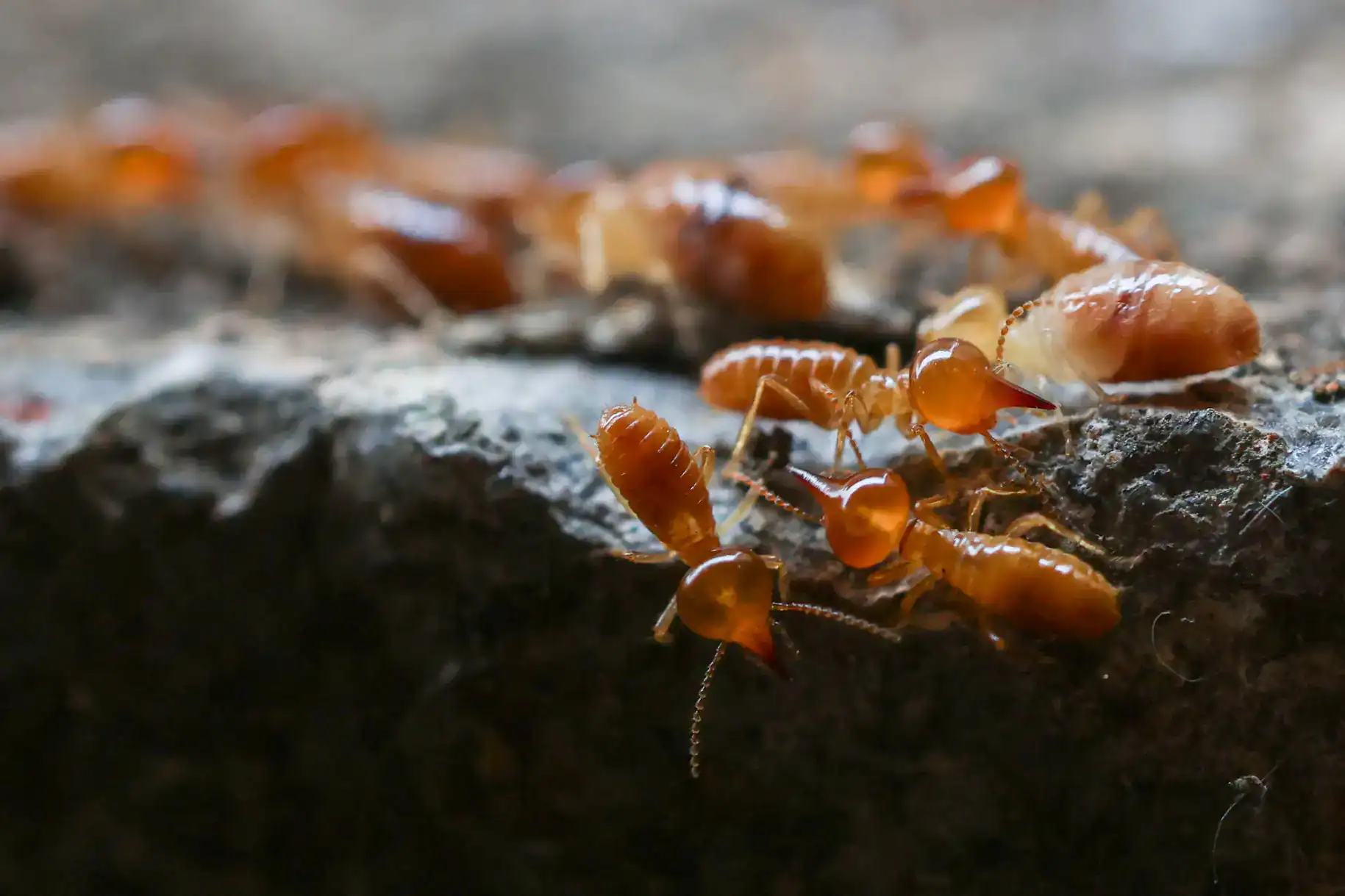
Most Flatlands homeowners don’t find out they have termites until they’re opening a wall during a renovation or watching swarmers appear in the living room on a warm spring morning. By that point, the colony has usually been active for years. The damage is already done and your insurance won’t cover a cent of it.
Flatlands sits on former glacial outwash plains and tidal marshes that once bordered Jamaica Bay. Elevations here run between 5 and 20 feet above sea level, and the soil stays moist close to the surface the kind of ground Eastern Subterranean Termites need to build and sustain underground colonies. That’s a geological fact about your neighborhood that makes regular termite inspections less of a precaution and more of a maintenance requirement.
The homes here make it worse. A large portion of Flatlands’ housing stock was built during the mid-20th century detached and semi-detached single-family homes with original wood framing, basement foundations, and decades of wear that termites exploit quietly. When you get ahead of it, treatment is straightforward and the cost is manageable. When you don’t, you’re looking at structural repairs that routinely run $3,000 to $10,000 or more on a home you’ve spent years building equity in.
We’ve been operating out of Brooklyn since 1971, and our headquarters is at 2216 Flatbush Avenue in the 11234 ZIP code, the same ZIP code as Flatlands. When you call us, you’re not reaching a national call center routing jobs to whoever’s available. You’re calling a company that’s been in this neighborhood for over 50 years.
Richard Kourbage Sr. founded Kingsway Exterminating, and his sons Richard Jr. and Charles run it today. Our staff collectively holds more than 100 years of pest control experience and that’s not a number pulled from a marketing sheet. It reflects a team that has stayed, grown, and built real expertise in the specific housing stock and soil conditions of southeastern Brooklyn. We hold an A+ rating with the Better Business Bureau, accredited since 1989, and apply only NYS DEC registered materials on every job.
From the older homes along Kings Highway to the single-family blocks throughout Community District 18, we’ve handled termite problems in homes just like yours and we’ve been doing it long enough to have earned the kind of reputation that travels by word of mouth in Flatlands.
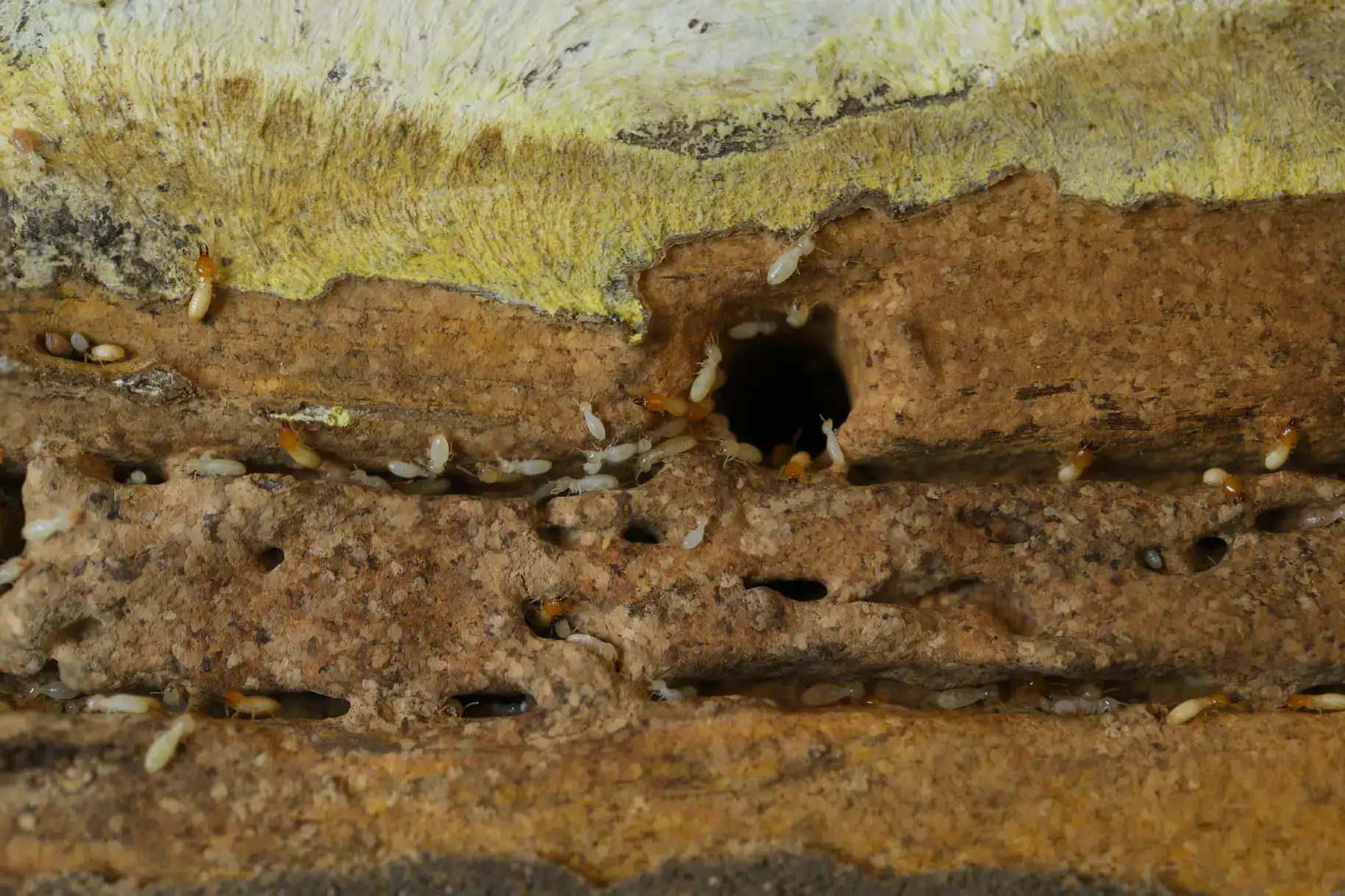
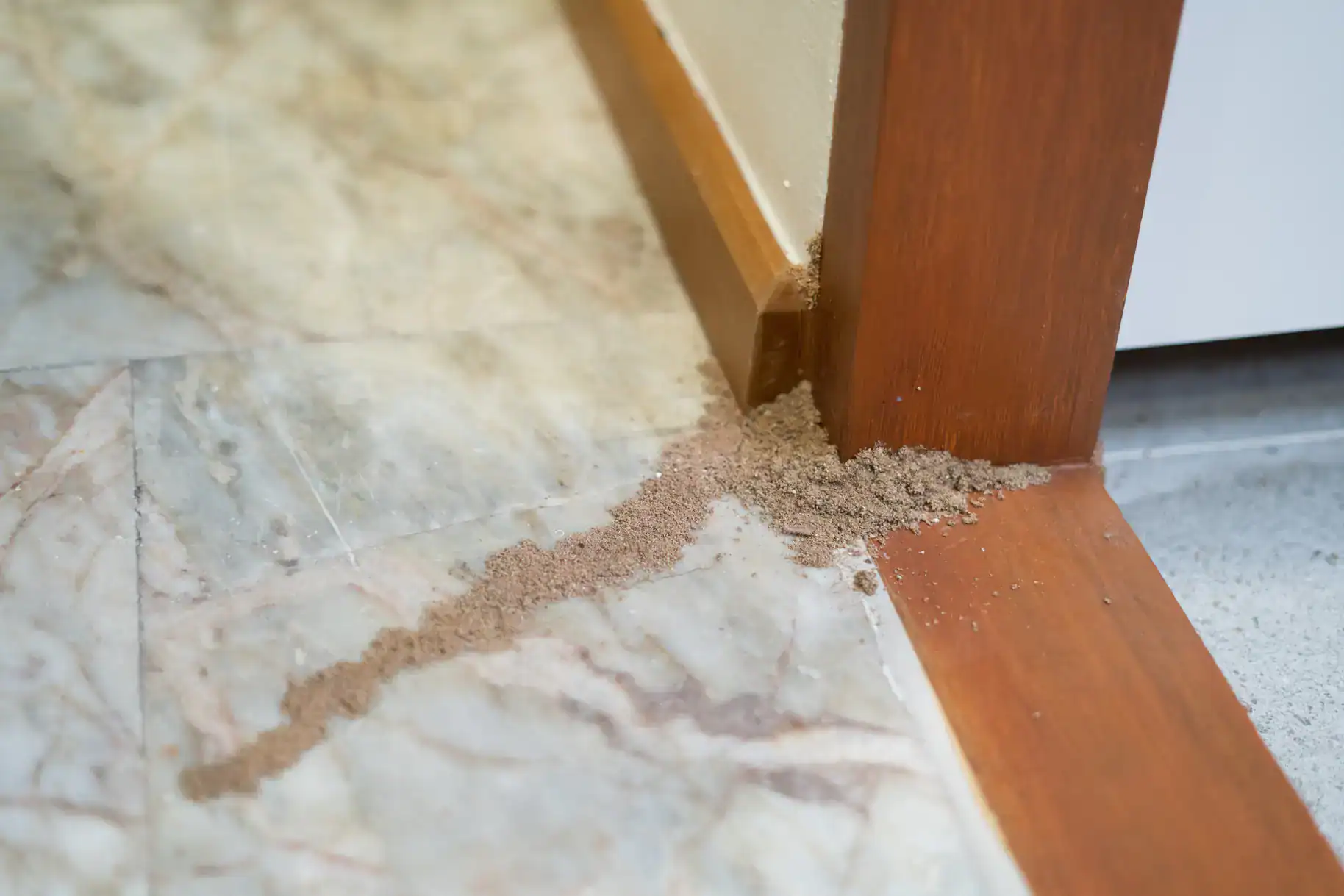
It starts with a thorough termite inspection. One of our licensed technicians walks your property foundation perimeter, basement, crawl spaces, any wood-to-soil contact points looking for the signs that most homeowners miss: mud tubes along foundation walls, soft or hollow-sounding wood, discarded wings near windowsills, or moisture damage that’s created an entry point. In Flatlands, where basements are common and the soil stays damp close to the surface, that foundation-level inspection is where most infestations are found.
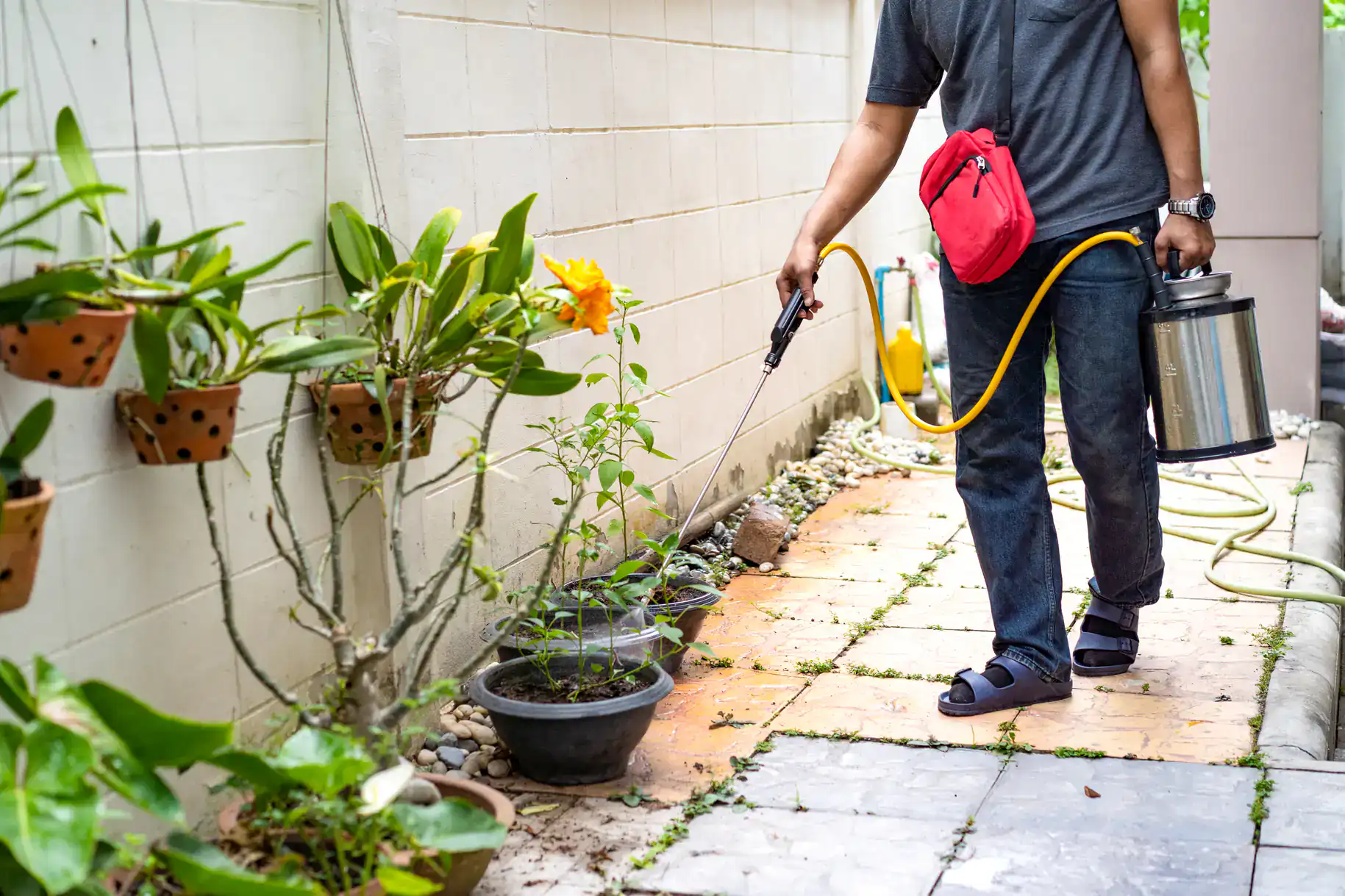
If there’s an active infestation, we’ll walk you through exactly what we found, where it is, and what treatment makes sense for your specific property. For most Flatlands single-family homes, that means a liquid barrier treatment applied along the foundation, a termite baiting system installed around the perimeter, or a combination of both. The baiting system works by getting worker termites to carry a slow-acting toxicant back to the colony eliminating it at the source rather than just disrupting surface activity.
All materials we use are registered with the New York State Department of Environmental Conservation. Application is targeted, not broad-spectrum, which keeps disruption to your household minimal. We guarantee an appointment within two business days, and same-day availability is frequently possible. If you’re in the middle of a real estate transaction and need a certified Wood Destroying Organism report for your lender, we handle that too with the documentation FHA and VA lenders require.
Ready to get started?
A termite inspection with us isn’t a quick walkthrough with a flashlight. It’s a documented assessment of your property foundation, basement, wood framing, and any areas where moisture or soil contact creates vulnerability. For Flatlands homes built in the mid-20th century, that often means paying close attention to original lumber, aging basement infrastructure, and the low-grade soil conditions that are specific to this part of southeastern Brooklyn.
If treatment is needed, we offer liquid barrier treatments, termite baiting system installation, and targeted eradication of Eastern Subterranean Termites the dominant species throughout Brooklyn and New York City. We also treat for carpenter ants and powder post beetles, which often appear alongside termite activity in older wood-frame homes. For property owners dealing with a New York City Department of Health pest citation, we know exactly what documentation and treatment protocols are required to close the violation a detail that matters for anyone managing rental property in Flatlands.
For buyers and sellers in the active Flatlands real estate market, we provide certified WDO (Wood Destroying Organism) inspection reports the documentation lenders require before approving a mortgage on a property with older construction. With median home values around $700,000 in this neighborhood, having a clean, credentialed report isn’t just a lender formality. It’s protection for one of the most significant financial transactions of your life.
It’s not overstated. Flatlands sits on some of the most termite-favorable terrain in the entire New York City area. The neighborhood was built on former glacial outwash plains and tidal marshes that once bordered Jamaica Bay, which means the soil beneath most homes here retains moisture close to the surface year-round. Eastern Subterranean Termites the dominant species in Brooklyn need consistent soil moisture to survive and build colonies. That’s exactly what they get in Flatlands.
Add to that a housing stock made up largely of mid-20th century single-family homes with wood-frame construction and basement foundations, and you have a neighborhood where termite activity is not a remote possibility it’s a documented, ongoing reality. The question for most Flatlands homeowners isn’t whether termites are present in the area. It’s whether they’ve found your specific home yet.
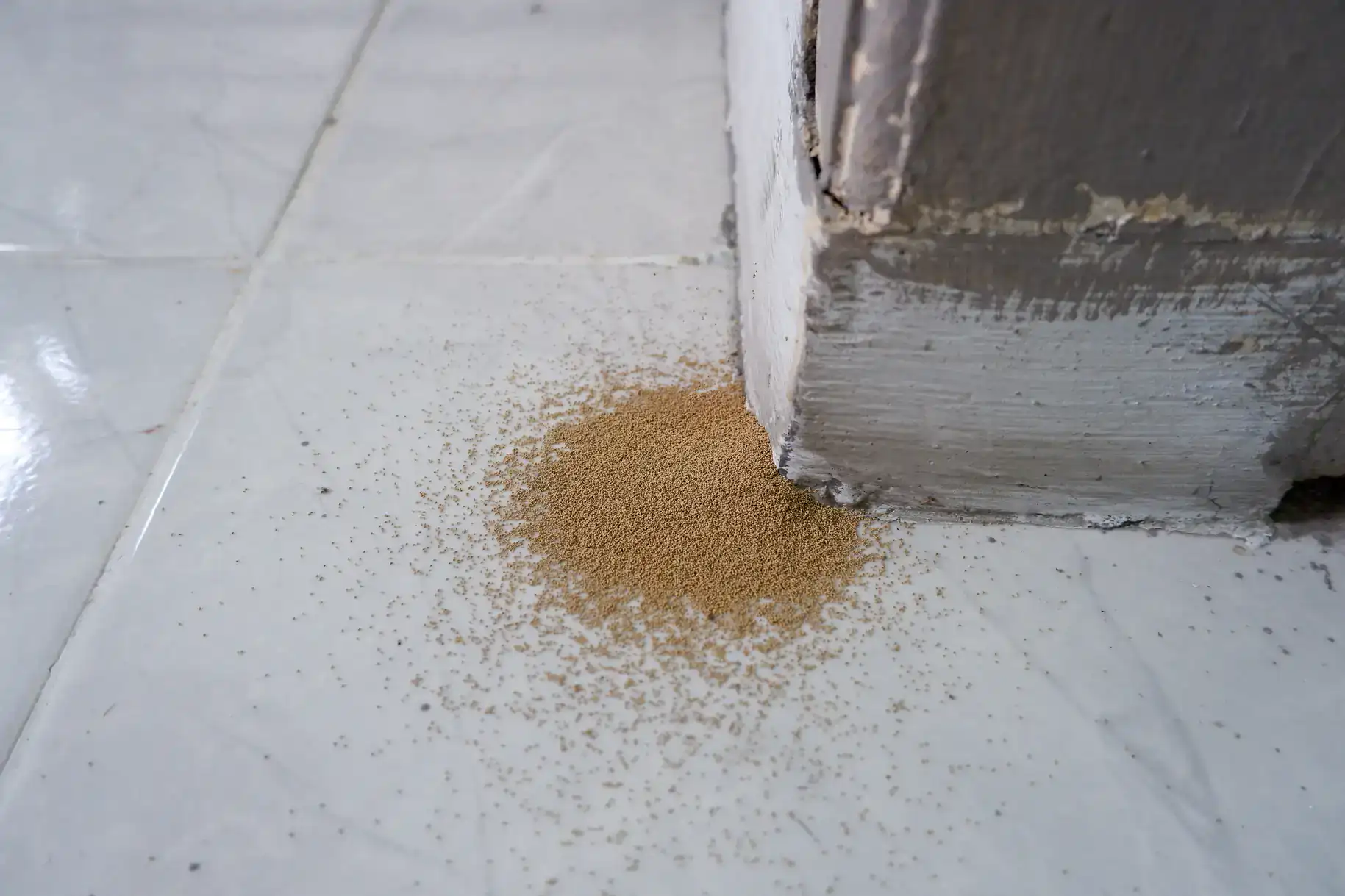
The most common signs are mud tubes along your foundation walls, soft or hollow-sounding wood when you knock on it, small piles of discarded wings near windows or doors in the spring, and visible damage inside walls or under flooring that shows up during a renovation. In Flatlands, basement inspections are especially important the combination of older construction and moisture-retaining soil means the foundation perimeter and any wood near grade level are the most likely entry points.
The harder reality is that termites feed 24 hours a day, 7 days a week, and colonies typically take more than five years to grow large enough to cause visible damage. By the time you notice something, the infestation has usually been active for years. That’s why a professional inspection matters a trained technician will find evidence that most homeowners walk past every day without recognizing it.
Treatment costs vary based on the size of the home, the extent of the infestation, and the method used. For a typical Flatlands single-family home, a professional termite treatment generally runs somewhere in the range of $1,500 to $5,000. That range accounts for liquid barrier treatments, baiting system installation, or a combination of both. A WDO inspection report for a real estate transaction is a separate, lower cost.
The number that matters more for most Flatlands homeowners is what untreated termite damage costs. Structural repairs routinely run $3,000 to $10,000 or more, and homeowner insurance policies in New York almost universally exclude termite damage. On a home worth $700,000 close to the Flatlands median a history of termite damage can reduce property value by roughly 20%. The cost of treatment is a fraction of what it costs to ignore the problem. We provide free estimates, so you know exactly what you’re looking at before committing to anything.
If you’re financing the purchase with an FHA or VA loan, a Wood Destroying Organism inspection report is typically required by the lender before the mortgage can be approved. Even for conventional purchases, many buyers in Flatlands request a termite inspection as part of their due diligence especially given the age of the housing stock and the soil conditions in southeastern Brooklyn that make termite activity more likely than in other parts of the city.
For sellers, having a clean WDO report ready before listing can prevent last-minute delays or price negotiations triggered by a buyer’s inspection. For buyers, it’s straightforward protection you want to know what you’re purchasing before you close. We provide certified termite inspections and WDO reports with the documentation that lenders and real estate attorneys require, and we can typically schedule within two business days, which matters when a transaction is on a tight timeline.
The most urgent time is spring typically late March through May. That’s when Eastern Subterranean Termites send out winged swarmers to establish new colonies, and it’s often when Flatlands homeowners first notice a problem. If you’re seeing small, winged insects appearing inside your home on warm days after rain, that’s a swarming event, and it almost always means there’s a mature colony nearby that has been active for years.
That said, termites don’t stop feeding when the swarm season ends. They feed year-round, moving deeper into the soil during winter and continuing to consume wood at or below the frost line. Fall is also a busy period for termite inspections in Flatlands because of real estate transaction activity buyers and sellers need WDO reports before closing. The honest answer is that there’s no bad time to schedule an inspection if you haven’t had one recently, and for a home built more than 20 or 30 years ago in this neighborhood, waiting for symptoms is the wrong approach.
We’re headquartered at 2216 Flatbush Avenue, Brooklyn, NY 11234 which is the Flatlands ZIP code. We’re a family-owned business, not a franchise, and not a national brand routing calls through a regional dispatch center. Richard Kourbage Sr. founded us in 1971, and his sons run the company today. Our staff has been with us long enough that their collective experience exceeds 100 years that’s not a figure you see at a franchise operation with high turnover.
For Flatlands homeowners, that local presence is more than a convenience. It means the technicians who inspect your home understand the specific housing stock in this part of Brooklyn, the soil conditions along the old Jamaica Bay marshland, and the seasonal patterns that drive termite activity in southeastern Brooklyn specifically. We’ve been BBB accredited since 1989 with an A+ rating, apply only NYS DEC registered materials, and answer the phone 24 hours a day. That combination local roots, regulatory compliance, and real availability is what separates us from the alternatives.
Useful Links
Other Services we provide in Flatlands