
Hear from Our Customers
The homes along the winding streets of Kew Gardens are genuinely beautiful and genuinely old. Tudor Revival and neo-Tudor construction from the 1910s through the 1940s means wood framing that has been sitting in Queens’ moist, glacially deposited soil for nearly a century.
Eastern Subterranean Termites don’t announce themselves. They enter through a foundation crack or a point where wood meets soil, build their colony underground, and feed continuously 24 hours a day while the structure above them slowly weakens. By the time you notice hollow-sounding floors, tight-fitting doors, or mud tubes near the baseboards, the colony has often been active for years. Because most homeowner insurance policies in New York don’t cover termite damage, every day without an inspection is a day that financial exposure grows on your dime.
Your proximity to Forest Park changes the equation too. The largest continuous oak forest in Queens sits directly on Kew Gardens’ western edge and the moist, wood-rich soil that sustains that ecosystem doesn’t stop at the park boundary. Homes along Park Lane and Abingdon Road face a direct adjacency to one of the most termite-hospitable environments in the borough. Getting ahead of that risk, before a colony finds its way into your foundation, is the only move that makes financial sense.
We were founded in 1976 by Richard Kourbage Sr. His sons, Richard Jr. and Charles, run the operation today. That’s not a tagline it means when something goes wrong, the people who answer the phone are the same people whose reputation is on the line. Customers have described Richard Jr. showing up personally for mid-renovation termite discoveries in Kew Gardens homes. That’s what accountability looks like when it’s real.
We hold BBB accreditation dating back to 1989 over 35 years of a documented, third-party track record. All our treatments use only New York State Department of Environmental Conservation registered materials. Our staff brings more than 100 years of combined pest control experience to every job, which matters when you’re dealing with a pre-war Tudor home or a pre-war co-op building in a neighborhood like Kew Gardens, where the construction details are specific and the stakes are high.
From the Kew Gardens LIRR station on Lefferts Boulevard to the residential streets bordering Forest Park, we know Queens’ older housing stock and we know exactly how termites move through it.
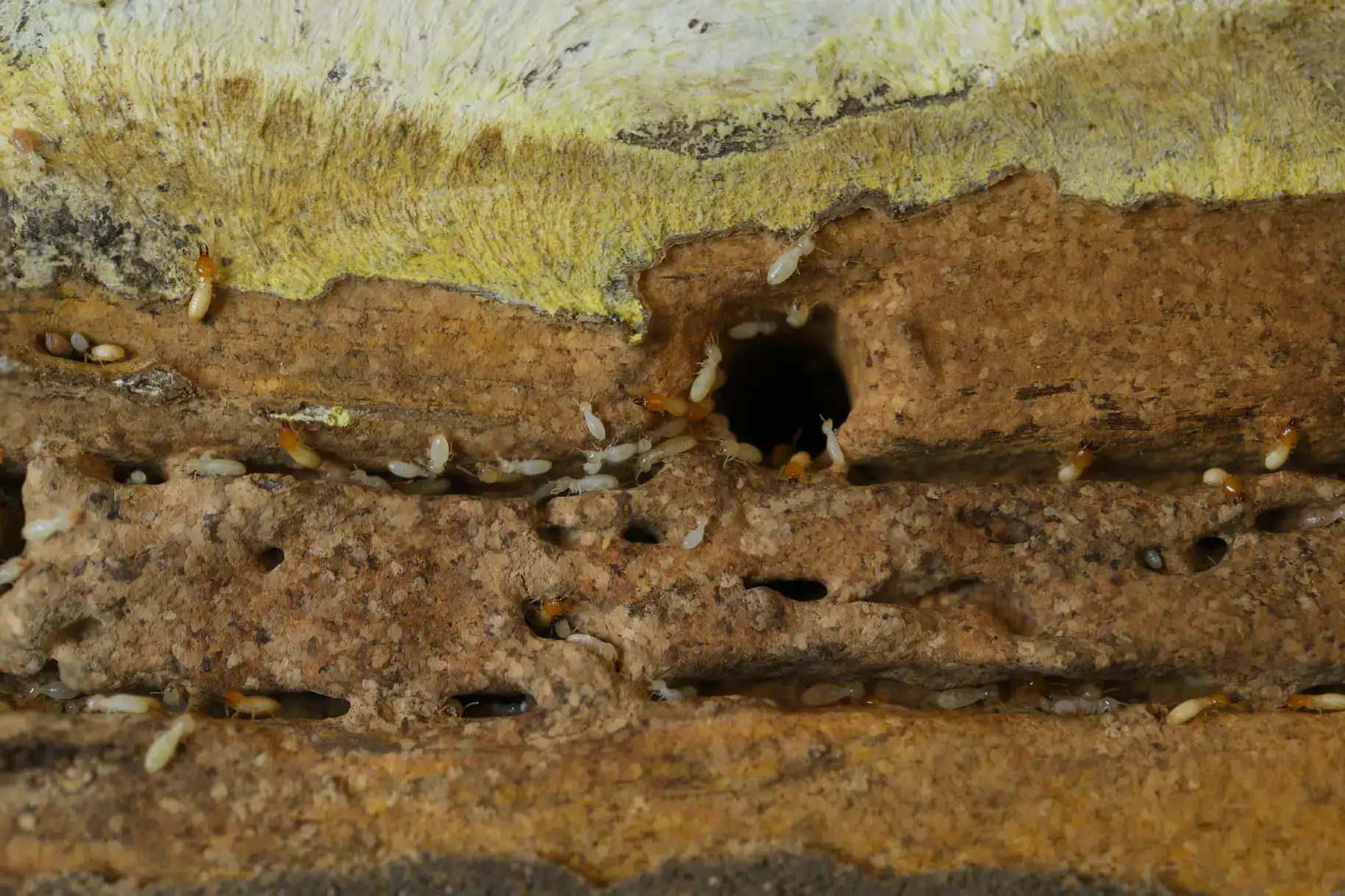
It starts with a thorough inspection foundation to framing. In Kew Gardens’ older homes, that means checking the basement, crawl spaces, any wood-to-soil contact points, and the perimeter of the foundation for mud tubes or entry signs. For pre-war co-op buildings, we assess shared framing and common areas, not just the individual unit where something was spotted. Termites in a co-op don’t stay in one unit they travel through the building’s structure, so a single-unit inspection in that context only tells part of the story.
Once the inspection is complete, you get a clear picture of what’s there, how far it’s gone, and what treatment makes sense. We use both liquid barrier treatments non-repellent termiticides that last five to ten years and termite baiting systems that target the colony at its source. The right approach depends on your specific building, the severity of the infestation, and the construction details of your property. You’ll know which method is being used and why before anything is applied.
Spring is the peak season for termite swarm activity in Kew Gardens warm days after rain trigger swarmers to emerge from established colonies, which is often the first visible sign homeowners notice. But inspections and treatment happen year-round, because termite colonies don’t go dormant in winter. If you’re in the middle of a real estate transaction and need a certified Wood Destroying Organism report for your lender or attorney, same-day inspection availability is frequently possible.
Ready to get started?
Our termite inspection covers the full scope of what a licensed professional is required to assess under New York State Department of Environmental Conservation standards. For homeowners in Kew Gardens dealing with a potential infestation, that means a documented evaluation of your foundation, structural wood, and any accessible crawl spaces or basement areas not a quick visual sweep. If a WDO report is needed for an FHA or VA loan, or for a co-op transaction, the documentation we produce meets lender and attorney requirements.
Our treatment options include liquid barrier applications using non-repellent termiticides like Termidor, which penetrate the soil perimeter and remain effective for five to ten years, and termite baiting systems that are placed strategically around the property to intercept foraging termites and eliminate the colony over time. Both methods are applied using only NYS DEC registered materials, which matters in a densely residential neighborhood like Kew Gardens where families, children, and neighbors in adjacent units are a real consideration.
For co-op boards and property managers dealing with a building-wide issue or a NYC Department of Health pest citation we can assess the full structure, develop a multi-unit treatment plan, and produce the documentation needed to satisfy inspectors and protect the board from further liability. This isn’t a service most local exterminators are set up to handle at that level. We are.
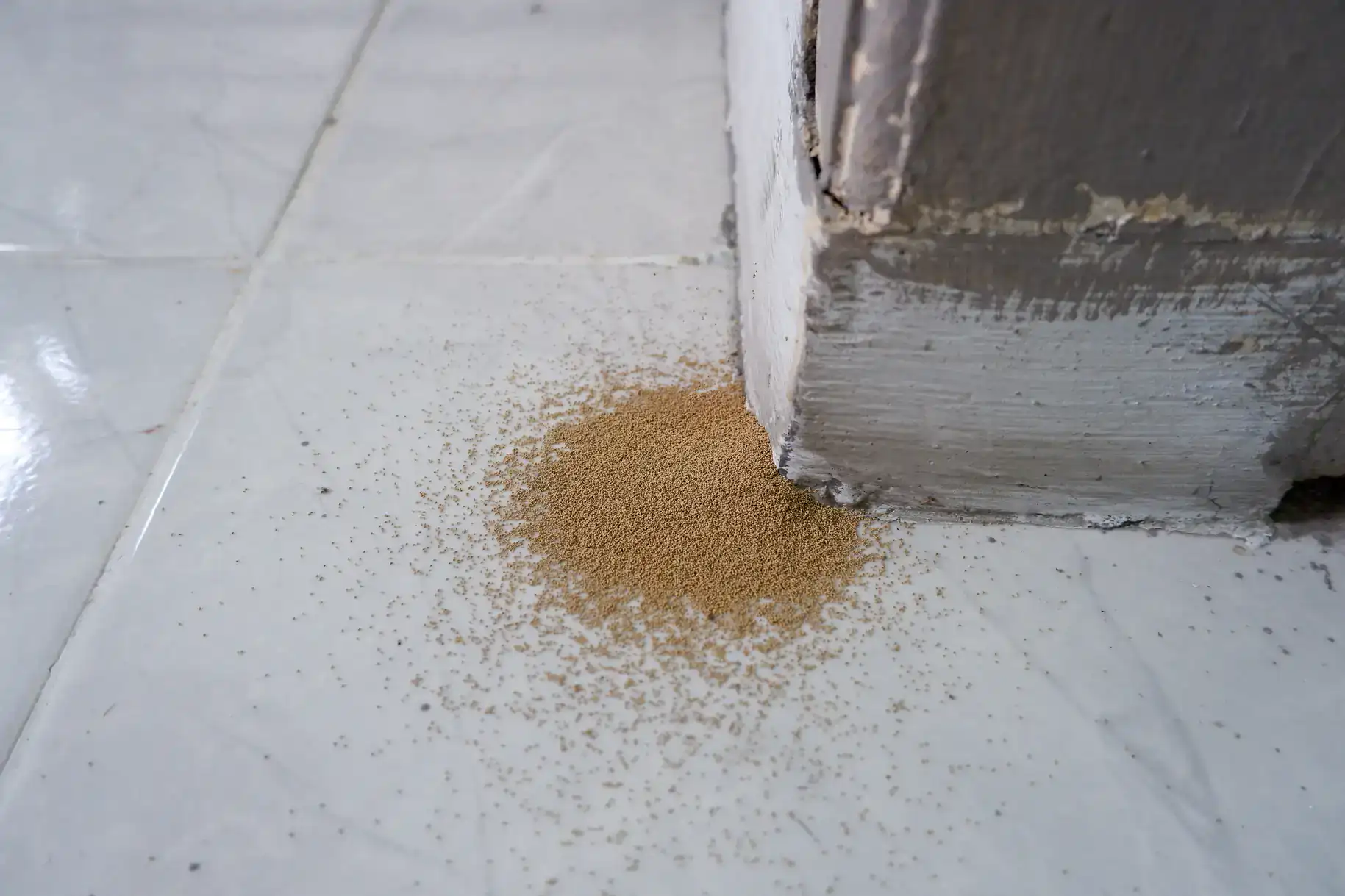
The most common signs in Kew Gardens’ older Tudor Revival and neo-Tudor homes are mud tubes along foundation walls or basement framing, hollow-sounding wood when you knock on floor joists or baseboards, and paint that bubbles or looks uneven without an obvious moisture source. In spring, you might see swarmers winged reproductive termites emerging from walls, window frames, or near the foundation. They’re often mistaken for flying ants, but the distinction matters: termite swarmers have straight antennae, equal-length wings, and a thick waist, while flying ants have elbowed antennae and a pinched waist.
In homes built between 1910 and 1945 which describes most of the housing stock in Kew Gardens the wood framing has had decades of exposure to Queens’ moist soil conditions. If you’re seeing anything that looks off tight-fitting doors, soft spots in the floor, or unexplained cracks near window frames it’s worth getting a professional inspection before assuming it’s just age.
For a single-family home in Kew Gardens, termite treatment generally runs between $1,000 and $3,000 for a standard liquid barrier or baiting system application. Larger Tudor Revival homes with more extensive foundation perimeters, or properties where the infestation has spread into structural framing, can run $1,500 to $5,000 or more depending on the scope of work. These are real ranges based on NYC market conditions not low-ball estimates designed to get someone in the door.
The more important number to keep in mind is what untreated termite damage costs. The average repair for termite-damaged structural wood runs around $3,000, with full beam replacements costing $2,000 to $10,000 or more. Most homeowner insurance policies in New York classify termite damage as a preventable maintenance issue and won’t cover it. Getting an inspection now before damage compounds is almost always the less expensive path. We offer free inspections, so the cost of finding out what you’re dealing with is zero.
Yes and this is one of the more complicated aspects of termite control in Kew Gardens specifically, given how much of the neighborhood’s housing stock consists of pre-war co-op buildings. Eastern Subterranean Termites travel through the soil and through wood framing, which in a co-op building is shared infrastructure. A colony that establishes itself in the basement or foundation of a pre-war co-op doesn’t stay confined to one unit it follows the wood wherever the structure takes it.
This creates a real responsibility question for co-op boards. Individual shareholders often assume the board is handling it; the board sometimes assumes it’s a unit-level issue. In the meantime, the colony keeps feeding. The right approach is a building-wide assessment that identifies the full extent of the infestation, followed by a treatment plan that addresses shared framing and common areas not just the unit where something was first spotted. We have experience working directly with co-op boards and property managers in Queens to handle exactly this kind of multi-unit situation, including producing the documentation boards need for their records.
If you’re using an FHA or VA loan to purchase a property in Kew Gardens, a Wood Destroying Organism inspection and report is required before the loan can close. Even for conventional purchases, many buyers especially those working with attorneys familiar with Queens County real estate will include a termite inspection contingency in the contract. Sellers who want to avoid last-minute delays often get a WDO inspection done proactively so there are no surprises at closing.
Given Kew Gardens’ active real estate market and the age of the housing stock, termite findings during a transaction are not unusual. The key is having a certified inspection report from a licensed professional that your lender and attorney will accept. We produce certified WDO reports that meet those documentation requirements, and same-day inspections are frequently available which matters when you’re working against a closing deadline. If you’re in the middle of a transaction and need this handled quickly, calling early in the process rather than waiting until the last week gives you the most flexibility.
The treatment methods we use liquid barrier applications and termite baiting systems are applied using only New York State Department of Environmental Conservation registered materials. In a neighborhood like Kew Gardens, where families live in close proximity in co-op buildings and garden apartments, the safety profile of any treatment is a completely reasonable thing to ask about before work begins. You should always ask, and any licensed exterminator should be able to answer clearly.
Liquid termiticide applications are injected into the soil around the foundation perimeter, not sprayed through living spaces. Baiting systems are placed in enclosed stations in the ground around the property. Neither method requires evacuation of the building during application in most residential scenarios, though our technician will walk you through any specific precautions relevant to your property before the job starts. If you have young children, pets, or neighbors in adjacent units with particular sensitivities, mention that when you call it affects how the application is planned and what precautions we take.
Liquid barrier treatments using non-repellent termiticides like Termidor are effective in the soil for five to ten years under normal conditions. Termite baiting systems work differently they’re designed to be monitored on an ongoing basis, with bait replenished as needed, and they target the colony at its source rather than just creating a barrier. Which method lasts longer in a practical sense depends on your property, your soil conditions, and whether you want a one-time treatment or an ongoing monitoring program.
For Kew Gardens homeowners, the follow-up question worth asking is what happens to the wood that was already damaged. Termite treatment stops the feeding it doesn’t repair the structural damage that already occurred. If the infestation was active for several years before it was caught, which is common in older homes where signs are subtle, there may be weakened joists, studs, or beams that need to be assessed and repaired separately. A thorough inspection will give you a clear picture of the damage extent so you can make informed decisions about what comes next treatment first, then structural assessment, in that order.
Useful Links
Other Services we provide in Kew Gardens