
Hear from Our Customers
You stop finding them behind the stove at 11 p.m. You stop wondering if the one you just saw means there are fifty more you didn’t. That low-grade anxiety the kind that makes you hesitant to have family over lifts. That’s what effective cockroach control actually delivers, and it’s worth being direct about.
In Midwood, the conditions that drive cockroach pressure are structural, not just situational. Most of the housing stock here was built in the 1920s and 1930s. Those brick homes and semi-detached Tudors on streets like East 16th and Avenue K are beautiful and they have nearly a century of wear in their plumbing sleeves, wall cavities, and foundation gaps. German cockroaches don’t need much space. They find it in these homes because it’s there, and no spray from a hardware store is going to change the underlying conditions.
The food corridors along Avenue J and Coney Island Avenue also matter. If you live within a few blocks of a restaurant strip, the pressure on your home isn’t just coming from inside it’s coming from next door, from the building across the alley, from delivery packaging. A treatment plan that doesn’t account for that is going to leave you calling again in six weeks. What you actually need is a process that addresses the full picture, not just what’s visible on day one.
We’ve been operating out of Brooklyn since the mid-1980s. Our office is on Flatbush Avenue in Marine Park a few miles south of Midwood along the same road most of you travel regularly. This isn’t a national brand with a local phone number. We’re a family business founded by Richard Kourbage Sr., with his son Richard Jr. joining in 1987, and multiple family members still working in the company today. That kind of continuity is rare, and it shows up in how the work gets done.
Our team collectively brings over 100 years of pest control experience to every job. That matters in a neighborhood like Midwood, where a 1920s detached home on a quiet residential block presents completely different challenges than a six-story apartment building on Ocean Parkway. We’ve worked in both and everything in between throughout Brooklyn for four decades. We know the difference, and we treat accordingly.
We hold an A+ rating with the Better Business Bureau of New York State, are fully licensed under the NYS Department of Environmental Conservation, and are fully bonded and insured. Those aren’t just credentials they’re the baseline you should expect from anyone entering your home.
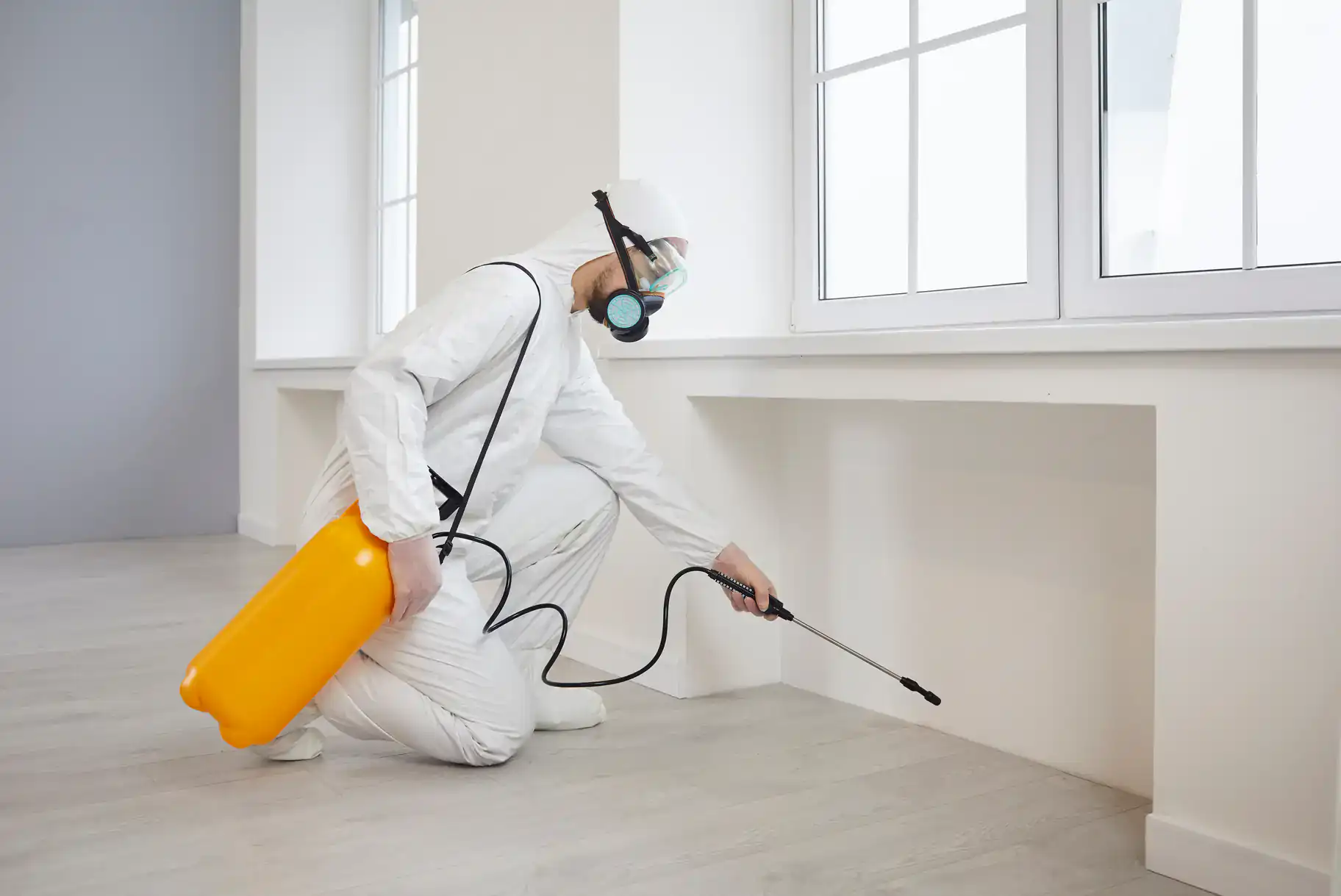
It starts with an inspection a real one. Not a two-minute walkthrough before pulling out a spray can. Our technician looks at the areas where cockroaches actually live: behind appliances, inside cabinet hinges, under sinks, along pipe sleeves, and inside wall voids. In Midwood’s older homes, those pipe sleeves and wall penetrations are often where established colonies are hiding. You can’t treat what you don’t find.
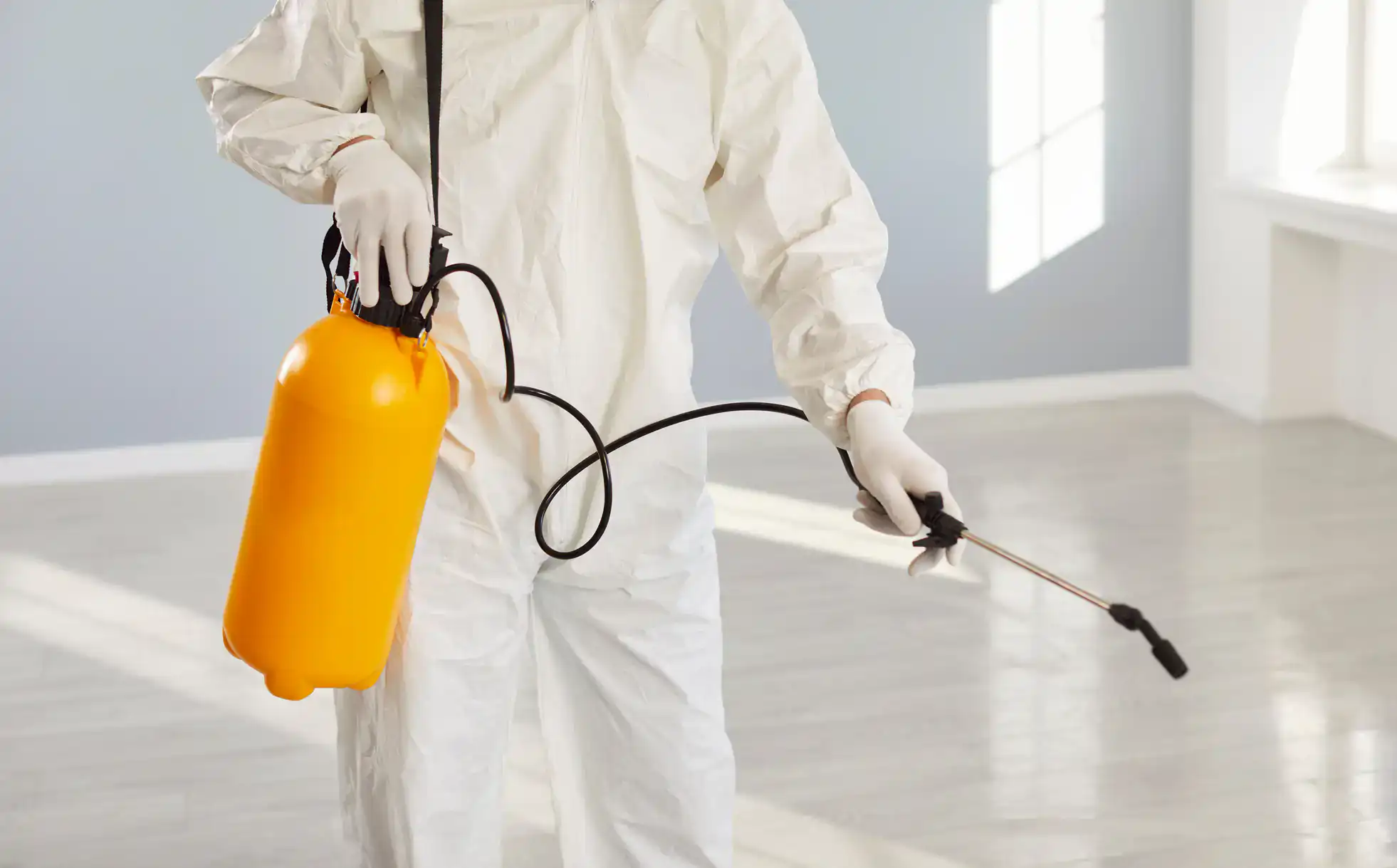
Once the inspection is done, the treatment is targeted to the species and the harborage sites. German cockroaches the small, fast ones most Midwood residents are dealing with require gel bait applications placed precisely where they feed, not aerosol sprays that scatter the colony and make the problem harder to resolve. American cockroaches, the large ones that come up through floor drains and sewer connections during heavy rain, need a different approach entirely. We identify which species is present before any product goes down.
Here’s something most people don’t know: cockroach eggs are resistant to pesticide applications. The eggs hatch two to four weeks after the first treatment, and that new generation needs to be addressed before the infestation is truly resolved. That’s why follow-up visits aren’t optional they’re part of the process. We also offer ongoing maintenance schedules for homeowners and property managers who want to stay ahead of the problem rather than react to it. For Midwood residents in multi-unit buildings along Ocean Parkway or Kings Highway, that kind of ongoing coordination is often the only approach that actually holds.
Ready to get started?
Every cockroach control service begins with species identification because the treatment for a German cockroach infestation in a kitchen on Avenue L is not the same as the treatment for American cockroaches migrating up through a basement drain on a rainy night in April. We use only NYS Department of Environmental Conservation registered materials, applied by licensed technicians. That’s the state-level compliance standard for commercial pesticide application in New York, and it’s the correct answer to anyone wondering what’s being put down in their home around children, elderly family members, or pets.
For Midwood’s senior residents who make up roughly 16% of the neighborhood’s population we offer a 10% senior discount. That’s a real number applied to a real invoice, not a promotional footnote. And for commercial operators along the Avenue J corridor, we handle NYC Department of Health compliance work, including the ability to issue Demolition Clearance Certificates a specialized credential that matters when renovation activity in the neighborhood disturbs established colonies and sends them into adjacent properties.
Ongoing maintenance schedules are available on weekly, monthly, and every-other-month cycles. For homeowners in Midwood’s detached and semi-detached housing stock, this is the most practical long-term solution not because the initial treatment fails, but because the structural conditions in 90-to-100-year-old homes don’t disappear after one visit. Staying ahead of the problem is always less expensive than responding to a reinfestation.
The most common reason is cockroach eggs. The egg cases called ootheca are physically resistant to most pesticide applications. A female German cockroach can carry an egg case containing 30 to 40 eggs, and those eggs are protected until they hatch, typically two to four weeks after the initial treatment. If no follow-up visit is scheduled to address that hatch cycle, the infestation appears to return because it effectively does.
In Midwood specifically, there’s a second factor: the structural age of the housing stock. Homes built in the 1920s and 1930s have accumulated decades of wear in their plumbing penetrations, wall cavities, and foundation gaps. Those gaps are harborage sites that cockroaches will continue to exploit even after a successful treatment, especially if they’re being pushed in from adjacent properties or from the commercial food corridor nearby. The correct response is a follow-up treatment timed to the hatch cycle, combined with targeted exclusion work on the most significant entry points.
In New York City, “waterbug” is the colloquial name for the American cockroach a large, reddish-brown insect that can reach two inches in length. It’s the same species, just a different name that New Yorkers have used for generations. The distinction matters for treatment purposes because American cockroaches and German cockroaches behave very differently and require different approaches.
German cockroaches are small, tan to light brown, and almost always found indoors in kitchens, bathrooms, and inside appliances. They reproduce extremely fast and are the species most commonly found in Midwood’s residential kitchens and apartment buildings. American cockroaches typically live in sewer systems and migrate upward through floor drains and plumbing connections during heavy rain events. In Midwood, where aging sewer infrastructure runs beneath pre-war housing stock, waterbug sightings in basements and ground-floor units after spring and summer storms are a recurring seasonal reality. Treating for one when you actually have the other is a waste of time and money.
Yes when applied correctly, by a licensed technician, using approved materials. We use only NYS Department of Environmental Conservation registered materials, which have been tested and approved for residential use by the state regulatory agency that oversees all commercial pesticide applications in New York. That’s a specific regulatory framework, not a vague claim about being “eco-friendly.”
For Midwood households with elderly residents or grandchildren visiting regularly, our technician will walk you through the specific products being used, where they’re being applied, and any re-entry timing you need to observe. Gel bait applications the primary method for German cockroach control are placed in targeted locations like cabinet hinges and behind appliances, not broadcast across surfaces where contact is likely. The goal is to put the product where cockroaches go, not where people are. If you have specific health concerns or sensitivities, mention them before the service begins so the treatment plan can be adjusted accordingly.
Yes, and this is one of the more frustrating realities of cockroach control in multi-unit buildings. Cockroaches travel through shared plumbing chases, electrical conduit, wall voids, and gaps around pipes all of which connect units in a typical Brooklyn apartment building. In the six-story buildings along Ocean Parkway and Kings Highway, a cockroach population established in one unit can spread to adjacent units within weeks if the building isn’t treated comprehensively.
This is why individual unit treatment in a multi-unit building often produces limited results. If the unit next door or below isn’t addressed at the same time, reinfestation is likely. Effective cockroach control in a building context requires coordination across units ideally with the property manager involved and a treatment plan that addresses shared harborage sites like basement utility rooms, laundry areas, and pipe chases. We work with property managers throughout Brooklyn on exactly this kind of building-level program, and can structure ongoing maintenance schedules that keep the entire property in compliance with NYC housing code requirements.
For a moderate German cockroach infestation in a residential home, most people see a significant reduction in activity within one to two weeks of the initial treatment. Full resolution meaning no visible activity and no new signs of harborage typically takes two to three treatment visits spaced two to four weeks apart, timed to address the egg hatch cycle.
Severity matters. A light infestation caught early in a single-family home on a residential block is a different situation than a heavy infestation in a multi-unit building where neighboring units haven’t been treated. In Midwood’s older housing stock, where cockroaches may have been established in wall voids for months or longer before the problem became visible, the initial treatment often surfaces more activity before things improve cockroaches are displaced from their harborage sites and become more visible in the days following treatment. That’s a normal part of the process, not a sign that the treatment isn’t working. Your technician will set accurate expectations before the first visit so you know what to look for.
Yes we offer a 10% senior discount on cockroach extermination services. Midwood has one of the higher concentrations of residents over 65 in Brooklyn, and a meaningful portion of those residents are longtime homeowners who have lived in the neighborhood for decades. Many are on fixed incomes and are managing homes that, because of their age, require more consistent pest control attention not less.
The discount applies directly to the service invoice. Beyond the pricing, our senior customers can expect technicians who take the time to explain what’s being applied, where it’s going, and what to expect in the days following treatment. Questions about chemical safety around grandchildren, concerns about re-entry timing, or requests to work around a specific household schedule those are all normal parts of the conversation, and our technicians are used to having them. If you’re a senior homeowner in Midwood dealing with a cockroach problem, call and mention the discount when you book.
Useful Links
Other Services we provide in Midwood