Hear from Our Customers
You stop dreading the kitchen at night. You stop wondering whether that thing in the drain is going to show up again. When a cockroach problem is properly treated not just sprayed and forgotten you get your home back, and that matters in South Jamaica, where families have lived on the same block for generations.
South Jamaica has a flooding problem that most exterminators outside of Southeast Queens don’t fully understand. When the sewers back up after a heavy rain, American cockroaches what most people around here call waterbugs get pushed up through drain pipes and into basements and ground-floor apartments. That’s not a fluke. It’s a structural condition that repeats itself every time the water table rises. Treating the cockroaches you can see without addressing how they’re getting in just means you’re back to square one after the next storm.
If you’re in a rowhouse, a two-family home, or one of the larger buildings off Merrick Boulevard or Guy R. Brewer Boulevard, the infestation dynamic is different than in a detached suburban house. Cockroaches travel through shared walls, plumbing chases, and utility corridors. A real solution accounts for that not just the unit that called, but where the problem is actually living.
Kingsway Exterminating Company has been operating in New York City for over 40 years. Founded as a family business and still run that way today, we serve all five boroughs from our base in Marine Park, Brooklyn connected directly to South Jamaica via the Belt Parkway that runs along your neighborhood’s southern edge. That’s not a coincidence. We built this company for the specific realities of NYC pest control, not adapted from a suburban franchise model.
Our team collectively brings over 100 years of combined pest control experience, which means the technician who shows up at your door has likely treated the same type of building, the same species, and the same flooding-related waterbug problem you’re dealing with right now in South Jamaica. We hold full NYS Department of Environmental Conservation licensing, maintain an A+ rating with the Better Business Bureau of New York State, and are fully licensed, bonded, and insured every job, every time.
If you’re a senior resident of South Jamaica, ask about the 10% senior discount when you call. It’s a straightforward acknowledgment that this community deserves accessible, professional service.
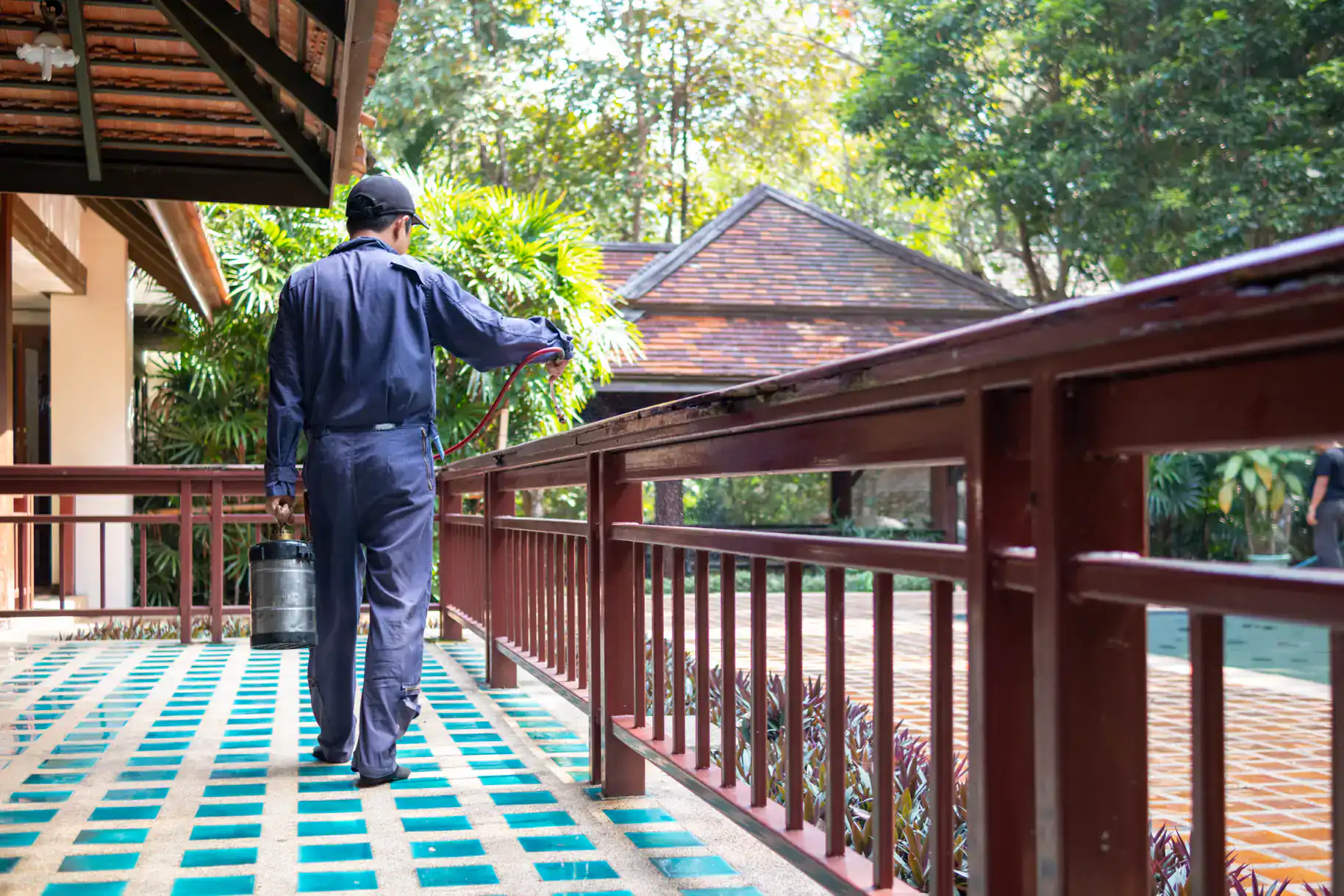
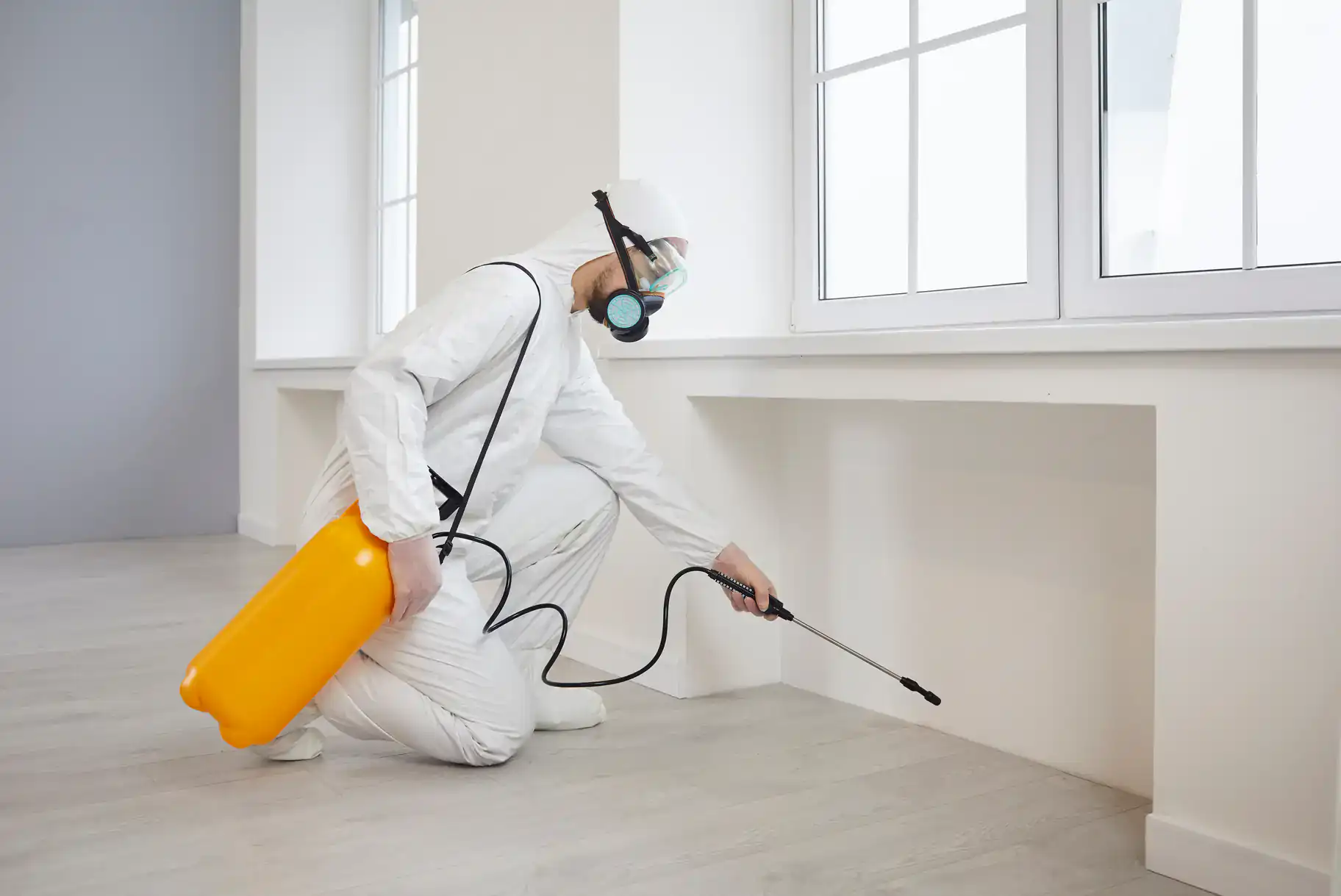
The first thing that happens is an inspection a real one. Not a five-minute walk-through before the spraying starts. Our technician looks at where the cockroaches are appearing, where they’re coming from, and what’s allowing them to stay. In South Jamaica, that often means checking floor drains, pipe penetrations in basement walls, gaps around utility lines, and anywhere water intrusion has created the warm, moist conditions that cockroaches need to survive. The flooding infrastructure issues in this neighborhood are well-documented, and a thorough inspection accounts for them.
From there, treatment is applied based on what the inspection actually found. For German cockroaches in kitchens and bathrooms, that typically means targeted gel bait placed in crack-and-crevice locations behind appliances, under sinks, along cabinet interiors. For American cockroaches entering from below, it means treating the entry points and creating a barrier that interrupts the migration path. The products we use are NYS DEC Registered Materials, which matters if you have children, elderly family members, or anyone with respiratory sensitivities in the home.
After treatment, you’ll know what was done, why, and what to watch for. If you’re in a multi-unit building and the infestation is coming from adjacent units or shared infrastructure, that gets communicated clearly because ignoring it doesn’t make it go away.
Ready to get started?
Cockroach pest control in South Jamaica isn’t a one-size situation. The neighborhood has a mix of pre-war rowhouses, two-family homes, NYCHA developments, and large co-op buildings and each one presents a different infestation pattern. Our service is structured around what your specific building type and infestation actually require, not a generic package applied the same way regardless of what’s going on.
For residential homes and apartments, our service covers inspection, targeted treatment, and entry point identification. For property managers and building owners whether you’re overseeing units near Baisley Pond Park, managing a building along Linden Boulevard, or dealing with a recurring problem in a multi-family property we work at the building level, not just the unit level. That distinction is critical in attached housing where cockroaches move freely between units through shared infrastructure. Under NYC’s Local Law 55, landlords of multiple dwellings are required to conduct monthly building-wide pest management, and we can support that obligation with a documented, licensed treatment program.
The species mix in South Jamaica typically includes German cockroaches in kitchens and bathrooms, and American cockroaches in basements, drains, and lower-level units especially after rain events. Both require different treatment approaches, and both are addressed as part of our service. Every material we apply is NYS DEC registered, and every technician is state-certified.
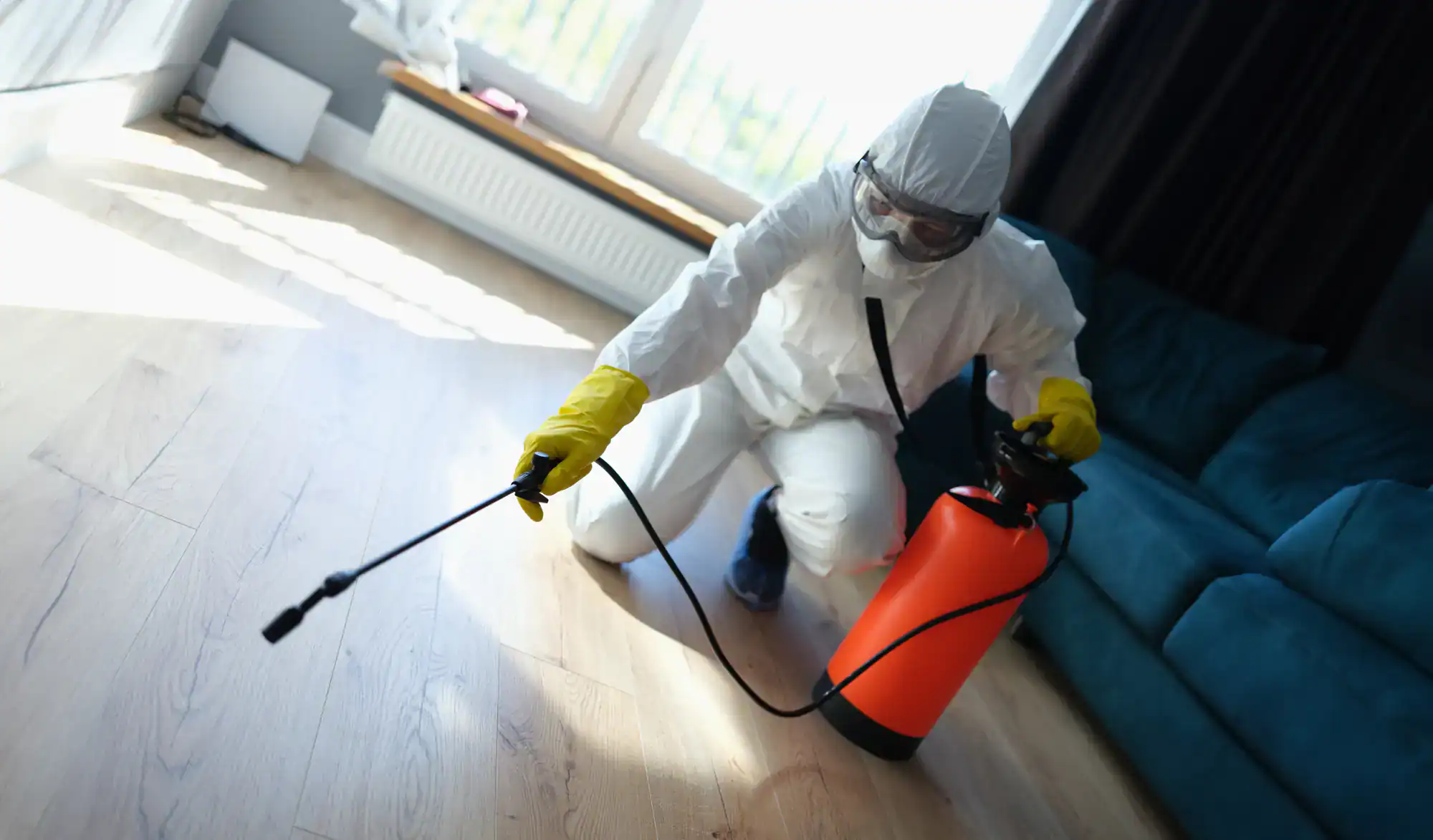
This is one of the most common questions from residents in Southeast Queens, and the answer is specific to this area’s infrastructure. South Jamaica has a documented rising water table and a sewer system that gets overwhelmed during heavy rain events. When that happens, American cockroaches commonly called waterbugs get pushed upward through the sewer lines and into homes through floor drains, pipe gaps, and any opening at or below ground level. It’s not a sign that your home is dirty. It’s a sign that your building is connected to an aging drainage system under pressure.
The fix isn’t just treating the cockroaches you see. It requires identifying every point where they’re entering floor drains, gaps around utility penetrations in basement walls, cracks in the foundation near the water line and sealing or treating those points directly. Without that step, the next heavy rain will bring the next wave. A licensed exterminator familiar with Southeast Queens conditions knows to look for these entry points as a standard part of the inspection, not as an afterthought.
Yes, and this is exactly why treating a single apartment in an attached building often doesn’t solve the problem long-term. Cockroaches move through wall voids, plumbing chases, electrical conduit openings, and gaps around pipes that run between units. In South Jamaica’s older rowhouse stock and multi-family buildings, those pathways are common especially in pre-war and early postwar construction where plumbing and electrical systems have been modified over decades and gaps around penetrations are rarely fully sealed.
If your infestation keeps returning after treatment, the source is likely in an adjacent unit, a shared utility space, or the building’s common infrastructure. The right approach is to identify the infestation pattern across the building, not just respond to the one unit that reported it. We work with property managers and building owners to assess and treat at the building level when the situation calls for it. Under NYC’s Housing Maintenance Code, landlords are also legally responsible for pest control in multi-family dwellings a Class B violation with fines up to $2,000 per incident so addressing it properly protects both tenants and building owners.
It matters a lot, because they behave differently, live in different parts of your home, and require different treatment approaches. German cockroaches are small, light brown, and almost always found near food and moisture inside kitchen cabinets, behind appliances, under sinks, and in bathroom fixtures. They reproduce extremely fast and are the most common species in NYC apartment infestations. American cockroaches the ones most New Yorkers call waterbugs are much larger, reddish-brown, and typically come up from below: sewer lines, drains, basements, and crawl spaces.
In South Jamaica, it’s not uncommon to have both at the same time. German cockroaches may be established in your kitchen while waterbugs are migrating in through the basement after a rain event. Treating both with the same product or the same method won’t work effectively. German cockroaches respond well to targeted gel bait in harborage areas. American cockroaches require entry point treatment and barrier application at the ground level. A proper inspection identifies which species you’re dealing with and in many South Jamaica homes, the answer is both.
A few straightforward steps make the treatment significantly more effective. Clear out the areas under your kitchen and bathroom sinks so our technician can access the plumbing. Pull appliances slightly away from the wall if you’re able to the space behind a refrigerator or stove is one of the most common German cockroach harborage sites in NYC kitchens. If you have food stored in lower cabinets, move it to a sealed container or a higher shelf temporarily. In basement areas, clear access to floor drains and any wall penetrations where pipes or utility lines enter.
You don’t need to leave the home during treatment in most cases, but our technician will let you know if any specific area needs to be vacated temporarily based on what’s being applied. All products we use are NYS DEC Registered Materials, so you don’t need to be concerned about unregulated chemicals being used in your home. After treatment, avoid cleaning the treated surfaces particularly behind appliances and inside cabinet interiors for at least a week, since wiping away gel bait or residual product before it has time to work is one of the most common reasons treatments underperform.
Under the NYC Housing Maintenance Code, your landlord is legally required to address cockroach infestations in rental units. A confirmed infestation is classified as a Class B violation, which carries fines of up to $2,000 per incident. You can file a complaint through NYC 311 online, by phone, or through the 311 app and the city’s Department of Housing Preservation and Development (HPD) can send an inspector to document the condition and issue a violation against the landlord. That violation creates a legal record and financial pressure that often accelerates landlord action.
If you’re in a NYCHA development like South Jamaica Houses or Baisley Park Houses and you’re dissatisfied with the in-house pest response, you can also request a work order through NYCHA’s customer contact center and escalate through the NYCHA Ombudsman’s office if the response is delayed. In the meantime, if you choose to hire a private exterminator independently, document everything the infestation, your communications with the landlord, and the treatment because that documentation supports any housing court proceeding if it comes to that. We can provide a licensed, documented treatment that creates a clear record of professional service.
Yes we offer a 10% discount for senior customers, and it applies to cockroach pest control service in South Jamaica. South Jamaica has a significant population of long-term residents and seniors who have lived in this neighborhood for decades, many of them on fixed incomes. Pest control is a health issue as much as a comfort issue cockroach allergens have been detected in the majority of NYC apartment air samples where infestation is present, and they’re a documented trigger for asthma, which disproportionately affects communities in dense urban neighborhoods like this one. Getting the problem treated professionally shouldn’t be out of reach because of cost.
When you call to schedule, just mention the senior discount and it will be applied to your service. There’s no complicated qualification process. We’re a family-owned company that has been serving New York City neighborhoods for over 40 years, and making professional pest control accessible to the people who’ve been part of this community the longest is something we take seriously not as a promotional offer, but as a straightforward business practice that reflects who we are.
Useful Links
Other Services we provide in South Jamaica