
Hear from Our Customers
There’s a big difference between a treatment that handles today’s problem and one that actually keeps cockroaches from coming back. In Whitestone, that distinction matters more than it does in most neighborhoods. When you’re sitting close to the East River and the older sewer infrastructure that runs beneath these streets, American cockroaches what most locals call waterbugs have a reliable pathway into your home every time it rains hard or temperatures spike. A single spray visit doesn’t close that pathway. Real cockroach control in Whitestone means identifying where they’re getting in, treating those entry points directly, and setting up a plan that accounts for the fact that pressure from below doesn’t stop after one visit.
For families in Whitestone’s single-family homes the Colonials, Cape Cods, and brick houses with basements and crawl spaces that define this neighborhood the risk isn’t just the roaches you see. Cockroach allergens are a documented trigger for asthma and respiratory issues, particularly in children. Getting the infestation fully resolved protects more than your floors and cabinets. It protects the air your household breathes every day. And for the significant number of seniors living in Whitestone, knowing that the materials used are state-regulated and safe isn’t a bonus it’s a baseline expectation that we meet on every job.
If you’re in one of the larger buildings in Beechhurst the Cryder House, LeHavre on the Water, or one of the garden co-ops near 14th Avenue the dynamic shifts again. German cockroaches spread between units through shared plumbing stacks and wall voids. One untreated unit keeps re-infesting the ones around it. What looks like a recurring problem is often a structural one, and it takes a treatment approach that accounts for the whole building, not just the unit you’re standing in.
We’ve been a family-owned operation since the beginning founded by Richard Kourbage Sr. and built over more than 40 years of continuous service across Brooklyn, Queens, the Bronx, Staten Island, Manhattan, and Long Island. Richard Kourbage Jr. joined in 1987, and the business has stayed in the family ever since. That’s not a marketing angle it’s just how we were built, and it shapes how every job in Whitestone and beyond gets handled.
Our team collectively brings over 100 years of combined pest control experience to their work. That kind of depth means a Kingsway technician walking into a Whitestone home near the Bronx–Whitestone Bridge or a Beechhurst waterfront building isn’t guessing. We’ve seen this before many times and we know what actually works in these conditions versus what just looks like it’s working.
Every material we use is registered with the New York State Department of Environmental Conservation. We’re fully licensed, bonded, and insured, and hold a consistent A+ rating with the Better Business Bureau of New York State. For Whitestone homeowners who do their research before making a call and most of you do those credentials are verifiable, not just claimed.
It starts with identification, and that step matters more than most people realize. Not all cockroaches in Whitestone are the same species, and the treatment that works for one doesn’t necessarily work for the other. The large reddish-brown waterbugs appearing in your basement or coming up through a drain are American cockroaches migrating from the sewer system. The small, fast ones in your kitchen are almost certainly German cockroaches, and they require a completely different approach bait-based treatments, crack-and-crevice applications, and insect growth regulators that interrupt their reproduction cycle rather than just pushing them deeper into the walls.
Once the species and scope are confirmed, we target the actual source rather than just the surface. For waterfront homes in Whitestone, that means inspecting foundation entry points, basement drains, utility penetrations, and pipe gaps the places where cockroaches are physically getting in from outside. For kitchen or bathroom infestations, it means treating the harborage areas where German cockroaches breed and hide, not just where they’re visible. Store-bought sprays typically scatter these populations rather than eliminate them, which is why most people calling us have already tried that route.
After the initial treatment, we can set up a maintenance schedule monthly, every other month, or another interval that fits your situation to keep the pressure managed over time. In a neighborhood like Whitestone where heavy rain events off the East River can push new cockroach activity from the sewer system into residential structures, ongoing maintenance isn’t an upsell. It’s just how you stay ahead of a problem that doesn’t stop generating pressure on its own.
Ready to get started?
We handle both residential and commercial cockroach control in Whitestone, NY and our approach is specific to the property type, not templated. For single-family homeowners in Whitestone’s 11357 ZIP code, treatment focuses on the entry points and harborage conditions that are most common in older Queens housing stock: basement drains, aging plumbing penetrations, foundation cracks, and the crawl spaces and utility rooms that give American cockroaches a warm, damp place to establish. Pre-war homes and Whitestone has plenty of them are particularly vulnerable to waterbug entry because of brick construction and plumbing that has shifted and settled over decades.
For property managers and building owners overseeing multi-unit properties in Beechhurst or the garden co-ops throughout Whitestone, we work at the building level, not just the unit level. That matters when German cockroaches are spreading between units through shared infrastructure. We also issue Demolition Clearance Certificates to the NYC Department of Health a credential relevant to any Whitestone property owner navigating a renovation or demolition project that requires city compliance.
All treatments use only NYS DEC Registered Materials state-approved, tested, and safe for use in homes with children, seniors, and pets. We offer a 10% senior discount, which is a straightforward acknowledgment of the significant number of longtime Whitestone homeowners who’ve been in the same house for decades and deserve a company that treats them accordingly. Maintenance programs are available on a schedule that fits your property and your level of ongoing pest pressure.
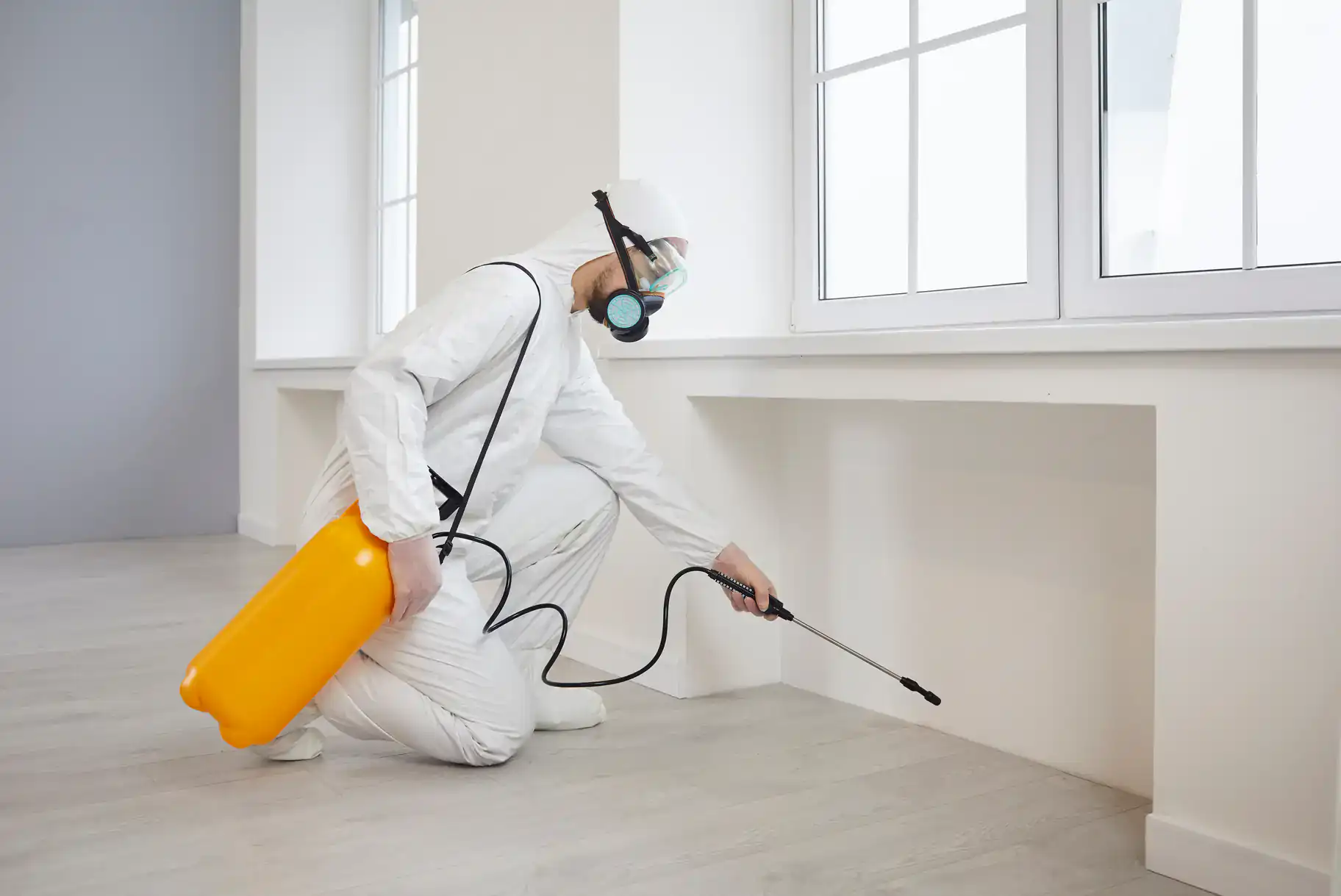
This is one of the most common questions we get from Whitestone homeowners, and the answer is pretty straightforward: the source isn’t inside your house it’s beneath it. American cockroaches, which most New Yorkers call waterbugs, live in the sewer system and migrate upward through drain pipes, foundation gaps, and utility penetrations when conditions push them that way. In Whitestone, those conditions happen regularly. Proximity to the East River means the underground environment stays damp, and heavy summer rain events the kind that saturate the soil and stress the storm drain system physically displace cockroach populations from below and push them into ground-level structures.
The reason they keep coming back is that a single treatment doesn’t seal the sewer system or permanently close every entry point. What it does is reduce the active population and treat the primary entry zones. Ongoing maintenance particularly heading into spring and summer when waterbug activity peaks is what keeps the numbers from rebuilding. If you’re seeing them every year around the same time in your Whitestone home, that’s a pattern worth getting ahead of rather than reacting to after the fact.
It matters quite a bit, because they require different treatments. The large, reddish-brown cockroach you find in your basement, near a drain, or occasionally flying in through a window during a summer heat wave is an American cockroach locally called a waterbug. It comes from outside, typically from the sewer system, and it’s looking for moisture and warmth. The small, fast cockroach you find in your kitchen cabinets, behind the refrigerator, or under the sink is almost certainly a German cockroach. It doesn’t come from outside it was introduced to your home and has been reproducing indoors ever since.
Treating a German cockroach infestation the same way you’d treat a waterbug problem won’t work. German cockroaches have developed significant resistance to spray-based treatments, and aerosol products often scatter the colony into wall voids rather than eliminating it. They need targeted bait applications, insect growth regulators that interrupt reproduction, and crack-and-crevice treatment in the specific areas where they harbor. We identify the species before recommending any treatment because getting that part right is what determines whether the problem actually gets resolved.
Yes and this is worth understanding in detail rather than just taking on faith. Every material we apply is registered with the New York State Department of Environmental Conservation, which means it has been reviewed and approved for use in residential settings by the state’s regulatory authority. That’s a legal compliance requirement, not just a preference. Our technicians are DEC-certified, not just company-trained, which means their licensing is independently verified.
Whitestone has a notably large senior population roughly one in four residents is 65 or older and a significant number of households with children. The concern about chemical safety during cockroach treatment is completely reasonable, and it’s one we take seriously. In practice, you’ll be given clear instructions about what to do before and after treatment things like covering food prep surfaces, keeping pets and children out of treated areas for a specified period, and ventilating the space. Following those steps is straightforward, and the materials being used are the same regulated products applied in homes, schools, and healthcare facilities across New York City every day.
It depends on what you’re dealing with. A German cockroach infestation in a kitchen typically requires more than one visit often two to three treatments spaced a few weeks apart because the first treatment eliminates the visible population but doesn’t always reach every harborage site or newly hatched eggs. A follow-up visit confirms that the treatment worked and addresses any remaining activity before it rebuilds.
For American cockroach pressure in a Whitestone home near the waterfront, the number of visits is less about eliminating a colony and more about managing ongoing migration pressure from the sewer system. One treatment can significantly reduce activity, but if the entry points haven’t been fully sealed and the external pressure continues which it does in waterfront neighborhoods you may see new activity after a heavy rain or a heat spike. That’s why we offer maintenance programs on a schedule that fits your situation. For some Whitestone homeowners, a seasonal or bimonthly program is the most practical way to stay ahead of a problem that the geography keeps generating.
Absolutely, and this is one of the most frustrating realities of cockroach control in multi-unit buildings. German cockroaches move through shared infrastructure plumbing stacks, pipe chases, wall voids, and even elevator shafts in older high-rise buildings. In a building like the ones in Beechhurst, where mid-century construction means decades of settled walls and aging utility systems, the pathways between units are numerous and often invisible. You can treat your unit thoroughly and still see cockroaches return within weeks if a neighboring unit remains untreated.
This is why we approach multi-unit cockroach control at the building level rather than the unit level when working with property managers and building owners. Treating individual units in isolation is a short-term fix in a building with active shared harborage. A coordinated treatment program that covers the common infrastructure not just the unit where the complaint originated is what actually resolves the problem and keeps it from cycling back. If you’re a property manager in Whitestone overseeing a building with recurring cockroach complaints, that’s the conversation worth having.
Yes we offer a 10% senior discount, and it applies to cockroach pest control services in Whitestone. Whitestone has one of the older demographic profiles in Queens, with a substantial portion of residents aged 65 and older many of them longtime homeowners who have been in the same house for 30 or 40 years. These are people who’ve invested in their homes and their neighborhood over decades, and the discount is a direct reflection of that.
It’s also worth noting that senior homeowners in Whitestone are often dealing with housing stock that’s just as old as they are pre-war or mid-century construction with aging plumbing, settled foundations, and the kinds of gaps and cracks that give cockroaches reliable entry points year after year. The discount makes professional-grade treatment more accessible for residents on fixed incomes without any change to the quality of the service or the materials we use. If you or someone in your household qualifies, just mention it when you call there’s no complicated process involved.
Useful Links
Other Services we provide in Whitestone