Rodents don't wait for an invitation. Here's what actually keeps them out — and what to do when they've already found a way in.

You didn’t move to Brooklyn, Manhattan, or Queens to share your home with rats and mice. But if you’ve found droppings in the back of a cabinet, heard something moving inside your walls after midnight, or spotted a mouse disappearing behind the refrigerator — you’re not alone, and you’re not dealing with a fluke. New York City has one of the most persistent rodent problems in the country, and it doesn’t discriminate by neighborhood or building type. The good news is that most infestations are preventable. Here’s what actually works — and why the things most people try first usually don’t.
One of the most common things we hear is, “But I keep a clean house.” And we believe you. The problem is that cleanliness alone doesn’t keep rodents out — access does. A mouse can squeeze through a gap the size of a dime. A rat needs only about the width of a quarter. Older buildings in Flatbush, Bed-Stuy, and Jackson Heights have accumulated decades of settling cracks, open pipe penetrations, and worn door sweeps that create dozens of entry points most people never think to check.
The other factor is pressure. NYC’s subway infrastructure, sewer network, and aging utility corridors run beneath all five boroughs, giving rodents an underground highway that connects block to block. When the weather drops in October, they’re not wandering in by accident — they’re actively looking for warmth, and your building is on the route.
If you’ve noticed new scaffolding going up nearby, that’s worth paying attention to. Active construction is one of the most underappreciated drivers of residential rodent infestations in Brooklyn, Queens, and Manhattan. When a site gets excavated — whether it’s a new condo in Crown Heights, a mixed-use development in Long Island City, or a gut renovation on the Lower East Side — it disturbs established rat colonies that have lived underground for years. Those colonies don’t disappear. They relocate, and the nearest warm, food-accessible building is their next destination.
The NYC Department of Health requires pre-construction rodent baiting on permitted sites, but enforcement is inconsistent and neighboring properties often bear the consequences. If you live within a few blocks of an active construction site, your risk of a new infestation goes up considerably — regardless of how well-sealed your home was before the work started.
This is especially relevant right now. Sunset Park, Bushwick, Astoria, and Flushing have all seen sustained construction activity over the past few years. Residents in these neighborhoods have reported upticks in rodent calls that track almost exactly with nearby project timelines. The connection is real, and it means that prevention isn’t just about what’s happening inside your home — it’s about what’s happening on your block.
The practical takeaway: if construction starts nearby, treat it as a trigger to inspect your foundation, check your utility penetrations, and make sure your entry points are sealed before the displaced population finds its way to you. Waiting until you see evidence is waiting too long.
In 2023, New York City began enforcing Local Law 199, which requires all residential and commercial trash to be placed in sealed containers rather than loose bags left on the sidewalk. The intent was to cut off the outdoor food supply that sustains the city’s rat population — and by some measures, it’s working. Citywide rat sighting reports dropped by roughly 20% between late 2023 and late 2024.
Here’s the part that doesn’t make the headlines: as outdoor food sources dry up, rodents are pushing harder into buildings to find what they need. The pressure isn’t gone — it’s shifted. Rats and mice that previously fed on sidewalk garbage are now more motivated to access interior spaces: basement storage rooms, kitchen walls, pantries, and utility corridors. For residents of Manhattan walk-ups, Queens attached row houses, and Brooklyn brownstones with basement units, that shift matters.
What this means practically is that the containerization law is good for the city but it raises the stakes for individual property owners. A sealed trash bin outside your building is a step in the right direction. But if the gaps around your basement pipes haven’t been sealed, if your door sweeps are worn, or if there’s a crack in your foundation that’s been there since the building went up in 1924 — the rodents that used to eat outside are now looking for a way in. The exterior food source being removed doesn’t make your building less vulnerable. It can actually make it more of a target if the structural entry points haven’t been addressed.
This is why exclusion — physically sealing the ways rodents get in — is the single most important thing you can do, and why trapping alone consistently fails.
Want live answers?
Connect with a Kingsway Exterminating expert for fast, friendly support.
Most rodent prevention advice sounds reasonable until you actually try it and the problem persists. These five tips are grounded in what actually works in Brooklyn, Manhattan, and Queens — not generic advice written for suburban homes with crawl spaces and detached garages.
The foundation of all of them is the same idea: rodents need three things to survive — food, water, and shelter. Eliminate access to any one of those, and you make your home significantly less attractive. Eliminate access to all three, and you’ve done most of the work.
This is the tip that matters more than all the others combined. Traps catch the rodents already inside. Sealing entry points stops the ones that haven’t gotten in yet — and prevents the ones you’ve removed from being replaced.
Start with the obvious: gaps around pipes under sinks, where utility lines enter the building, around the base of exterior doors, and along the foundation. In Brooklyn brownstones, the basement-to-first-floor transition is a common weak point — utility penetrations that were never properly sealed, or that have opened up over decades of building movement. In Queens row houses, shared party walls between attached units can harbor rodent pathways that run from one end of the block to the other. In Manhattan pre-war buildings, the gap between the building’s original plumbing stack and the surrounding masonry is often large enough to serve as a rodent highway between floors.
The materials matter. Steel wool compresses and rusts over time, making it a temporary fix at best. Expanding foam alone isn’t rodent-resistant — rats chew through it. The right approach combines a rigid filler (hardware cloth or metal mesh) with a rodent-resistant sealant over it. This is what professional exclusion work looks like, and it’s the reason a properly done exclusion job holds for years while a DIY patch fails within a season.
Beyond the structural gaps, check your door sweeps. A worn sweep on a basement door or a ground-floor unit entrance is one of the most common and overlooked entry points in urban buildings. If you can see light under the door, a mouse can get through it.
The best time to do this inspection is before October. Once temperatures drop, the motivation for rodents to push through marginal entry points increases dramatically, and what was a minor gap in September becomes an active entry point by November.
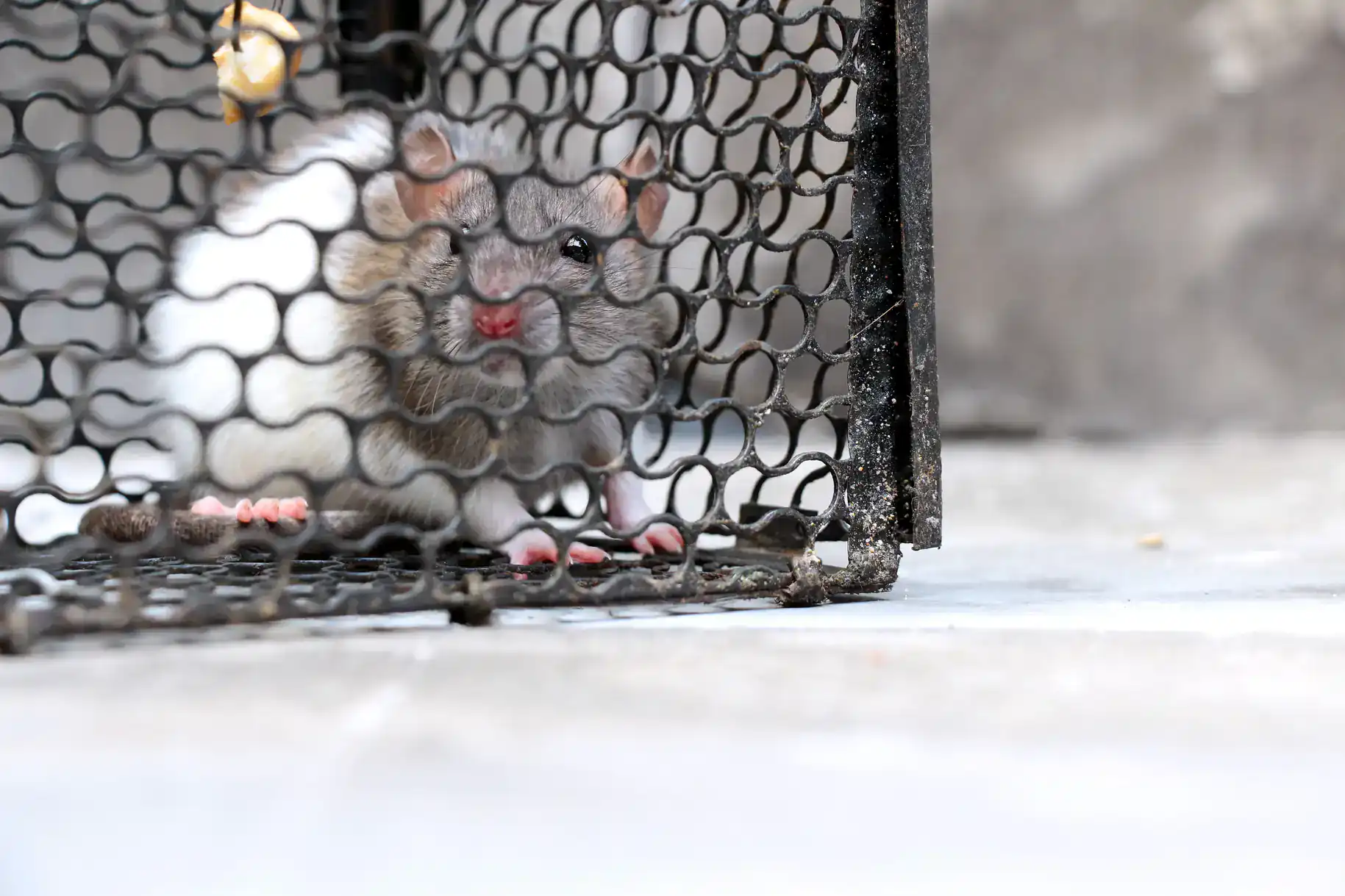
Snap traps, glue boards, and store-bought bait blocks aren’t useless — they’re just incomplete. The reason most DIY rodent control fails isn’t that the products don’t work. It’s that trapping and baiting without exclusion is treating a symptom while leaving the cause wide open. You remove five mice, and five more move in through the same gap by the following week. The infestation feels never-ending because, structurally, it is.
There’s also the question of placement and timing. Rodents are neophobic — they’re cautious around new objects in their environment. A trap placed in the wrong location, or moved too frequently, will be avoided entirely. Bait stations placed without knowledge of the rodent’s travel routes miss the mark. We read the evidence — droppings, gnaw marks, grease trails along baseboards, burrow locations — and place treatments where they’ll actually intercept the population, not where it seems logical to a human observer.
The other thing DIY attempts consistently underestimate is scale. A single female mouse produces five to ten litters per year, with five or six pups per litter. One mouse in October can become a significant infestation by February if the entry points stay open. By the time most people call us, they’ve already spent weeks and real money on products that bought them partial, temporary relief.
If you’ve tried traps and the problem keeps coming back, that’s not a sign that the infestation is unusually bad. It’s a sign that the entry points haven’t been addressed. That’s the conversation worth having with us — not just “how do we remove what’s here” but “how do we make sure nothing new gets in.”
For anyone in the Rat Mitigation Zones the city has designated in parts of Brooklyn and Manhattan, the external rodent pressure is officially documented and ongoing. In those areas especially, DIY control is fighting a losing battle without a structural exclusion component.
If you’ve heard scratching at night, found droppings in your kitchen, or seen a rodent during daylight hours — that last one especially — it’s time to call us. Daytime sightings typically mean the population has grown large enough that competition for space is pushing rodents out during hours they’d normally avoid.
The five tips above will take you a long way toward prevention. But once an infestation is active, professional treatment isn’t optional — it’s the faster, safer, and ultimately cheaper path. The cost of a treated infestation is almost always less than the cost of the property damage, health risk, and failed DIY attempts that accumulate when it’s left to run.
We’ve been handling rodent problems across Brooklyn, Manhattan, and Queens since 1971. We know these neighborhoods, these building types, and what actually works here. Give us a call — we answer 24 hours a day, and we can typically get to you within two days of your first call.
Summary:

Article details:
Share: