Not all roaches are the same — and in New York City, getting the species wrong means the wrong treatment. Here's how to tell them apart before you do anything else.
It’s late. You’re in your kitchen. Something small and fast disappears behind the stove, and your stomach drops. Before you reach for the nearest spray can or start Googling “exterminator near me” in a panic, take a breath — because the next 60 seconds can actually make a real difference in how this gets resolved.
Here’s what most people don’t know: the type of roach you’re dealing with determines everything about how it should be treated. Getting that wrong — whether you’re in a Flatbush apartment, a Williamsburg brownstone, or a Queens row house — means wasted money and a problem that keeps coming back. Let’s start with how to figure out what you’re actually looking at.
New York City is home to four common roach species: the German cockroach, the American cockroach, the Oriental cockroach, and the brown-banded cockroach. Each one behaves differently, lives in different parts of your home, and responds to different treatments. A professional who knows what they’re looking at will treat a German cockroach infestation completely differently from an American cockroach problem — and that distinction is the difference between a resolved issue and a recurring one.
The good news is that you don’t need to be an entomologist to narrow it down. Size, color, and where you spotted it are usually enough to point you in the right direction before you make any calls.
Start with size. This one detail eliminates most of the guesswork immediately.
German cockroaches are small — roughly half an inch long, light brown, with two dark stripes running behind their head. They’re the most common roach found in Brooklyn, Manhattan, and Queens homes and apartments, and they almost always show up in kitchens and bathrooms. If what you saw was small, quick, and disappeared into a cabinet crack or behind the dishwasher, there’s a strong chance it’s a German cockroach.
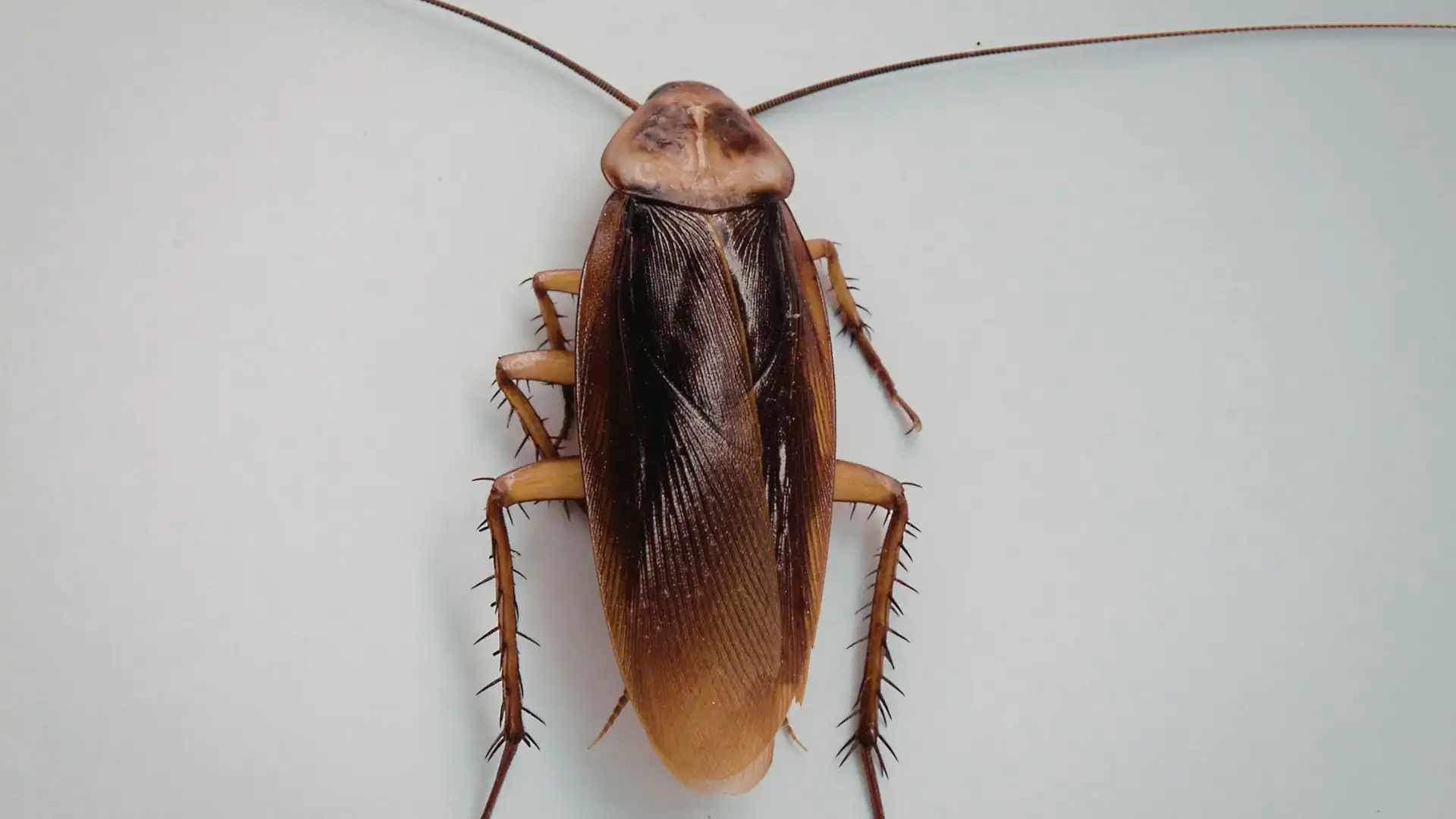
American cockroaches are much larger — anywhere from an inch and a quarter to over two inches. They’re reddish-brown with a yellowish figure-eight pattern on the back of their head. In New York City, people often call these “water bugs,” which leads a lot of folks to treat them as a minor nuisance rather than a real pest problem. They’re not minor. They come up through sewer connections, floor drains, and basement pipe systems — especially in older buildings throughout Brooklyn and Manhattan — and they signal a moisture or entry-point issue that won’t fix itself.
Oriental cockroaches are about an inch long and nearly jet black, with a glossy, almost lacquered look. They move more slowly than German or American roaches and tend to stay in cooler, damp areas — basements, crawl spaces, areas near leaky pipes. They also produce a noticeably strong, unpleasant odor. If you’re in a ground-floor unit or a basement apartment in Queens or Brooklyn and you’re getting a musty, pungent smell you can’t trace, an Oriental cockroach infestation is worth investigating.
Brown-banded cockroaches are smaller and often overlooked because they don’t stick to kitchens. They prefer dry environments and can show up in bedrooms, living rooms, and offices — which surprises a lot of people. Males can fly short distances, which is another distinguishing clue.
Location is the second fast identifier — and in a New York City apartment, it’s especially telling because the building itself shapes where each species lives and travels.
German cockroaches almost never come from outside. They’re an indoor species that thrives in the warmth and humidity of kitchens and bathrooms. If you spotted a small roach near your stove, under the sink, or behind the refrigerator, that’s their territory. They hide in cracks, inside cabinet hinges, behind appliance panels, and near the dishwasher motor — anywhere warm, dark, and close to food or moisture.
American cockroaches typically enter from below. In Brooklyn, Manhattan, and Queens, the sewer system and shared building infrastructure are their highway. They come up through floor drains, gaps around pipe penetrations, and utility chases. Spotting one in a basement, a laundry room, or near a floor drain is a classic American cockroach scenario. Seeing one in a first-floor kitchen in the summer — especially after heavy rain — is also common, because heat and flooding push them upward through the building’s plumbing system.
Oriental cockroaches favor the same damp, below-grade environments. If your building has a history of moisture issues or you’re noticing them near a sump pump or crawl space, that’s the profile.
The reason this matters so much in a multi-unit building — which describes most of Brooklyn, Manhattan, and Queens — is that where you see the roach tells you where the source is. A German cockroach in your kitchen almost certainly has a colony living somewhere in your unit or in the shared wall space between yours and a neighbor’s. An American cockroach coming up through the drain is a building-wide infrastructure issue, not just your problem. Treating only your apartment without understanding the source is why so many people end up calling a second exterminator.
Want live answers?
Connect with a Kingsway Exterminating expert for fast, friendly support.
This is the step almost nobody talks about — and it might be the most important one in a city where most people share walls, pipes, and trash areas with dozens of neighbors.
Roaches don’t respect unit lines. German cockroaches travel through pipe chases, gaps around electrical outlets, and the spaces under doors. If you have an active infestation, there’s a real possibility that adjacent units are involved, even if your neighbors haven’t noticed yet. What you do between spotting the problem and getting us in can either contain it or make it worse.
The first thing to avoid is reaching for a fogger or a broad-spray pesticide. It feels like you’re doing something, but for German cockroaches specifically, it can actually make things worse. Roaches scatter when they detect certain chemicals, which pushes them deeper into wall voids and into neighboring units. Gel bait — the treatment we use for German cockroaches — works by letting roaches carry the bait back to the colony. Disrupting that process with a spray before we arrive can cause what’s called bait aversion, making subsequent treatment harder.
What you can do right now is reduce access to food and moisture. Clear under the sink, seal any open food containers, and don’t leave dishes sitting in water overnight. These aren’t just hygiene tips — they’re about removing the conditions that sustain a colony while you wait for treatment.
If you’re in a Brooklyn brownstone, a pre-war Manhattan apartment, or a Queens multi-family building, it’s also worth noting any gaps around pipes under your sink or behind appliances. These are the travel corridors roaches use between units, and our inspectors will want to know about them. You don’t need to seal them yourself — just make note of where they are so the inspection can start there.
One more thing worth knowing: under New York City’s Housing Maintenance Code, a cockroach infestation is classified as a Class C violation — the most serious category — and landlords are required to respond within 24 hours of a complaint. If you’re a renter, you have legal standing to demand action. Documenting what you’ve seen and when is useful whether you’re dealing with a landlord or filing a 311 complaint.
Here’s the part that most people only learn after a failed first treatment: the method matters as much as the product, and the method depends entirely on the species.
German cockroaches are treated with gel bait and insect growth regulators, applied precisely in harborage areas — the cracks, hinges, and voids where the colony lives. The goal is to get the bait into the colony, not just kill the roaches you can see. A spray treatment applied to a German cockroach problem will kill some individuals on contact but won’t reach the egg cases or the hidden population, which is always larger than what’s visible. Seeing even one roach in daylight is often a sign that the colony is large enough that competition for harborage space is pushing individuals out into the open.
American and Oriental cockroaches require a different approach — one that focuses on identifying and sealing entry points, addressing moisture sources, and treating the below-grade areas where they live and breed. No amount of gel bait in a kitchen cabinet will solve a problem that’s originating in the building’s sewer connection or basement drain system.
This is also why the inspection step matters so much. A thorough inspection — one that identifies the species, locates harborage areas, and traces entry points before anything is applied — is what separates a treatment that works from one that buys you three weeks of relief before the problem comes back. In a city like New York, where buildings are old, dense, and interconnected, that inspection step isn’t optional. It’s the whole game.
It’s also worth mentioning that cockroach allergens — feces and shed body parts — are known triggers for asthma and respiratory illness, particularly in children and the elderly. This isn’t just a nuisance problem. In households with young kids or anyone with respiratory sensitivities, a persistent roach infestation is a genuine health concern that deserves to be treated seriously and thoroughly, not just sprayed at.
If you’ve spotted a roach in your Brooklyn, Manhattan, or Queens kitchen, the honest answer is: now is a good time to call. Not because one roach automatically means a full-blown infestation, but because roaches reproduce fast, they’re rarely traveling alone, and the earlier we get eyes on the situation, the simpler the solution tends to be.
The three tips above — identifying by size and color, reading the location clue, and avoiding actions that scatter the problem before treatment — give you a real head start. But they’re a first step, not a substitute for an inspection by someone who knows what they’re looking at.
We’ve been doing exactly this kind of work in Brooklyn, Manhattan, and Queens since 1976. If you’re ready to find out what you’re actually dealing with and get it handled the right way, give us a call.
Summary:

Article details:
Share: