
Hear from Our Customers
You sleep without checking the sheets first. You stop bagging your clothes before sitting on the couch. You stop wondering if the bite on your arm is from last night or last week. That’s what a resolved bed bug problem actually feels like — and it’s the only outcome worth talking about.
Brooklyn Heights creates specific conditions that make bed bugs harder to eliminate than in most places. About 40% of the housing stock here was built before 1940. That means settled plaster walls, original hardwood floors with gaps between the planks, crown moldings with cavities behind them, and vertical plumbing chases running through multiple floors of pre-war construction. These aren’t just old buildings — they’re buildings with decades of accumulated harborage that bed bugs exploit.
A treatment approach that works in a newer building won’t cut it in Brooklyn Heights. The same goes for the multi-unit reality of this neighborhood. With 64% of Brooklyn Heights units renter-occupied and most residents living in co-ops, converted brownstones, or prewar apartment buildings, bed bugs don’t stay in one apartment. They move through shared walls, elevator lobbies, and the building infrastructure that connects your unit to your neighbors’. Getting rid of them means understanding how the building works — not just treating the room where you found them.
We’ve been treating bed bug infestations across Brooklyn for over 50 years, operating out of Flatbush Avenue — a few miles from the brownstones and co-ops along Montague Street and the fruit streets of Brooklyn Heights. That’s not a marketing number. It means our technicians have been inside these buildings long enough to know exactly where bed bugs hide in pre-war construction, how they move through shared walls, and what it takes to eliminate them in a building with a co-op board watching.
Every technician on our team is NYS DEC-certified and uses only DEC-registered materials. We’ve held an A+ rating with the Better Business Bureau for over 35 years — independently verifiable, not self-assigned. When you need documentation for your co-op board or your property manager, we produce it. When you need HPD violation compliance paperwork, we handle that too.
This isn’t a national franchise dispatching someone from a call center. We’re a Brooklyn company that has been doing this work in Brooklyn Heights buildings for five decades, and the difference shows in how we approach the job.
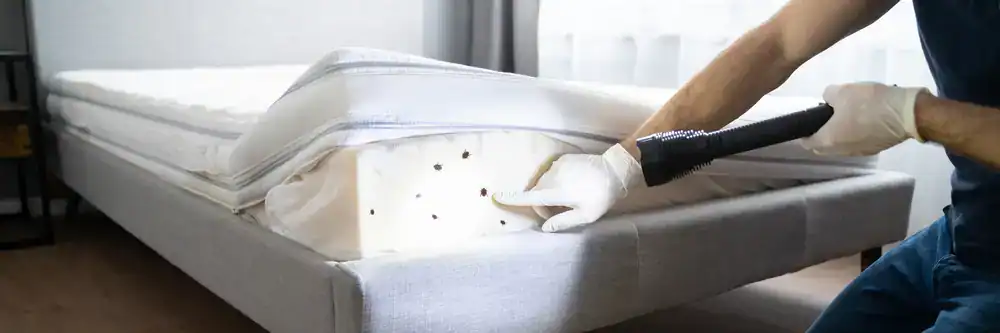
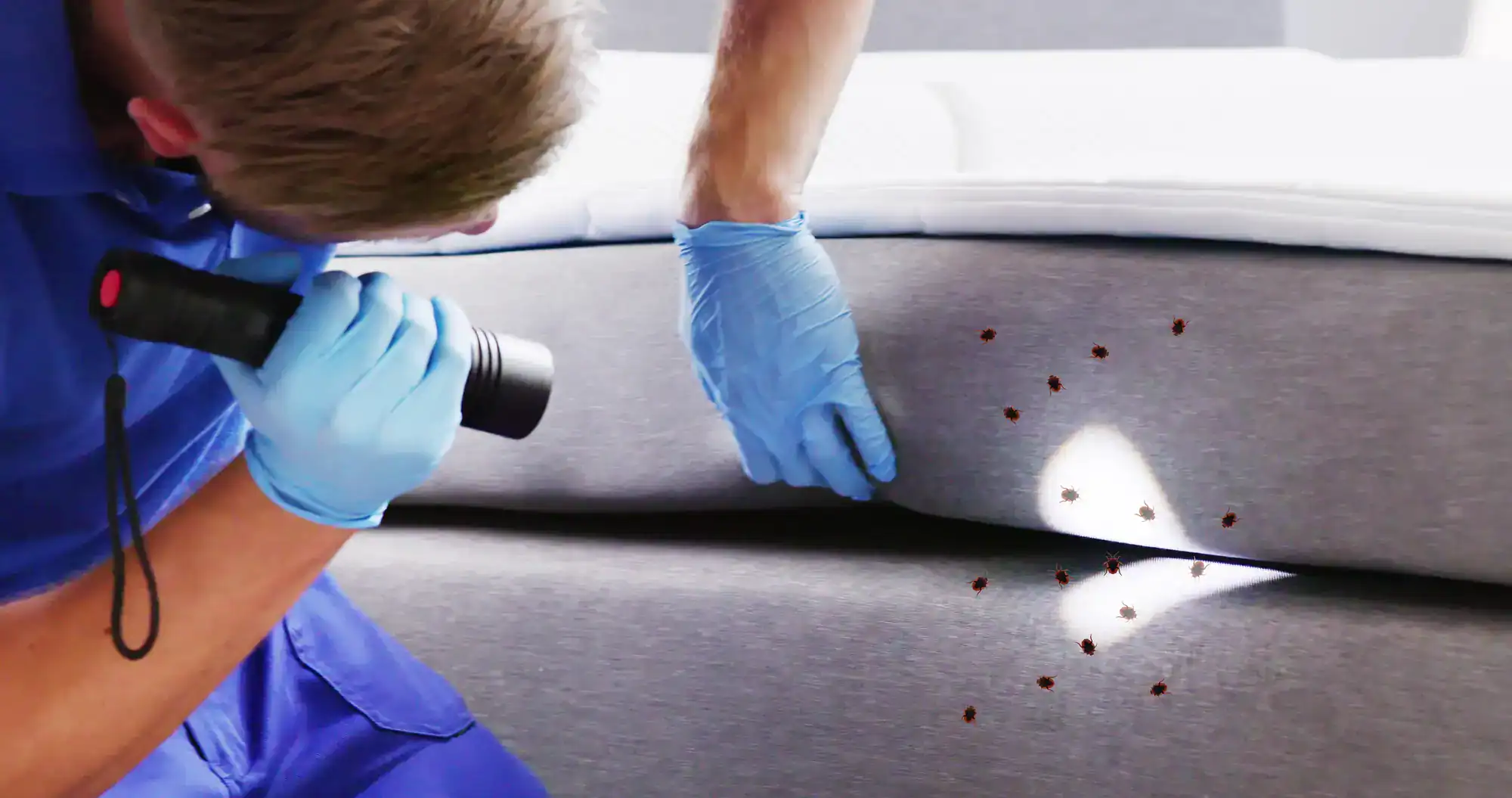
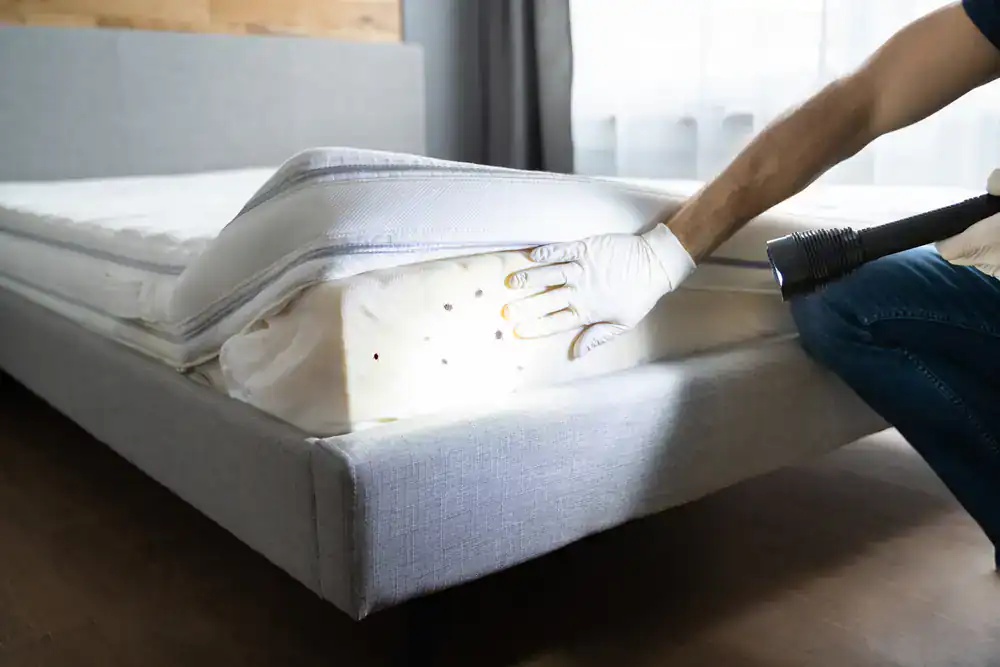
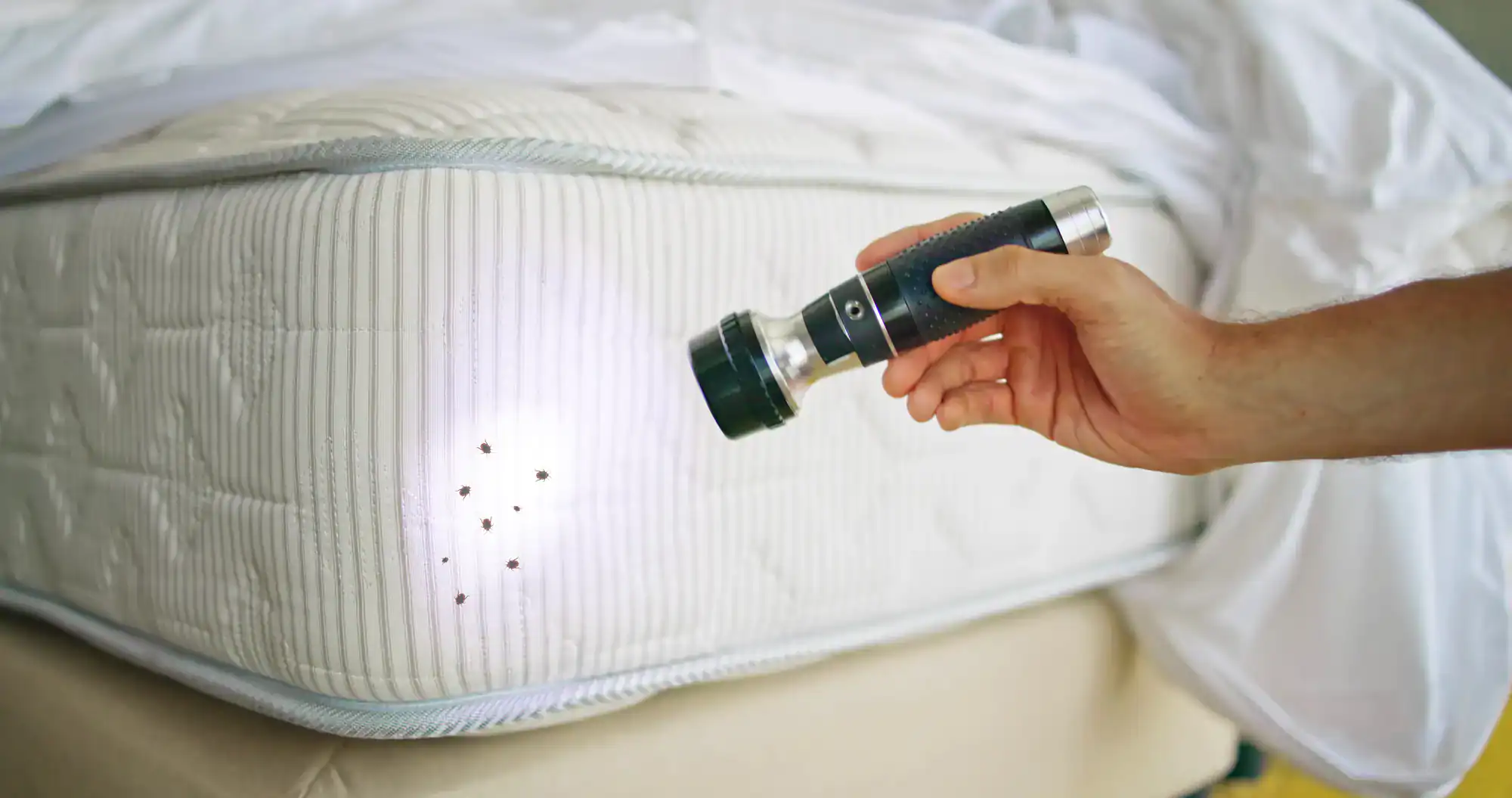
It starts with a thorough inspection before anything else. A certified technician walks through your unit and looks at the places bed bugs actually hide — not just the mattress, but the baseboards, outlet covers, furniture joints, behind picture frames, and inside wall voids. In Brooklyn Heights pre-war buildings, that inspection includes the areas where settled plaster and original millwork create gaps that newer construction simply doesn’t have. You’ll know exactly what was found and where before any treatment decision is made.
From there, you get a written treatment plan. This matters in Brooklyn Heights specifically because co-op boards and property managers routinely require written documentation before allowing treatment to proceed, and because HPD compliance requires a paper trail if a violation has been issued. The plan outlines what method we’ll use, how many visits are involved, and what you’ll need to do to prepare.
For most chemical treatments, you’re looking at two to four visits spaced over three to six weeks. That timeline exists because bed bug eggs are resistant to most pesticides — follow-up visits catch what hatches after the first treatment. We tell you this upfront because you deserve an honest picture of what resolution actually takes, not a promise that one visit fixes everything. If your building situation requires adjacent unit inspection or coordination with your managing agent, we walk you through that process too.
Ready to get started?
Bed bug treatment in Brooklyn Heights means accounting for things that don’t come up in most other neighborhoods. The Historic District designation protects exterior facades, which affects how some preventive sealing work gets approached on landmark-protected buildings. The high concentration of co-ops means your treatment documentation needs to satisfy not just you, but your board and your managing agent. And the density of pre-war construction means the inspection has to go deeper than a standard walkthrough.
We use NYS DEC-registered materials applied by certified technicians. Our approach combines targeted chemical treatment with a structured multi-visit protocol designed to address both live bugs and eggs — because a single visit almost never resolves an infestation completely, and any company telling you otherwise isn’t being straight with you. Heat treatment options are also available depending on your unit’s situation, and your technician will give you an honest recommendation based on what they actually find.
For renters in Brooklyn Heights — and that’s the majority of residents here — we also help you understand where your landlord’s legal obligations begin. Under NYC housing law, property owners are responsible for addressing bed bug infestations, and HPD bed bug violations carry a 30-day correction window. If you’re in a rental and your landlord is slow to act, the documentation we provide puts you in a significantly stronger position.
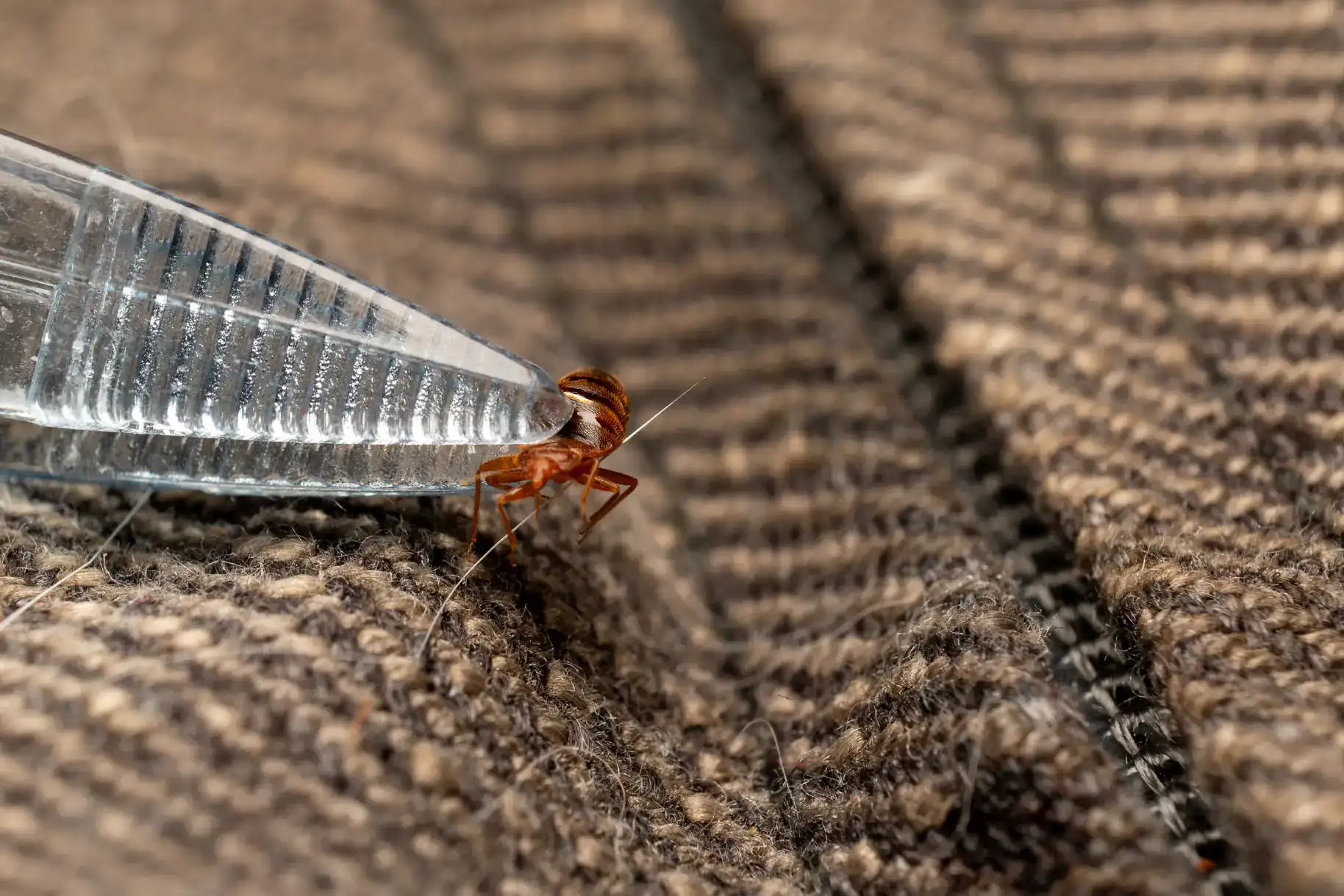
In a typical Brooklyn Heights pre-war building, bed bugs have more ways to travel between units than most residents realize. They move through wall voids, electrical conduits, plumbing chases, and gaps in baseboards — all of which are more common and more accessible in buildings constructed before modern building codes tightened the envelope. A bed bug doesn’t need much space to move through; a gap the width of a credit card is enough.
This is why treating only your unit often isn’t enough in a multi-unit Brooklyn Heights building. If adjacent units haven’t been inspected, the infestation can reintroduce itself within weeks of treatment. A proper bed bug inspection in Brooklyn Heights accounts for the building’s construction, not just the apartment where the bugs were first noticed. When adjacent unit coordination is needed, we can help facilitate that conversation with your property manager or co-op board.
Under New York City housing law, the responsibility for addressing bed bug infestations in rental units falls on the property owner. Bed bugs are classified as a Class B violation under the NYC Housing Maintenance Code, which means once a complaint is filed and an HPD inspector confirms the infestation, the landlord has 30 days to correct the condition. That correction has to be performed by a licensed, certified exterminator — not a handyman or an unlicensed spray-and-go service.
With 64% of Brooklyn Heights housing units renter-occupied, this comes up constantly. If your landlord is dragging their feet, having documented evidence of the infestation — and documented treatment by a NYS DEC-certified company — puts you in a much stronger position. We provide written treatment plans and HPD compliance documentation that you can present directly to your landlord, your property manager, or HPD if it comes to that. You don’t have to navigate that process alone.
New York City bed bug populations have developed significant resistance to the class of insecticides most commonly found in over-the-counter sprays — pyrethroids. These are the active ingredients in most hardware store products, and NYC bed bugs have been exposed to them long enough to build resistance. Using them doesn’t eliminate the infestation; in some cases it disperses the bugs further into the building.
This isn’t unique to Brooklyn Heights, but it’s especially relevant here given the density of the housing stock and how easily bed bugs can spread through a pre-war multi-unit building once they’ve been disturbed. Professional-grade treatment uses a combination of chemical classes and application methods that OTC products simply can’t replicate. If you’ve already tried a store-bought spray and the problem persists, the infestation likely needs a structured multi-visit protocol with DEC-registered materials — not another attempt with a product that isn’t working.
Most co-op boards in Brooklyn Heights require written documentation confirming that treatment was performed by a licensed, NYS DEC-certified exterminator. This typically includes a written treatment plan outlining what was found, what method was used, and how many visits are scheduled. Some boards also require proof that adjacent units were inspected, particularly in older buildings where shared infrastructure makes spread between units a realistic concern.
Beyond the board itself, NYC Local Law 69 of 2017 requires residential property owners to file an annual bedbug infestation history report with HPD — which means your building’s managing agent needs accurate records of any treatment that occurred. If you’re a co-op shareholder dealing with an infestation in Brooklyn Heights, we provide written treatment plans and compliance documentation designed to satisfy these requirements. Getting the paperwork right matters as much as getting the treatment right in a neighborhood where building governance is this active.
For chemical treatment, most infestations require two to four visits spaced over three to six weeks. The reason is straightforward: bed bug eggs are resistant to most pesticides. The first treatment eliminates live bugs, but eggs that were present will hatch in the weeks that follow. Follow-up visits address that second generation before it can reproduce and re-establish the infestation. Skipping follow-up visits is one of the most common reasons people think treatment failed when it actually just wasn’t finished.
Heat treatment, where the entire space is brought to a temperature that kills bugs and eggs simultaneously, can resolve an infestation in a single visit — but it’s not always the right approach for every unit or building type, and your technician will give you an honest recommendation based on what they find during the inspection. In Brooklyn Heights pre-war buildings specifically, the construction characteristics can affect how heat distributes through a space, which is one of the factors that gets evaluated before a method is recommended.
It depends on the treatment method. For chemical treatments, you’ll typically need to vacate the treated space for a few hours after application — your technician will give you a specific window based on the products used and the size of the space. Once that period has passed and the area has been ventilated, it’s safe to return. You’ll receive clear instructions before the treatment begins so you’re not guessing.
For heat treatment, the process requires the space to reach and hold temperatures that are not compatible with occupancy, so you’ll need to be out for the duration of the treatment session. In Brooklyn Heights, where many residents live in co-ops or apartments with shared HVAC systems, your technician will also walk you through any building-specific considerations before the job starts. The preparation steps — bagging clothing, laundering bedding, clearing furniture away from walls — are straightforward, and we walk you through exactly what’s needed so the treatment has the best possible chance of working the first time through.
Useful Links
Other Services we provide in Brooklyn Heights