Hear from Our Customers
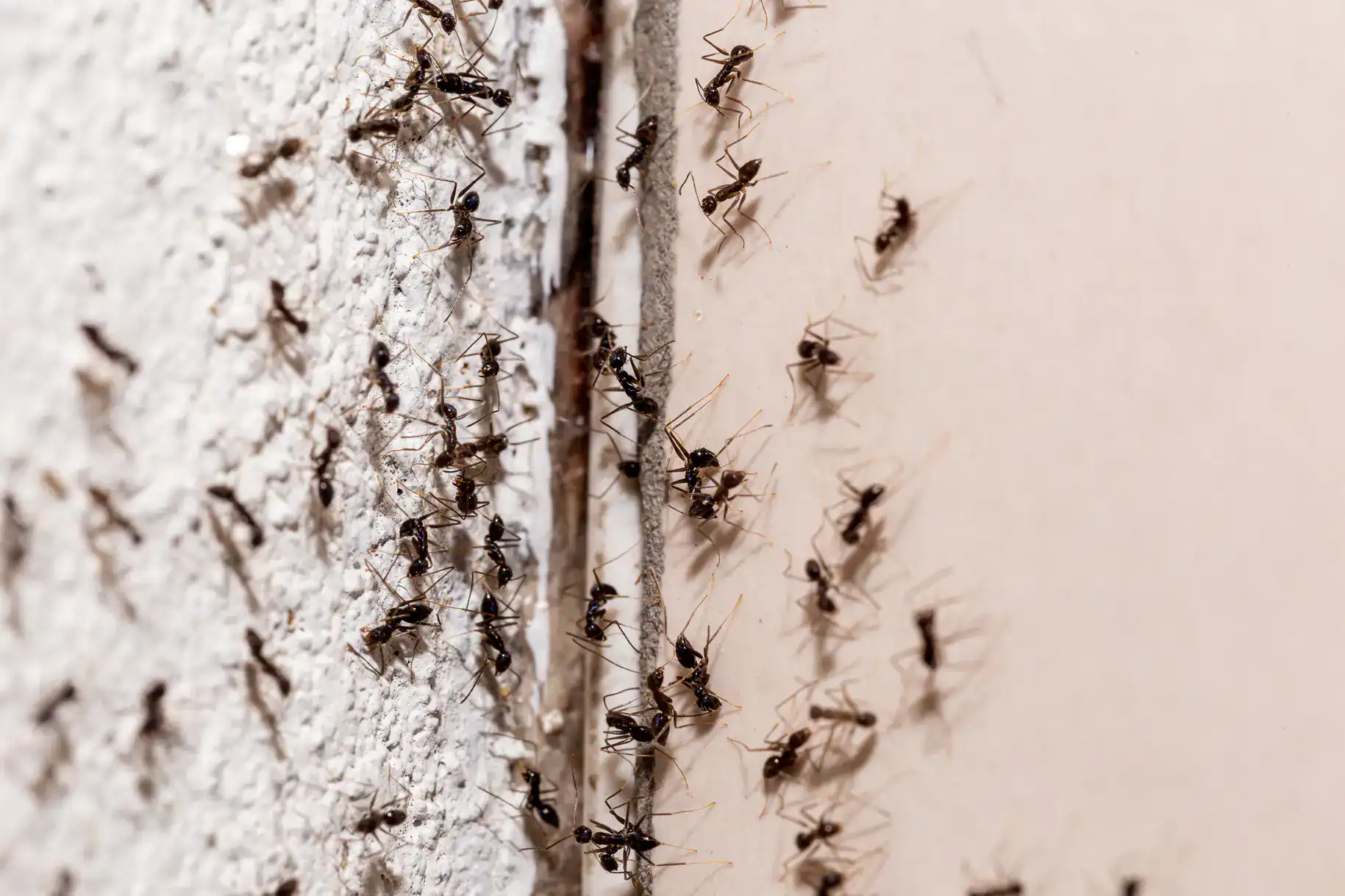
The ants you see on your counter are not the problem. They’re scouts — roughly ten percent of a colony that could number in the thousands, living inside your walls, under your foundation, or in wood framing that’s been in place since the 1870s. Killing the visible ants without reaching the colony just triggers the colony to send more. That’s why the same ants keep showing up two weeks after you treat.
In Brooklyn Heights, this plays out differently than it does in most other neighborhoods. The row house blocks here share party walls from one end to the other. A carpenter ant colony established in the wall between two attached brownstones has lateral access to every unit on that block — through shared framing, plumbing chases, and foundation connections that have been in place for generations. Treating your unit alone doesn’t close that door.
The East River proximity makes it worse. The bluff that Brooklyn Heights sits on, with the BQE running beneath the Promenade and Brooklyn Bridge Park’s landscaping along the western waterfront, keeps ambient moisture levels elevated throughout the neighborhood. Carpenter ants don’t just eat wood — they seek out wood that’s already been softened by moisture. Aging plumbing, condensation on cold water lines, and the general moisture retention of 150-year-old masonry give them exactly what they’re looking for.
When we eliminate the colony and identify the moisture source, the infestation stops cycling back. That’s the outcome worth paying for.
We’ve been operating out of Brooklyn since the mid-1980s — long before most of the current residents of Brooklyn Heights moved in. We’re family-owned and operated, founded by Richard Kourbage, who remains president today. That kind of continuity is rare in this industry, and it means something: when your name is on the company, every job reflects on you personally.
We hold a BBB A+ rating, accredited since May 5, 1989. We’re fully licensed, bonded, and insured, and every product we apply is registered with the New York State Department of Environmental Conservation. That last point matters in a neighborhood like Brooklyn Heights, where residents are informed, ask the right questions, and expect straight answers about what’s being applied in their homes.
From the brownstones along Willow Street to the pre-war co-ops near Montague Street, we’ve spent decades learning the specific pest challenges that come with Brooklyn Heights’ older building stock. This isn’t a national franchise routing your call through a regional center. We’re a Brooklyn company that knows these buildings.
Every job starts with a free estimate and a full property inspection — not a quick look around, but a real assessment of what species is present, where the colony is located, and what conditions in the building are sustaining it. In Brooklyn Heights, that inspection often turns up things that a surface-level treatment would completely miss: moisture behind original plaster walls, aging pipe connections creating damp conditions in wall voids, or carpenter ant activity in wood framing that’s been slowly compromised over decades.
Once the inspection is done, we match the treatment approach to what was actually found. A carpenter ant colony in aging brownstone framing requires a completely different protocol than a pavement ant problem under a stoop foundation or a pharaoh ant infestation traveling through the plumbing conduits of a pre-war co-op. Applying the wrong treatment to the wrong species doesn’t just fail — with some species like pharaoh ants, it can scatter the colony and make the infestation significantly harder to resolve. Species identification isn’t a formality. It’s the whole job.
After treatment, our technician walks you through what was applied, where, and why — and what conditions to watch for going forward. If you’re in a co-op or working with a property manager, we provide treatment documentation that supports building records and NYC housing code compliance. Brooklyn Heights landlords are legally required to maintain pest-free conditions under the city’s housing code, and that documentation matters when a board or a tenant needs it.
Ready to get started?
We handle the full range of ant species that show up in Brooklyn Heights properties: carpenter ants, pavement ants, odorous house ants, pharaoh ants, fire ants, and the smaller species that tend to appear in kitchens and bathrooms year-round. Each one gets a different response, because each one has a different biology and a different reason for being in your building.
Carpenter ants warrant the most attention in this neighborhood. Brooklyn Heights’ historic district designation means exterior structural modifications — including replacing deteriorating wood that’s become a carpenter ant entry point — require Landmarks Preservation Commission review. You can’t just gut and replace your way out of the problem. The colony has to be eliminated from within, which is exactly why the inspection-first approach matters here more than anywhere else.
Faint rustling or crackling inside walls at night, soft or hollow-sounding wood when tapped, and winged ants emerging near windows in early spring are all signs that a colony has been working inside the structure for some time.
For multi-unit buildings — and roughly sixty percent of Brooklyn Heights properties are apartments — we’re experienced in coordinating with property managers and co-op boards when treatment needs to address shared building systems or multiple units. We serve both residential and commercial properties, and commercial clients receive treatment documentation that supports NYC Department of Health compliance. If you’re a business owner on Hicks Street or a property manager overseeing a building near Pierrepont Street, that paperwork is part of what you’re getting.
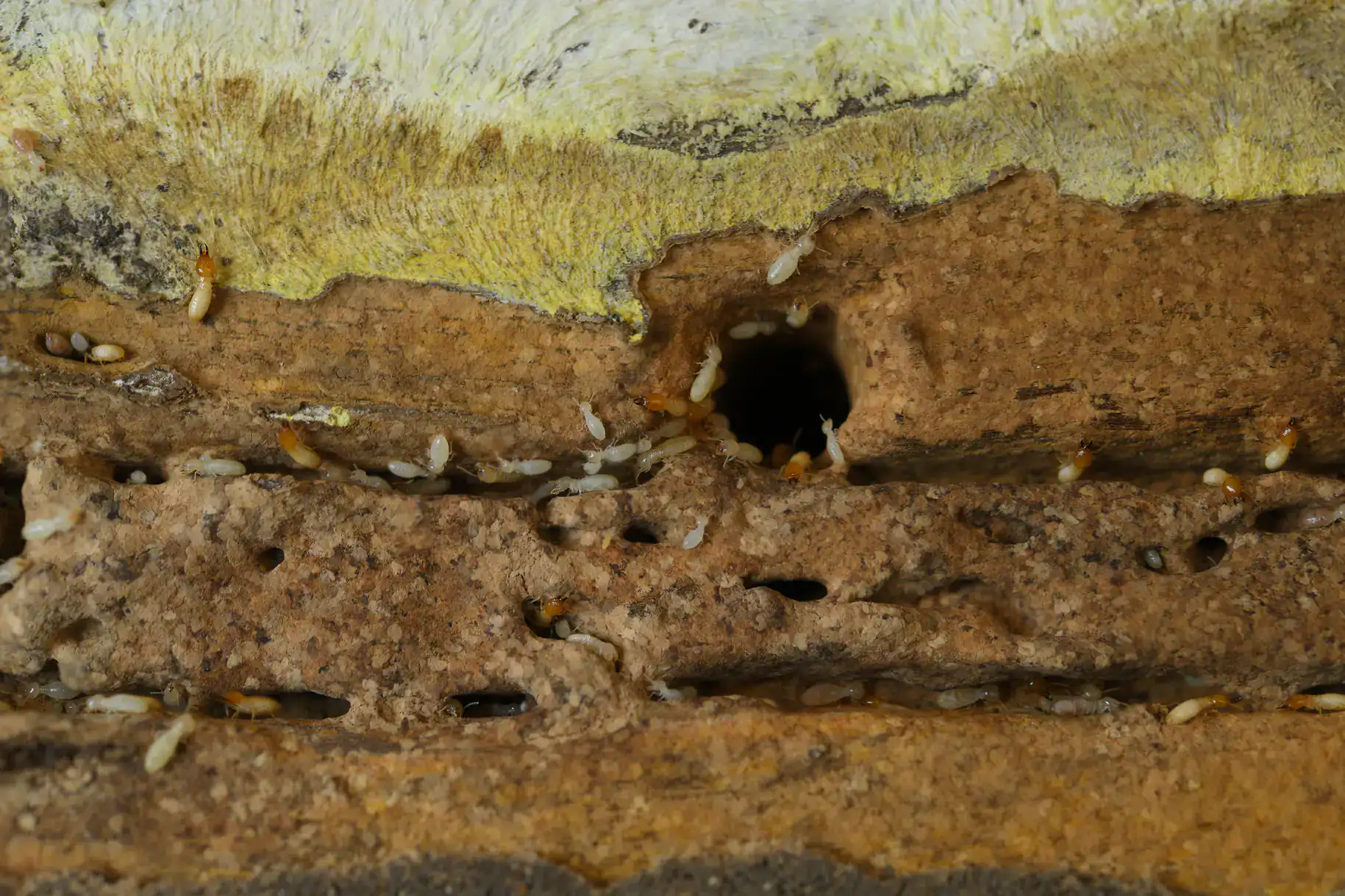
The most common reason is that the treatment addressed the forager ants — the ones you can see — without reaching the colony itself. In a Brooklyn Heights brownstone, the colony is often established deep inside wall voids or aging wood framing, sometimes in areas that have been moisture-compromised for years without any visible sign of damage. Killing the workers that emerge to forage doesn’t affect the queen or the colony structure. Within days, the colony sends replacements.
The other factor specific to Brooklyn Heights is the shared-wall architecture. The row houses here share party walls across entire blocks. If the colony is established in the structural wood between your unit and your neighbor’s, treating your side of the wall alone doesn’t eliminate the source. A thorough inspection that locates where the colony is actually living — not just where the ants are appearing — is what determines whether the problem gets resolved or just temporarily suppressed.
In most cases, yes — but our technician will give you specific guidance based on what products are being applied and where. Every product we use is registered with the New York State Department of Environmental Conservation and applied in controlled quantities at targeted locations, not broadcast-sprayed throughout the living space. That distinction matters, especially in Brooklyn Heights apartments where families with children and pets are living in close quarters.
If you have specific concerns about a particular product or application method — which is a completely reasonable question — raise it before the treatment begins. Our technician can walk you through exactly what’s being applied, where it’s going, and what the re-entry time looks like. The goal is always to apply the minimum effective amount in the right location, not to saturate the space. For most standard ant treatments in residential settings, normal activity can resume within a short window after application is complete.
Size is the first indicator — carpenter ants are significantly larger than pavement ants or odorous house ants, typically a half-inch or more in length, and they’re usually black or dark reddish-brown. But the more telling signs are behavioral and structural. If you’re hearing a faint rustling or crackling sound inside your walls at night, that’s often carpenter ants moving through galleries they’ve excavated in the wood. Soft or hollow-sounding wood when you tap on it — particularly around window frames, door frames, or areas near plumbing — can indicate that the wood has been damaged from the inside.
In Brooklyn Heights specifically, the spring emergence of winged ants near windows or light sources is a significant warning sign. Winged carpenter ants — called swarmers — emerge from established colonies when the colony is mature and looking to expand. If you’re seeing swarmers inside your home in early spring, the colony has likely been developing inside the building’s structure through the winter. That’s not a new infestation you caught early — it’s an established one that’s been there longer than you realize.
Under New York City’s housing code, landlords are legally required to maintain pest-free conditions. An ant infestation is considered a violation of the warranty of habitability, which means your landlord has a legal obligation to address it — not just acknowledge it. If your landlord is unresponsive, you have the right to file a complaint with the NYC Department of Housing Preservation and Development, which can issue violations and compel the landlord to act.
As a tenant, you also have the option to hire a pest control provider directly and document the infestation and treatment for your records. We’re experienced in working with both tenants and property managers in Brooklyn Heights’ co-op and rental buildings, and can provide treatment documentation that supports any formal complaint or housing court proceeding. If the infestation is coming from a shared wall or a neighboring unit — which is common in Brooklyn Heights’ attached row houses — that documentation becomes especially important in establishing that the source of the problem is structural, not something confined to your unit.
The honest answer is: whenever you see them. But understanding the seasonal pattern helps you know what you’re likely dealing with. In Brooklyn Heights, carpenter ant swarmers typically emerge in early spring — late March through May — when overwintering colonies that have been living inside building structures become active again. Seeing winged ants near windows in spring is one of the most reliable signs that a colony has been established inside the building through the winter.
Summer brings peak foraging activity across all ant species, and Brooklyn Heights’ proximity to the East River and Brooklyn Bridge Park’s landscaping keeps moisture levels and organic material available along the neighborhood’s western blocks, which sustains ant pressure through the warmer months. Fall is actually an important treatment window for carpenter ants specifically — treating a colony in the fall, before it goes dormant for the winter, disrupts it before it can expand in the following spring. Year-round, pharaoh ants in the heated multi-unit buildings common throughout Brooklyn Heights remain active regardless of outdoor temperature, traveling through plumbing and electrical conduits across floors.
The treatment methodology is similar — inspection first, species identification, colony-source targeting — but the logistics and coordination are meaningfully different. In a single-family brownstone, the decision-making is straightforward: you authorize the work and it gets done. In a co-op, individual shareholders often can’t authorize building-wide treatment without board approval, which means that even when the infestation source is clearly in a shared wall or a common building system, addressing it properly requires getting the property manager or board involved.
We’re familiar with this dynamic and can work directly with building management when the scope of treatment needs to extend beyond a single unit. For co-op and condo buildings in Brooklyn Heights — where roughly sixty percent of properties are apartments — we provide treatment documentation that supports building governance records and NYC housing code compliance. That documentation isn’t just paperwork; it’s what allows a co-op board to demonstrate due diligence if a violation is filed, and it’s what gives individual shareholders a clear record of what was done, when, and where. If your building has a property manager overseeing multiple units, we can coordinate directly with them so the treatment addresses the actual source of the problem rather than just the unit where ants are visible.
Useful Links