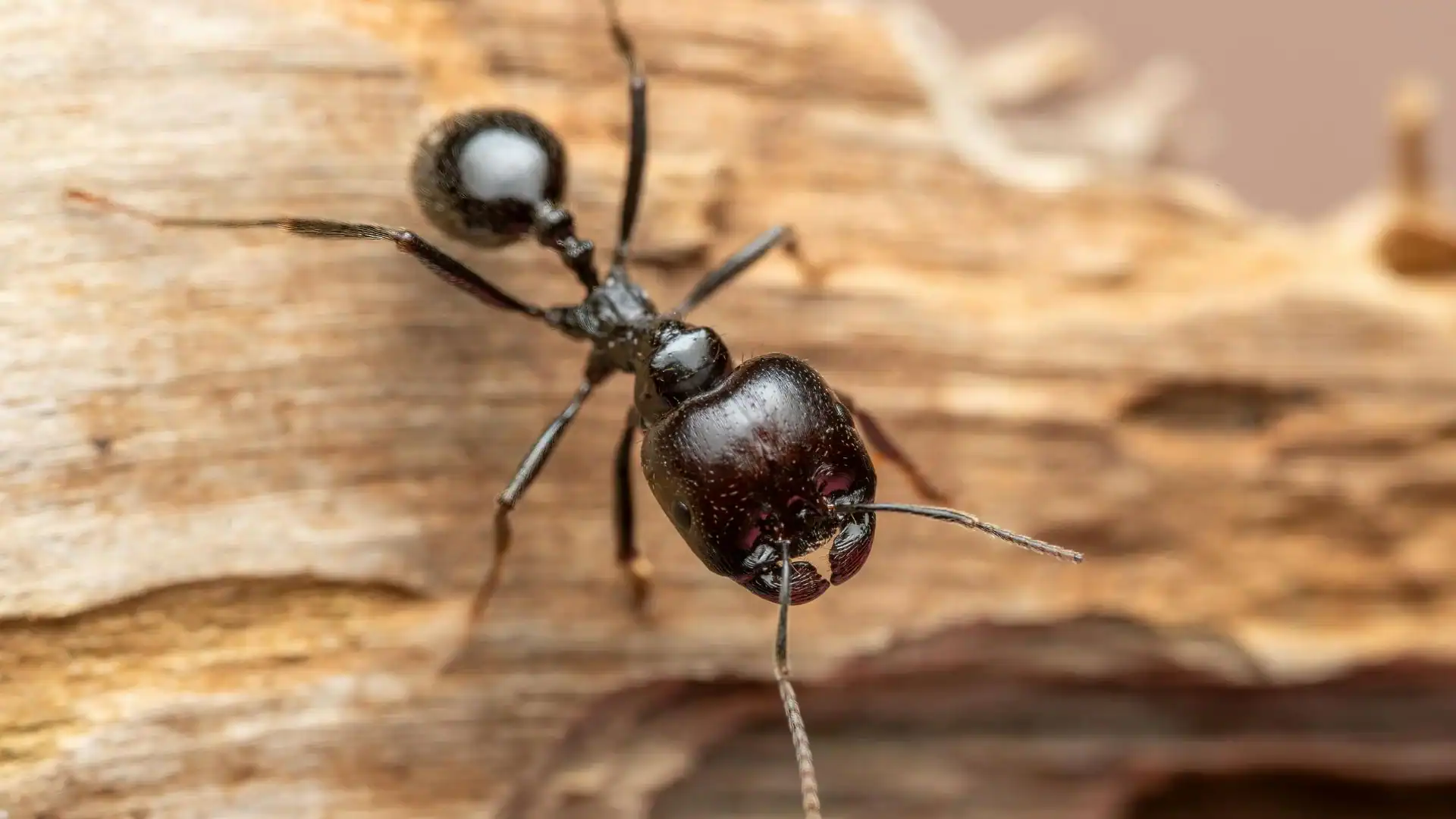
Termites cause billions in damage every year — and NYC homes are more vulnerable than most people realize. Here's what you need to know.

Most New Yorkers don’t think of termites as their problem. That’s a Southern thing, right? The reality is that the USDA classifies all five NYC boroughs in a moderate-to-heavy termite infestation probability zone — the same tier as many states in the Deep South. Orkin’s 2025 data named New York one of the most termite-infested states in the country. And the structural conditions that make Brooklyn brownstones, Queens row houses, and Manhattan pre-war buildings so architecturally rich are exactly the conditions termites are built to exploit. Here’s what’s actually happening — and what it means for your home.
A few things are happening at once. Warmer winters across the New York metro area are extending the window during which termites stay active — meaning the annual damage cycle is longer than it was even a decade ago. At the same time, NYC’s housing stock is aging, and the older a building is, the more entry points it tends to have.
Termite colonies take five or more years to grow large enough to cause visible damage. That means by the time you notice something wrong — a soft floor joist, mud tubes along a basement wall, a cluster of wings near a window sill — the colony has likely been active for years. The problem isn’t new. You’re just now seeing it.
Walk down almost any block in Park Slope, Brooklyn Heights, Crown Heights, or Bed-Stuy and you’re looking at buildings constructed between 1880 and 1930. That original lumber — the sill plates, floor joists, and basement framing — was never treated with modern termiticides. In many cases, it’s in direct contact with soil. That’s not a minor risk factor. That’s an open invitation.
Eastern Subterranean Termites, which are the dominant species across Brooklyn, Manhattan, and Queens, live underground and forage upward through soil into wood. They don’t need a large gap to get in — a crack as narrow as 1/32 of an inch is enough. Expansion joints, plumbing penetrations, and the edges of concrete slabs are all common entry points. The idea that a concrete foundation makes you safe is one of the most expensive misconceptions we encounter.
There’s also the shared-wall reality that’s unique to urban row house living. In Flatbush, Canarsie, Bay Ridge, and Sheepshead Bay, termite colonies can move laterally through shared soil zones beneath adjacent foundations. Your neighbor’s infestation doesn’t stay your neighbor’s problem for long. We’ve seen this play out across entire blocks, where one untreated property becomes the source colony for several surrounding homes.
Moisture compounds everything. Aging plumbing in pre-war construction creates slow leaks inside wall cavities and subfloor spaces that go undetected for years. Subterranean termites are drawn to moisture the way most pests are drawn to food — it’s a primary driver of where they establish and expand. Add in the dense urban tree canopy, mulch beds along brownstone stoops, and wood fencing near soil, and you have a set of conditions that termites are very well suited to exploit.
The most visible moment in the termite calendar is swarming season, which runs from late March through June across Brooklyn, Queens, and Manhattan. When temperatures climb above 60°F — usually after a warm rain — winged reproductive termites emerge from established colonies to mate and start new ones. You’ll often find them near windows, along baseboards, or clustered around light sources. They shed their wings quickly, so a pile of small, uniform wings near a window sill is one of the most common early signs people notice.
The problem is that termite swarmers are routinely mistaken for flying ants. The difference matters: termites have straight antennae, a uniform body width, and wings of equal length. Flying ants have elbowed antennae, a pinched waist, and unequal wings. If you’re not sure what you’re looking at, don’t guess — have someone come take a look. Waiting a few weeks to figure it out on your own can mean weeks of additional feeding inside your structure.
What most people don’t realize is that swarming is just the visible part. The colony doing the actual damage isn’t the swarmers — it’s the workers, feeding underground and inside your wood 24 hours a day. In Queens neighborhoods like Ozone Park, Howard Beach, and South Ozone Park, where properties sit near Jamaica Bay and soil moisture levels are naturally elevated, those colonies can grow and spread faster than in drier parts of the borough.
Inside heated structures, termites don’t slow down in winter. If a colony has established itself within your walls or beneath your floors, the cold months outside are irrelevant to them. That’s why annual inspections matter — not just a call in April when you spot swarmers, but a consistent habit of checking what’s happening inside the structure before visible damage forces the issue.
Want live answers?
Connect with a Kingsway Exterminating expert for fast, friendly support.
The first step is always a proper inspection — not a quick walkthrough, but a thorough assessment of the foundation, basement, crawl spaces, plumbing penetrations, and any wood-to-soil contact points. Species identification matters because subterranean and drywood termites require different treatment approaches. Treating for the wrong one, or treating without identifying the scope of the problem, is how infestations persist.
We offer treatment options including liquid soil barriers, termite baiting systems, and borate wood treatments, each suited to different property types and infestation levels. Baiting is the most advanced approach for subterranean termites — it targets the entire colony, including the queen, rather than just creating a perimeter barrier. For properties where soil treatment is difficult or limited, it’s often the most effective long-term solution.
A professional termite inspection looks at every area where wood contacts or comes close to soil, where moisture is present, and where structural wood is accessible. That includes the basement framing, sill plates, floor joists, wall voids near plumbing, and any exterior wood elements. A thorough inspection produces a Wood Destroying Insect (WDI) report — a formal document that identifies evidence of active infestation, previous damage, or conditions conducive to infestation.
In Brooklyn, Manhattan, and Queens real estate markets, WDI reports are commonly required or requested during property transactions. If you’re buying a brownstone in Carroll Gardens, a semi-detached home in Forest Hills, or a pre-war co-op in Harlem, a termite inspection isn’t just a good idea — it’s often a condition of the deal. Real estate attorneys and brokers across these boroughs routinely recommend professional pest inspections before closing, and we’ve been a trusted resource for that community since 1971.
What people sometimes don’t account for is the financial exposure if they skip this step. Standard homeowner’s insurance policies do not cover termite damage — it’s treated as a preventable maintenance issue, not an unforeseen event. The average homeowner who discovers termite damage after the fact spends around $3,000 just on repairs, separate from the cost of treatment. On an $800,000 Brooklyn brownstone, that’s a manageable number — but only if you catch it early. Let it go several more years and you’re looking at structural repairs that can run well into five figures.
For sellers, a clean inspection report is a selling point. For buyers, it’s protection. Either way, it’s a straightforward step that most people only wish they’d taken sooner.
This comes up a lot. Hardware stores sell termite treatments, and it’s understandable to want to try something before spending money on a professional. The honest answer is that over-the-counter products can kill termites on contact — but they don’t reach the colony. Subterranean termites live underground, sometimes several feet below the surface, and forage through tunnels that surface treatments never touch. You might slow things down temporarily, but the colony continues.
In New York, termite treatment carries a specific licensing requirement that most people aren’t aware of. The New York State Department of Environmental Conservation maintains a dedicated certification category — Category 7C — specifically for termite control. This is separate from a general pest control license. Not every exterminator you call is qualified to legally perform termite treatment in this state. When you’re vetting a company, it’s worth asking directly whether they hold this certification.
Beyond licensing, the treatment method itself needs to match the property. A Manhattan townhouse with a full basement, original 1910 framing, and aging cast-iron plumbing is a different situation than a 1950s wood-frame home in Jamaica, Queens with a concrete slab and a finished basement. Liquid barrier applications, bait station programs, and borate treatments each have appropriate use cases — and applying the wrong one, or underapplying the right one, is a common reason infestations persist after treatment.
We apply only N.Y.S. DEC registered materials, which means every product used in your home meets New York’s regulatory standards for safety and effectiveness. That matters if you have children, pets, or any concerns about chemical exposure — and it’s a question worth asking any company you’re considering hiring.
If you’ve spotted swarmers, noticed mud tubes along a foundation wall, found soft or hollow-sounding wood, or simply haven’t had an inspection in a few years — that’s reason enough to make the call. Termites don’t resolve on their own. Colonies grow, damage compounds, and the window for a straightforward treatment gets narrower the longer the problem sits.
The same applies if you’re in the middle of a real estate transaction, managing a rental property, or dealing with a health code situation that requires documentation. A professional inspection gives you a clear picture of what’s actually happening — not a guess, not a worst-case assumption, just an honest assessment.
Kingsway Exterminating Company has been serving Brooklyn, Manhattan, and Queens since 1971. If you have questions or want to schedule an inspection, we’re available by phone 24 hours a day, seven days a week — and we can typically get someone out to you within 48 hours, often sooner.
Summary:
Article details:
Share: