If your backyard has become a no-go zone from June through September, you're not alone — and citronella candles aren't the answer.
You spent good money on that patio furniture. You planned the cookout. And then, the moment the sun started to set, everyone moved inside. Sound familiar?
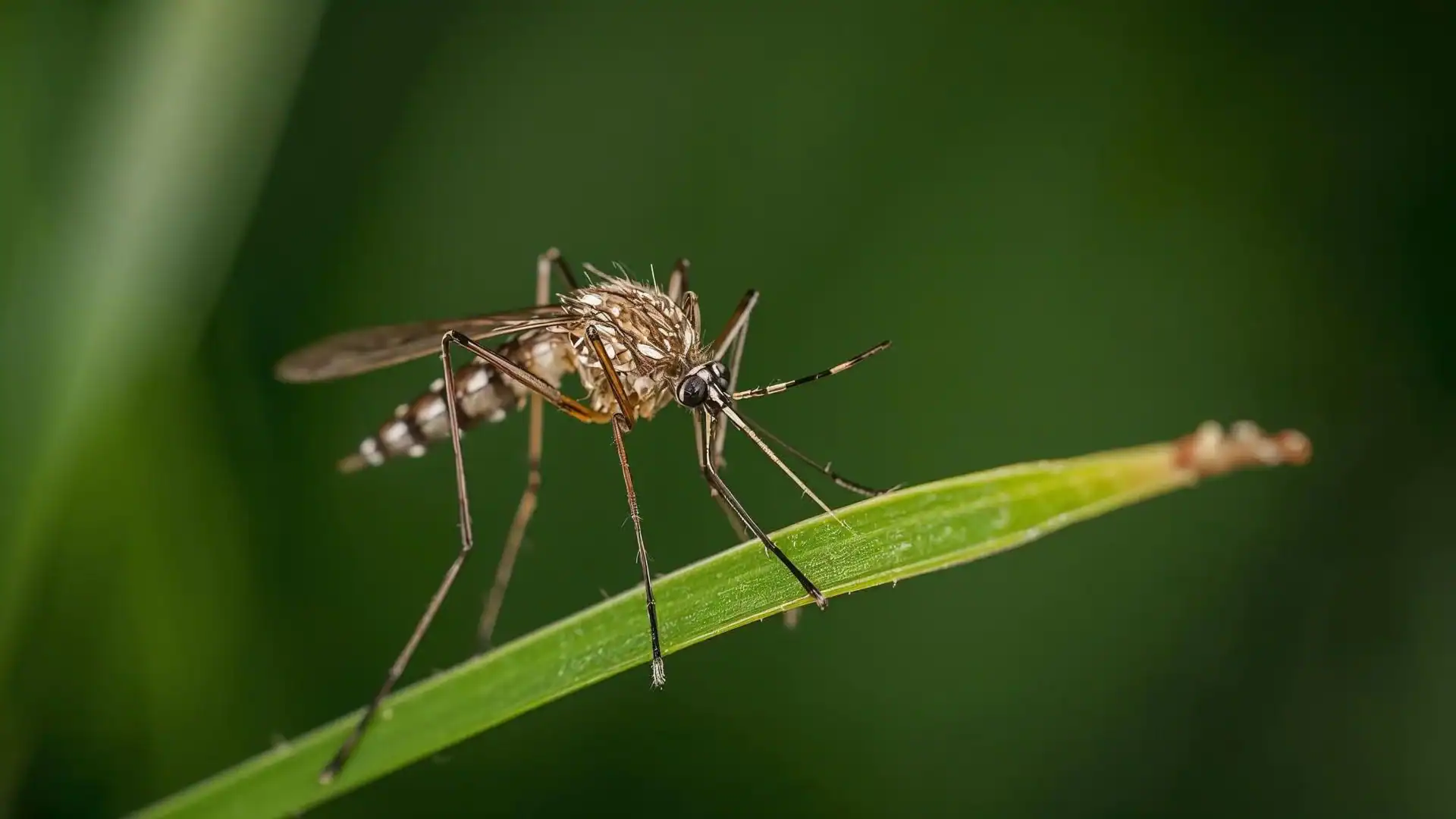
Mosquitoes in Queens, Brooklyn, and Manhattan aren’t just a nuisance — they have a way of quietly taking over your outdoor space for the entire summer. And if you’ve already tried the sprays, the candles, or the bug zapper with nothing to show for it, that frustration is completely valid. Those products were never designed to solve the problem. They were designed to be sold.
Here’s what actually works, why DIY approaches fall short, and what professional mosquito control looks like when it’s done right.
It’s not just bad luck. The geography of Queens and Brooklyn creates near-perfect conditions for mosquitoes to breed and thrive from May through October every year.
Jamaica Bay sits right on the Brooklyn-Queens border — 9,155 acres of tidal marsh and wetland that functions as one of the largest mosquito nurseries in the entire metro area. Neighborhoods like Howard Beach, Broad Channel, Canarsie, and Marine Park live directly downwind of it. Flushing Meadows-Corona Park has Meadow Lake and Willow Lake, both significant standing water sources that feed mosquito populations across Flushing, Corona, and Jackson Heights all summer long. Prospect Park’s lake and wetlands push populations into Park Slope, Crown Heights, and Flatbush. Alley Pond Park — home to the largest remaining wetland in Queens — affects Bayside, Douglaston, and the surrounding neighborhoods.
And that’s before you account for what’s happening on your own block.
Most people picture mosquito breeding in ponds or swamps. In Brooklyn and Queens, the reality is far more ordinary — and far more fixable, if you know where to look.
Mosquitoes need standing water to reproduce, but they don’t need much of it. A clogged gutter, a flower pot saucer, an old container sitting in the corner of the yard — any of these can support a breeding population. Flat-roof row houses, which dominate neighborhoods like Flatbush, Canarsie, Astoria, and Jackson Heights, accumulate standing water after every rain event. That water sits on rooftops, invisible to the people living below, and hatches new mosquitoes for weeks. NYC’s older drainage infrastructure compounds the problem — catch basins and low-lying areas retain water longer than they should, extending the local breeding window well into fall.
What this means practically is that a mosquito problem in a dense urban neighborhood is rarely coming from just one source. It’s coming from a dozen small ones, scattered across your property and your neighbors’. Adult mosquitoes rest in dense shrubs and foliage during the day and emerge at dusk — which is exactly when you’re trying to be outside.
This is also why treating only the adult mosquitoes you can see doesn’t solve anything. As long as the breeding sources remain, new adults will keep hatching. The NYC Department of Health and Mental Hygiene understands this — their own mosquito control program involves helicopter-based larviciding specifically targeting the marsh areas of Brooklyn and Queens, because eliminating larvae before they become adults is the only way to actually reduce populations. Professional ground-level treatment works on the same principle, applied to your specific property.
The other factor that catches a lot of Queens and Brooklyn homeowners off guard is the shared-yard problem. In row house neighborhoods, your yard shares a fence line with two or three neighbors. If mosquitoes are breeding on their property and yours is treated, you’ll still have pressure — though a well-executed property-level treatment creates enough of a barrier to make a meaningful difference. It’s not an all-or-nothing situation.
Citronella candles work within about a two-foot radius, in still air, when the candle is actively burning. DEET repels mosquitoes from landing on your skin but does nothing to reduce the population in your yard. Consumer-grade foggers kill adult mosquitoes on contact — but they don’t penetrate the dense foliage where mosquitoes rest, they don’t reach rooftop breeding sites, and they wash off or break down within days. None of these products address the larval stage of the mosquito life cycle. That’s the fundamental problem.
When you spray a consumer fogger in your backyard, you might kill a portion of the adult mosquitoes that happen to be active at that moment. But the eggs and larvae in your gutters, your flat roof, and your neighbor’s forgotten birdbath are completely unaffected. Within a week, a new generation has hatched, and you’re back where you started. This isn’t a failure of effort — it’s a design limitation of the products themselves.
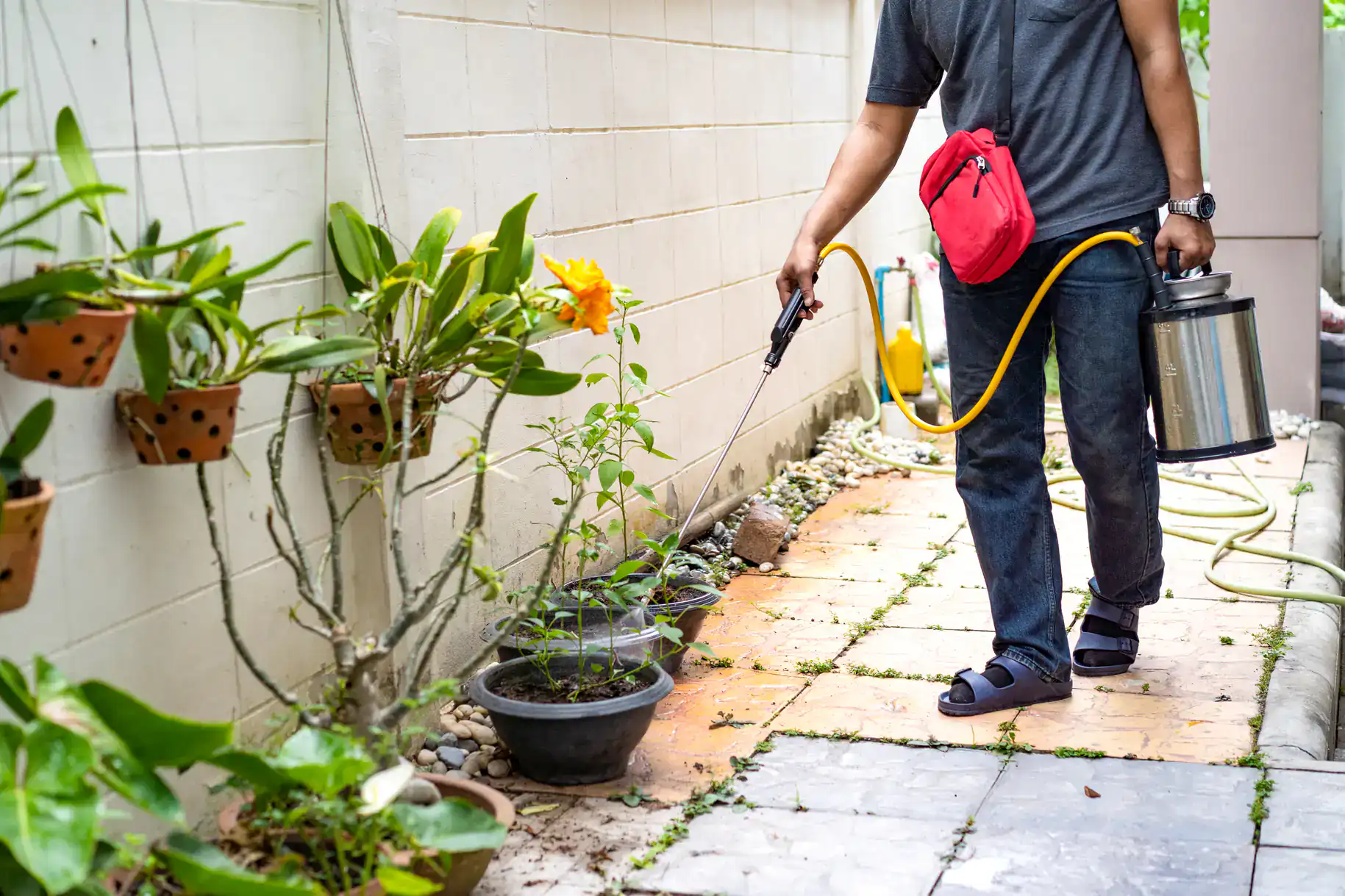
Professional mosquito control works differently because it starts with an inspection. Before any treatment goes down, one of our licensed technicians walks the property to identify active breeding sites, resting areas, and environmental factors specific to your yard. That inspection drives the treatment plan — larvicide applications to standing water sources to interrupt the breeding cycle, combined with barrier spray treatments to dense vegetation and shrubs where adult mosquitoes rest during the day. The barrier treatment targets the places mosquitoes actually hide, not just the open air of your patio.
One important note for pet owners and parents who are understandably cautious: DEC-registered mosquito control products, applied by a licensed technician, are formulated to be safe for household members after the treatment has dried — typically within 30 to 60 minutes. Proper professional application is considerably safer than improper or repeated use of consumer-grade products, which people often over-apply out of frustration. Every product we use at Kingsway Exterminating Company is registered with the New York State Department of Environmental Conservation, meeting every state licensing requirement.
Want live answers?
Connect with a Kingsway Exterminating expert for fast, friendly support.
A lot of people don’t call a professional exterminator because they’re not sure what they’re actually buying. That’s a fair concern. Here’s what the process looks like when we do it right.
It starts with the inspection — not a quick walk-around, but a systematic assessment of your property to identify where mosquitoes are breeding and where they’re resting. From there, we build a treatment plan around what’s actually happening on your specific property. After treatment, we walk you through what was done, what to expect in the days that follow, and when a follow-up visit makes sense. One treatment is rarely the whole answer — mosquito season in NYC runs from May through October, and sustained protection requires more than a single application.
Most people call when they’re already frustrated — mid-July, after a few weeks of being driven inside every evening. That’s completely understandable, and treatment at that point absolutely helps. But if you want to get ahead of the problem rather than react to it, April or early May is the better window.
Here’s why: mosquito populations build over the course of the season. The earlier you interrupt the breeding cycle, the smaller the peak population becomes. A barrier treatment applied in late April or early May — before the first major hatch — establishes protection before the problem escalates. Homeowners in Brooklyn and Queens who’ve dealt with bad mosquito pressure in prior summers often find that starting treatment earlier in the season makes the entire summer more manageable, rather than playing catch-up from July onward.
NYC’s mosquito season officially runs May through October, with peak activity in July and August when temperatures and humidity are highest. The urban heat island effect in Brooklyn and Queens — where the dense built environment retains heat — means local temperatures often run warmer than the surrounding region, which accelerates breeding cycles. An extended warm fall can push meaningful mosquito activity into October, so don’t assume the season ends with August.
The other reason to think about pre-season treatment: demand for mosquito control services spikes in summer, which means scheduling becomes tighter. Booking an inspection in April means you’re not waiting when everyone else is calling in June.
**How long does a mosquito treatment last?** Barrier spray treatments typically remain effective for three to four weeks, depending on weather conditions. Rain and heavy foliage can reduce that window. For sustained protection through the full NYC mosquito season, most properties benefit from scheduled follow-up treatments rather than a single application.
**Is mosquito spraying safe for my kids and pets?** Yes, when applied correctly by a licensed technician using DEC-registered products. The standard guidance is to keep children and pets off treated surfaces until the product has dried — usually 30 to 60 minutes. After that, the treated area is safe for normal use. If you have specific concerns about particular plants, a vegetable garden, or a beehive on the property, mention it before treatment begins so our technician can plan accordingly.
**What if my neighbor’s yard isn’t treated?** This is one of the most common concerns we hear from homeowners in Brooklyn and Queens, and it’s a legitimate one. Row house neighborhoods mean shared fence lines and shared mosquito pressure. A property-level treatment won’t eliminate every mosquito that might drift in from next door, but it significantly reduces the population on your property by eliminating on-site breeding sources and creating a treated barrier around resting areas. Most clients in these neighborhoods notice a meaningful improvement even in dense urban settings.
**Do I really need a professional, or can I handle this myself?** Consumer products can reduce adult mosquito activity temporarily, but they don’t address breeding sites — which means the population rebounds quickly. If you’ve already tried the store-bought options and the problem keeps returning, that’s your answer. Professional mosquito control is the difference between managing symptoms and actually reducing the source population.
**Why are mosquitoes so bad near Jamaica Bay and Flushing Meadows?** Both areas contain large bodies of standing water and extensive wetland habitat — exactly the conditions mosquitoes need to breed at scale. The NYC Department of Health and Mental Hygiene conducts helicopter-based larviciding in the marsh areas of Brooklyn and Queens specifically because of the scale of the breeding environment there. Property-level treatment in Howard Beach, Broad Channel, Canarsie, Flushing, and Corona is working against a significant natural pressure source, which is why professional, repeated treatment matters more in these neighborhoods than in areas farther from major wetlands.
**Does West Nile Virus actually pose a real risk in NYC?** It does. Between 1999 and 2024, 470 NYC residents were diagnosed with West Nile neuroinvasive disease, and 63 died. In 2023 alone, 31 cases were confirmed. The disease is most dangerous for adults over 60 and immunocompromised individuals, but it can affect anyone. This isn’t a theoretical risk — it’s a documented, recurring public health issue in Brooklyn, Queens, and Manhattan.
Mosquitoes are a real problem in Queens, Brooklyn, and Manhattan — and not one that resolves itself. The geography of the outer boroughs, the flat-roof architecture, the proximity to Jamaica Bay and Flushing Meadows, and NYC’s warm, humid summers all work against you. Consumer products treat the symptom. Professional mosquito control addresses the source.
We’ve been doing this work in Brooklyn and across NYC for over 50 years. Three generations of the Kourbage family, more than 35 consecutive years of A+ standing with the Better Business Bureau, and technicians who know this city’s neighborhoods and building stock the way only a genuinely local company can. That’s not a credential we put on a wall — it’s a track record you can verify.
If you’re done losing your summers to mosquitoes, reach out to Kingsway Exterminating Company. Phones are answered 24 hours a day, and we guarantee an appointment within two business days — with same-day inspections frequently available.
Summary:
Article details:
Share: