Termites don't announce themselves. Here's what Queens, Brooklyn, and Manhattan homeowners need to know before damage shows up in their own walls.
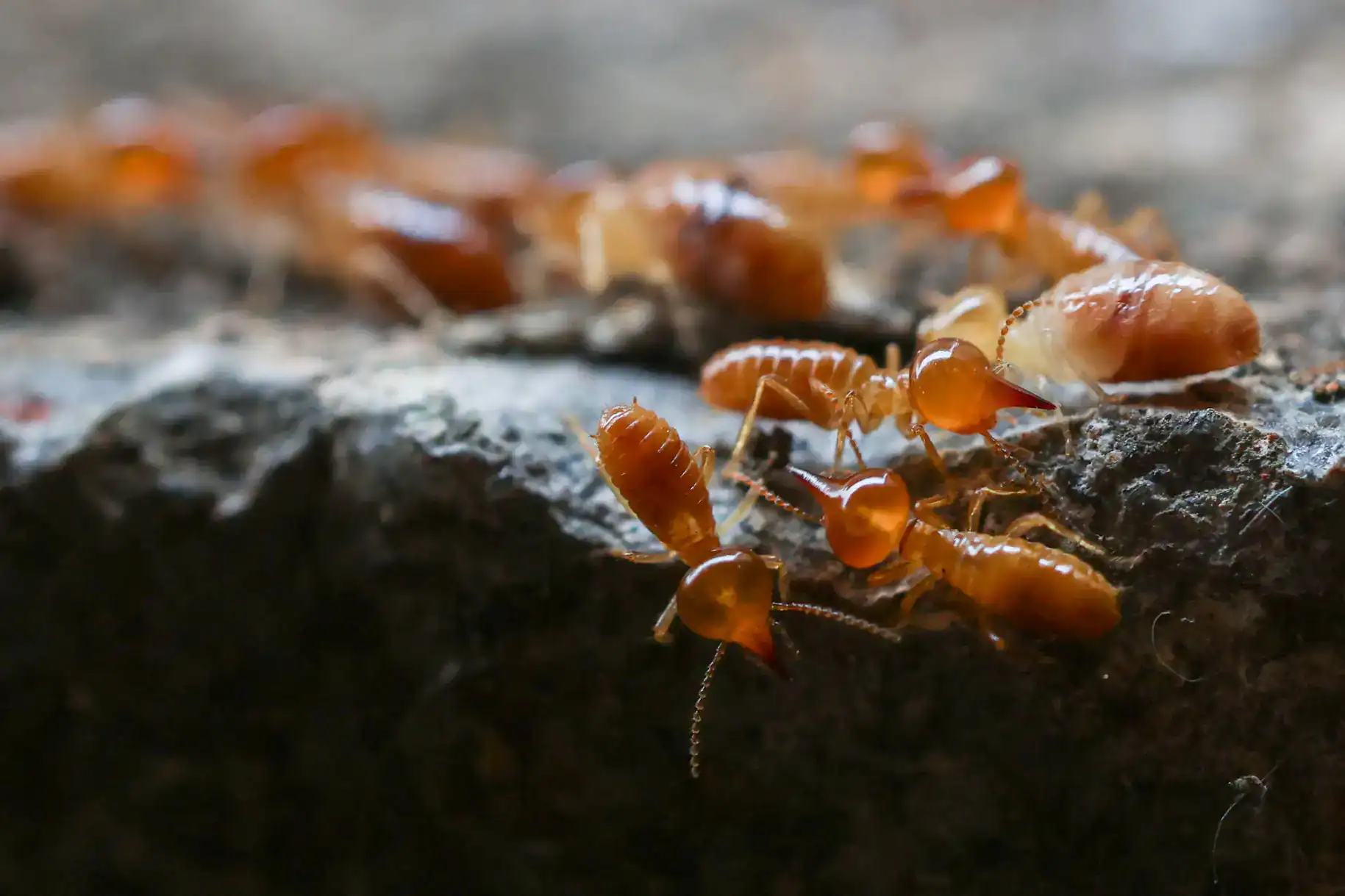
Most people in Queens, Brooklyn, and Manhattan don’t think of themselves as living in termite territory. That’s understandable — termites feel like a Florida problem, a Southern problem, something that happens to other people in other places. But Eastern subterranean termites don’t care about that assumption. They’re here, they work underground and out of sight, and by the time most homeowners notice something is wrong, the damage is already done.
This guide is for anyone who wants to understand what a termite inspection actually covers, when you need one, and what to expect from the process — before it becomes an emergency.
New York City’s housing stock is old. That’s part of its character — and part of its vulnerability. Pre-war brownstones in Brooklyn, wood-frame detached homes in Jamaica and Hollis in Queens, century-old row houses throughout Manhattan, and historic townhouses across the metro area all share something in common: they were built with materials and construction methods that Eastern subterranean termites find very hospitable.
Termite damage is also almost never covered by standard homeowner’s insurance. Insurers treat it as a preventable maintenance issue, which means the financial exposure falls entirely on you. The average cost to repair termite damage runs around $3,000 to $3,300 — and in severe cases, that number can climb to $40,000 or more.
A termite inspection isn’t a precaution for the overly cautious. It’s basic financial self-defense.
Here’s the honest answer: most of the time, you won’t see termites at all. Eastern subterranean termites live underground and inside wood, tunneling through structural elements while leaving the outer surface intact. A floor joist or sill plate can be almost entirely hollowed out while looking completely normal from the outside. That’s what makes them genuinely dangerous — the damage accumulates quietly, sometimes for years, before anything visible appears.
What you might notice instead are the secondary signs. Mud tubes are one of the clearest indicators — pencil-thin tunnels of soil and debris that termites build along foundation walls, basement walls, or floor joists to travel between the soil and their food source. If you tap on wood that sounds hollow when it shouldn’t, that’s worth paying attention to. Blistered or bubbling paint on wood surfaces — often mistaken for water damage — can also indicate termite activity underneath.
The sign that gets the most attention is swarmers: winged termites that emerge in spring and early summer when a colony is ready to expand. People often mistake them for flying ants. The key difference is that termite swarmers have straight antennae, equal-length wings, and a broad waist — ants have elbowed antennae, unequal wings, and a pinched waist. Finding discarded wings near windowsills or door frames after a warm spring day is a strong indicator that a colony is nearby.
One thing worth knowing: swarmers emerging inside your home don’t automatically mean the structure is infested. They may have flown in from outside. But either way, it’s not something to watch and wait on. A professional inspection is the only way to know what you’re actually dealing with.
For Queens homeowners specifically, the coastal neighborhoods carry additional risk. Howard Beach and the Rockaways sit near Jamaica Bay and the Atlantic, and the persistent soil moisture in those areas creates ideal conditions for subterranean termite colonies to thrive. If you’re in one of those neighborhoods and you haven’t had an inspection in years — or ever — that’s worth factoring in.
The general guidance is straightforward: if you own a wood-framed home, annual inspections are the standard recommendation. For masonry buildings — brick co-ops, concrete-construction condos — every two to three years is typically sufficient, though it depends on the specific structure and whether there’s any wood framing involved in the floors, roof, or interior walls.
If your property has a history of termite activity, annual inspections aren’t optional — they’re how we verify that a prior treatment held and that no new activity has started. Termite colonies don’t give up after one treatment. They reroute. They find new entry points. Monitoring is part of the long-term picture.
There are also specific moments when an inspection should happen regardless of your regular schedule. Before purchasing any property in Queens, Brooklyn, or Manhattan, a termite inspection should be on your checklist — not just because lenders often require it, but because it’s one of the few ways to find out what’s happening inside the walls before the property is yours.
Renovation projects are another trigger. When contractors open up walls in an older home, termite damage that’s been invisible for years suddenly becomes visible. If you’re doing any significant work on a pre-war home in Bed-Stuy, Astoria, Jamaica, or anywhere else with older housing stock, it’s worth getting an inspection before the work starts.
The other moment people often overlook is when a neighbor discovers an infestation. Subterranean termites spread through soil, and an active colony next door is a legitimate risk indicator for your own property. It doesn’t mean you have termites — but it means the conditions in your immediate area are favorable, and knowing your own status is worth the time.
Want live answers?
Connect with a Kingsway Exterminating expert for fast, friendly support.
A thorough termite inspection isn’t a quick walk-through. It covers the exterior perimeter of the structure, the foundation, any areas where soil meets wood, the basement or crawl space, visible floor joists and sill plates, window frames, door frames, and any areas with suspected moisture issues. Attics and interior spaces are checked when accessible.
The goal is to identify active termite activity, evidence of past activity, conditions that make infestation likely, and any damage already done. What you receive at the end is a written report — and for real estate transactions, that report has a specific form and legal weight.
If you’re buying or selling a home in Queens, Brooklyn, or Manhattan, there’s a good chance your real estate attorney or mortgage lender has asked for a WDI report — or a WDO report. These terms get used interchangeably, and the confusion is understandable.
WDI stands for Wood Destroying Insect. WDO stands for Wood Destroying Organism. The report itself — formally called the NPMA-33 — is the standard form used for real estate transactions across the country. VA loans, FHA loans, HUD-backed financing, and most conventional mortgage lenders require this document before they’ll approve a closing. It’s not optional, and it’s not something a general home inspector can produce. The report must be completed by a licensed pest management professional with the appropriate New York State Department of Environmental Conservation certification.
What the report documents is whether the inspector found evidence of active infestation, evidence of past infestation, damage from wood-destroying insects or organisms, or conditions that are conducive to infestation. A clear report doesn’t mean there are no termites anywhere near the property — it means no evidence was found during the inspection. A report with findings doesn’t automatically kill a deal either. It means there’s something to address, and the buyer and seller negotiate from there.
The part that causes problems in NYC real estate transactions isn’t usually the findings themselves — it’s timing. Closing timelines in this market are tight, and a WDI report that takes a week to schedule and another few days to produce can create real problems. That’s why it matters who you call. We produce WDO reports that are accepted by attorneys and real estate brokers across the NYC metro area, and we offer same-day inspections when timelines are tight. Our phones are answered 24 hours a day, and we guarantee an appointment within 48 hours.
This is the question most homeowners are actually worried about — and the honest answer is that a positive finding isn’t a disaster. It’s information. What happens next depends on the extent of the activity, the type of treatment appropriate for your structure, and whether you’re in the middle of a real estate transaction or dealing with this as a current homeowner.
For active subterranean termite infestations, the primary treatment options are soil-applied termiticides, direct wood treatment, and termite baiting systems. Baiting systems involve installing monitored stations around the perimeter of the property that attract termites and introduce a slow-acting agent that spreads through the colony. They’re particularly effective for ongoing monitoring after an initial treatment. Direct wood treatment addresses the structural wood itself — useful when termites have already reached specific framing members.
We handle all of it — inspection, identification, subterranean termite eradication, baiting system installation and monitoring, and direct wood treatment — from one provider. For real estate transactions, that matters because you’re not waiting for a second company to schedule a second appointment. The inspection, the report, and the treatment path are all coordinated.
A few things worth knowing if you’re a seller and termites are found: disclosure requirements in New York are real, and trying to work around them creates far more legal exposure than addressing the issue directly. Most buyers who receive a report with findings will negotiate — a credit, a price adjustment, or a requirement that treatment be completed before closing. Deals fall apart when findings are hidden or when the seller has no documentation of what was done. They survive when there’s a clear record of professional treatment.
For homeowners not in a transaction, the timeline pressure is different but the urgency isn’t. Eastern subterranean termites don’t pause while you think it over. A colony that’s been active for a few years in a Queens wood-frame home from the 1940s has had a lot of time to work. Getting a treatment plan in place sooner rather than later is simply the less expensive option.
If you’ve read this far, you’re already ahead of most homeowners. The people who end up with the largest repair bills are usually the ones who assumed termites weren’t a concern in New York City — or who noticed something and waited to see if it got worse.
The right move is simple: get an inspection from someone licensed, experienced, and familiar with the specific building types in your borough. Not every exterminator can produce a lender-accepted WDI report. Not every inspector has worked on Brooklyn brownstones, Queens wood-frame homes, and Manhattan townhouses long enough to know where termites tend to hide in each.
We’ve been doing this in New York City since 1976. Our technicians are certified under NYS DEC requirements, and we’ve held an A+ BBB rating since 1989 — a record you can verify on your own. If you have questions, want a free estimate, or need an inspection scheduled quickly, Kingsway Exterminating Company is ready to help. Call us any time — our phones are answered around the clock.
Summary:

Article details:
Share: