Brooklyn's pre-war buildings aren't just charming — they're practically built for rodents. Here's what's really going on inside your walls.
You’re not dirty. Your kitchen isn’t the issue. And no, your neighbors probably aren’t to blame — at least not entirely. If you live in a pre-war Brooklyn brownstone, a Queens row house, or an older Manhattan apartment building and you’re dealing with rodents, the most likely culprit isn’t something you did. It’s the building itself.
That’s not an excuse — it’s actually useful information. Once you understand why old New York City buildings are so vulnerable to rodent entry, the solution starts to make a lot more sense. And so does why the trap you bought at the hardware store isn’t cutting it.
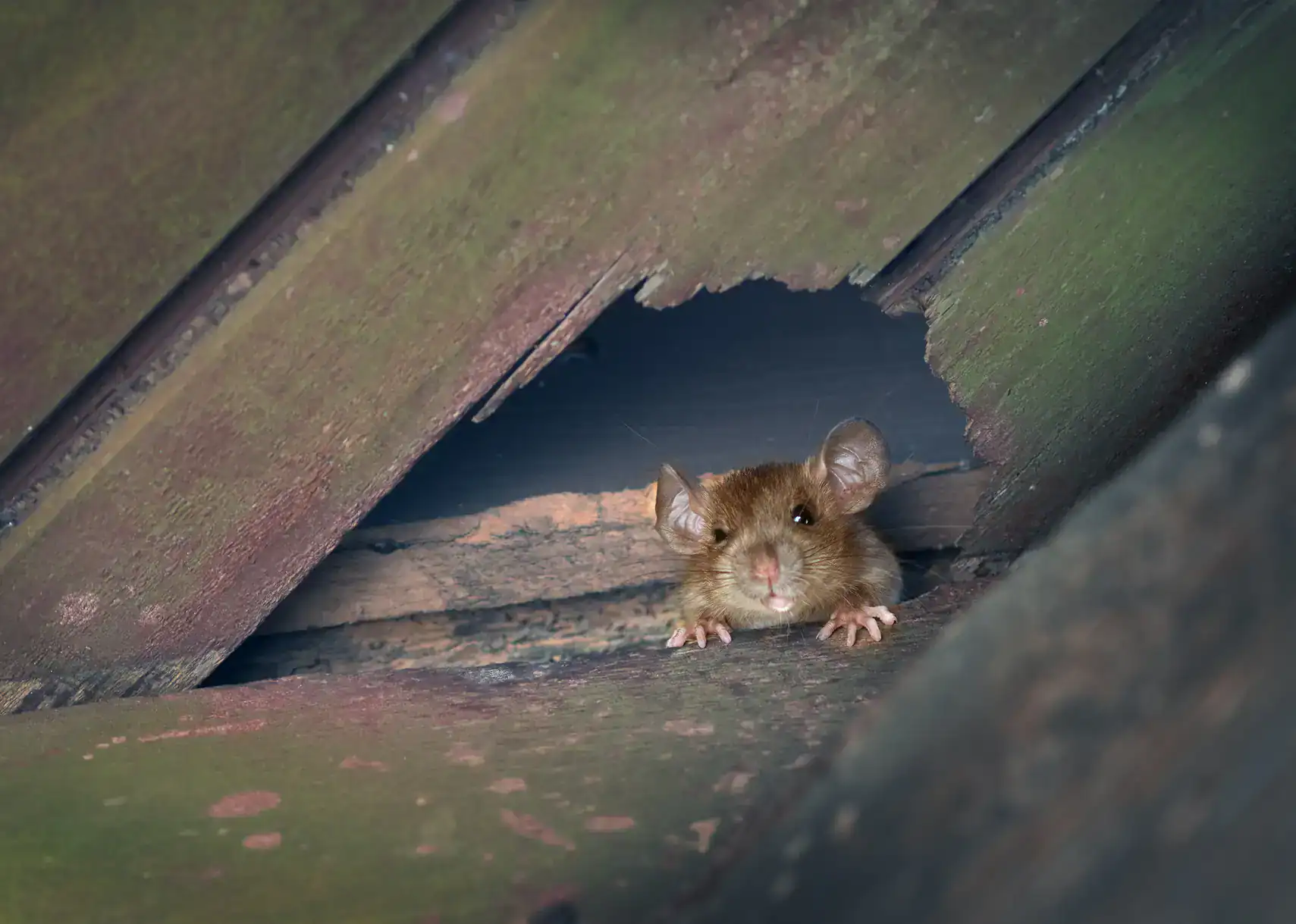
A brownstone built in 1905 has had over a century of settling, patching, renovating, and re-patching. Every time a plumber ran a new pipe, every time the boiler was replaced, every time someone drilled through a foundation wall — that’s another potential entry point. Over decades, those gaps accumulate.
Rats only need a hole the size of a half-dollar coin to squeeze through. Mice need even less — a gap smaller than a dime is enough.
This is the structural reality of Brooklyn’s housing stock, and it applies just as much to Queens and older Manhattan neighborhoods. It’s not about cleanliness or carelessness. It’s about buildings that have been modified dozens of times over a hundred-plus years, by dozens of different hands, without anyone systematically sealing what was left behind.
Here’s something that doesn’t get talked about enough: in attached buildings — which describes the majority of housing in Brooklyn and Queens — rodents don’t stay in one unit. They travel. Through shared basement spaces, through wall voids that run the full length of a row, through utility chases that were never sealed between floors or units.
A rat that enters through a crack in the foundation on one end of the block can work its way through to the other side without ever going outside again.
This is why treating a single apartment often feels futile. You eliminate the rodents you can see, but the entry points — and the travel routes — remain open. Within weeks, sometimes days, you’re back to square one. It’s not that the treatment failed. It’s that treatment alone was never going to be enough.
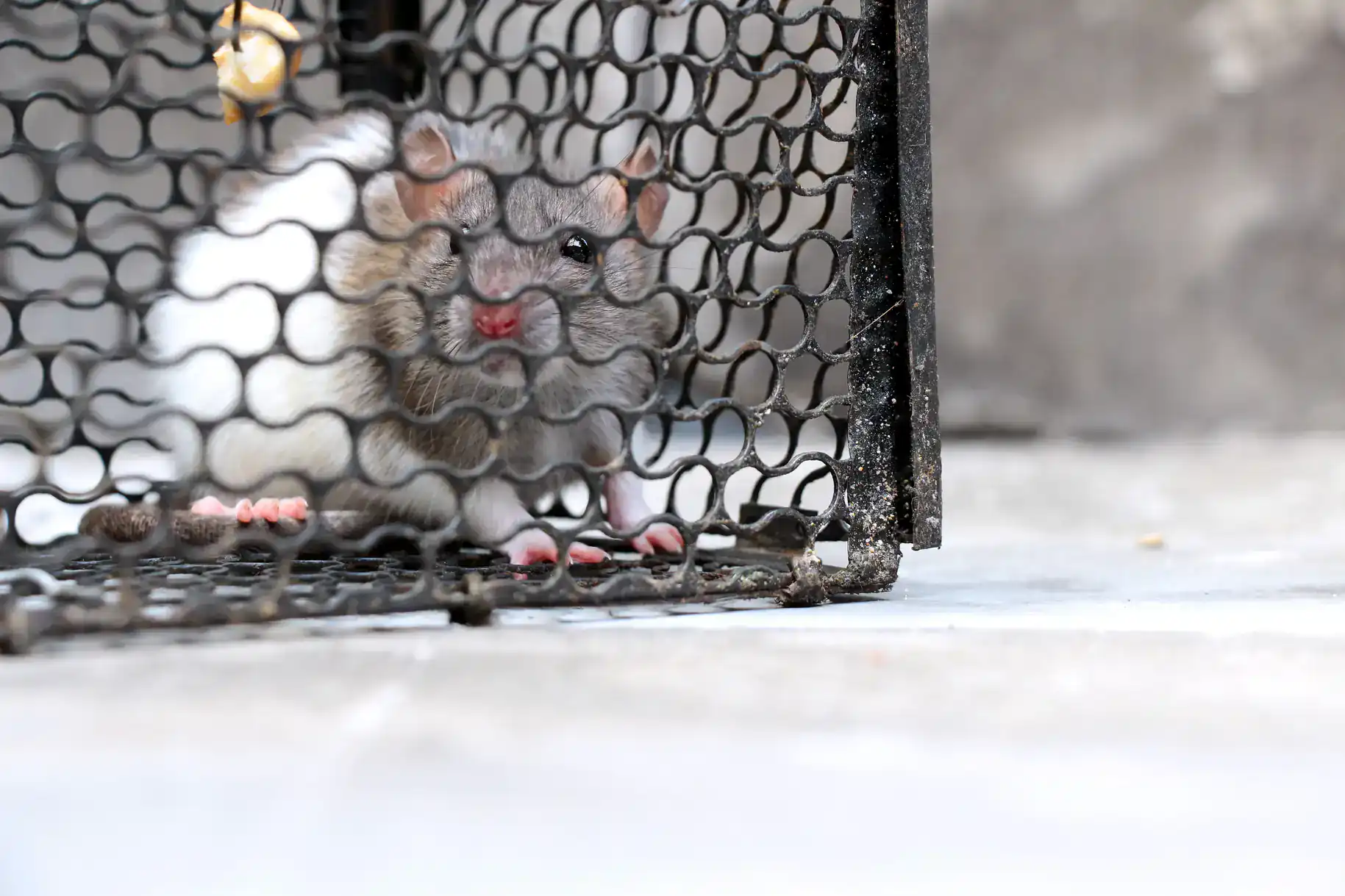
Norway rats, which are the dominant species in Brooklyn, Queens, and Manhattan, are also notoriously suspicious of new objects in their environment. Pest control professionals call this neophobia. A rat can live alongside a snap trap for weeks without touching it, because the trap is new and unfamiliar. They’re cautious, they’re adaptable, and they’re not going to fall for the same trick twice.
Mice are less cautious — but they reproduce fast enough that trapping without sealing entry points is a losing race. A single female mouse can produce several litters a year, each with multiple pups. The math is not in your favor.
NYC’s sewer system spans roughly 7,400 miles, and Norway rats use it. They swim through sewer lines and access buildings through floor drains, broken sewer connections, and gaps around utility penetrations at the foundation. This isn’t a fringe scenario — it’s how a significant portion of rat entries happen in older Brooklyn and Queens buildings, particularly those with aging sewer connections that haven’t been inspected in years.
Store-bought traps and bait stations aren’t worthless — but they’re designed for a simpler problem than what most Brooklyn and Queens residents are actually dealing with. They address the rodents that are already inside. They do nothing about the structural gaps that let new ones in.
In an attached building with shared walls and a connected basement, there will always be new ones.
The other issue is placement and consistency. Effective rodent control requires knowing where rodents are actually traveling — their runways, their nesting sites, their entry points. That takes an inspection, not a guess. Dropping a trap in the corner of your kitchen because that’s where you saw a mouse is a reasonable instinct, but it’s not a strategy.
There’s also the question of what happens after a rodent dies from a bait station inside a wall void. In an old building with limited ventilation and dense insulation, that’s a problem that can linger for weeks. Professional-grade rodent control accounts for placement, monitoring, and follow-up in a way that off-the-shelf products simply aren’t designed to do.
Fort Greene has been called “Rat Haven” by local residents. Bedford-Stuyvesant and Bushwick were specifically targeted by the city’s $32 million rat reduction plan in 2017. Rat sightings across New York City increased 71% between 2020 and 2022. These aren’t statistics about negligent homeowners — they’re statistics about a city with aging infrastructure, a massive sewer network, and a rodent population that’s been adapting to urban life for generations.
The problem is structural and systemic. The solution needs to match that.
Want live answers?
Connect with a Kingsway Exterminating expert for fast, friendly support.
The word “exterminator” makes it sound like the whole job is killing things. But in a city like New York, in buildings like the ones across Brooklyn and Queens, the more important half of the job is exclusion — finding and sealing the entry points that are letting rodents in and keeping them connected to neighboring units and outdoor populations.
Effective rodent control starts with a real inspection. Not a quick walkthrough, but an actual assessment: identifying the species, locating the entry points, understanding the severity, and building a treatment plan around what’s actually there. Treatment without that foundation is guesswork.
Exclusion is the process of physically sealing the gaps, cracks, and penetrations that rodents use to enter a building. Materials like steel wool, metal sheeting, caulk, and concrete are used to close off entry points at the foundation, around pipe penetrations, along utility chases, and anywhere else the building’s envelope has been compromised.
In a pre-war Brooklyn brownstone, a typical row house might have anywhere from three to eight significant entry points — and most of them aren’t visible without knowing exactly what to look for.
This is where local experience matters. A technician who has spent years working in Brooklyn’s brownstones, Queens’ attached row houses, and Manhattan’s pre-war apartment buildings has seen these entry points hundreds of times. They know where they tend to be, how they’re typically created, and what it takes to seal them properly. That’s not something you can replicate with a YouTube video and a tube of caulk, especially when the gap is behind a radiator or inside a wall cavity.
Exclusion is also the only thing that addresses the shared-building problem. If your unit is treated but the basement entry point — which is accessible to every unit in the building — remains open, you’re fighting a losing battle. A comprehensive exclusion assessment looks at the building as a system, not just your individual apartment.
For landlords and property managers in Brooklyn and Queens, this matters for another reason entirely. Under NYC Housing Maintenance Code section 27-2018, landlords are legally required to maintain rental properties free of rodent infestation. A rat infestation in a rental unit is classified as a Class C violation — the most serious category — which means it triggers mandatory correction timelines, potential fines, and HPD inspection follow-up. Documentation of professional treatment and exclusion isn’t just good practice; in many cases, it’s legally necessary.
This is the question most people are afraid to ask, because they’ve already paid for one treatment that didn’t hold. It’s a fair concern, and the honest answer is: one visit is rarely the complete picture.
Effective rodent control involves follow-up. After initial treatment and exclusion work, monitoring tells you whether the population has been fully addressed or whether new activity is occurring through a previously unidentified entry point. In a dense urban environment like Brooklyn or Queens, where rodent pressure is continuous and the surrounding infrastructure is full of active populations, monitoring isn’t optional — it’s how you confirm the job is actually done.
A satisfaction guarantee matters here more than almost any other factor. If the problem returns after treatment, you shouldn’t be paying again to fix it. The guarantee should be clear, unconditional, and backed by a company that’s been doing this long enough to stand behind it without hesitation. That’s the standard worth holding any provider to.
It’s also worth asking about the materials being used. In New York State, pest control companies are required to hold a Commercial Pesticide Applicator Certification issued by the NYS Department of Environmental Conservation. The materials we use must be EPA-approved and NYS DEC-registered. For households with children or pets, this isn’t a minor detail — it’s the difference between a treatment that’s been evaluated for safety and one that hasn’t. You can verify a company’s license independently, and you should.
One more thing that often gets overlooked: if you’re in the middle of a property transaction in Brooklyn — where the median property value sits around $905,000 — a rodent issue can affect your closing. Wood-Destroying Insect inspection reports required by FHA, VA, and conventional mortgage lenders can only be issued by a licensed pest control professional. Getting that documentation in order before it becomes a last-minute problem is worth thinking about well in advance.
The reason rodent problems persist in so many Brooklyn, Queens, and Manhattan buildings isn’t a mystery. It’s old infrastructure, shared building structures, and a city-wide rodent population that’s been thriving underground for generations. Understanding that is the first step toward actually solving it.
The solution isn’t more traps. It’s a real inspection, targeted treatment, and exclusion work that addresses the entry points — not just the rodents that are already inside. In a pre-war building in an attached row, that’s the only approach that holds.
We’ve been doing this work in Brooklyn since 1976. If you’re dealing with a rodent problem in an old building and you’re ready to stop going in circles, Kingsway Exterminating Company is available around the clock — and we guarantee the job until it’s actually done.
Summary:

Article details:
Share: