Hear from Our Customers
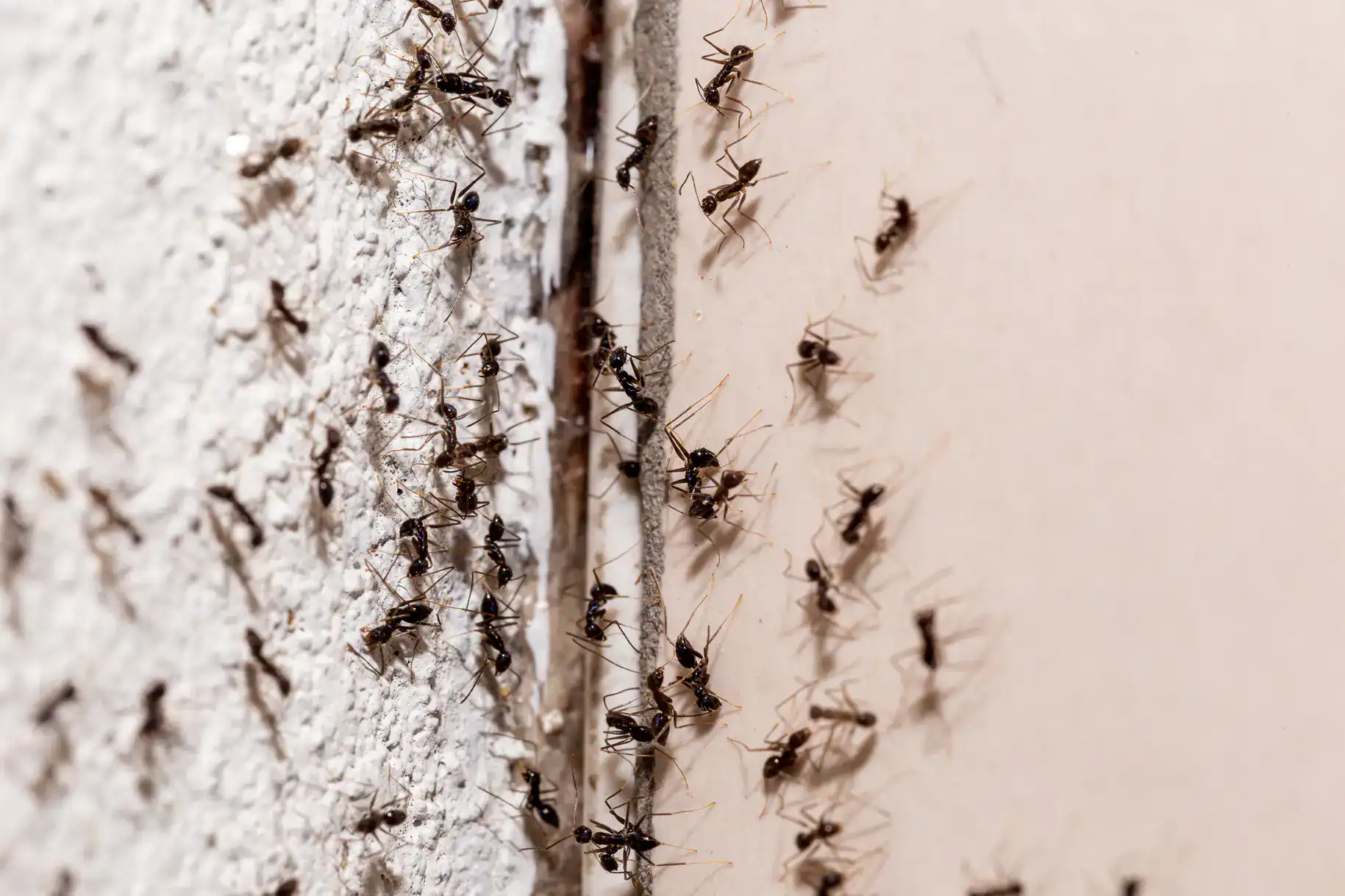
If you’ve sprayed the counter, wiped down the shelves, and the ants keep coming back by morning the product isn’t the problem. The problem is that you’re treating the ants you can see while the colony stays completely untouched. That colony could be living inside a shared wall, beneath aging floorboards, or deep in the foundation of a building that’s been standing since before World War I. Surface sprays don’t reach it. That’s why they don’t work.
In Chinatown, the challenge isn’t just the ants it’s the environment. You’re dealing with 100-year-old tenement buildings where cracks in the masonry, gaps around old pipes, and deteriorating window frames give ants a dozen ways in. Add the constant proximity to food whether you’re above a restaurant kitchen on Mott Street, near the produce stands along Canal Street, or just sharing a wall with a neighbor who has the same problem and you have conditions that keep colonies active and growing year-round.
What changes after a real treatment isn’t just fewer ants on the counter. It’s knowing the colony is gone. It’s not second-guessing whether your kitchen is safe. It’s not watching them come back two weeks after you sprayed. That’s the outcome a professional ant removal process is designed to deliver and it’s the difference between a temporary fix and an actual solution.
We’re a family-owned pest control company that has been working in New York City’s five boroughs for over 50 years. That experience means our technicians know the difference between treating a detached house in the suburbs and treating a six-story tenement building with a restaurant on the ground floor and families on every floor above it. We’ve worked in buildings just like yours, in Chinatown and neighborhoods like it.
Chinatown is one of the most densely packed, food-rich, and structurally complex neighborhoods in the entire city. The buildings along East Broadway, Bayard Street, and Doyers Street weren’t built with modern pest barriers in mind. We understand that and we come prepared for it. We hold an A+ rating with the Better Business Bureau of New York State, are fully licensed, bonded, and insured, and use only NYS DEC-registered materials on every job.
If you’re a tenant, a landlord managing a building near Confucius Plaza, or a restaurant owner watching your health grade, you need a company that’s been doing this in NYC long enough to actually know what works here.
It starts with a phone call and someone actually picks up, any time of day or night. Our phones are answered 24 hours a day, seven days a week, so if you’re a restaurant owner who just finished the dinner rush and spotted ants near the prep station, or a tenant who noticed a trail across the kitchen floor at 10 PM, you’re not leaving a voicemail and waiting until Monday.
Once you schedule, the first visit is a full initial cleanout. That means treatment applied both inside and outside the structure not just a quick spray along the baseboards. The materials we use are specifically chosen because ants carry them back into the nest and share them with the rest of the colony, including the queen. That transfer effect is what makes professional ant control work when store-bought products don’t. In Chinatown’s tenement buildings, where a colony can be spread across shared wall voids and multiple floors, hitting only the interior of one unit accomplishes almost nothing. The treatment has to address the building as a system and that’s exactly how we approach it.
After the initial cleanout, follow-up visits are scheduled based on your situation weekly, every other week, or monthly to reapply materials and confirm the colony is gone. This matters especially in Chinatown’s mixed-use buildings, where a commercial kitchen one floor below can keep drawing new foragers if the exterior perimeter isn’t maintained. The process doesn’t end until the problem does.
Ready to get started?
Ant control in Chinatown isn’t a one-size-fits-all job, and we don’t treat it like one. Whether you’re dealing with pavement ants pushing through cracks in century-old masonry, odorous house ants trailing from a neighboring unit through shared plumbing, or carpenter ants working their way into original wood framing the approach is adjusted based on what’s actually happening in your specific building.
For residential tenants in rent-stabilized apartments throughout Chinatown, we can work directly with you even if your landlord is slow to respond. Under New York City’s Housing Maintenance Code, building owners are legally required to address pest infestations and if you’ve already filed a 311 complaint or received an HPD notice, documented professional treatment helps move that process forward. For property owners managing multiple units along East Broadway or near the Canal Street corridor, we handle multi-unit buildings at scale, treating the full structure rather than just responding unit by unit.
For restaurant operators in Chinatown and there are more than 300 of you ant control is directly tied to your NYC Department of Health inspection grade. A pest sighting during an unannounced inspection adds violation points that can drop your public grade from an A to a B overnight. Our commercial ant control service includes scheduled follow-up visits designed to keep your kitchen protected between inspections, not just compliant the day someone shows up. Free estimates are available for both residential and commercial properties. Senior residents receive a 10% discount a straightforward acknowledgment of the many longtime residents in Chinatown who have been here for decades.
The short answer is that what you’re spraying isn’t reaching the colony. Over-the-counter ant sprays are contact killers they eliminate the ants that walk through the treated area, but the queen and the rest of the colony stay completely untouched inside the nest. As long as the colony is alive, it keeps producing new foragers, and they keep showing up in your kitchen.
In Chinatown’s tenement buildings, this problem is compounded by the fact that ant colonies often nest inside shared wall voids, beneath old flooring, or within the building’s foundation spaces that a surface spray can’t penetrate. When the colony is established in a shared wall between your unit and a neighbor’s, or in the building’s structural core, treating just your apartment interior is only addressing a fraction of the problem. Professional ant pest control uses materials that ants carry back into the nest themselves, which is how you actually eliminate the source rather than just cycling through the same foragers over and over.
Yes. Under New York City’s Housing Maintenance Code, building owners are legally required to keep rental properties free of pests and to apply continuous eradication measures when an infestation is present. This applies to the tenement buildings throughout Chinatown just as it does anywhere else in the five boroughs. If you’re a renter and your landlord isn’t responding, you have the right to file a pest complaint through NYC 311, which can trigger an HPD inspection and a formal violation order requiring the owner to remediate.
That said, the legal process takes time and ants don’t wait. If you’re dealing with an active infestation and your landlord is slow to act, you can contact us directly. We work with individual tenants in Chinatown in situations like this and can provide documented treatment records, which are useful if your case escalates to Housing Court. Knowing your rights is important, but getting the problem treated is what actually solves it.
Absolutely and in Chinatown, this is one of the most common scenarios we see. Mixed-use tenement buildings, where a restaurant or food market occupies the ground floor and residential units sit directly above, create an almost ideal environment for ants to move vertically. They travel through shared plumbing chases, electrical conduits, gaps around pipes, and wall voids that connect commercial and residential spaces without any visible entry point you’d ever notice.
The restaurant below generates constant food activity prep, storage, grease, moisture which sustains ant colonies at the building’s base. From there, satellite nests can establish themselves on upper floors, and foragers will follow food scents into whatever residential unit offers an opening. This is why treating only your apartment rarely works in this type of building. Effective ant removal in a mixed-use Chinatown tenement requires treating the full structure both the commercial space below and the residential units above to actually interrupt the colony’s movement. That’s the kind of building-wide approach we’re equipped to handle.
In Manhattan’s older residential buildings, the three most common types are pavement ants, odorous house ants, and carpenter ants. Pavement ants are the small dark ants you typically see trailing along baseboards or coming up through cracks in the floor they nest in foundation cracks, sidewalk gaps, and beneath concrete slabs, which makes Chinatown’s aging building foundations a prime habitat. Odorous house ants are attracted to moisture and sweet food sources and tend to nest inside wall voids and beneath flooring, often spreading between units through shared building infrastructure.
Carpenter ants are the ones to take most seriously in a neighborhood like Chinatown, where many buildings still have original wood framing that’s over a century old. Unlike other ant species, carpenter ants don’t eat wood they excavate it to build nests, which causes real structural damage over time. If you’re seeing large black ants, especially near window frames, door frames, or anywhere there’s been past moisture damage, that’s worth addressing quickly. A licensed carpenter ant exterminator can assess the extent of the nesting activity and treat accordingly before the structural damage compounds.
Ant activity in Chinatown typically peaks in spring April through June when warming temperatures activate colonies that have been dormant in building foundations and sidewalk cracks over winter. Summer sustains high activity, particularly in buildings near food-heavy commercial corridors like Canal Street and East Broadway, where heat, humidity, and constant food proximity keep colonies growing. There’s often a second wave in early fall as colonies seek warmth before temperatures drop.
That said, in Chinatown’s mixed-use buildings, ant infestations don’t always follow a clean seasonal pattern. Ground-floor restaurant kitchens stay warm and food-rich year-round, which means colonies nesting in or near those spaces can remain active through winter and the apartments above them can see forager activity in January just as easily as in July. As for how long an infestation lasts without treatment: indefinitely. A colony that isn’t eliminated keeps growing and expanding. With professional ant control and scheduled follow-up visits, most infestations are resolved within a few treatment cycles but the timeline depends on the size of the colony and how many satellite nests have established in the building.
Yes we offer a 10% discount for senior residents. In a neighborhood like Chinatown, where many of the longest-tenured residents are elderly immigrants living on fixed incomes in buildings like Confucius Plaza and other affordable housing along Division Street and the surrounding blocks, pest control costs are a real consideration. The discount is available to seniors across our full service area, including Chinatown, and applies to ant control services for residential properties.
If you’re a senior resident dealing with an ant problem and you’re not sure whether your landlord is going to handle it or you’ve already been waiting and nothing has happened we can work directly with you. The 10% discount reduces the out-of-pocket cost, and the free estimate means you know exactly what you’re looking at before any work begins. There’s no pressure and no commitment required to get the estimate. Call any time, day or night, and someone will pick up.
Useful Links