
Hear from Our Customers
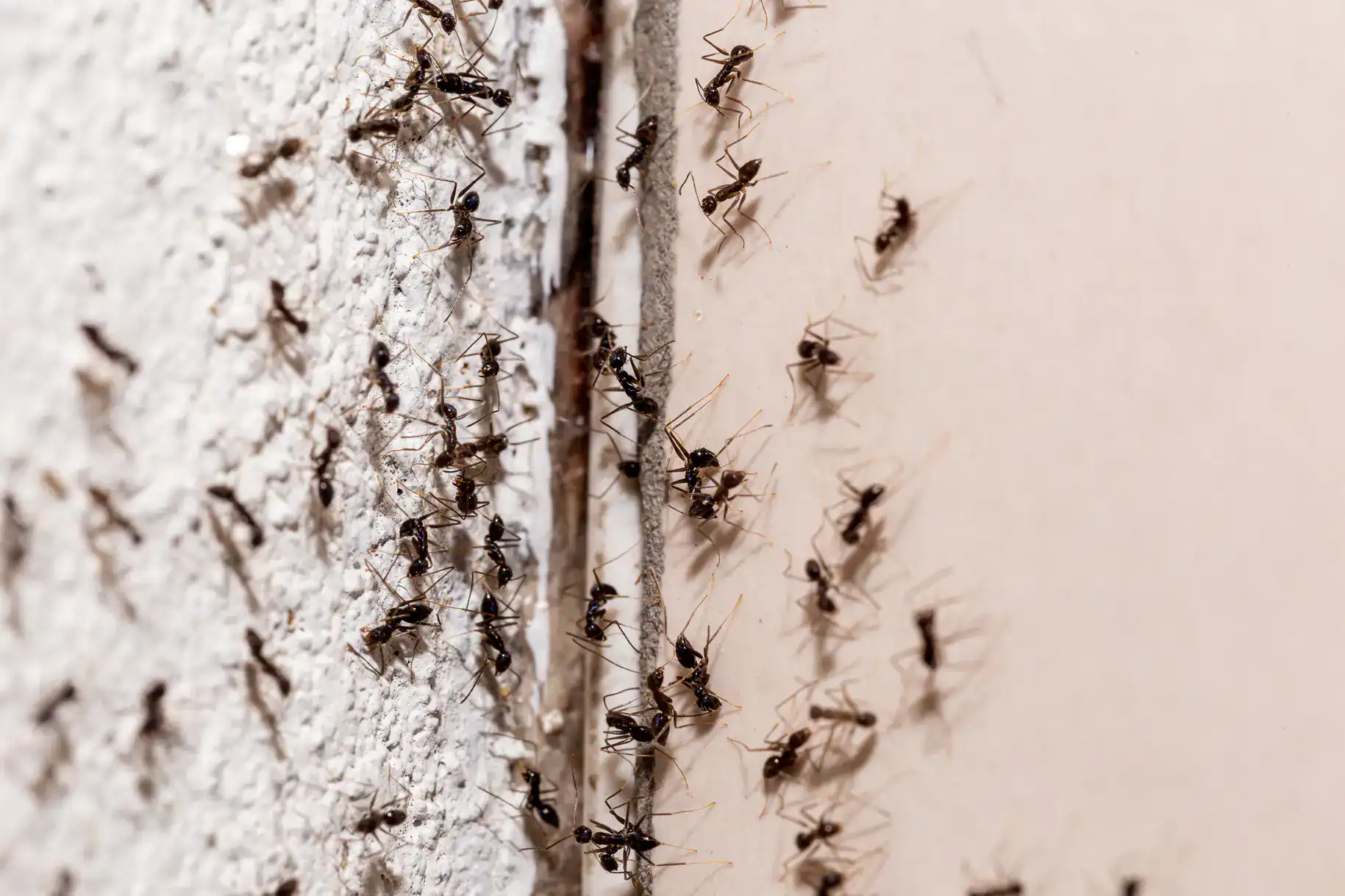
If you’ve sprayed an ant trail and watched it come back in the same spot three days later, that’s not bad luck that’s how ant colonies work. The foragers you see represent maybe five percent of the actual colony. The nest, the queen, and the satellite colonies are untouched. Store-bought sprays don’t reach them, and a single professional treatment often doesn’t either when the infestation is coming from a source as large as the park’s wooded and marshy margins.
For homes along Fillmore Avenue, Stuart Street, and the blocks bordering Marine Park’s edge, ant pressure isn’t just a spring problem. When heavy rain or tidal fluctuations along Gerritsen Creek raise groundwater near the salt marsh, colonies near the water get displaced and move inland straight toward the older brick homes that line the neighborhood’s residential blocks. That’s a dynamic most pest control companies won’t even mention.
The homes here were built mostly between the 1920s and 1960s. Aging wood sills, basement beams, and crawl spaces that have dealt with decades of moisture exposure are exactly what carpenter ants are looking for. Treating the ants you can see without addressing what’s drawing them in and where they’re nesting doesn’t solve anything. That’s the difference between a treatment that holds and one that doesn’t.
We’re headquartered at 2216 Flatbush Avenue ZIP code 11234, the same postal zone that covers Marine Park. Flatbush Avenue runs along the eastern boundary of the neighborhood itself. That’s not a technicality. It means when you call, you’re reaching a company that operates on the same roads, knows the same building types, and has been treating homes in Marine Park since the early 1980s.
Founded by Richard Kourbage, we’ve maintained an A+ rating with the Better Business Bureau of New York State across five decades of operation. We’re fully licensed, bonded, and insured, and we use only NYS Department of Environmental Conservation-registered materials something that matters when your backyard borders a Forever Wild protected salt marsh. You’re not getting a national franchise that sends whoever’s available. You’re getting a Brooklyn company that’s been accountable to this community for a long time.
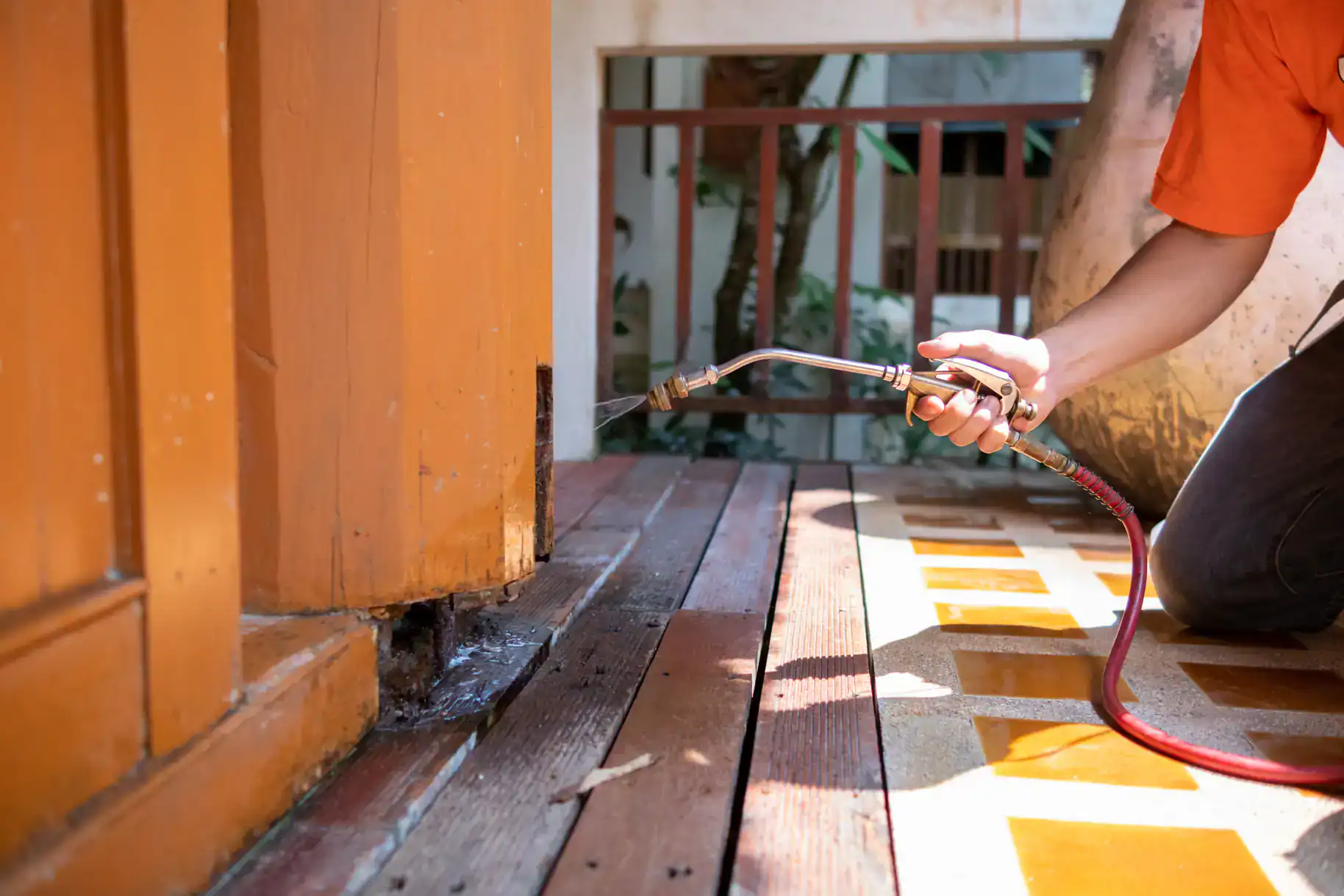
When you call, someone picks up any day, any hour. You’ll get a free estimate before anything is scheduled, so there’s no guesswork on cost before you commit. Once you’re ready to move forward, a licensed technician comes out for an initial cleanout visit. That means applying treatment materials both inside and outside the home interior entry points, kitchen areas, basement perimeters and along the exterior foundation and grounds where foraging ants are entering.
For Marine Park homes, that exterior work is especially important. Colonies established in the park’s wooded margins forage outward up to 100 feet, using tree branches, foundation gaps, and aging mortar lines as pathways in. The materials applied to the exterior intercept that foraging activity before it reaches your kitchen. But one visit isn’t the end of the process it’s the beginning.
Follow-up visits are scheduled based on your situation: weekly, every other week, or monthly, depending on how active the infestation is and how quickly activity drops off. Those visits allow the technician to re-apply materials, check for new activity, and adjust the approach if needed. That’s how you get results that actually hold, rather than a two-week reprieve before the ants come back.
Ready to get started?
Carpenter ants are the primary structural concern in Marine Park. They don’t eat wood they excavate it, hollowing out smooth tunnels through basement sills, window frames, and wall voids. In a neighborhood of pre-war and postwar brick homes with aging wood structural elements and chronic moisture exposure from the adjacent tidal environment, an untreated carpenter ant infestation is a financial risk, not just a nuisance. These are homes valued at $700,000 and up, many passed from generation to generation. Protecting the structure is part of protecting the investment.
Pavement ants are the more common visible culprit the small dark ants forming trails along your kitchen floor or bathroom tile. They nest under concrete slabs, sidewalks, and foundation edges, which makes them a persistent issue in Marine Park’s older homes where settling foundations and cracked slab edges give them easy access. We handle both, along with odorous house ants, fire ants, and any other species showing up in your home.
All materials we use are registered with the New York State Department of Environmental Conservation. For homeowners adjacent to a protected salt marsh ecosystem, that’s not a minor detail it means treatment is applied responsibly, with the right products in the right places. We offer a 10% senior discount for qualifying residents, which is relevant in a neighborhood where nearly one in five residents is 65 or older.
The ants you see foraging across your floor or countertop are a small fraction of the colony typically workers sent out to find food. When you spray them, you eliminate those foragers, but the queen, the nest, and any satellite colonies are completely unaffected. Within days, the colony sends out a new wave of foragers, and the cycle starts over. This is why over-the-counter sprays almost always produce temporary results.
Professional ant control targets the colony itself, not just the visible activity. The materials we apply are designed to be carried back into the nest by foraging ants, reaching the source of the infestation rather than just its symptoms. Combined with exterior perimeter treatment to intercept ants before they enter, and follow-up visits to re-apply as needed, the treatment addresses the full picture not just what you can see on your kitchen floor.
Yes and in Marine Park specifically, the risk is higher than in many other Brooklyn neighborhoods. Carpenter ants are drawn to moisture-damaged and damp wood, and the homes here check both boxes. Most of Marine Park’s residential buildings were constructed between the 1920s and 1960s, which means aging wood structural elements that have been exposed to decades of humidity including the elevated ambient moisture that comes with living adjacent to a tidal salt marsh and Gerritsen Creek’s twice-daily tidal flow.
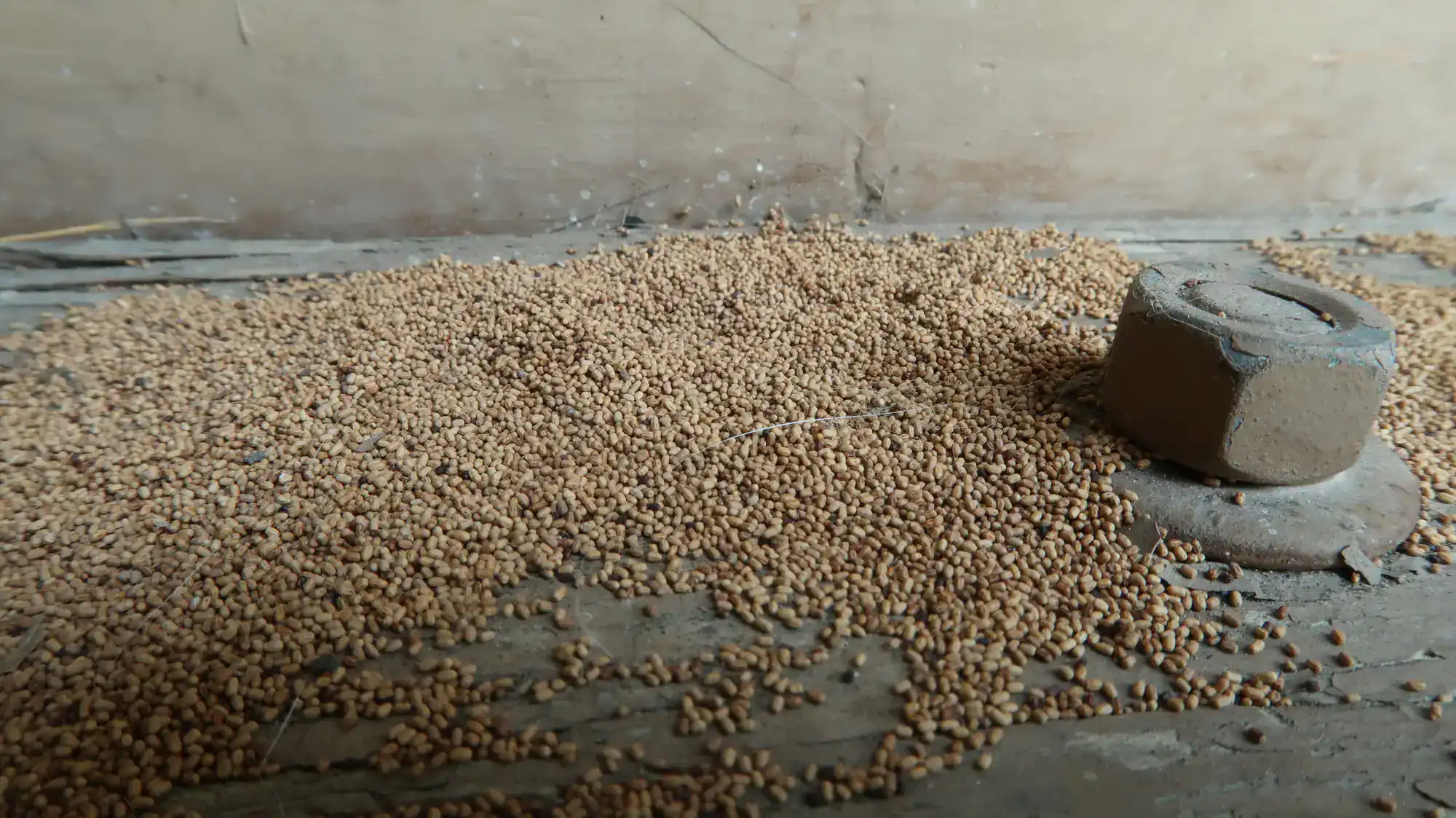
Carpenter ants don’t consume wood the way termites do, but they excavate it creating smooth galleries and tunnels through basement sills, wall framing, and window frames that weaken structural integrity over time. The damage is often hidden inside walls or under floors, which means by the time you notice visible signs like sawdust-like frass or hollow-sounding wood, the infestation may already be well established. Early treatment is significantly less costly than structural repair.
You can’t always tell just by looking, but if you’re on a block bordering the park particularly along Fillmore Avenue, Stuart Street, or the streets closest to the park’s wooded perimeter there’s a strong likelihood that the source colony is established in or near the park’s marshy margins rather than inside your home. Carpenter ant colonies in wooded environments forage outward up to 100 feet, using overhanging tree branches, foundation gaps, and utility lines as entry routes into adjacent structures.
The pattern of activity is often a clue. If you’re seeing large black ants near your roofline, eaves, or attic or finding frass near window frames and wood trim that’s consistent with carpenter ants foraging in from an outdoor colony rather than a fully established indoor nest. One of our technicians can assess entry points and foraging patterns during the initial visit to determine where the infestation is originating and treat accordingly, including exterior perimeter application to intercept foraging activity at the source.
This is a legitimate concern for Marine Park residents, and it’s one worth asking directly. We use only pesticide materials registered with the New York State Department of Environmental Conservation. NYS DEC registration means the product has been reviewed and approved for use in New York, with specific guidelines around application rates, locations, and environmental sensitivity. Our licensed technicians are trained to apply materials in targeted areas not broadcast spraying across yards or near water which is exactly the approach required near an ecologically sensitive environment like Marine Park’s Forever Wild salt marsh.
The materials applied to the exterior of your home are focused on foundation perimeters, entry points, and structural gaps not open ground near the park’s edge. If you have specific concerns about application near a garden, a pet area, or proximity to the creek, those are conversations to have with the technician before the visit begins. Our process is designed to be both effective and controlled, which matters in a neighborhood where the natural environment is a genuine community asset.
There’s no single honest answer that applies to every situation, but for Marine Park homes particularly those near the park’s perimeter or dealing with carpenter ants in older wood structures a single visit is rarely enough to fully eliminate an established infestation. The initial cleanout visit addresses active foraging, entry points, and interior nesting areas, but colonies in this area are often complex: multiple satellite nests, multiple foraging trails, and a continuous source of pressure from the park’s wooded margins.
Follow-up visits are scheduled based on activity levels weekly, every other week, or monthly depending on how quickly the infestation responds to treatment. Most infestations see significant reduction after the first visit, with full elimination typically achieved over the course of two to four follow-up visits. Homes with more severe carpenter ant activity, especially where moisture damage has allowed deep structural nesting, may require more time. The follow-up schedule is flexible and adjusts based on what the technician observes during each visit.
We offer a 10% senior discount for qualifying customers. In Marine Park where roughly one in five residents is 65 or older and many of those residents are the long-term homeowners who have maintained these properties for decades that discount reflects something straightforward: the people who’ve kept this neighborhood what it is deserve a fair deal on protecting the homes they’ve invested in for years.
Beyond the senior discount, every job starts with a free estimate, so you know exactly what you’re looking at before any work begins. There are no contracts required for ongoing maintenance the follow-up schedule is flexible and based on what your situation actually calls for, not a fixed commitment designed to lock you in. If you’re unsure whether your situation warrants professional treatment or just want a second opinion on what you’re seeing, the free estimate is a no-pressure way to get a real answer from someone who knows what to look for in homes like yours.
Useful Links