Hear from Our Customers
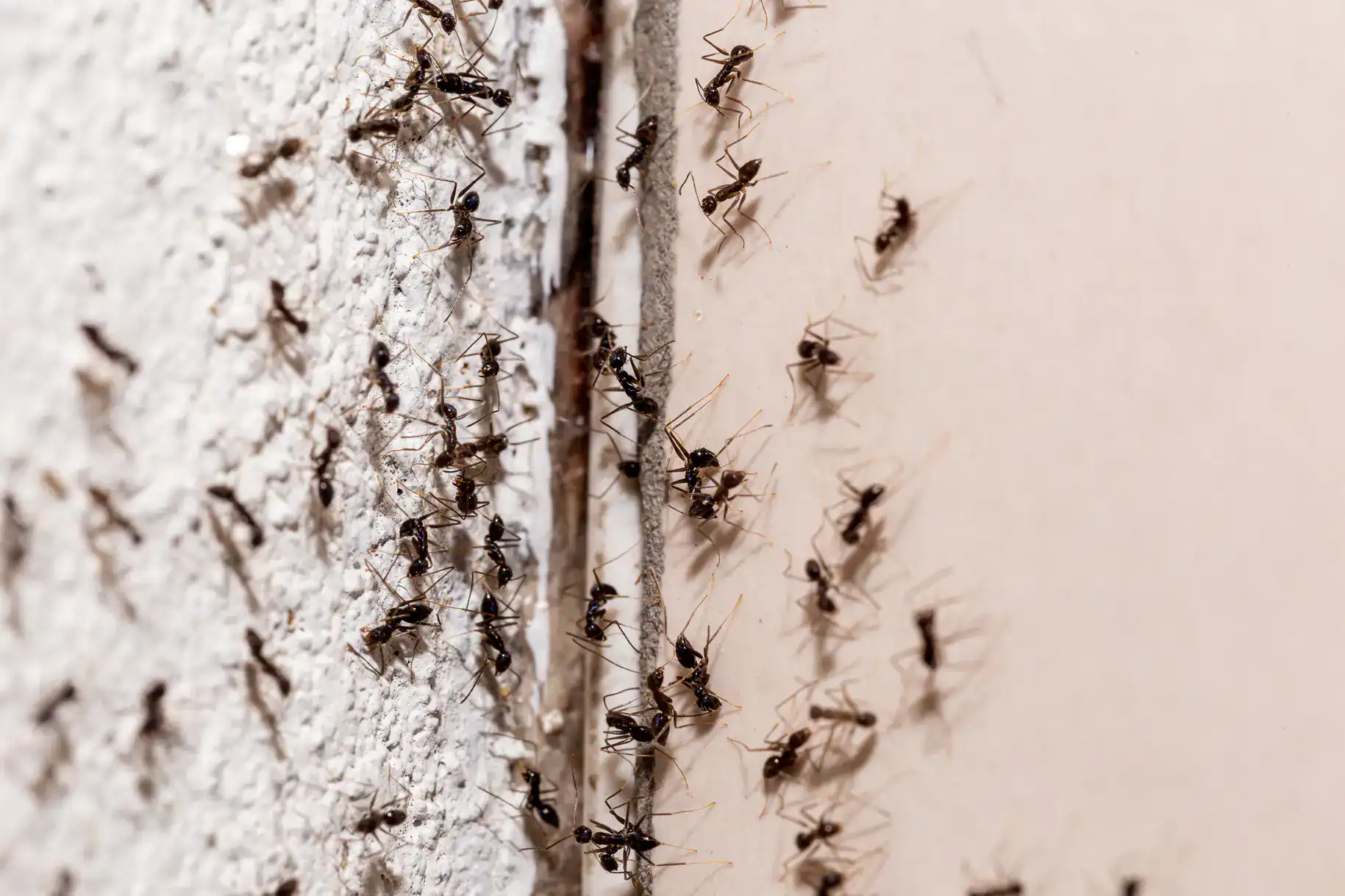
You’ve probably already tried something. A spray, a trap, maybe a few different products. The ants disappeared for a few days and then came right back because whatever you used only hit the foragers you could see. The colony was still intact, tucked somewhere inside a wall, a foundation crack, or a utility chase. That’s the part that actually needs to be treated.
Williamsburg’s older buildings make this especially persistent. The pre-war tenements along the J/M/Z corridor, the converted loft buildings between the waterfront and Broadway, the walk-ups near the Williamsburg Bridge these structures have decades of settled cracks, aging plumbing, and moisture buildup that give ant colonies exactly what they need to establish and spread. In a multi-unit building, one untreated colony can send foragers into three different apartments through shared walls and pipe runs.
The waterfront location adds another layer. Williamsburg sits along the East River, and that proximity keeps ambient moisture levels elevated which is exactly the kind of environment carpenter ants look for in structural wood. If you’re in an older building and you’re seeing large, dark ants near windows or plumbing fixtures, that’s not a minor nuisance. That’s a sign something needs to be looked at before it becomes a bigger problem.
We’re a family-owned company based in Brooklyn, and we’ve been operating for over 50 years. That’s not a marketing number it means our technicians have worked in the specific building types that make up Williamsburg: the 19th-century brick tenements of South Williamsburg, the converted warehouses off Kent Avenue, the newer towers rising along the waterfront. We know what pest pressure looks like in this neighborhood because we’ve been treating it for decades.
We’re fully licensed, bonded, and insured, and we use only NYS Department of Environmental Conservation-registered materials. Our A+ rating with the Better Business Bureau of New York State reflects how we actually operate. You get a real person on the phone 24 hours a day, seven days a week. No voicemail queue, no callback window, no waiting until Monday.
We also offer free estimates, a 10% senior discount, and flexible scheduling after the initial treatment because no two buildings in Williamsburg are the same, and your situation shouldn’t be treated like it is.
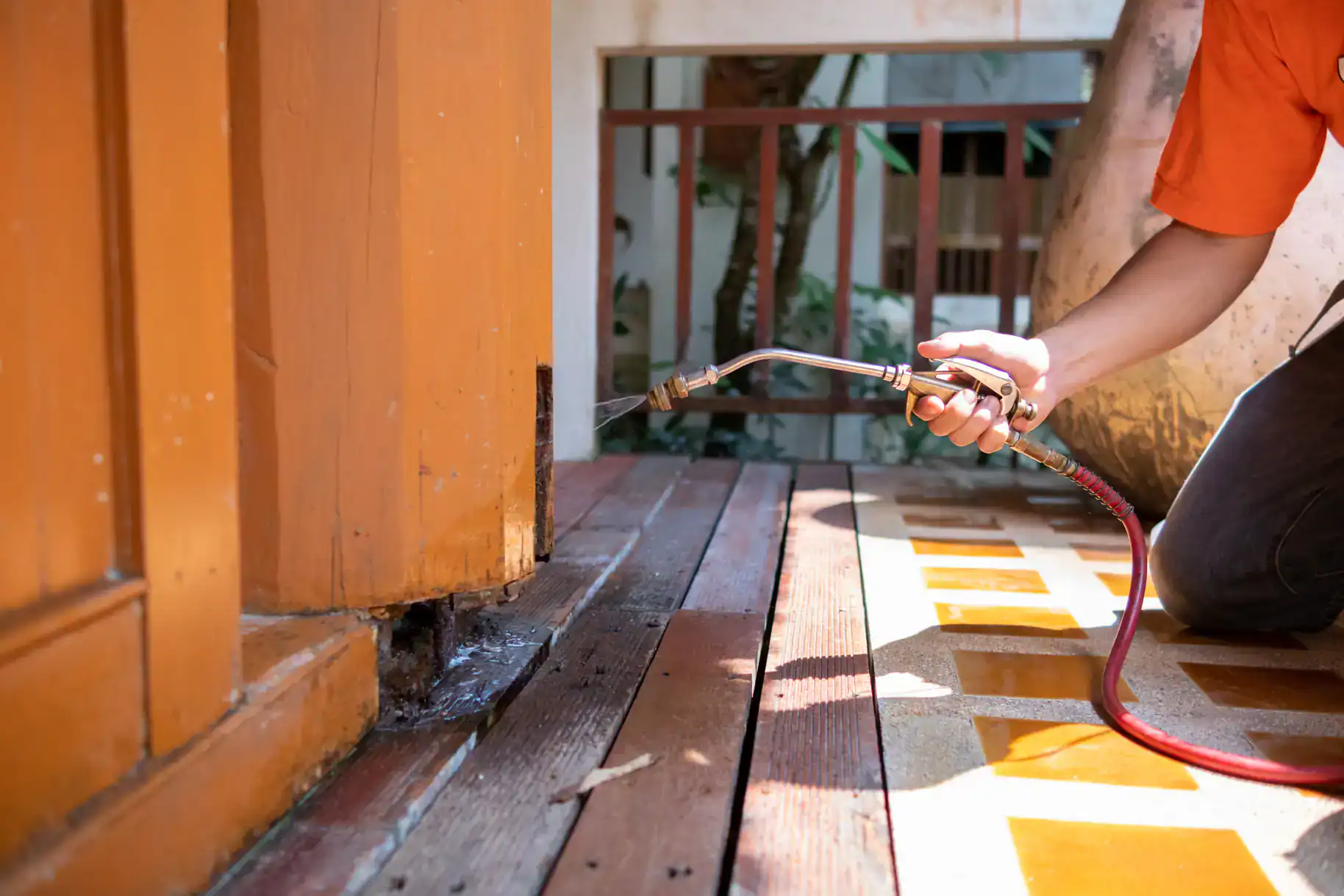
The first step is the initial cleanout. One of our technicians comes out, assesses the infestation, and applies treatment both inside and outside your property. The materials we use aren’t designed to just kill what’s visible they’re carried by forager ants back into the colony, where they spread through the nest. That’s the only way to actually eliminate the source rather than manage the surface.
In Williamsburg specifically, that exterior treatment matters more than most people realize. With major construction underway at sites like River Ring on River Street and Williamsburg Wharf on Kent Avenue, established underground ant colonies are being displaced on a regular basis. When the ground gets excavated, those colonies move. They look for the nearest available structure and in a dense neighborhood like this one, that’s often your building. Treating the perimeter cuts that off before it becomes an interior problem.
After the initial cleanout, we schedule follow-up visits based on what your property needs weekly, every other week, or monthly. We keep coming back until the infestation is gone. Under NYC’s housing code, landlords are legally responsible for maintaining pest-free conditions, so if you’re renting, your first call may actually be to your building manager but if you need documentation, a licensed exterminator, or a company that can handle the whole building, that’s exactly what we do.
Ready to get started?
Ant control in Williamsburg isn’t a one-size situation. The species you’re dealing with depends on where you live and what kind of building you’re in. Pavement ants and odorous house ants are the most common in the dense residential blocks they nest in foundation cracks and sidewalk seams, and they forage indoors looking for food and moisture. Carpenter ants show up most often in older buildings with moisture issues: pre-war walk-ups, converted lofts with aging window frames, brownstones near the waterfront. In newer high-rise towers, pharaoh ants are a documented concern they travel through plumbing and electrical conduits and require a completely different treatment approach than what you’d use on a pavement ant colony.
We provide ant control services in Williamsburg, NY that cover all of these species. We assess what you’re actually dealing with before we treat, and we apply materials that are registered with the NYS DEC and safe for use in occupied residential and commercial buildings. That matters in a neighborhood where households include young children, pets, and multi-generational families particularly in the South Williamsburg community along Lee Avenue and the surrounding blocks.
For commercial properties restaurants on Bedford Avenue, food vendors near Smorgasburg, property managers overseeing multi-unit buildings we handle building-wide ant infestations and can provide the documentation required for NYC housing code compliance. Residential or commercial, we treat the whole problem.
The most common reason is that whatever treatment was used only eliminated the foragers the ants you could actually see without reaching the colony. Ant colonies can have thousands of workers and multiple satellite nests spread through wall voids, insulation, and structural cavities. In Williamsburg’s older walk-up buildings and converted lofts, those nests can be deeply embedded in places that store-bought sprays simply can’t reach.
There’s also a building-level dynamic at play in dense multi-unit housing. If your neighbor’s unit has an untreated infestation, ants can move between apartments through shared walls, plumbing chases, and electrical conduits. Treating one unit without addressing the broader building problem is why infestations keep coming back. A professional treatment that covers both interior and exterior and includes scheduled follow-up visits is the only approach that reliably breaks that cycle.
The three you’re most likely to encounter in Williamsburg are pavement ants, odorous house ants, and carpenter ants. Pavement ants are extremely common in dense urban neighborhoods they nest in the cracks of sidewalks, building foundations, and concrete perimeters, which Williamsburg has in abundance. Odorous house ants are small, dark brown, and produce a faint rotten-coconut smell when crushed. They form large colonies and are the most frequent kitchen invader in NYC apartment buildings.
Carpenter ants are a different concern. They don’t eat wood they nest in it, specifically in wood that’s been softened by moisture. Williamsburg’s older pre-war buildings and converted industrial spaces often have aging plumbing, deteriorating window frames, and moisture infiltration from the East River proximity exactly the conditions carpenter ants look for. If you’re seeing large black ants near your bathroom, kitchen plumbing, or exterior walls, it’s worth having a professional assess whether there’s a structural nesting issue rather than just a foraging one.
In most cases, yes. Under New York City’s housing code, landlords are legally required to maintain pest-free conditions in rental properties. An ant infestation is considered a violation of the warranty of habitability, which means your landlord is responsible for arranging and covering the cost of treatment. You should not be paying out of pocket for professional ant control in a rental apartment.
The practical step is to notify your landlord or building manager in writing this creates a record of the complaint and starts the clock on their obligation to respond. If they fail to act within a reasonable timeframe, you can file a complaint with the NYC Department of Housing Preservation and Development. If your building manager is looking for a licensed, insured exterminator who can treat the whole building and provide documentation of service, we handle exactly that and we work with property managers across Brooklyn’s Community District 1 regularly.
Yes and it’s more common than most people realize. Large-scale ground excavation for projects like River Ring on River Street and Williamsburg Wharf on Kent Avenue disturbs established underground ant colonies that have been in place for years. When that soil gets displaced, those colonies don’t disappear they relocate. In a neighborhood as densely built as Williamsburg, the nearest available structure is usually a residential or commercial building, and that’s where the displaced ants end up.
This is a pattern that tends to produce sudden, unexplained ant activity in buildings that never had a problem before especially in the blocks immediately surrounding active construction zones. If you’ve noticed ants appearing out of nowhere in the past few months and you’re near one of the waterfront development sites, that’s likely what’s driving it. Treating the building perimeter is the most effective way to intercept displaced colonies before they establish indoors, which is exactly what our exterior treatment is designed to do.
The timeline depends on the species, the size of the infestation, and the type of building. For common ant species like pavement ants or odorous house ants in a single apartment, you’ll typically see a significant reduction in activity within the first week after the initial treatment. Full elimination meaning no returning foragers and no new trails usually takes two to four follow-up visits depending on how established the colony was.
Carpenter ant infestations in older buildings take longer because the nesting sites are often inside structural wood, which is harder to access and requires the treatment materials to work their way through the colony over time. In Williamsburg’s pre-war walk-ups and converted lofts, where moisture damage can create extensive nesting conditions behind walls, patience and follow-through matter more than a single aggressive treatment. That’s why we schedule follow-up visits as part of the standard process weekly, every other week, or monthly until the infestation is fully resolved, not just temporarily reduced.
Yes. Williamsburg’s food and hospitality corridor the restaurants and cafés along Bedford Avenue, the vendors at Smorgasburg, the bars and entertainment venues throughout the Northside represents a high-stakes environment for ant control. A single ant sighting in a commercial kitchen or dining area can trigger health code violations and damage a business’s reputation quickly. Professional, documented treatment isn’t optional in that context.
We serve both residential and commercial clients in Williamsburg, NY. For commercial properties, we provide treatment documentation that supports NYC health and housing code compliance, and we work with property managers overseeing multi-unit buildings who need building-wide ant pest control handled reliably and on record. We’re fully licensed through the NYS Department of Environmental Conservation, bonded, and insured the credentials that matter when a business or building owner needs more than just someone showing up with a sprayer. If you manage a property in Kings County and need a consistent, professional ant control service, call us for a free estimate and we’ll assess what the building actually needs.
Useful Links