Hear from Our Customers
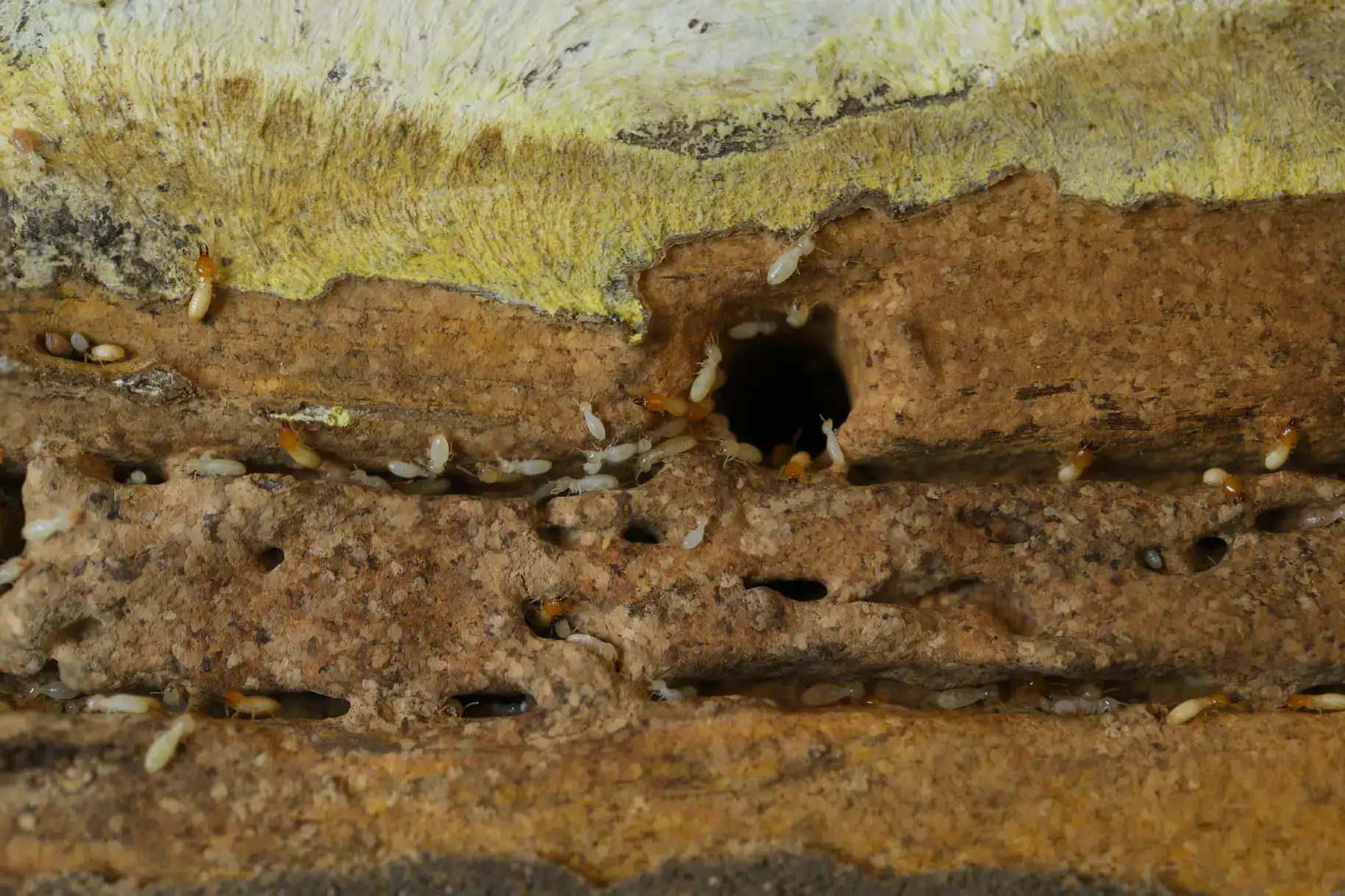
Most termite damage in Williamsburg doesn’t announce itself. You don’t find it until a contractor opens a wall during a kitchen renovation, or a floor starts to feel soft in a place it never used to. By then, the colony has usually been active for years feeding around the clock through joists, sill plates, and structural beams that were never designed to be protected from the inside out.
That’s the specific problem with Williamsburg’s building stock. The Northside’s wood-frame row houses share walls and plumbing chases with neighboring units, which means a colony established under one foundation can quietly extend into two or three adjacent properties before anyone notices anything visible. Converted warehouse lofts add another layer those original heavy timber frames and exposed wood beams that look great as design features are exactly what Eastern Subterranean Termites are drawn to, especially when aging plumbing creates the moisture conditions they need to thrive.
What you get after proper termite treatment isn’t just a pest-free building it’s clarity. You know what you’re dealing with, you have documentation that protects your investment, and if you’re buying or selling in Williamsburg’s competitive real estate market, you have the WDO report your lender requires to close. That’s the outcome that actually matters here.
We’ve been a Brooklyn operation since 1971 founded by Richard Kourbage Sr. and now run by his sons Richard Jr. and Charles. That’s three generations of the same family, with the same name on every job. When something doesn’t go right, there’s no corporate chain to escalate through. There’s a person who picks up the phone.
Our staff brings over 100 years of combined pest control experience, and a significant portion of that has been spent inside the exact types of buildings that define Williamsburg pre-war walkups, attached row houses, multi-family tenements, and industrial conversions from the Northside to the Southside. We hold BBB accreditation since 1989 with an A+ rating, and every technician applies only NYS DEC-registered materials. That matters in a neighborhood as densely occupied as Williamsburg, where treatments need to be effective without creating disruption for the families, tenants, and pets in surrounding units.
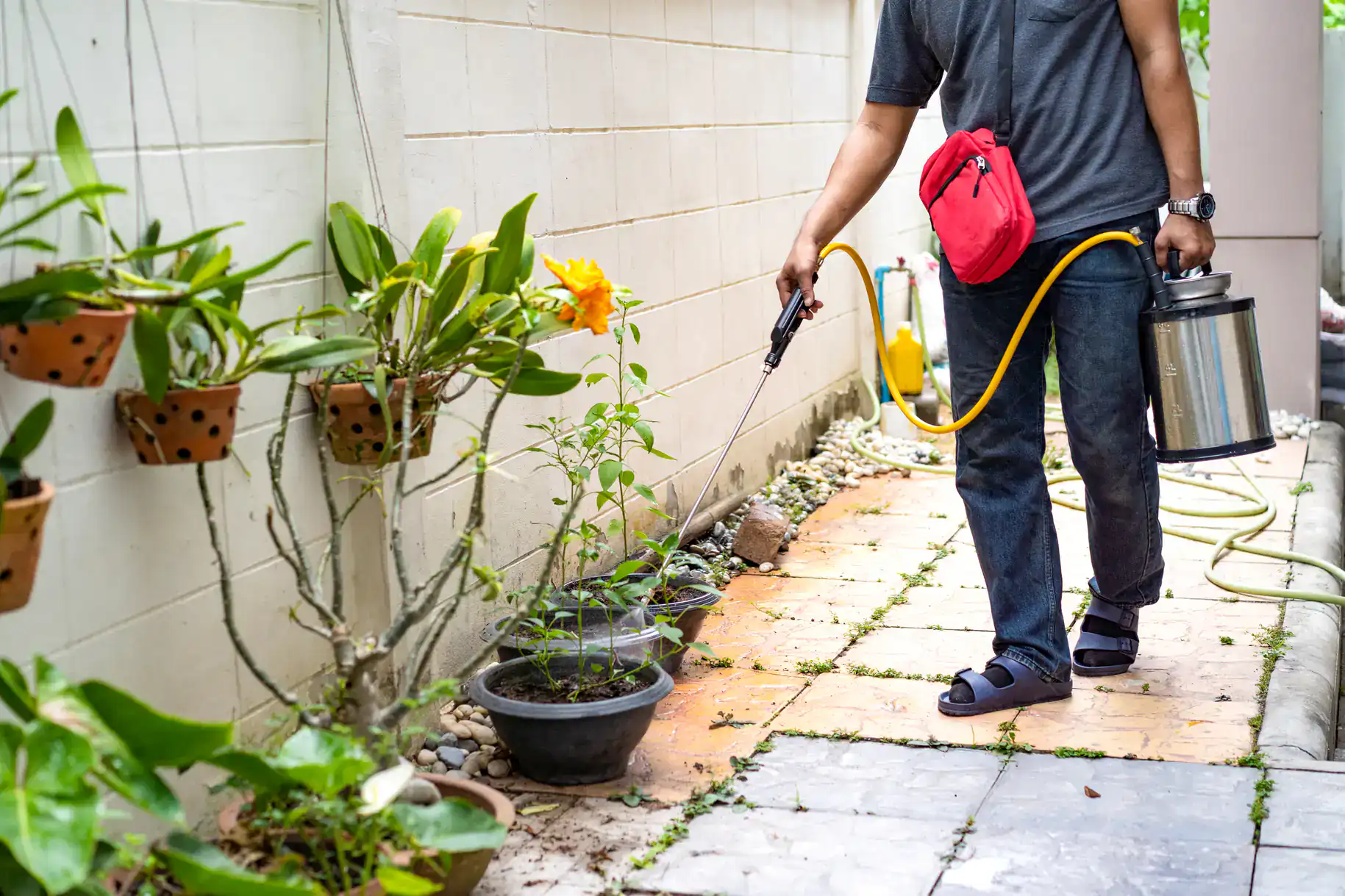
It starts with an inspection and in most cases, we can get someone to your building the same day you call. The inspection covers the areas where Eastern Subterranean Termites are most likely to be active in Williamsburg’s building types: basement sill plates, foundation contact points, plumbing chases, crawl spaces, and any wood-to-soil or wood-to-concrete connections. In a converted loft or warehouse building, that also means checking original timber framing and structural beams that may have been exposed for decades without any treatment history.
Once the inspection is complete, you get a clear picture of what’s there or confirmation that it’s not. If there’s activity, the treatment plan is explained before anything is applied. For subterranean termite control in attached buildings, that typically means a baiting system designed to reach the colony at its underground source, not just treat what’s visible at the surface. In some cases, a liquid barrier treatment along the foundation perimeter is the right call. The approach depends on your specific building, not a one-size-fits-all protocol.
If you’re in the middle of a real estate transaction in Williamsburg, the inspection produces a formal WDO report the documentation required by VA, FHA, HUD, and most conventional lenders before a mortgage closes. Our inspectors are certified and familiar with what Williamsburg’s lenders and attorneys expect to see. You get the paperwork you need, on a timeline that works with your closing date.
Ready to get started?
Termite control in Williamsburg isn’t a single treatment applied the same way to every building. The neighborhood’s mix of 19th-century row houses, pre-war tenements, converted industrial lofts, and new construction near Domino Park creates genuinely different risk profiles and the treatment approach needs to match the building, not just the pest.
For attached row houses on the Northside, where shared foundations and plumbing chases allow colonies to travel laterally across multiple properties, baiting systems that target the colony at the soil level are typically the most effective long-term solution. For multi-family rental buildings throughout Central and South Williamsburg where landlords are legally responsible for maintaining pest-free conditions under NYC Housing Maintenance Code we can provide both the treatment and the documentation needed to resolve an HPD complaint or NYC Department of Health citation. That’s not something most pest control companies explicitly handle, but it’s a real need in this neighborhood.
For buyers and sellers navigating Williamsburg’s active real estate market, a certified WDO inspection report is part of our service not an add-on. Every technician applies only NYS DEC-registered materials, and all work is performed by certified applicators under Category 7C structural pest control licensing. We answer phones 24 hours a day, seven days a week, and guarantee an appointment within two business days with same-day availability in most cases.
If you’re financing the purchase which most buyers are then yes, in most cases you do. VA, FHA, and HUD loans all require a Wood Destroying Organism (WDO) inspection report before the mortgage can be approved. Many conventional lenders require it as well, and even when they don’t, your real estate attorney may recommend one as standard due diligence on a Brooklyn property.
In Williamsburg specifically, this matters more than in newer neighborhoods. A significant portion of the housing stock pre-war walkups, converted loft buildings, attached row houses has original wood framing that has never been professionally inspected for termite activity. A WDO report gives you documentation of the building’s current status and protects you from inheriting a problem that the previous owner may not have known about. Our inspectors are certified to produce this report, and we’re familiar with the building types and timelines that Williamsburg transactions typically involve.
Yes, and this is one of the more common scenarios in Williamsburg’s attached housing stock. Eastern Subterranean Termites live underground and forage through soil, which means a colony established beneath one unit’s foundation can extend its tunnels into adjacent units through shared foundation walls, plumbing chases, and any wood-to-concrete connection points. In a row house block on the Northside, where buildings share party walls and the same soil beneath them, a single colony can reach multiple properties before any visible sign appears above ground.
This is why treating only the affected unit or only the visible damage rarely solves the problem completely. Effective subterranean termite control in a multi-unit Williamsburg building means targeting the colony at the soil level, not just the symptoms inside a specific apartment. Our baiting approach is designed to do exactly that: eliminate the colony at its source so the problem doesn’t resurface in a neighboring unit six months later.
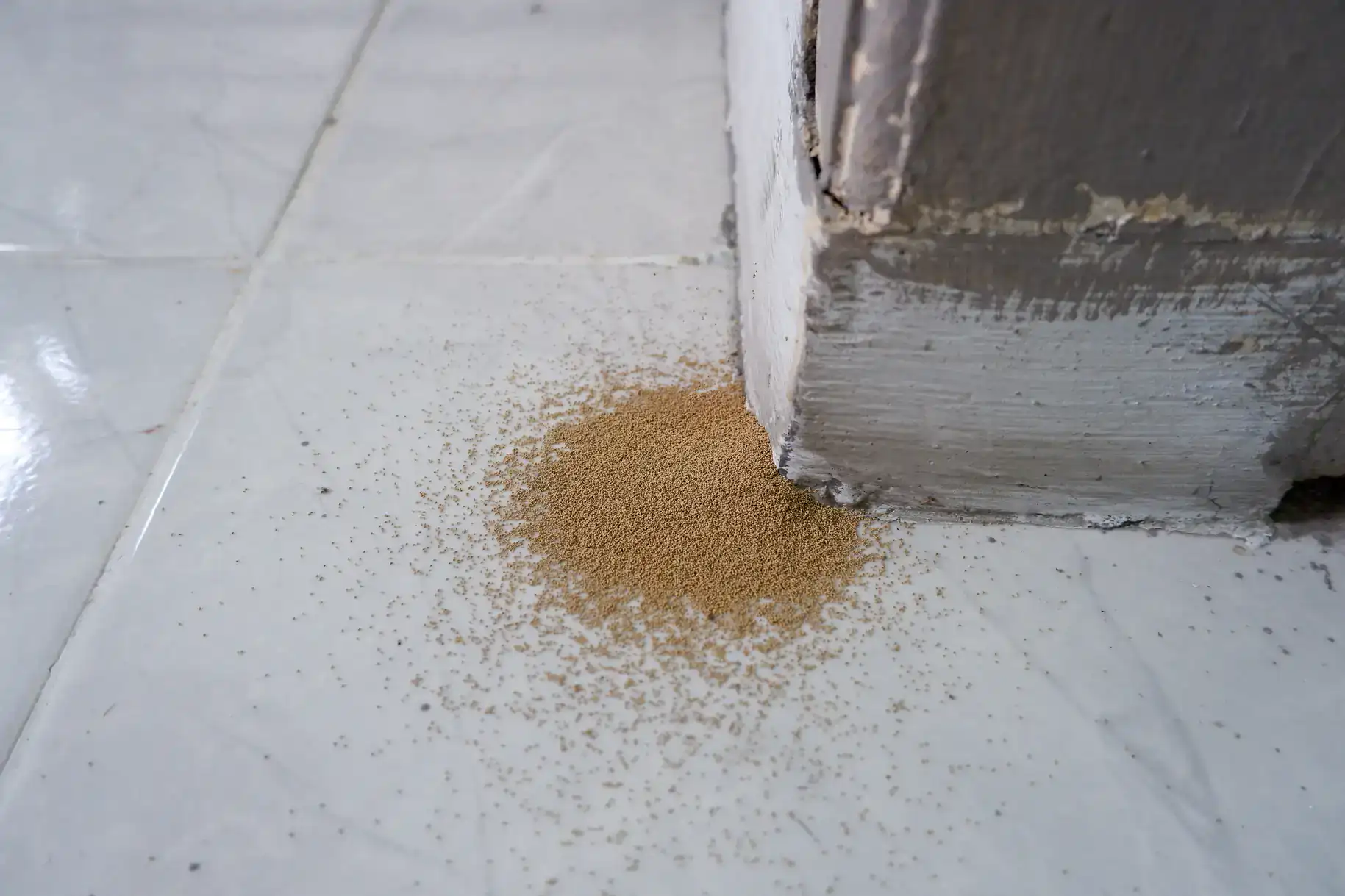
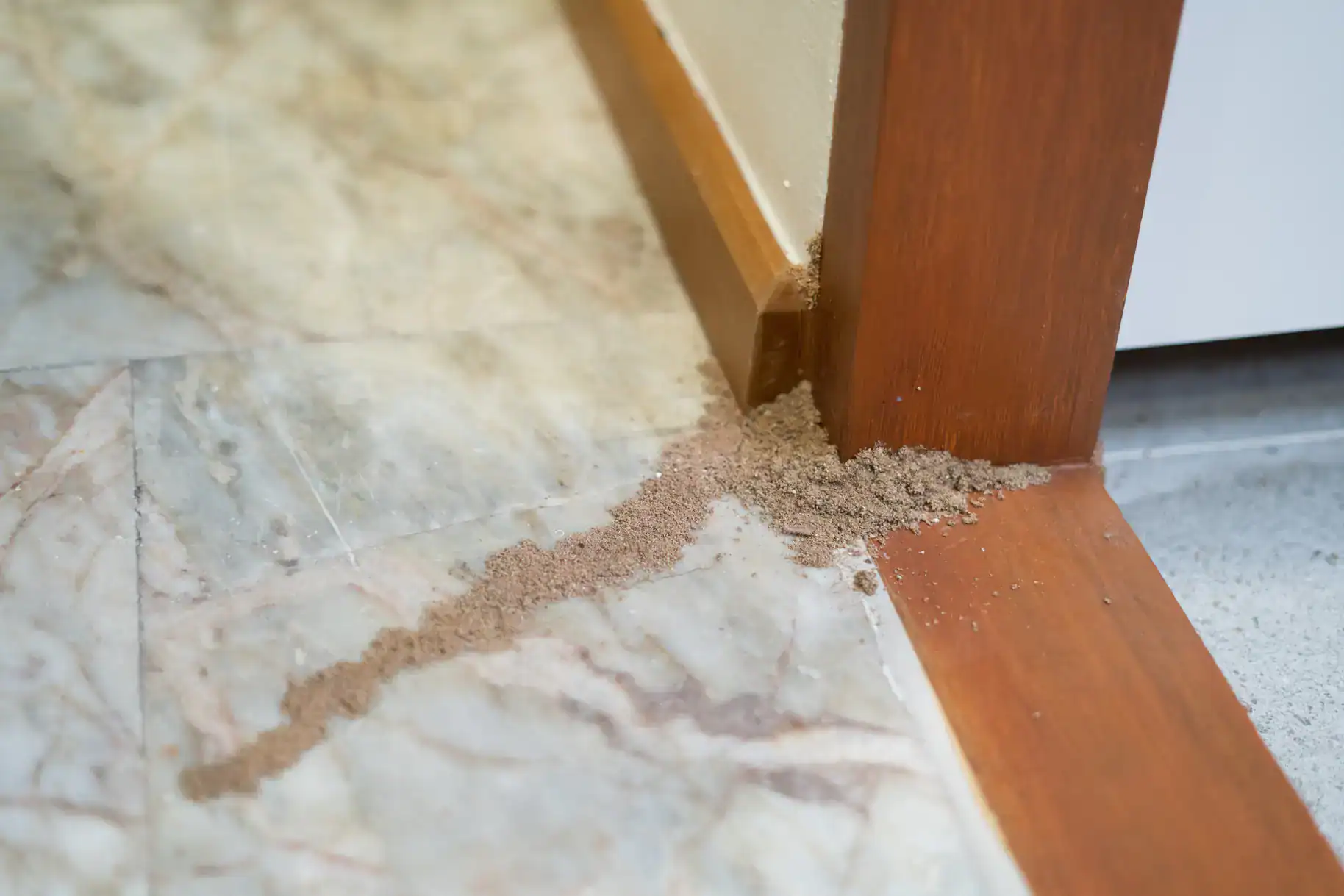
Converted loft and warehouse buildings which are some of Williamsburg’s most distinctive residential spaces present a specific set of termite warning signs that are easy to overlook if you don’t know what you’re looking for. The most common early indicators include mud tubes along foundation walls or concrete columns, hollow-sounding wood when you tap exposed beams or original hardwood floors, and small piles of frass (which looks like fine sawdust or sand) near baseboards or along structural members.
In these buildings, the exposed heavy timber framing and original wood floors that make the space visually appealing are also the most vulnerable elements. Old-growth wood that has been in place for decades without treatment is exactly what Eastern Subterranean Termites target, particularly when moisture from aging plumbing or basement-level condensation is present. If you notice paint bubbling or peeling in a way that looks like water damage but there’s no obvious leak, that’s worth having looked at termites working inside a wall cavity can create moisture conditions that mimic water intrusion from the outside.
Cost depends on the size of the building, the extent of the infestation, and the type of treatment required. For a typical Williamsburg row house or walkup, termite treatment generally runs somewhere between $1,500 and $5,000. Larger multi-family buildings or commercial properties with more complex foundations will fall toward the higher end of that range or above it. A WDO inspection for a real estate transaction is a separate, lower-cost service.
What’s worth keeping in mind is that the average cost of termite damage repair once structural wood has been compromised is around $3,000, and it can reach $10,000 or more if the damage is extensive. Homeowner’s insurance in New York almost never covers termite damage, which means the full cost of repairs comes out of pocket. In a neighborhood where property values are as high as they are in Williamsburg, treating a confirmed infestation early is almost always significantly less expensive than dealing with the structural consequences of waiting.
Under the NYC Housing Maintenance Code, landlords are legally responsible for maintaining rental properties free of pest infestations, including termites. If your landlord isn’t responding, you have the right to file a complaint with the NYC Department of Housing Preservation and Development (HPD). HPD can issue a violation that requires the landlord to remediate the problem within a specific timeframe, and failure to comply can result in fines and further legal action.
If you’re a property owner or manager on the receiving end of an HPD complaint or a NYC Department of Health pest citation, we have direct experience navigating that process providing the treatment, the documentation, and the certification needed to formally close out a citation. That’s a specific capability that matters in Williamsburg, where the large stock of multi-family rental buildings means these situations come up regularly. Either way, having a licensed, certified exterminator involved early creates a paper trail that protects everyone involved.
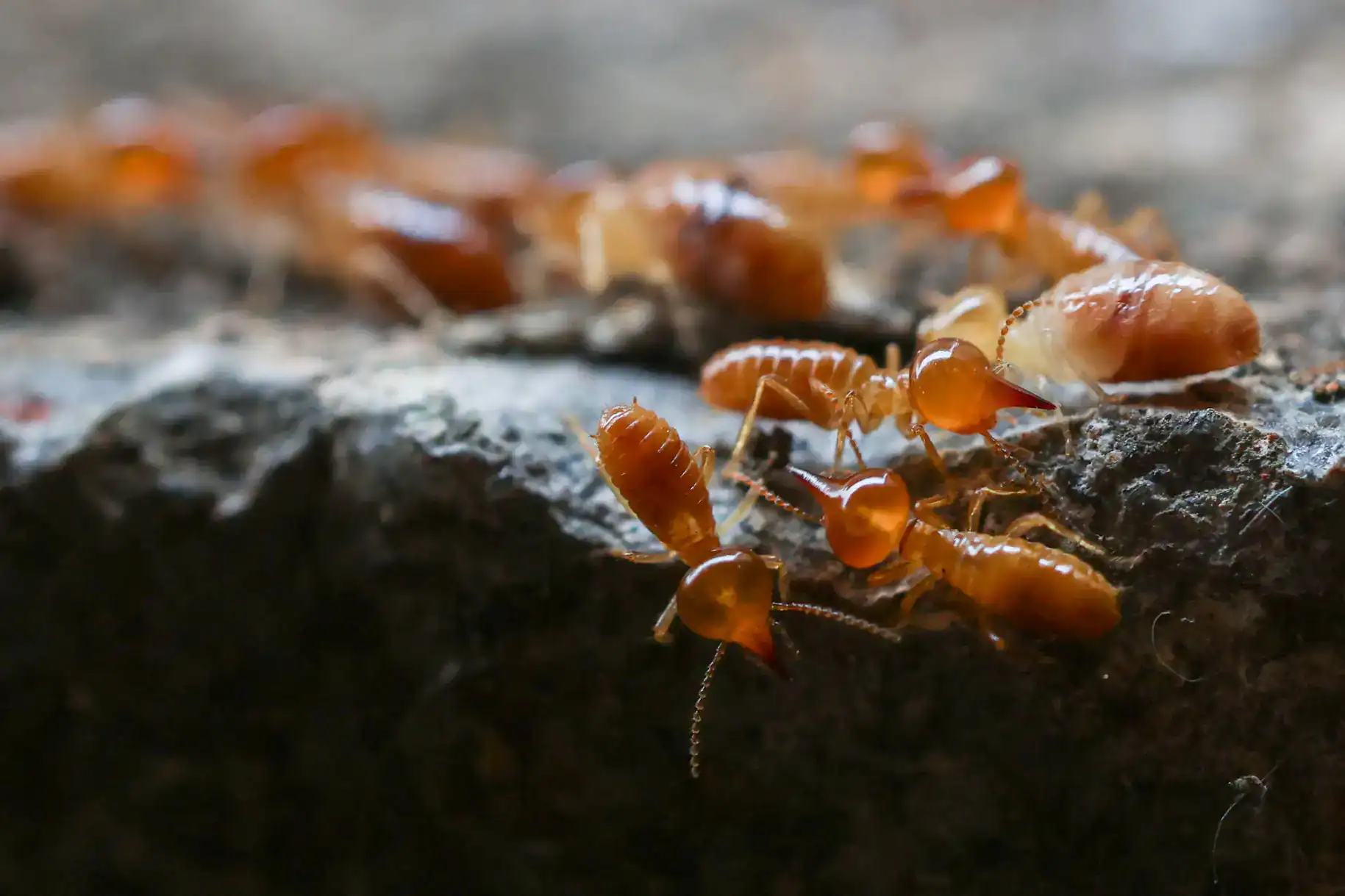
In the New York City area, Eastern Subterranean Termites typically swarm in early spring often in March through May usually following a warm day after a stretch of rain. Swarmers are the winged reproductive termites that emerge from an established colony to start new ones. In Williamsburg’s dense residential environment, the most common place people first notice them is inside their apartment, particularly in basement units, ground-floor lofts, or near windows where they’re drawn to light.
The key distinction between termite swarmers and flying ants which people often confuse is body shape. Termite swarmers have a straight, uniform body with no pinched waist, straight antennae, and two pairs of wings that are equal in length. Flying ants have a pinched waist, bent antennae, and wings of unequal size. If you’re seeing swarmers inside your building in spring, that’s a strong indicator that an established colony is already present swarmers don’t appear until a colony is mature, which typically takes several years. That means the damage has likely already been accumulating. Getting an inspection scheduled quickly, rather than waiting to see if it happens again, is the right move.
Useful Links