
Hear from Our Customers
Bed bugs in Little Neck don’t usually arrive the way most people expect. This isn’t a dense apartment corridor in Flushing or a high-turnover rental building in Jackson Heights. Most homes here are owner-occupied Colonials and Tudors built in the 1950s and 60s and that older construction means more void spaces, more baseboards with gaps, and more places for bed bugs to settle in quietly before you ever notice them. By the time you see the signs, they’ve usually been there a while.
The good news is that a thorough, certified treatment works and it works differently in a home like yours than it does in a studio apartment. When the job is done right, you stop waking up and scanning the sheets. You stop wondering whether the itch on your arm means something. You stop avoiding your own bedroom. That’s the outcome: your home feels like your home again.
For Little Neck residents who commute into the city on the LIRR Port Washington Branch or spend summer weekends in the Hamptons, the exposure risk is real and ongoing. Bed bugs hitchhike on bags and clothing without anyone knowing. Understanding how they got in and sealing that pathway is just as important as eliminating what’s already there. That’s the difference between a treatment and a solution.
Kingsway Exterminating Company has been serving Queens homeowners since before most people in Little Neck bought their houses. Founded by Richard Kourbage Sr. and now run with his sons Richard Jr. and Charles who joined in 1987 and 1989 respectively this is a family business where the people answering the phone are the same people accountable for the work. There’s no franchise layer, no anonymous dispatch center, no rotating cast of technicians who don’t know the neighborhood.
We hold an A+ rating with the Better Business Bureau, accredited since May 5, 1989, and are fully licensed under New York State Department of Environmental Conservation requirements which matters here because NYC’s HPD mandates that bed bug treatment in multi-dwelling buildings be performed by a NYSDEC-certified pest management professional. We meet that bar. We’re not generalists who occasionally handle bed bugs we’re certified bed bug specialists, which is a real distinction.
Little Neck sits at the northeastern edge of Queens, right on the Nassau County line. We cover all five boroughs and Long Island, so this community which straddles both worlds is well within our territory and our experience.
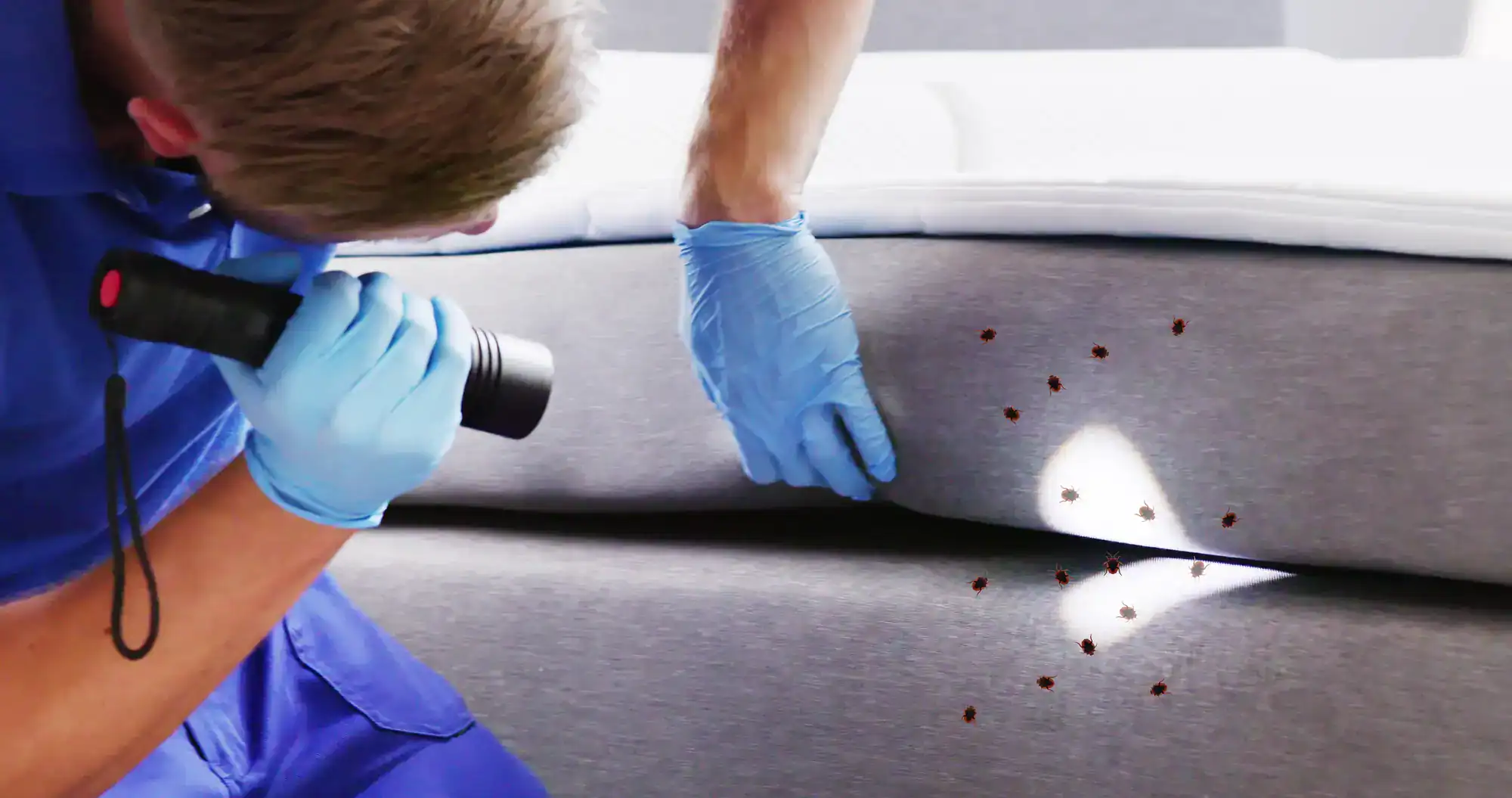
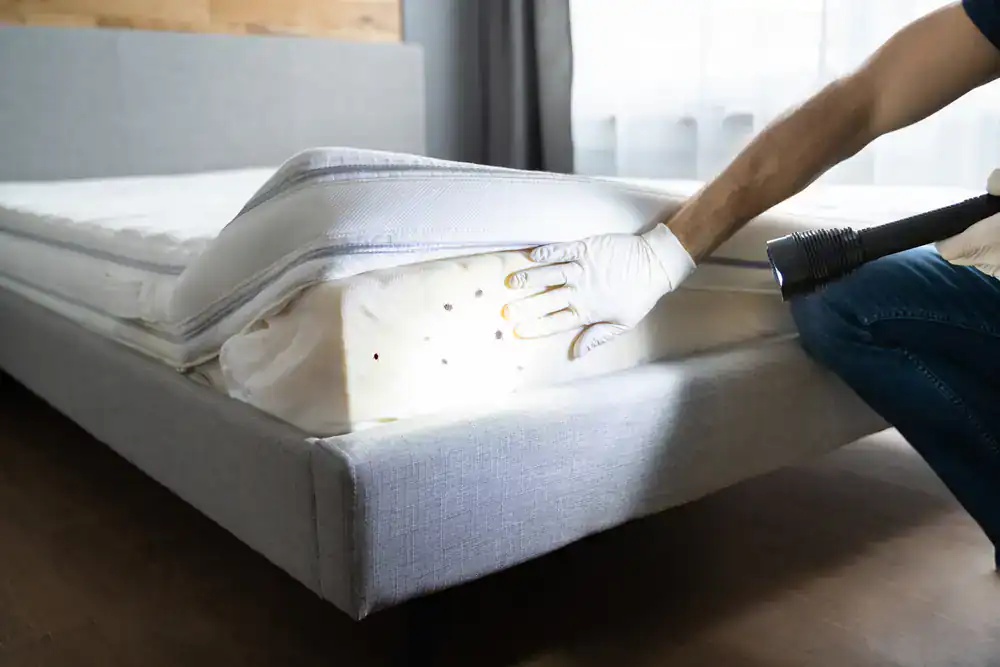
It starts with an inspection. One of our certified technicians comes to your home same day in many cases, and always within two days and does a real walkthrough. In Little Neck’s older housing stock, that means checking baseboards, wall voids, bed frames, upholstered furniture, and the structural details that homes built in the 1940s through 1960s tend to have in abundance. Nothing gets skipped to save time.
From there, you get an honest assessment. Not an upsell. Not a worst-case scenario designed to justify a bigger invoice. Our reviews on Angi specifically call this out customers note that the technician gave them a straight answer and didn’t push products or services they didn’t need. You’ll know exactly what you’re dealing with, what the treatment plan involves, and what it will cost before anything starts.
The treatment itself typically involves two to four visits over a three-to-six-week period, depending on the severity and the size of your home. Between visits, you’ll receive clear instructions on what to do and what to avoid. After the final visit, a follow-up confirms the infestation is fully resolved not just suppressed. For co-op or condo owners in Little Neck’s multi-unit buildings, we also understand the NYC HPD reporting requirements under Local Law 69 and can coordinate treatment documentation accordingly.
Ready to get started?
Bed bug treatment in Little Neck isn’t a one-size situation, and we don’t treat it like one. Our approach is built around what’s actually happening in your home the size of the infestation, the type of property, and how the bugs got in. Treatment methods include chemical and residual applications, steam treatment, and integrated pest management approaches that combine multiple methods with follow-up monitoring. For cases where pesticide resistance is a concern which is increasingly common in the NYC metro area multi-method treatment is standard, not an upgrade.
Every treatment includes a thorough pre-treatment inspection, a clear preparation checklist so you know exactly what to do before the technician arrives, and environmentally conscious application methods that are safe for families, children, and pets. Little Neck is a family neighborhood District 26 schools, private driveways, homes that have housed the same families for decades and our treatment approach reflects that. Nothing gets applied carelessly.
Because many Little Neck homes were built between 1940 and 1969, our inspection process here is more detailed than it would be in newer construction. Older homes have more harborage points more places for bed bugs to hide between treatments which is exactly why certified specialist experience matters more than a generalist with a spray can. Our collective staff brings over 100 years of combined pest control experience to every job, and that depth shows in how thoroughly the work gets done.
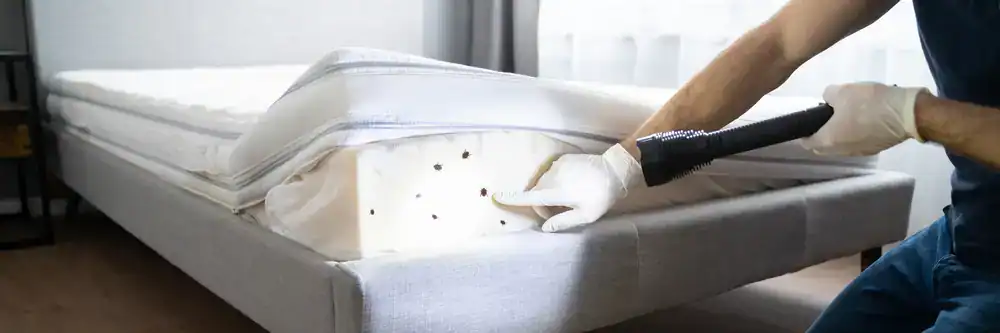
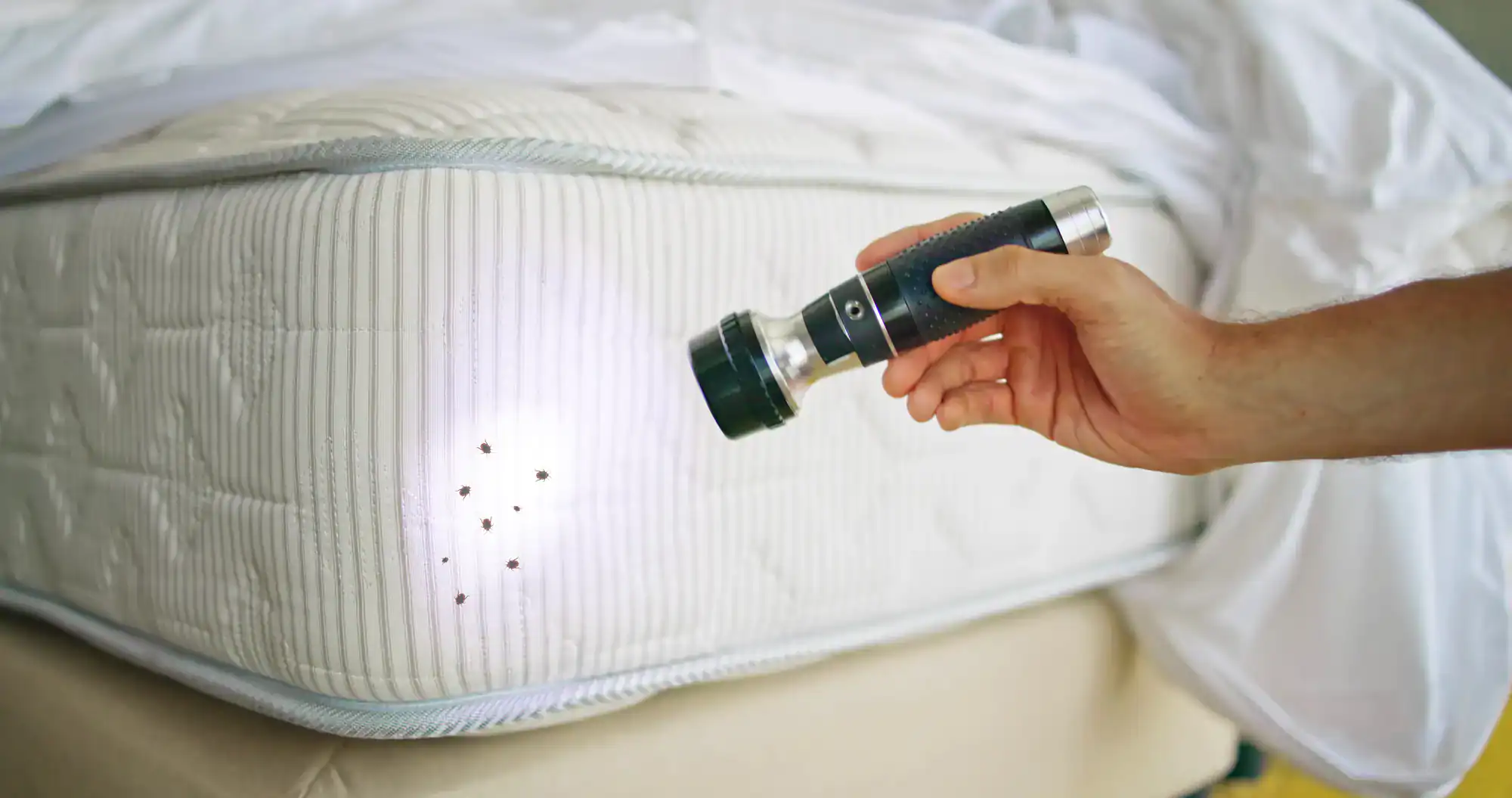
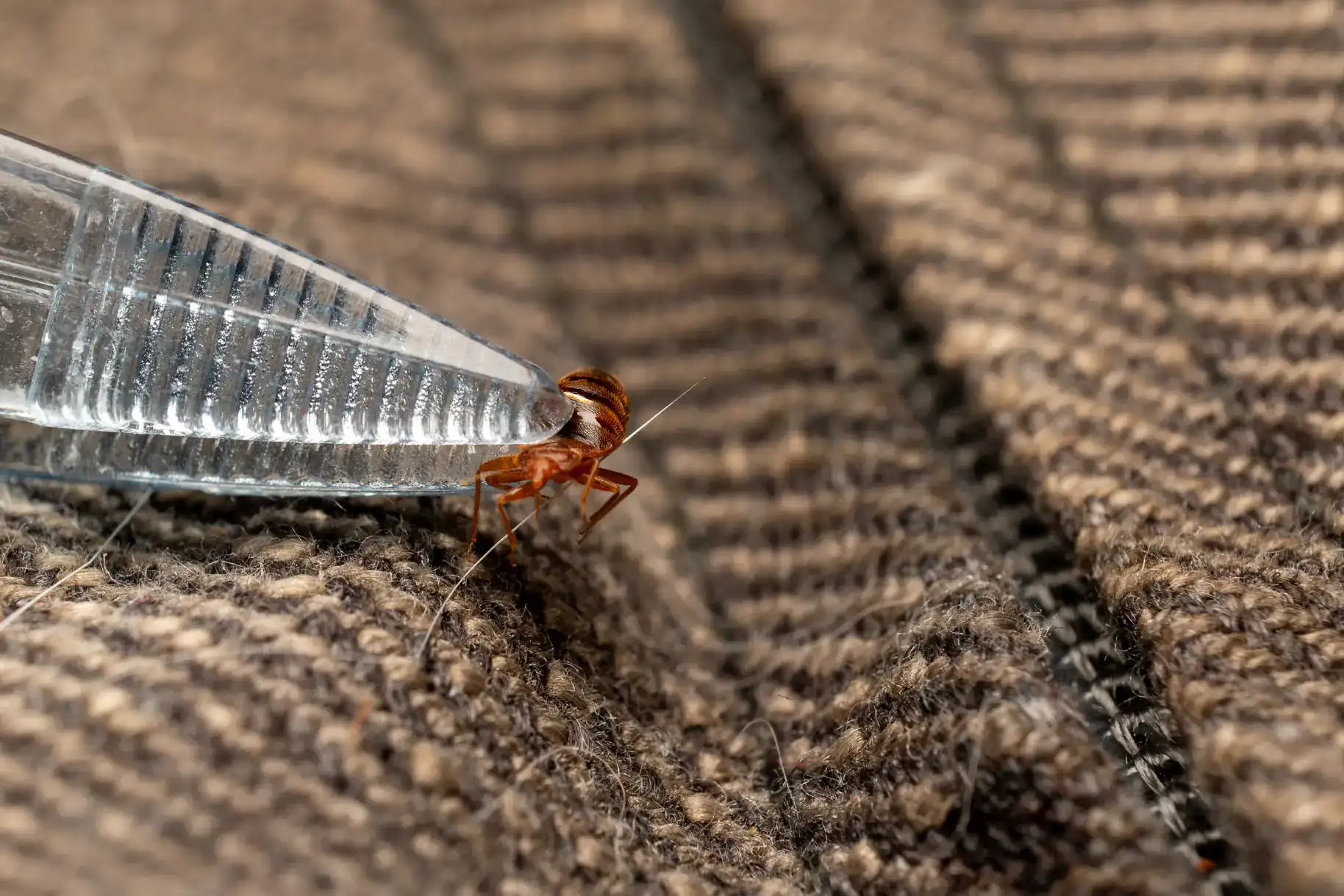
The most common signs are small rust-colored stains on your mattress or sheets, tiny dark spots along baseboards or behind headboards, and bites that appear in clusters or lines usually on exposed skin. You might also notice a faint, musty odor in heavily infested areas, though that’s typically a later-stage sign.
In Little Neck’s older homes most built between the 1940s and 1960s bed bugs tend to establish themselves in wall voids, behind baseboards, inside furniture joints, and in the structural gaps that older construction naturally creates. These spots aren’t obvious, which is why a professional inspection matters. A trained eye will find evidence that a self-inspection would miss entirely. If you’re seeing any of the early signs, don’t wait the longer an infestation goes untreated, the harder and more expensive it becomes to eliminate.
Cleanliness has nothing to do with it and this is one of the most important things to understand. Bed bugs don’t care about hygiene. They travel on people and their belongings, not on dirt. A spotless Tudor in Little Neck is just as vulnerable as any other home if the exposure pathway is there.
For residents here, the most common entry points are travel hotel stays, Hamptons rentals, Fire Island shares accessible via the LIE from Exit 32 and daily commuting on the LIRR Port Washington Branch into Penn Station and the Midtown subway system. Bed bugs can transfer from a seat, an overhead bin, or a waiting area to your bag or coat without you ever knowing. Secondhand furniture, estate sale finds, and items passed between family members are also documented pathways. None of these reflect on how you keep your home. They reflect on how bed bugs move and the solution is professional treatment, not shame.
Most infestations require two to four professional treatments over a three-to-six-week period. The reason it takes multiple visits is biological bed bug eggs are resistant to most treatment methods, so follow-up visits are timed to target newly hatched nymphs before they can reproduce. A single treatment almost never resolves an infestation completely, regardless of what any company tells you.
The number of visits depends on the severity of the infestation and the size and age of your home. In Little Neck’s older single-family homes with more void spaces, more structural gaps, and more potential harborage points than newer construction a thorough multi-visit approach is especially important. Cutting corners on follow-up is the most common reason bed bug treatments fail. We build the follow-up schedule into the treatment plan from the start, so there are no surprises and no gaps that allow the infestation to rebound.
Yes when it’s done by a certified professional using the right methods and proper preparation protocols. Before any treatment, you’ll receive a clear checklist of what to do ahead of time: covering or removing certain items, washing bedding, and temporarily relocating pets and family members during the application. These steps aren’t optional, but they’re straightforward and manageable.
We use environmentally conscious treatment methods and tailor the approach to the household. In a neighborhood like Little Neck where homes have children, pets, and in many cases older residents the safety profile of every product we use is taken seriously. After treatment, you’ll be told exactly when it’s safe to return to each area of your home. There’s no guessing, no vague “give it a few hours” answer. You get a specific, clear timeline based on what was applied and where, so your family’s routine is disrupted as little as possible.
Yes, and it’s one of the more serious concerns for multi-unit property owners in this area. Bed bugs can travel through wall voids, electrical conduits, and shared plumbing chases meaning an infestation in one unit can reach adjacent, above, or below units without anyone opening a door. In Little Neck’s older co-op and condominium buildings, where construction from the mid-20th century means more potential travel pathways, this risk is real.
Under New York City’s Housing Maintenance Code, owners of multiple dwellings are required to inspect adjacent units when an infestation is confirmed and to file an annual Bed Bug Annual Report with HPD under Local Law 69 of 2017. Treatment must be performed by a NYSDEC-certified pest management professional which we are. If you’re a co-op board member or building manager in Little Neck dealing with a confirmed or suspected infestation, we can coordinate the inspection, treatment, and documentation your building needs to stay compliant.
For a typical single-family home in Little Neck, professional bed bug treatment generally runs between $1,000 and $2,500, depending on the size of the home, the severity of the infestation, and the number of visits required. More extensive infestations in larger homes can reach $4,000 or more. These are real numbers not estimates designed to get you on the phone and then surprise you later.
What matters as much as the price is what’s included. A lower quote that covers one visit with no follow-up is almost never a better deal it’s a treatment that’s likely to fail, leaving you to start over with another company. Our pricing reflects a complete treatment plan: inspection, preparation guidance, multiple visits timed to the biology of the infestation, and follow-up confirmation. Given that the average home value in Little Neck sits around $521,500, the cost of a thorough professional treatment is a reasonable investment in protecting both your property and your peace of mind. You’ll know the full cost before anything starts no surprises, no add-ons after the fact.
Useful Links
Other Services we provide in Little Neck