

Hear from Our Customers
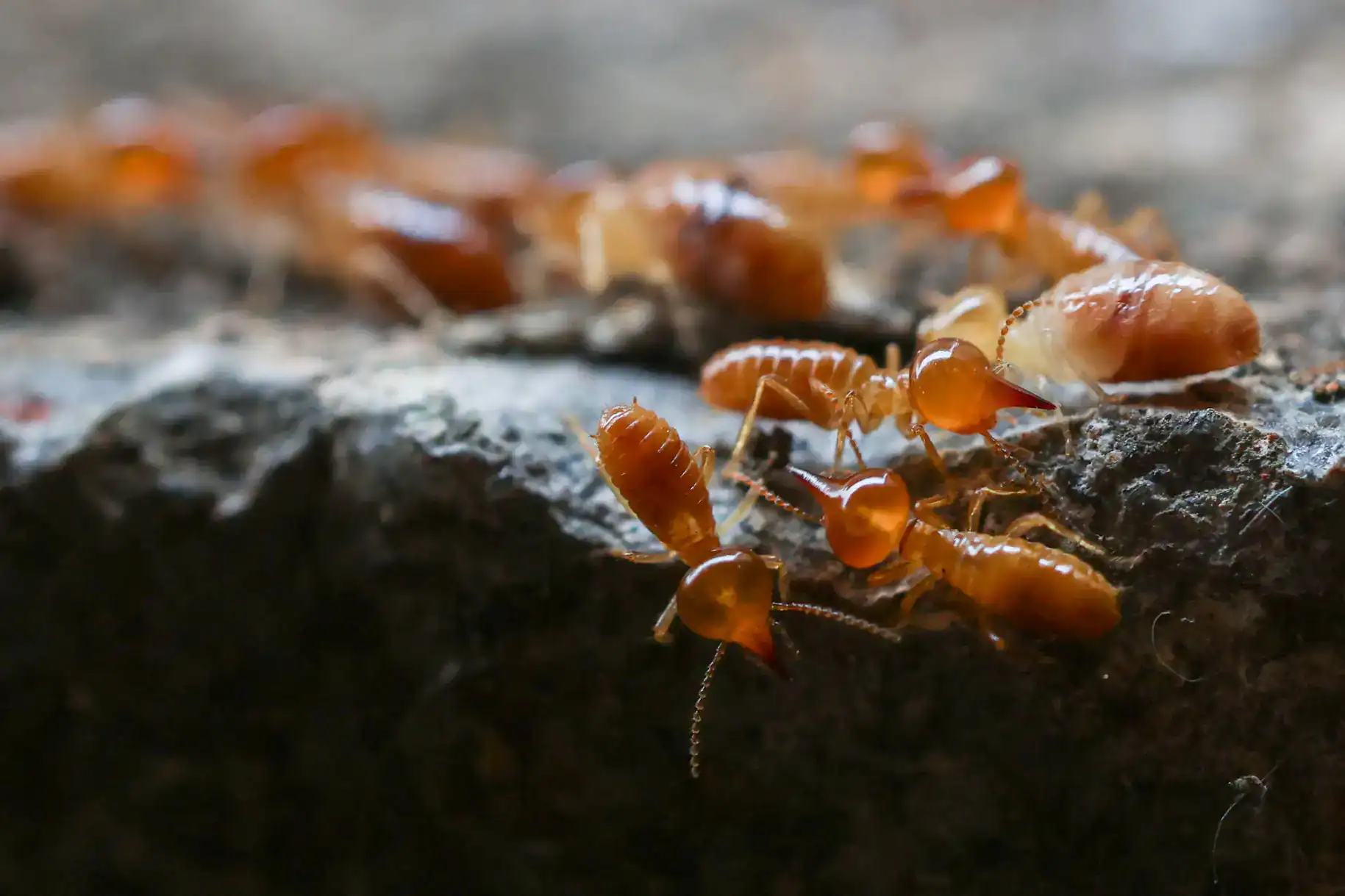
Most Little Neck homeowners don’t find out they have termites until a real estate transaction forces an inspection or until something in the floor starts to feel soft. By that point, Eastern Subterranean Termites have typically been feeding for years. They don’t announce themselves. They work from the ground up, through your foundation, into the framing, quietly.
The homes throughout Little Neck tell the story clearly. Most were built between the 1940s and 1960s wood-frame construction with crawl spaces, aging foundations, and decades of soil contact. Add the moisture coming off Little Neck Bay and the wetland corridors running through Alley Pond Park, and the conditions here are about as favorable for subterranean termite activity as you’ll find anywhere in Queens.
Getting a professional termite inspection in Little Neck, NY means you stop guessing. You find out what’s actually there, what the risk level is, and what if anything needs to happen next. If there’s an active infestation, you deal with it now, on your terms, before it affects your property value or your ability to sell. If there isn’t, you walk away with documented peace of mind. Either way, you’re better off knowing.
We’ve been operating since 1971 founded by Richard Kourbage Sr. and now run by his sons Richard Jr. and Charles, who serves as General Manager. That’s over 50 years of the same family, the same standards, and more than 100 years of combined staff experience behind every job.
This isn’t a franchise with rotating technicians and a call center. When you reach us, you’re reaching people who have spent decades working in Little Neck and the surrounding neighborhoods of northeastern Queens, where the housing stock and soil conditions create a very specific termite risk profile. We know these streets. We’ve worked these homes. Our technicians understand the particular vulnerabilities of mid-century wood-frame construction near the bay and what it takes to protect them.
We hold an A+ BBB rating with accreditation dating back to 1989, apply only NYS DEC-registered materials, and answer the phone 24 hours a day, 7 days a week. If you need a same-day termite inspection in Little Neck, NY, that’s genuinely available not a marketing line.
It starts with a phone call one that a real person answers, any time of day. You describe what you’re seeing: mud tubes along the foundation, discarded wings on a windowsill, soft spots in the floor, or nothing visible at all but a gut feeling something isn’t right. From there, we schedule an inspection, typically within two business days, with same-day availability in many cases.
The inspection covers the areas where subterranean termites are most likely to enter and establish foundation walls, crawl spaces, basement framing, soil-contact points, and any areas with moisture exposure. In Little Neck, that means paying close attention to the lower-lying areas of properties closer to the bay, and any landscaping, mulch, or wood debris near the foundation that could be drawing termite activity toward the structure. Because all our treatments use only NYS DEC-registered materials, you don’t have to worry about chemical runoff affecting the wetland habitats nearby at Alley Pond Park or Udalls Cove.
If termites are found, you get a clear explanation of what was discovered, where, and what treatment makes sense whether that’s a targeted chemical treatment, a termite baiting system designed to eliminate the colony at its source, or a combination of both. If your situation involves a real estate transaction, we provide the Wood Destroying Organism report your lender or attorney needs, fully documented and ready to submit. No vague proposals. No pressure. Just a written estimate and a clear path forward.
Ready to get started?
Termite control in Little Neck, NY through our company covers the full range of what homeowners in this area actually need. That starts with a thorough termite inspection not a quick walk-around, but a detailed assessment of your foundation, subfloor, framing, and any soil-contact points that are common in the mid-century homes throughout the 11362 and 11363 zip codes.
Our treatment options include termite baiting systems, which are particularly effective for the subterranean termite colonies that are endemic to this part of Queens. Bait stations are installed around the property’s perimeter, intercept foraging termites, and carry the treatment back into the colony eliminating it from the inside out rather than just addressing what’s visible on the surface. For active infestations requiring faster resolution, targeted liquid treatments are also available, applied by our certified technicians using only NYS DEC-registered materials.
We also handle the other wood-destroying organisms that commonly affect older Little Neck homes: carpenter ants, which are drawn to moisture-damaged wood and are especially active near the wetland corridors of Alley Pond Park, and powder post beetles, which bore into hardwood floors and structural framing. If your home needs a Wood Destroying Organism report for a purchase or sale a requirement for FHA and VA mortgage approvals we provide fully documented WDO inspections accepted by lenders, attorneys, and property managers throughout Queens and Nassau County.
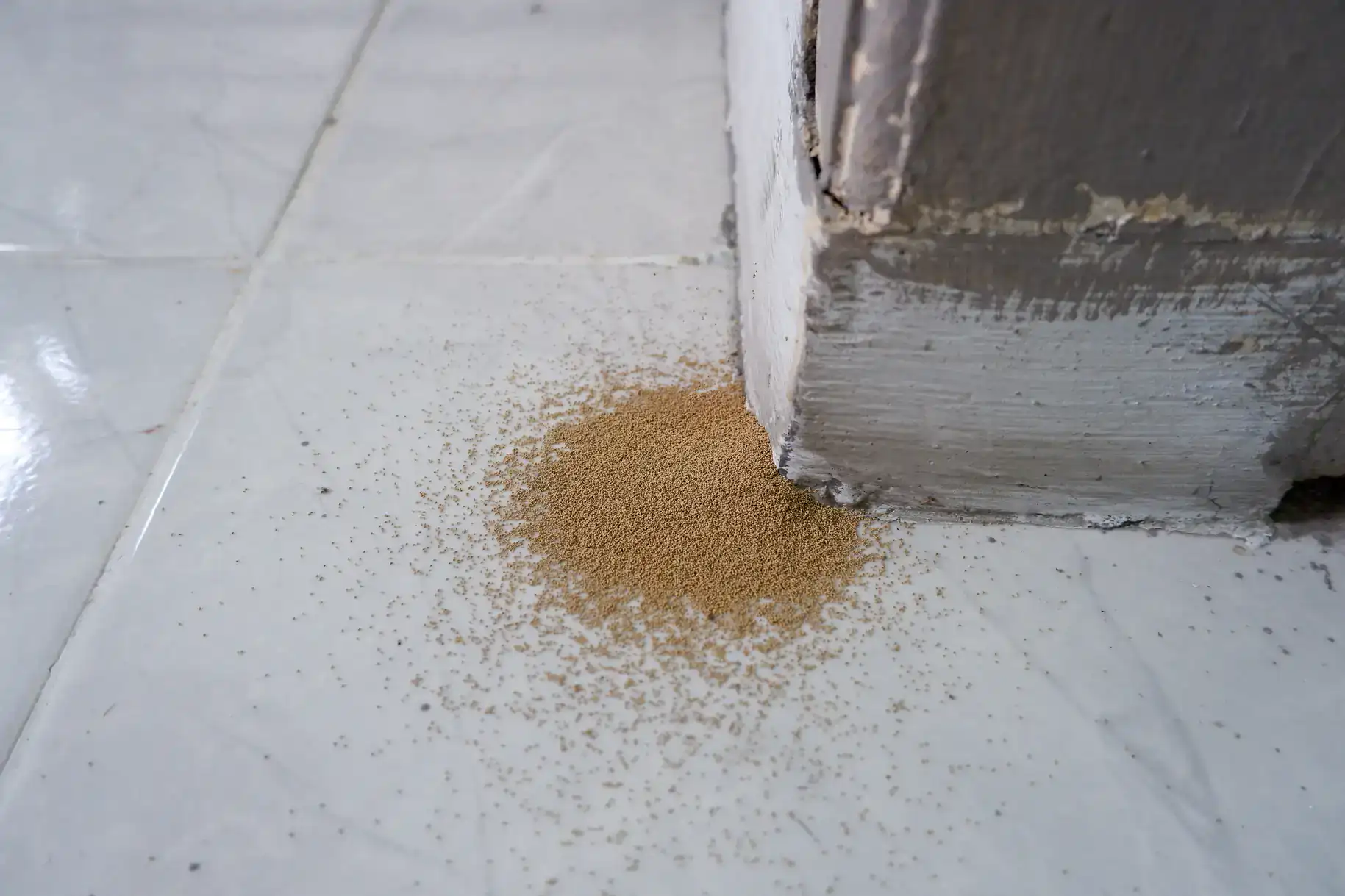
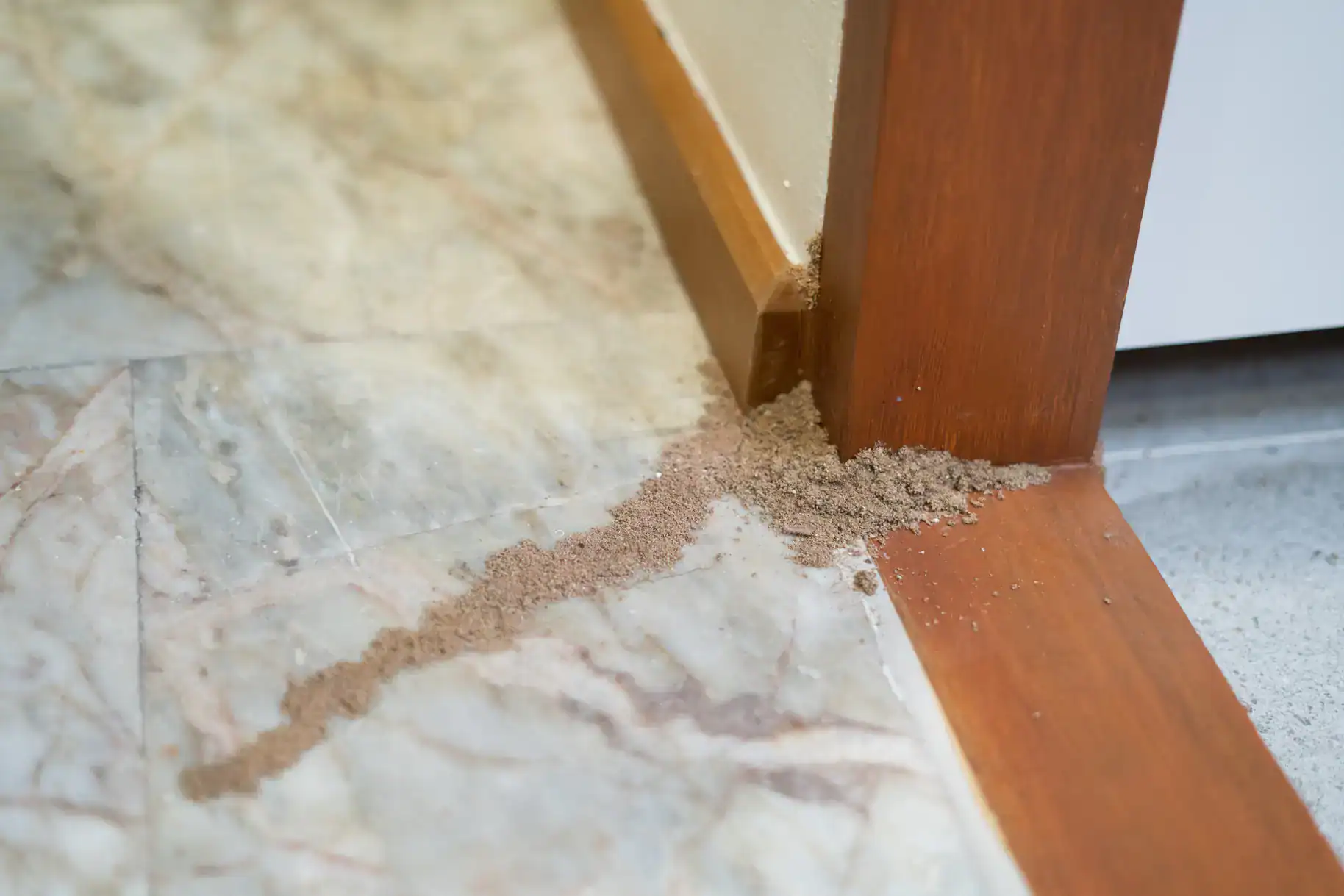
The most common signs are mud tubes running along your foundation or basement walls, discarded wings near windowsills or door frames after a swarm, soft or hollow-sounding wood when you tap on it, and small piles of what looks like sawdust which is actually termite frass. In Little Neck specifically, the spring swarm season runs roughly March through May, when Eastern Subterranean Termites send out winged reproductives to start new colonies. If you see what looks like flying ants emerging from a wall or floor after a warm, rainy day, that’s a strong indicator.
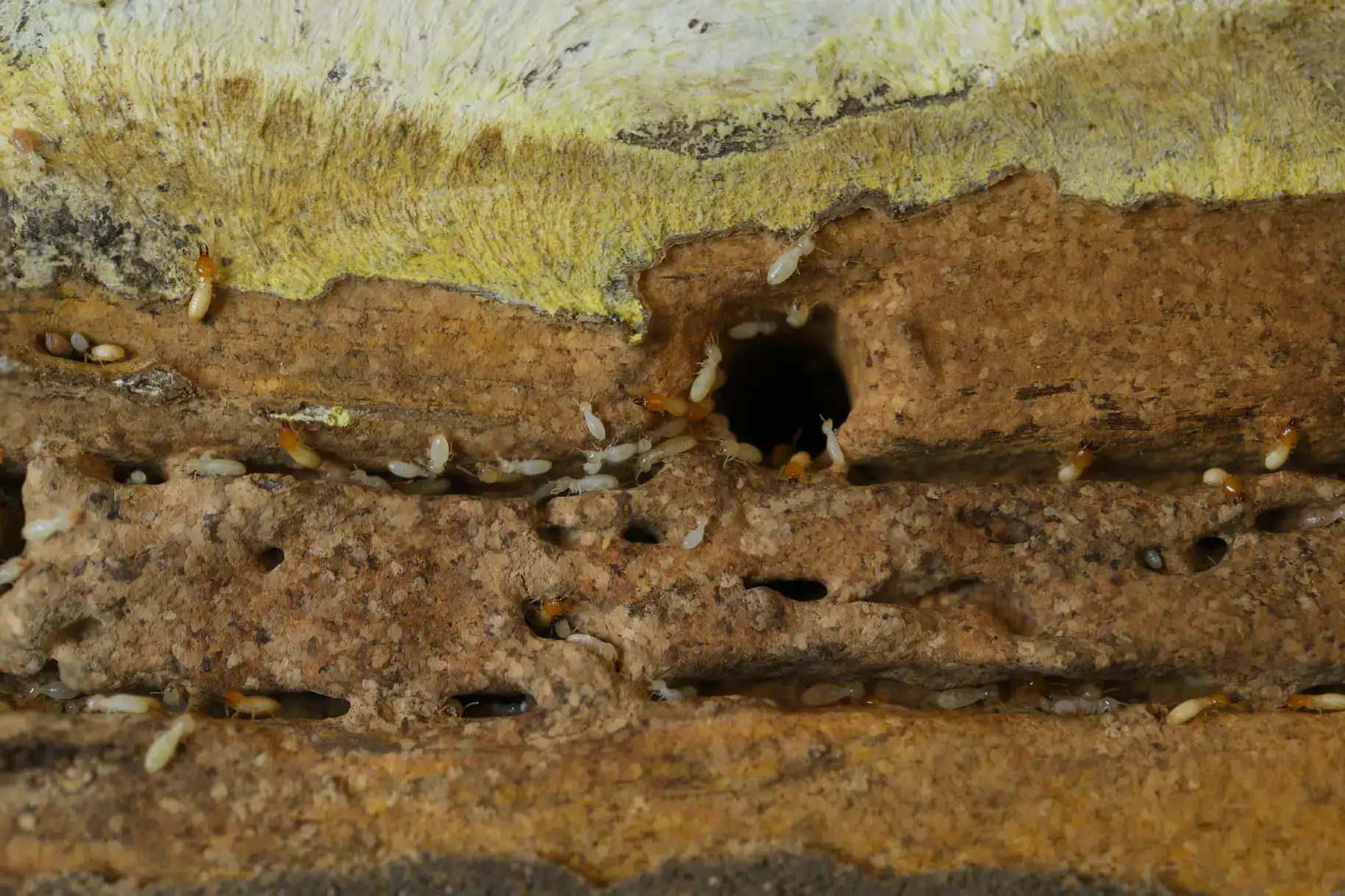
The challenge with subterranean termites is that they do most of their work out of sight inside wall cavities, under flooring, and within foundation framing. By the time visible signs appear, an infestation has often been active for several years. If your home was built before 1970 and sits in a lower-lying area of Little Neck near the bay or adjacent to Alley Pond Park, a professional inspection is worth scheduling even without obvious symptoms. Catching it early is always less expensive than dealing with structural damage.
A professional termite inspection covers every area where subterranean termites are likely to enter or establish foundation walls, crawl spaces, basement framing, sill plates, and any wood that has direct or near-direct contact with soil. In Little Neck homes, that typically includes a close look at basement perimeters, utility penetrations through the foundation, and any areas with signs of past or current moisture intrusion, which is common in homes built in the 1940s and 1950s with aging plumbing.
The inspector will also check the exterior looking for mud tubes along the foundation, wood-to-soil contact in landscaping or deck framing, and any conditions that make the property more attractive to termite activity. If you’re having the inspection done for a real estate transaction, the result is a Wood Destroying Organism report that documents findings in the format required by lenders and attorneys. Our inspections are conducted by NYS DEC-certified technicians, which is the licensing standard required for termite work in New York State.
In almost every case, no. Standard homeowner’s insurance policies in New York classify termite damage as a maintenance issue rather than a sudden or accidental event, which means it’s excluded from coverage. That applies whether you’re in Little Neck or anywhere else in the state. The financial exposure is real the average termite repair costs around $3,000, and structural repairs can run $10,000 or more depending on how long the infestation has been active and which framing members are affected.
For Little Neck homeowners with properties valued near or above $1 million, this matters more than it might in other markets. A significant termite infestation that goes unaddressed can reduce a home’s resale value by as much as 20%, and it will surface in any competent buyer’s inspection. The most cost-effective insurance against that outcome is a professional inspection and, if needed, treatment before the damage compounds. We provide free estimates with written proposals, so you know exactly what you’re looking at before any work begins.
Eastern Subterranean Termites depend on moisture to survive. Their colonies live underground, and they can’t function in dry soil they need consistent moisture to travel, feed, and maintain their colony structure. Little Neck’s position along the waterfront, with Little Neck Bay to the north, Udalls Cove Park Preserve along the shoreline, and Alley Pond Park’s tidal wetlands and freshwater springs to the west, creates naturally elevated soil moisture throughout the neighborhood year-round. That’s the environmental baseline termites need to thrive.
Homes in the lower-lying sections of Little Neck particularly those closer to the bay or adjacent to the park sit on soil that retains moisture even in dry stretches. Combined with the neighborhood’s older housing stock, where wood framing is often in close proximity to soil at the foundation, the conditions here are more favorable for subterranean termite activity than in drier, more inland parts of Queens. It doesn’t mean every home has termites, but it does mean the risk is elevated enough that periodic professional inspections are a reasonable precaution for any homeowner in this area.
If the transaction involves an FHA or VA loan, a Wood Destroying Organism inspection is required not optional. The lender needs documented evidence that the property is free of active termite infestation before the mortgage can close. Even in conventional transactions, buyers increasingly request termite inspections as part of their due diligence, especially in a neighborhood like Little Neck where the housing stock is predominantly older and the environmental conditions support termite activity.
For sellers, having a clean WDO report in hand before listing removes one of the most common deal-disrupting surprises in a real estate transaction. For buyers, it’s straightforward protection you’re spending close to or over $1 million on a home, and you want to know what you’re buying. We provide WDO inspections and reports that meet the documentation standards required by lenders, attorneys, and property managers throughout Queens. Same-day and expedited inspections are available when a transaction timeline is tight, which is often the case in Little Neck’s competitive real estate market.
Both are effective, but they work differently and are suited to different situations. A liquid termite treatment creates a chemical barrier in the soil around your foundation termites that cross it are eliminated before they can reach the structure. It works quickly and is often the right call when there’s an active infestation that needs to be stopped fast. The limitation is that it addresses termites at the entry point but doesn’t necessarily eliminate the colony in the ground.
A termite baiting system takes a different approach. Bait stations are installed around the perimeter of your property, where foraging termites find them, feed on the bait, and carry it back to the colony. Over time, this eliminates the colony at its source not just the termites that were heading toward your house. For Little Neck homeowners dealing with properties near Alley Pond Park or the wetland areas along the bay, where termite colonies in the surrounding soil can be persistent, baiting systems offer ongoing protection that goes beyond a single treatment. We’ll assess your specific property and recommend the approach that actually fits your situation not the one that’s easiest to sell.
Useful Links
Other Services we provide in Little Neck