
Hear from Our Customers

Living in a 150-year-old brownstone on Henry Street or Clinton Street comes with a lot of charm and a few realities that newer construction doesn’t have. Shared party walls, aging plumbing chases, imperfectly sealed coal chutes, and basement footprints that connect under the sidewalk. These aren’t design flaws you can fix with a can of spray. They’re structural pathways, and pests know how to use them.
When pest control is done right in a Cobble Hill building like yours, the difference isn’t subtle. No more sounds in the walls at night. No more finding evidence in the kitchen before your first coffee. No more wondering whether your neighbor’s problem just became yours. You get your home back and in a neighborhood where properties trade at close to $2 million, that’s not a small thing.
There’s also the peace of mind that comes from knowing the work was done carefully. Cobble Hill is an LPC-designated historic district, which means your building’s exterior fabric matters. The right exterminator doesn’t just seal gaps we do it in a way that respects the building. That combination of thoroughness and care is what separates a real fix from a temporary one.
Kingsway Exterminating has been operating continuously since 1971 which means we were treating Cobble Hill’s brownstones before most of our competitors existed. We’re NYSDEC-licensed, fully insured, family-owned, and certified in bed bug treatment. That’s not a list of credentials for the sake of it. It’s what you should be asking for before anyone walks into your home.
We’ve spent five decades working in the specific building stock that defines Cobble Hill and the surrounding neighborhoods Carroll Gardens, Brooklyn Heights, Boerum Hill. We know how pests move through attached row houses. We know what the BQE corridor does to rodent pressure on the western blocks of Cobble Hill every fall. We know where the entry points are in a pre-war building that a newer operator would walk right past.
This is Kings County, and we know it well. When you call us, you’re not getting a franchise technician reading from a checklist. You’re getting someone who has seen your building type hundreds of times and knows exactly what to look for.
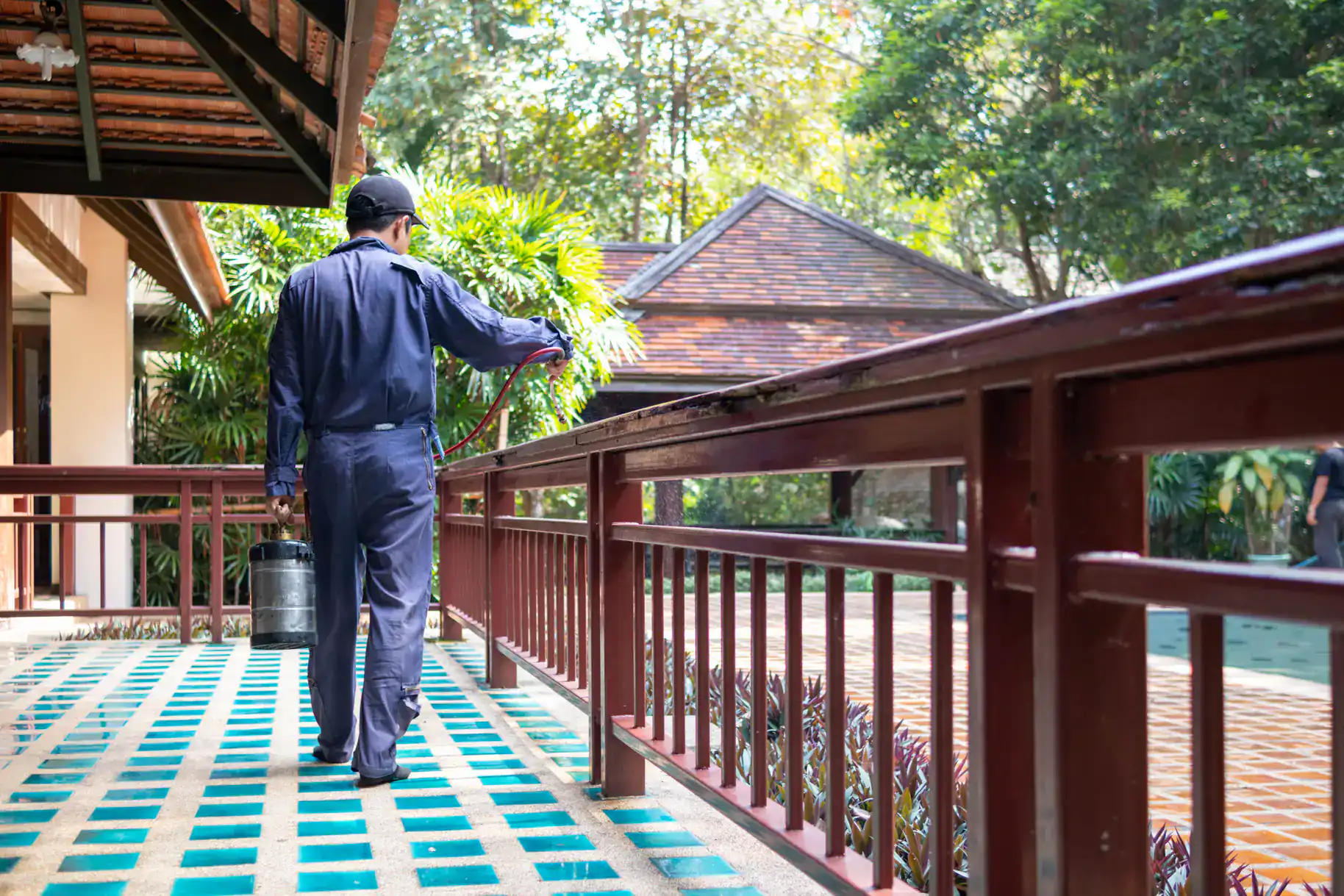
It starts with a free inspection. A licensed technician comes to your home, walks the space, and actually looks at the basement, the perimeter, the kitchen, the areas behind appliances, the points where plumbing enters the walls. In a Cobble Hill brownstone, that inspection includes the structural details that matter most: shared wall voids, foundation gaps, any exterior entry points that need to be addressed in a way consistent with your building’s historic character.
From there, you get a clear picture of what’s happening and a straightforward recommendation. No pressure, no upselling, no vague estimates. If treatment is needed, we’ll tell you exactly what we’re using, why, and what you need to do to prepare. We use EPA-registered materials and apply Integrated Pest Management principles meaning the most targeted, lowest-impact effective treatment for your specific situation. That matters in a household with kids or pets, and it’s also what NYC law now requires for buildings in this city.
After treatment, we don’t disappear. Follow-up is part of our process, because in an attached row house, one visit sometimes isn’t the whole story. If the problem came through a shared wall, we need to know it’s actually resolved not just quieted for a few weeks.
Ready to get started?
The pest pressures in Cobble Hill are specific. Rodents push in from two directions the Atlantic Avenue restaurant corridor along the northern boundary generates food waste year-round, and the BQE infrastructure along the western edge provides exactly the kind of undisturbed subsurface habitat that Norway rats prefer. When temperatures drop in September and October, that pressure intensifies fast. Properties on the western and northern blocks of Cobble Hill feel it first.
Inside the buildings, the story is cockroaches in pre-war kitchens, carpenter ants working through aging wooden window frames and floor joists, and bed bugs in multi-unit conversions where a single introduction can spread through shared wall voids before anyone realizes it. We handle all of it rodents, cockroaches, bed bugs, termites, carpenter ants, wasps, fleas, and wildlife. If you’re buying or selling a home in Cobble Hill, we also issue WDI inspection reports and mortgage pest clearance certificates, which FHA and VA lenders frequently require for properties with older construction. In a neighborhood where homes move fast and buyers are under timeline pressure, having a licensed provider who can turn that around quickly matters.
Whatever the pest, our approach is the same: identify the actual source, treat it correctly, and close the entry points so it doesn’t come back.
It comes down to age and structure. Cobble Hill’s brownstones are predominantly 19th-century construction many of them between 100 and 180 years old. They were built before modern pest-proofing standards existed, and they’ve had more than a century to develop the gaps, cracks, and settling that pests exploit. Coal chutes, even sealed ones, are often imperfectly closed. Foundation gaps have widened. Plumbing that was installed decades ago runs through shared chases between units.
The attached row house format compounds the problem. When you share a party wall with your neighbor in Cobble Hill, you’re also sharing potential pest pathways. A mouse or cockroach doesn’t recognize unit boundaries it moves through wall voids, under floors, and through plumbing penetrations. That’s why treating only the visible problem in one unit often doesn’t hold. Effective pest control in a Cobble Hill brownstone has to account for the building as a whole, not just the apartment where you spotted the issue.
Termites in New York are almost always Eastern subterranean termites, and they’re quiet. You typically won’t see them until the damage is already done. What you might notice first: wood that sounds hollow when you tap it, small mud tubes running along foundation walls or floor joists in the basement, discarded wings near windowsills in spring (termite swarm season runs roughly March through May), or floors that have developed a soft spot that wasn’t there before.
In a Cobble Hill brownstone, the risk areas are the basement and the lowest structural wood floor joists, sill plates, any wood that’s in contact with soil or close to it. Older construction often has wood members that have absorbed moisture over decades, which makes them more attractive to termites. If you’re seeing any of these signs, or if you’re in the middle of a real estate transaction and need a WDI inspection report, a licensed inspection is the right first step. We can assess the situation, confirm whether termites are present, and give you an honest picture of what treatment looks like before anything is committed to.
Honestly, the best time is before fall because by the time September and October arrive, the pressure is already building. Mice and Norway rats start seeking indoor warmth as temperatures drop, and in Cobble Hill, they have two significant pressure sources pushing them toward residential buildings: the BQE infrastructure along the western edge of the neighborhood, which provides year-round subsurface habitat, and the Atlantic Avenue restaurant corridor to the north, which generates consistent food waste that sustains large exterior populations through the warmer months.
Properties on the northern and western blocks of Cobble Hill closer to Atlantic Avenue and the highway tend to see the sharpest increase in rodent intrusion attempts in early fall. If you’re already hearing activity in the walls or finding evidence in the kitchen, the problem is active and it won’t resolve on its own. A single female mouse can produce up to 60 offspring per year. The right move is an inspection now, exclusion work to close entry points, and treatment to address what’s already inside. Waiting until winter just means more time for the population to establish.
Yes when it’s done by a licensed professional using the right approach for your specific situation. The two main treatment options are heat treatment and chemical treatment, and they’re not interchangeable. Heat treatment involves raising the temperature of the affected space to a level that eliminates bed bugs at all life stages, without introducing any chemical agents. Chemical treatment uses EPA-registered materials applied to targeted areas. A certified bed bug specialist will assess your situation and recommend the method that makes sense not the one that’s easiest to deliver.
For households with young children or pets, preparation instructions and re-entry timelines are specific and important. We’ll walk you through exactly what needs to happen before treatment and how long you need to stay out of the space afterward. In Cobble Hill’s attached row houses and multi-unit building conversions, it’s also worth knowing that bed bugs can spread through shared wall voids so if you’re in a building with multiple units, the scope of the treatment may need to account for that. We’ll tell you upfront if that’s the case, so there are no surprises.
It’s not always legally required, but it’s one of the smarter things you can do before closing on a pre-war property. FHA and VA loan programs frequently require a WDI (wood-destroying insect) inspection report before they’ll approve financing, and even conventional lenders often request pest clearance for older construction. But beyond the lender requirement, a pest inspection on a Cobble Hill brownstone is straightforward due diligence on a property that may be 100 to 150 years old.
Termites, carpenter ants, and wood-boring beetles can cause significant structural damage that isn’t visible during a standard home inspection. We know where to look foundation walls, basement joists, sill plates, wooden window frames and can identify active infestations, old damage, and conditions that make the property vulnerable. In a market where Cobble Hill homes sell for close to $2 million and transactions move quickly, having a licensed provider who can turn around a WDI report on your timeline is genuinely useful. We issue those reports and can work around the schedule that your closing requires.
The LPC historic district designation means that exterior alterations to properties in Cobble Hill including some pest exclusion work have to be done in a way that’s consistent with the building’s historic fabric. Installing hardware cloth, sealing foundation gaps, caulking entry points around windows or at the roofline: these are all standard exclusion techniques, but in a landmarked building, how they’re done and what materials are used can matter from a compliance standpoint. Work that requires structural modification may need LPC review before it proceeds.
We’ve been working in Cobble Hill and Brooklyn’s historic brownstone neighborhoods for over 50 years, so this isn’t new territory for us. We approach exclusion work in these buildings with the same care a restoration contractor would: close the entry points effectively, use materials that are appropriate for the building, and flag anything that might require a property owner to consult with the LPC before we proceed. If you’ve had other providers do exclusion work that left visible patching on a historic facade, or that didn’t hold because it wasn’t done correctly for the building type, that’s a common story in Cobble Hill. The fix is doing it right the first time, with someone who actually knows these buildings.
Useful Links
Other Services we provide in Cobble Hill