Hear from Our Customers

Most pest treatments in Manhattan fail for the same reason they address what’s visible but ignore where the infestation is actually living. In a pre-war building on the Upper West Side or a high-rise in Murray Hill, cockroaches aren’t just in your kitchen. They’re moving through pipe chases, wall voids, and shared plumbing risers that connect your unit to every floor above and below you. Treating one apartment without understanding the building is like mopping up a leak without turning off the water.
When the job is done right, you stop seeing the same pests two weeks later. You stop wondering if the problem is coming from the unit next door. You get a clear answer about what’s happening, where it’s coming from, and what it takes to keep it from coming back not just a spray and a receipt.
Manhattan’s subway system runs beneath virtually every block in the borough, and that infrastructure drives rodent pressure into adjacent buildings year-round. Buildings near Central Park, Riverside Park, or along the Harlem River corridor face elevated wildlife and rodent exposure on top of that. Real pest control here means understanding the environment you’re actually dealing with not applying a suburban solution to an urban problem.
We’ve been operating in New York City since 1971. That’s not a marketing number it means we’ve treated pre-war co-ops on the Upper East Side, restaurant kitchens in Hell’s Kitchen, basement apartments in Washington Heights, and NYCHA buildings in East Harlem. We know how pest problems move through Manhattan’s housing stock because we’ve been working inside it for over five decades.
We’re a family-owned business based in Brooklyn, licensed by the New York State Department of Environmental Conservation, and fully insured. When you call, you’re reaching people who know this city not a national call center routing your ticket to whoever’s available.
Every inspection starts with an honest assessment. We’ll tell you what we found, what we recommend, and why before any work begins. No pressure, no upselling, no vague answers.
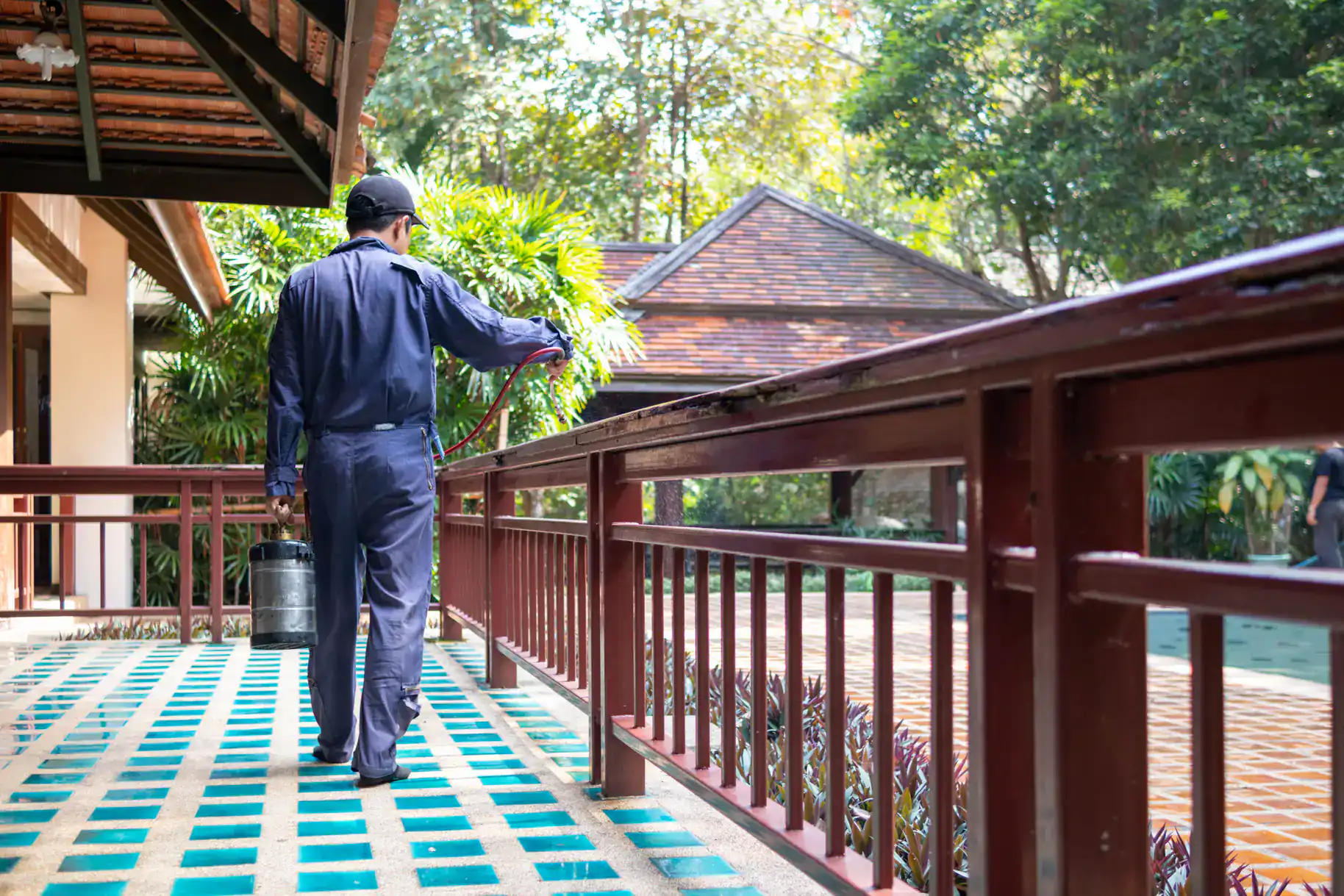
It starts with a free inspection. A licensed technician comes to your apartment, assesses the unit, and critically looks at the shared infrastructure that most companies skip. In Manhattan’s multi-unit buildings, that means checking pipe penetrations, utility access points, and any shared wall areas where pests are likely moving between units. You get a clear picture of what’s actually happening before anyone recommends a treatment or quotes a price.
From there, we walk you through exactly what treatment makes sense for your situation. Whether that’s a targeted cockroach treatment, a rodent exclusion plan, bed bug heat treatment, or a building-wide IPM program, the recommendation is based on what we found not a standard package applied to every job. If you’re in a co-op or condo building that requires service documentation for the board, we handle that too.
After treatment, we don’t disappear. If the problem persists, we come back. Manhattan’s density means re-infestation pressure is real and ongoing, especially in buildings near the subway corridors or high-traffic restaurant blocks in Midtown and the Lower East Side. We account for that from the start, so the plan we build actually holds up over time.
Ready to get started?
We handle the full range of pest problems Manhattan residents and building operators actually deal with. Cockroach extermination, rodent control, bed bug treatment, termite and WDI inspections, ant and stinging insect removal, flea and mite treatment, mosquito control, and wildlife removal residential and commercial. If you manage a restaurant in Tribeca or a multi-family building in Harlem, we offer ongoing commercial pest control programs built around NYC Department of Health compliance and HPD documentation requirements.
For bed bugs specifically, we offer both heat treatment and chemical treatment options. Heat treatment is often preferred in Manhattan apartments because it eliminates bed bugs in a single visit without requiring multiple chemical applications in a small, shared living space an important consideration when you’re dealing with children, pets, or elderly residents in a studio or one-bedroom. For real estate transactions, we provide licensed Wood-Destroying Insect inspection reports that satisfy co-op board approval processes and FHA or VA loan requirements a service that matters in a borough where deals move fast and documentation delays cost money.
Every service is performed under New York State DEC licensing, follows Integrated Pest Management principles, and uses EPA-registered materials. That’s the standard Manhattan’s regulatory environment demands and the standard every job we do is held to.

This is the most common frustration we hear from Manhattan residents, and the answer almost always comes down to building infrastructure. In pre-war buildings which make up the majority of residential housing across the Upper West Side, Harlem, Washington Heights, and large parts of Midtown cockroaches live inside the walls, not just in your kitchen. They travel through pipe chases, steam heat risers, and shared plumbing voids that connect your unit to the rest of the building. When a technician treats only your apartment, they’re addressing where cockroaches are visible, not where they’re actually harboring and breeding.
A treatment that holds long-term in a Manhattan building requires identifying and addressing those shared pathways sealing penetrations, treating void spaces, and in some cases coordinating with building management to treat adjacent units. If your building has had ongoing cockroach complaints across multiple floors, that’s a sign the source is in the building’s shared systems. We assess that during the inspection and give you an honest answer about what it will take to actually resolve it.
Under the NYC Housing Maintenance Code, building owners are legally required to keep their properties pest-free. If you’re a renter in Manhattan and you have a cockroach infestation, a rodent problem, or bed bugs, your landlord is responsible for addressing it and that responsibility extends beyond your unit to the building’s shared systems and common areas. If your landlord isn’t responding, you can file a complaint through 311, which routes to the NYC Health Department for enforcement. HPD can issue violation notices and impose fines for unaddressed pest conditions.
That said, many tenants reach a point where they can’t wait for their landlord to act especially with bed bugs, where every day matters. In those situations, you have the right to hire a professional on your own and, in some cases, seek reimbursement or a rent reduction through Housing Court. We work with both tenants and building owners across Manhattan and can provide the service documentation you’d need if you pursue a legal remedy against a landlord who’s failed to act.
Pricing in Manhattan varies depending on the pest, the size of the unit, and the severity of the infestation. For a standard cockroach or general pest treatment in a one-bedroom apartment, you’re typically looking at $150 to $350. Rodent control which in Manhattan often requires both treatment and exclusion work to seal entry points generally runs $200 to $450 depending on what’s found during the inspection. Bed bug heat treatment for a one-bedroom apartment typically falls in the $1,200 to $2,500 range, though larger units or more severe infestations can run higher.
Annual pest control service contracts for Manhattan apartments, which include regular inspections and treatments, typically run $400 to $800 per year depending on the building type and service frequency. Commercial pest control for Manhattan restaurants and food service establishments is usually structured as a monthly agreement, ranging from $150 to $500 or more per month based on establishment size. We provide a written estimate after the free inspection so you know exactly what you’re looking at before any work begins no surprise charges, no ambiguity.
This is a fair concern, especially in Manhattan where apartments are often small and ventilation is limited. The short answer is yes when performed by a licensed technician using EPA-registered materials and an IPM approach, pest control is safe for households with children and pets, provided you follow the preparation and re-entry instructions you’re given before the treatment.
Before we treat, we’ll walk you through exactly what to do: what to move, where to be during the application, and how long to stay out of treated areas. The specific re-entry window depends on what’s being applied and where a targeted gel bait application in a kitchen cabinet has a very different profile than a broadcast spray. We use the least toxic, most targeted treatment that will actually solve the problem, not the heaviest-duty option available. If you have specific concerns about a particular product a pet with a respiratory condition, an infant in the home tell us during the inspection and we’ll factor that into the treatment plan.
For conventional co-op purchases in Manhattan, a pest inspection isn’t always legally required but many co-op boards require it as part of their approval process, and it’s a smart step regardless. For purchases involving FHA or VA financing, a Wood-Destroying Insect inspection report is typically required by the lender before closing. Manhattan’s older brownstones, townhouses, and pre-war buildings in neighborhoods like the West Village, Harlem, and the Upper East Side have the structural characteristics wood framing, aged foundation materials, moisture-prone basements that make termite and wood-destroying insect activity a real consideration.
A WDI inspection from a licensed pest control company produces a formal report that satisfies lender, attorney, and co-op board requirements. In Manhattan’s real estate market, where deals move quickly and documentation delays can cost you the transaction, having that inspection done by a licensed provider who can turn around the report promptly matters. We provide licensed WDI inspections and pest clearance certificates for Manhattan real estate transactions across all neighborhoods and building types.
The subway system is a documented driver of rodent pressure throughout Manhattan. The tunnel infrastructure, track beds, and station environments support large rat populations that migrate into adjacent buildings through utility conduits, basement connections, and gaps in foundation walls. Buildings along subway corridors which in Manhattan means nearly every block face a level of ongoing rodent pressure that doesn’t go away after a single treatment. It’s structural, and managing it requires a different approach than you’d take in a suburban home.
Buildings near Central Park, Riverside Park, and Inwood Hill Park face an additional layer of wildlife and rodent exposure, particularly in fall when animals begin seeking indoor warmth. If your Manhattan building is near a subway entrance, a park border, or a high-density restaurant block, we’ll assess those specific exposure factors during the inspection and build a rodent control plan that accounts for them.
Useful Links
Other Services we provide in Manhattan