Hear from Our Customers
In Manhattan, the stakes are different. You’re not talking about a suburban split-level you’re talking about a pre-war co-op where floor joists from 1920 are still doing the heavy lifting, or a Harlem brownstone that’s been in your family for decades. When termites get into that kind of structure, they don’t just damage wood. They damage value, complicate sales, and create problems that boards, lenders, and attorneys all want answers to.
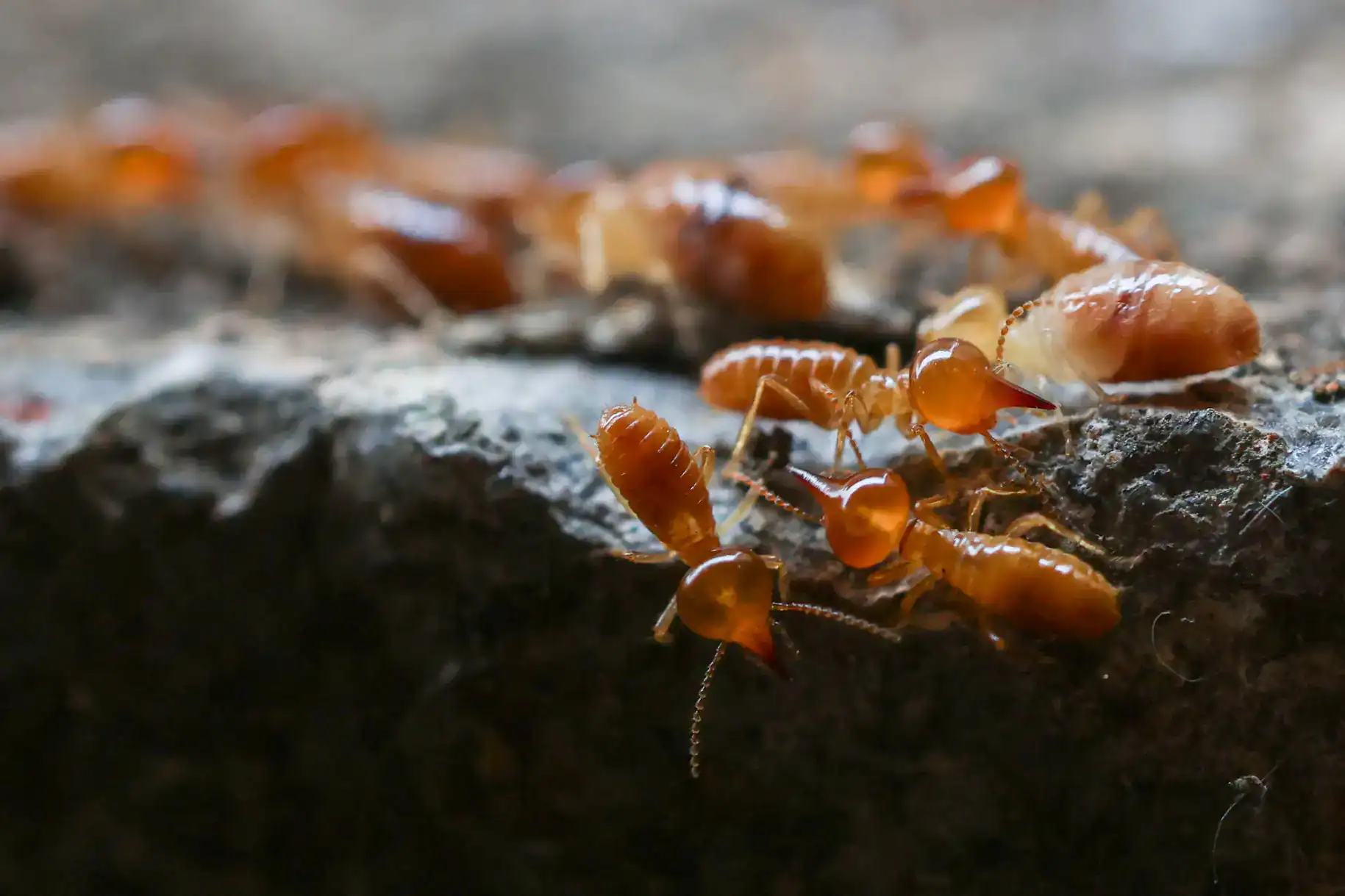
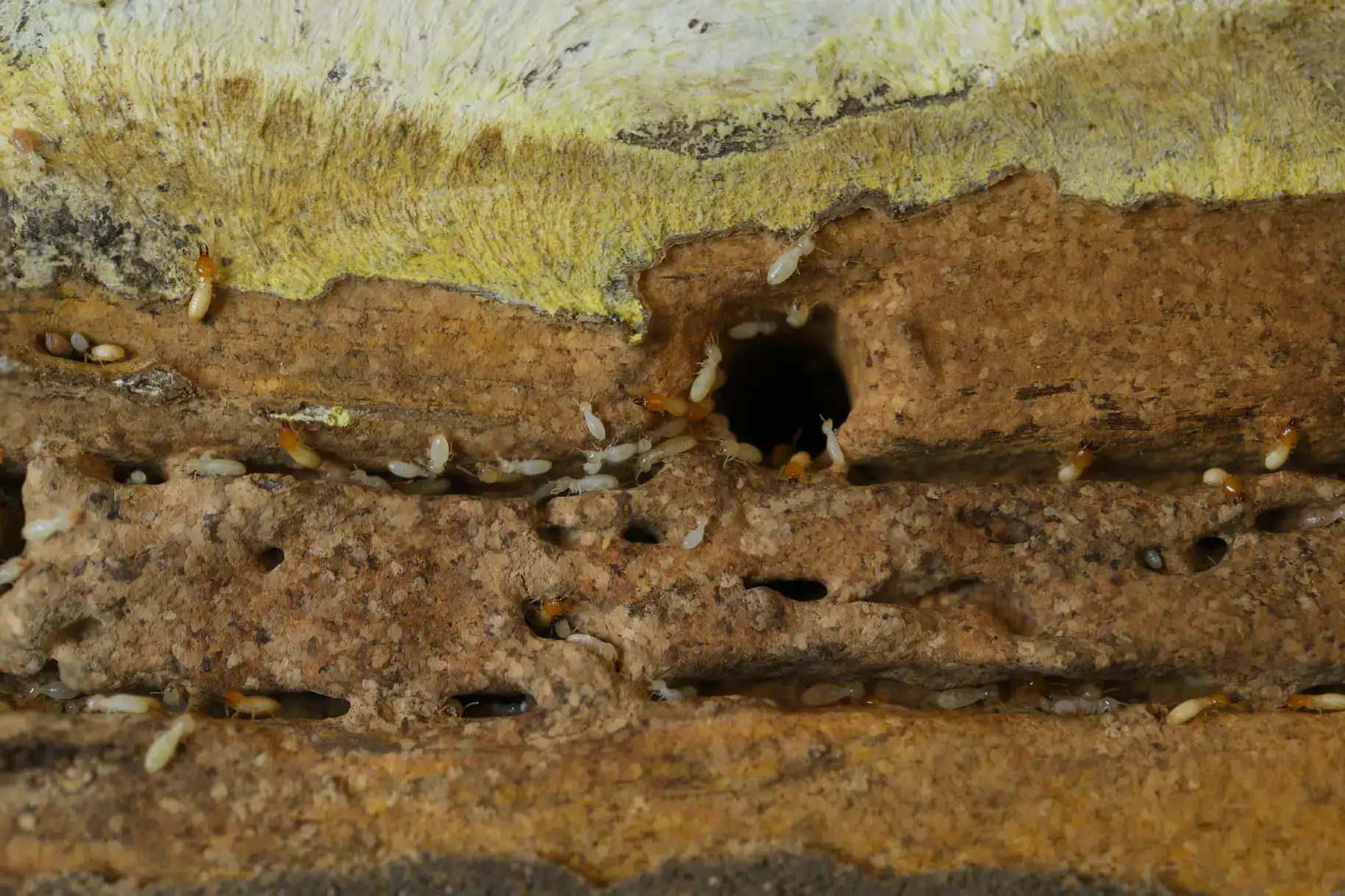
The Eastern Subterranean Termite the species doing the damage in Manhattan lives underground, feeds around the clock, and can work inside your walls for five years before you see a single sign. Manhattan’s underground infrastructure keeps soil temperatures warmer than surrounding areas, which means colonies stay active longer into the season than most people expect. A building in Washington Heights or the Upper West Side isn’t getting a winter break from termite activity the way a house in the suburbs might.
Getting ahead of it means a real inspection, a clear treatment plan, and documentation you can actually use whether that’s for a co-op board, a real estate transaction, or an HPD compliance requirement. That’s the outcome. Not just treated, but protected and documented.
We’ve been operating in Manhattan and across New York City since 1971. That’s more than 50 years of working inside the actual buildings Manhattan is made of pre-war co-ops on the Upper East Side, landmarked row houses in Greenwich Village, converted lofts in Tribeca, and everything in between. The Kourbage family built Kingsway Exterminating from the ground up, and three generations later, we’re still the ones answering for the work.
Our staff collectively brings over 100 years of combined pest control experience not a marketing number, but the real total of what walks through your door when you call. Every material we apply is registered with the New York State Department of Environmental Conservation, and we’ve held an A+ BBB rating since 1989. For Manhattan property owners dealing with co-op boards, HPD requirements, or a real estate deadline, that kind of track record isn’t a bonus it’s the baseline you should be demanding from anyone you let into your building.
When you call us, someone picks up 24 hours a day, seven days a week. If you’ve spotted swarmers coming out of a baseboard in March, or a building super flagged mud tubes in the basement, or you’re under contract on a property and need a WDO report before closing, the first step is the same: a real inspection by someone who knows what they’re looking for in a Manhattan building.
The inspection covers the areas termites actually use foundation contact points, basement storage areas, exposed wood framing, crawl spaces where they exist, window and door frames, and any areas showing moisture damage or previous repair work. In a co-op or multi-unit building, that often means coordinating with building management to access common areas, which we handle directly. You don’t need to figure out the logistics on your own.
From there, our recommendation is specific. If it’s subterranean termite activity, the treatment options liquid barrier treatment, a termite baiting system, or a combination are explained clearly, with the reasoning behind each. If it’s carpenter ants or wood-boring beetles alongside the termite activity, that gets addressed too. You leave the inspection knowing exactly what’s there, what it will take to fix it, and what the documentation looks like because in Manhattan, you almost always need the paperwork.
Ready to get started?
Termite control in Manhattan isn’t a one-size treatment. Our service covers identification and inspection, liquid barrier treatments, termite baiting systems, and full eradication and it extends to carpenter ants and wood-boring beetles, because in older Manhattan buildings, you rarely have just one wood-destroying organism. The inspection also produces a formal Wood Destroying Organism (WDO) report when needed, which is the document FHA and VA lenders require, that co-op boards increasingly ask for, and that real estate attorneys want in hand before a deal closes.
For landlords and property managers dealing with HPD violations or NYC Department of Health citations tied to pest activity, we have specific experience navigating that process. That’s a real differentiator in Manhattan, where a 311 complaint from a tenant can trigger an inspection and a compliance clock faster than most property owners expect. Having a licensed exterminator who understands the regulatory side not just the treatment side matters here in a way it simply doesn’t in most other markets.
All materials we use are NYS DEC registered. All our technicians are certified. And if your building is in a historic district Greenwich Village, the Upper West Side, SoHo the work is done with the care those structures require. You’re not getting a generic spray-and-go. You’re getting a treatment plan that fits the building you actually own.
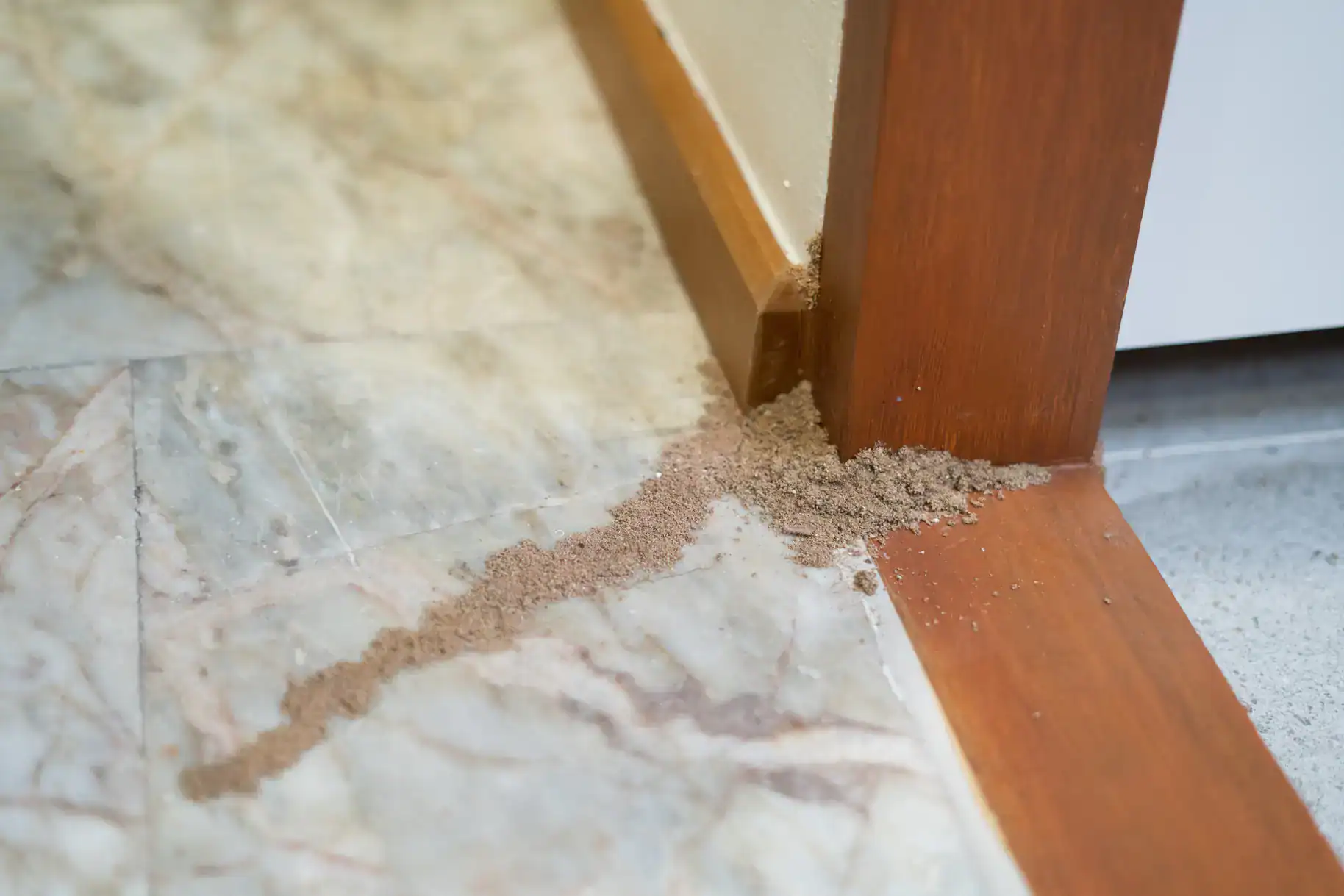
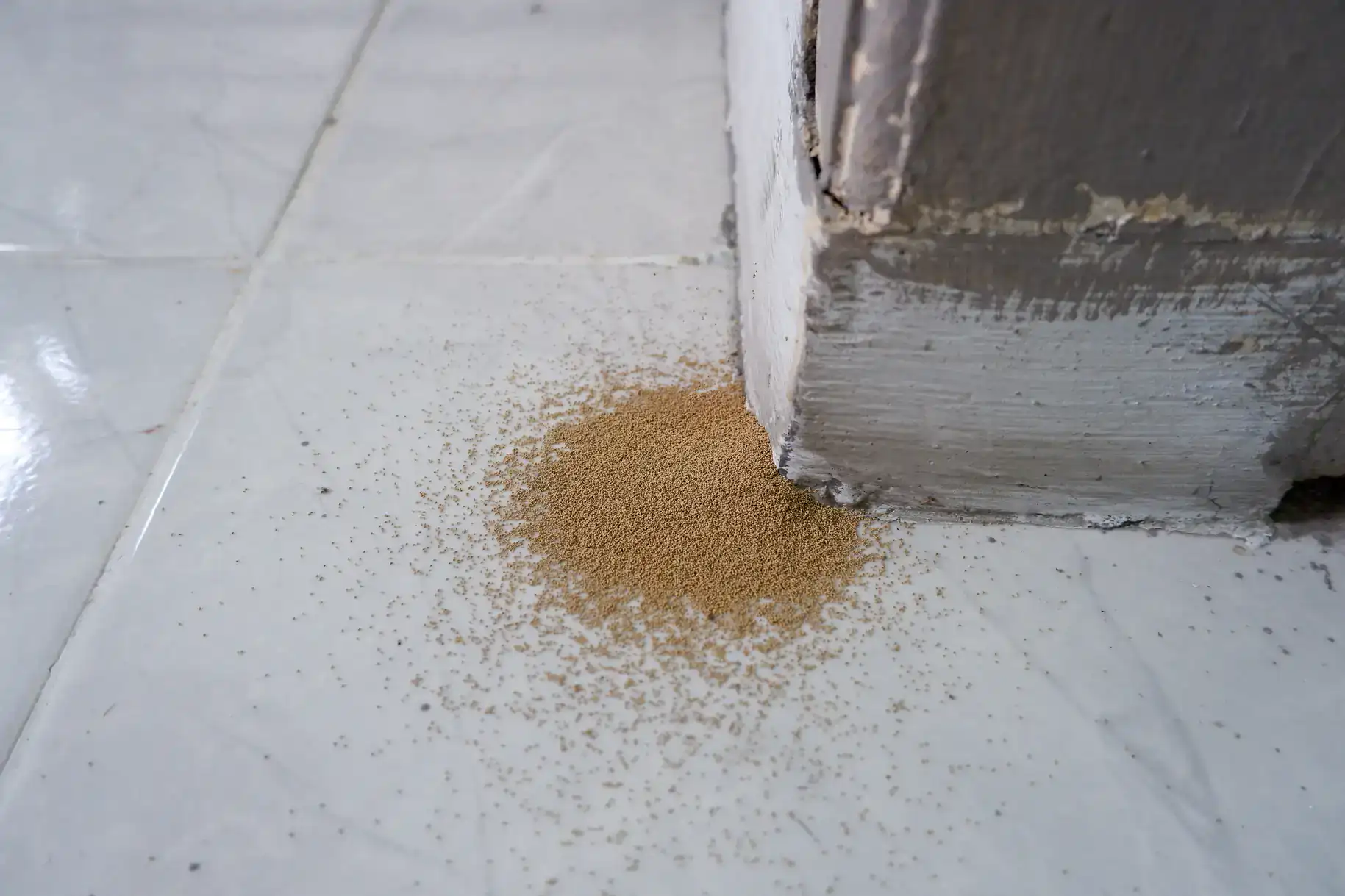
The most common signs in Manhattan buildings are mud tubes running along foundation walls or basement ceilings, hollow-sounding wood when you knock on baseboards or door frames, small piles of what looks like sawdust near wood surfaces, and most visibly swarmers. Swarmers are winged termites that emerge in late March through May in New York City, typically after a warm day with rain. They’re often mistaken for flying ants, which is one of the main reasons people lose weeks of response time.
In a Manhattan co-op or brownstone, the trickier part is that the damage often starts in areas you don’t see every day basement storage rooms, subfloor framing, the wood around ground-floor windows, or structural members behind finished walls. If you’re seeing any of those signs, or if you’re renovating and the contractor is pulling back material that looks compromised, that’s the moment to call for an inspection rather than wait. In Manhattan’s pre-war building stock, infestations that go unaddressed rarely stay contained to one area for long.
Yes, and this is one of the most important things to understand about termite infestations in multi-unit buildings in Manhattan. Eastern Subterranean Termites enter through the foundation and travel upward through the structural wood that runs continuously through a building floor joists, wall framing, subfloor boards. In a Manhattan co-op or rental building, those structural elements are shared. A colony that enters through the basement can work its way through multiple floors over time without any visible sign in individual units until the damage is already significant.
This is why building-wide coordination matters. If one shareholder or tenant reports signs of termite activity, the responsible move for the board, the management company, and every resident in the building is a full inspection of common areas and accessible structural elements, not just the affected unit. We work directly with building management and supers to handle that coordination, which makes the process significantly less disruptive for residents and more thorough in terms of actually finding the extent of the infestation.
A Wood Destroying Organism (WDO) report is a formal inspection document that identifies the presence or evidence of termites, carpenter ants, wood-boring beetles, and other organisms that damage wood structures. It’s produced by a licensed pest control professional and documents what was found, where, and what conditions exist that could support future activity.
For Manhattan real estate transactions, this report comes up in a few specific situations. FHA and VA loans require it as part of the mortgage approval process. Many conventional lenders are increasingly requesting it as well, particularly for older buildings. Co-op boards which control the approval process for unit purchases are asking for it more often as part of their due diligence requirements. And real estate attorneys on both sides of a transaction frequently want it in hand before a closing date is set. If you’re buying or selling in Manhattan and you’re not sure whether you need one, the safest answer is to get it done early. Waiting until the last week before closing and discovering active termite activity is one of the more stressful ways a deal can fall apart.
Under New York City’s Housing Maintenance Code, the responsibility falls on the landlord. Landlords are legally required to keep rental properties free from pest infestations and the conditions that allow them to persist. Local Law 55, which took effect in 2018, strengthened those requirements buildings with three or more units are subject to annual pest management inspection requirements, and landlords must address any infestations that are identified.
In practice, this means that if you’re a renter in Manhattan and you’re seeing signs of termite activity swarmers coming from baseboards, mud tubes in a basement storage area, soft or hollow-sounding floors you have the right to report it. A 311 complaint can trigger an HPD inspection, and if violations are issued, the landlord is on a compliance timeline to remediate. For landlords and property managers, the faster you address it with a licensed exterminator, the better your position. Waiting for HPD to compel action is more expensive and more disruptive than getting ahead of it.
In Manhattan, termite swarm season runs from late March through May. Swarmers the winged reproductive termites that emerge to start new colonies typically appear after the first warm days above 60°F, usually following rain. Because Manhattan’s urban heat island effect keeps the borough a few degrees warmer than surrounding areas, swarm activity can start slightly earlier here than in the outer boroughs or suburban areas outside the city.
If you see swarmers inside your apartment or building, the most important thing to do is not panic but also not ignore it. Swarmers themselves don’t cause structural damage, but their presence is a clear signal that an active colony is already established nearby, likely in the soil beneath your foundation or within your building’s structural framing. The mistake most people make is assuming that once the swarmers disappear after a day or two, the problem is gone. It isn’t. The colony is still there, still feeding. Call for an inspection while the evidence is fresh swarmers are actually one of the easiest ways to confirm termite activity, and a good inspector will want to see the location where they emerged.
Cost varies depending on the size of the structure, the extent of the infestation, and the treatment method that makes the most sense for the building. For a Manhattan townhouse or brownstone, termite treatment typically ranges from around $1,500 to $5,000. For a larger co-op or multi-unit building where the infestation has spread through shared structural elements and a building-wide treatment plan is needed, costs can be higher depending on scope.
What’s worth keeping in perspective is the alternative. The average cost to repair termite damage is around $3,000 and that’s for a moderate case. Structural repairs involving load-bearing members, floor joists, or subfloor framing in a Manhattan pre-war building can run $10,000 or more, and that’s before you factor in the impact on property value. A documented history of termite damage can reduce a property’s market value by roughly 20 percent which on a Manhattan co-op or townhouse worth $1 million or more, is a number that makes the cost of professional treatment look very different. Most standard homeowner and co-op insurance policies don’t cover termite damage either, so the financial exposure is entirely yours if it goes unaddressed.
Useful Links
Other Services we provide in Manhattan