

Hear from Our Customers

You stop finding droppings behind the stove. You stop hearing things in the walls at night. You stop wondering if the problem is getting worse or if the stuff from the hardware store did anything at all. That’s what changes and it’s worth more than people realize until they’ve been living with the alternative for a few months.
In Maspeth, pest pressure isn’t random. The Maspeth Industrial Business Zone over 850 businesses operating across 592 acres generates rodent populations that migrate outward into residential streets when the weather turns. Add Newtown Creek along the western edge of the neighborhood, a federally designated Superfund site with burrowing rat populations in the disturbed soil near the waterway, and you have a structural pest problem that no amount of steel wool and snap traps is going to solve permanently. A real fix accounts for where the pressure is coming from, not just where the pests showed up.
Maspeth’s housing stock adds another layer. A lot of these rowhouses and two-family homes were built before 1939. Aging mortar joints, original plumbing stacks, shared foundation walls between attached properties these are the entry points and travel routes that pests use, and they’re specific to this type of construction. When you treat that kind of building correctly, the results hold. When you don’t, the problem comes back from the same place it started.
We founded Kingsway Exterminating in 1976. That’s not a marketing line it’s just a fact that matters when you’re choosing who to let into your home. We’re family-owned, Brooklyn-based, and we’ve been crossing into western Queens to treat exactly these kinds of buildings for over five decades. Our technicians know the difference between a two-family rowhouse in Maspeth and a high-rise in Midtown, and we treat them accordingly.
Being based in Brooklyn directly across Newtown Creek from Maspeth’s western border means we’re not dispatching someone who’s never been to this part of Queens before. We know the streets around Grand Avenue. We know what pre-war construction looks like from the inside. We know that a rodent problem two blocks from the industrial corridor is a different job than one in a newer, more isolated building.
We’re fully licensed and registered with the New York State Department of Environmental Conservation, certified as bed bug specialists, and we carry the kind of insurance that protects you if anything goes sideways. Free inspection, no obligation, no pressure to sign anything before you know exactly what you’re dealing with.

It starts with the free inspection. One of our technicians comes out, walks the property, and looks at the actual situation not just where you saw the pest, but where it’s likely coming from and how it’s getting in. In Maspeth, that often means checking the foundation perimeter on the side closest to the industrial zone, looking at the shared wall between your unit and the one next door, and identifying any gaps in aging mortar or plumbing penetrations that are common in pre-1939 construction. You get a straight answer about what’s there and what it takes to fix it.
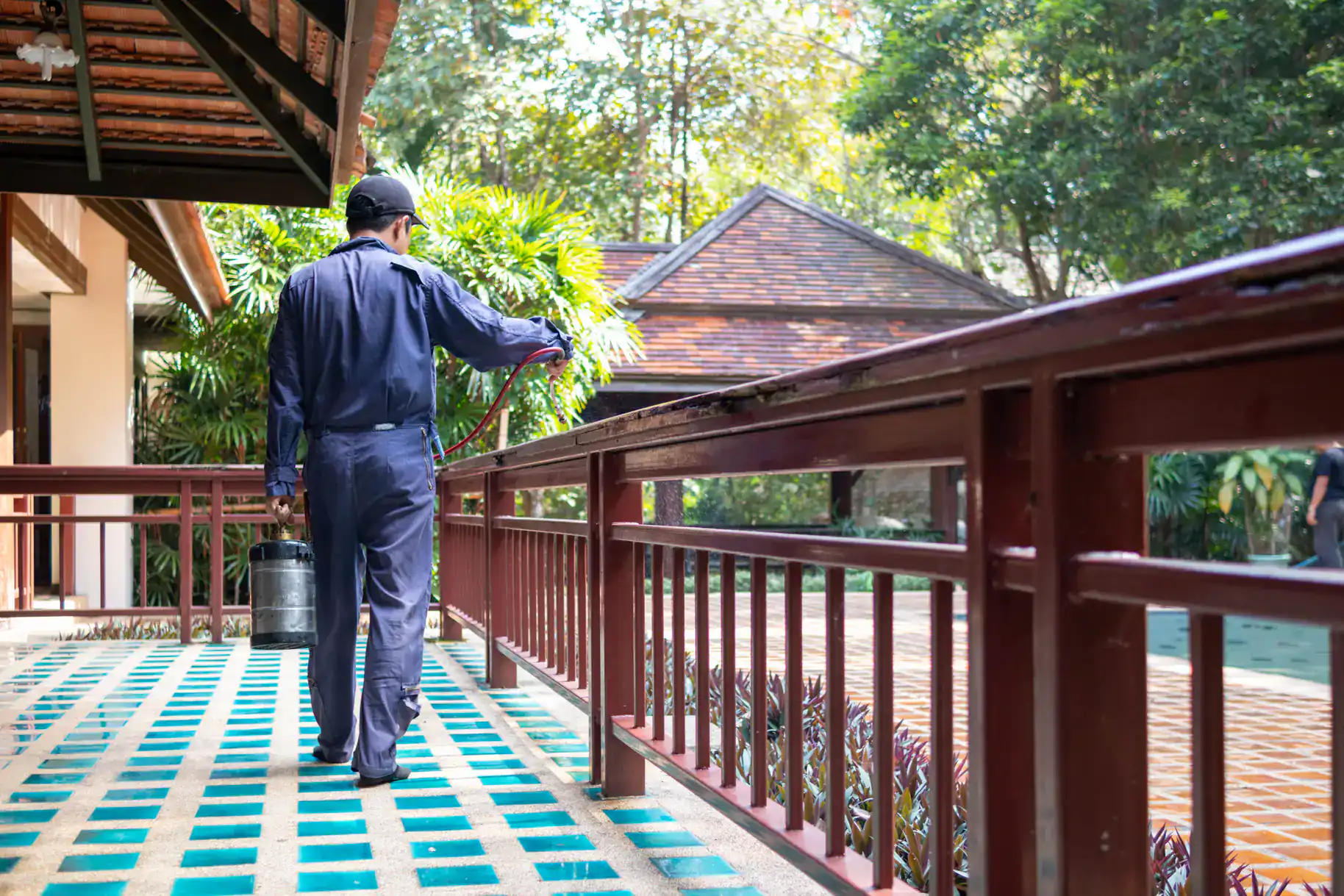
From there, the treatment plan is built around the specific pest, the specific building, and the specific level of activity. We use EPA-registered materials and follow Integrated Pest Management principles meaning we start with the most targeted, least invasive approach that will actually work, and we scale up from there if needed. For rodents, that means exclusion work alongside baiting, not just traps that need to be reset. For bed bugs, it means a choice between heat treatment and chemical treatment depending on your building type and situation. For cockroaches in an attached rowhouse, it means treating the shared wall side and the plumbing access points, not just spraying the kitchen.
If you’re in a two-family home which describes a lot of Maspeth and the problem involves both units, we can coordinate that. Landlord-tenant situations, NYC Housing Code compliance, pre-sale WDI inspections for mortgage clearance these are all part of what we handle. After treatment, you’ll know what was done, what to expect, and when to follow up.

Ready to get started?
We handle the full range of pest problems that show up in Maspeth’s residential and commercial properties. Rodent control mice and rats is the most common call in this neighborhood, and for good reason given the industrial zone adjacency and the Newtown Creek corridor. Cockroach extermination, bed bug treatment, termite inspection and treatment, ant control, wasp and stinging insect removal all of it is on the table, and all of it is approached with the same inspection-first process that keeps the treatment from being overkill or underpowered.
For bed bugs specifically, our certified specialists offer both heat treatment and chemical treatment. That distinction matters in Maspeth’s rowhouse and two-family stock, where heat treatment logistics differ significantly from a standalone single-family home. We’ll tell you which approach makes sense for your building and your situation not just which one we prefer to sell.
For homeowners buying or selling in Maspeth, we also issue WDI inspection reports the Wood-Destroying Insect clearance certificates that FHA and VA lenders frequently require before closing. Given how much of Maspeth’s housing stock is pre-war construction with original wood-frame elements, termite activity is a real concern during real estate transactions here, and having a licensed pest control specialist issue that report keeps your closing on schedule. Whether it’s a one-time treatment or an ongoing residential pest control program, our approach is always specific to what your property actually needs.
This is the most common frustration we hear from Maspeth residents, and the honest answer is that treating the rats inside your home without addressing the pressure source outside is only half the job. Maspeth’s Industrial Business Zone 592 acres of active warehouses, food distribution operations, and industrial businesses generates and sustains large rodent populations year-round. When temperatures drop in fall, those populations migrate outward into adjacent residential streets. If your home sits within a few blocks of the industrial corridor or near the Newtown Creek waterfront, you’re dealing with ongoing external pressure that will keep pushing new rodents toward your property.
A lasting fix requires two things working together: eliminating the active infestation inside, and sealing the entry points that allow new rodents in from outside. That means exclusion work filling gaps in foundation mortar, sealing plumbing penetrations, addressing any structural voids alongside the baiting and trapping program. Without exclusion, you’re managing a revolving door. With it, you’re actually solving the problem.
Yes, when it’s done correctly and the key phrase there is “done correctly.” We use EPA-registered materials applied according to label directions, which means the products have been evaluated for safety and efficacy by federal regulators before they ever come into your home. Our Integrated Pest Management approach means the least toxic effective treatment is used for each specific situation, rather than defaulting to the strongest available chemical for every job.
Before any treatment, you’ll be told exactly what is being applied, where it’s being applied, and how long to keep your family and pets out of treated areas. There’s no vague “give it a few hours” you get specific guidance based on the actual products used and the areas treated. If you have young children, pets with specific sensitivities, or anyone in the household with respiratory concerns, mention that during the inspection. We can adjust the treatment plan accordingly.
In most cases, yes and skipping the second unit is one of the most common reasons pest problems in Maspeth’s two-family homes keep coming back. Cockroaches travel through shared plumbing walls. Mice move through gaps in shared foundations and wall voids. A treatment that addresses only one unit while leaving the other untreated is a treatment that will likely fail within weeks, because the source of the reinfestation is still active on the other side of the wall.
The landlord-tenant dynamic in two-family homes adds complexity. Sometimes the owner occupies one unit and rents the other, and the tenant isn’t aware of or isn’t cooperating with the treatment. We have experience navigating exactly that situation coordinating access, communicating with both occupants, and structuring the treatment so both units are addressed in the same visit. Under the NYC Housing Maintenance Code, landlords are legally required to maintain pest-free conditions, so getting both units treated isn’t just practical in many cases it’s a legal obligation.
Pricing depends on the pest, the severity of the infestation, the size of the property, and whether you need a one-time treatment or an ongoing program. For a standard rodent or cockroach treatment in a Maspeth rowhouse or two-family home, a single-visit treatment typically falls in the range of $150 to $400 depending on scope. Bed bug treatments particularly heat treatment, which requires specialized equipment run higher, often in the $500 to $1,500 range depending on the size of the affected area and the treatment method chosen. Termite treatments and WDI inspections for real estate transactions are priced separately based on the property.
The most important thing to know is that our inspection is free. You don’t pay anything to find out what you’re dealing with and what it will cost to fix it. That removes the biggest barrier most people have to making the first call the fear of being quoted something outrageous before they even understand the problem. Get the inspection, get the quote, then decide.
Heat treatment involves raising the temperature in the affected area to levels that kill bed bugs and their eggs at all life stages typically above 120°F for a sustained period. It’s a single-day process with no residual chemical left behind, which is why many residents prefer it. The limitation is that it requires preparation, it doesn’t prevent reinfestation after treatment, and in attached rowhouses which are common throughout Maspeth heat can be harder to contain to a single unit without affecting adjacent spaces.
Chemical treatment uses EPA-registered pesticides applied to the specific areas where bed bugs harbor mattress seams, box spring frames, baseboards, and wall voids. It typically requires two to three visits spaced a few weeks apart to catch any eggs that hatch after the first application. It costs less than heat treatment in most cases and is often the more practical option in Maspeth’s attached rowhouse and two-family building stock where heat containment is a challenge. Our certified bed bug specialists will walk you through both options and tell you which one makes more sense for your specific building and situation not just which one is more profitable to perform.
If you’re financing the purchase with an FHA or VA loan, a WDI inspection Wood-Destroying Insect report is frequently required by the lender before the loan can close. Given that a significant portion of Maspeth’s housing stock was built before 1939, with original wood-frame structural elements and aging foundations, termite activity is a genuine concern in this neighborhood’s real estate transactions. A WDI report from a licensed pest control specialist documents whether wood-destroying insects termites, carpenter ants, wood-boring beetles are present or have caused damage.
We issue mortgage-ready WDI clearance certificates as part of our service offering. If wood-destroying insects are found during the inspection, we can treat the property and re-inspect, keeping your closing timeline on track rather than forcing a delay while you coordinate multiple vendors. For buyers, a pre-purchase pest inspection even when not required by the lender gives you a clear picture of what you’re actually buying before you sign. In a neighborhood with Maspeth’s housing age and history, that’s not a precaution it’s just due diligence.
Useful Links
Other Services we provide in Maspeth