

Hear from Our Customers
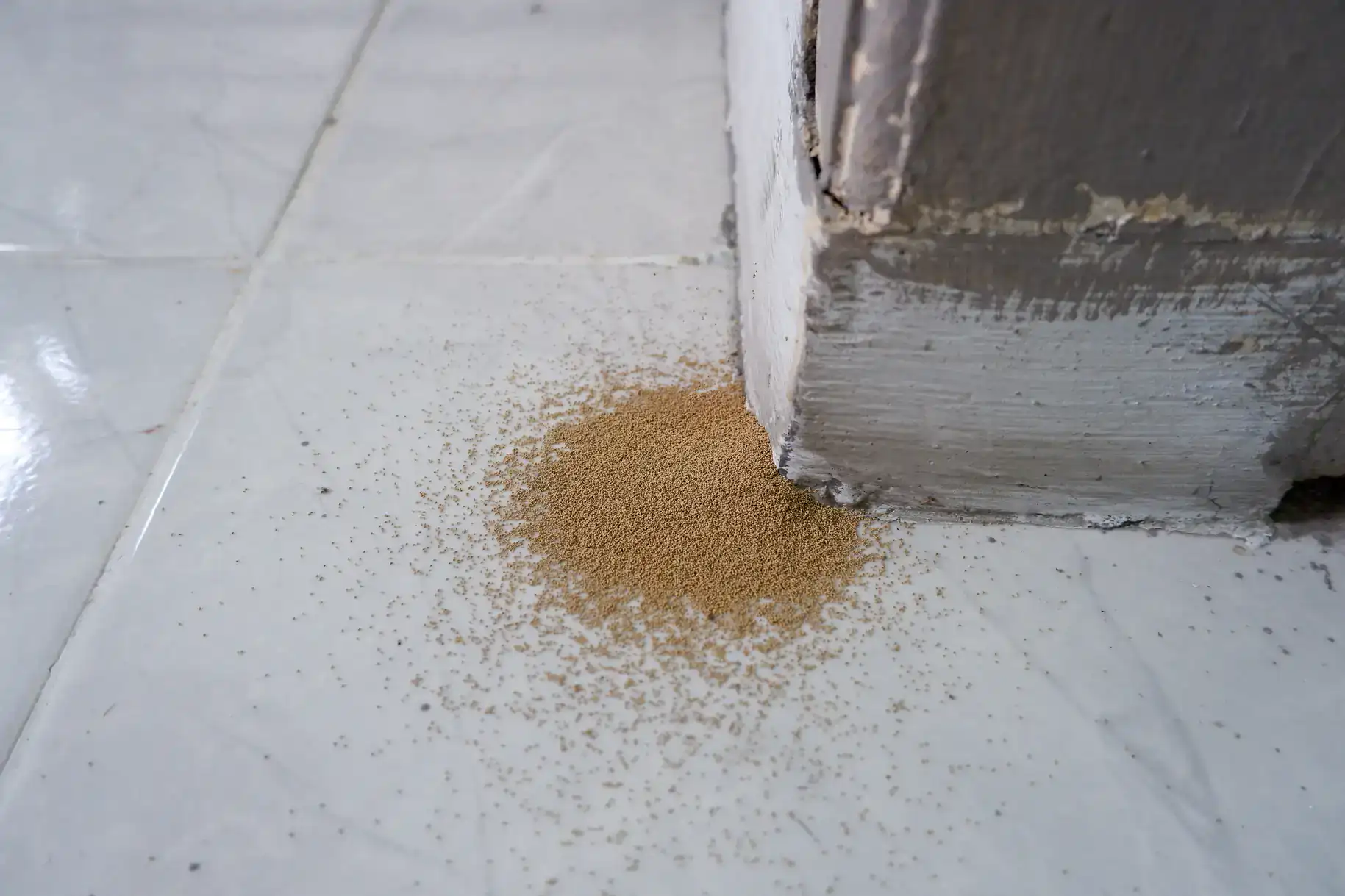
Most Glendale homeowners don’t find termites until something else tips them off a contractor opens a wall during a renovation, a floor starts to feel soft underfoot, or winged insects appear near a basement window in early spring. By that point, the colony has usually been active for years. That’s just how subterranean termites work. They don’t announce themselves. They feed around the clock, silently working through the wood framing of homes that were built a century ago and never designed with termite barriers in mind.
What changes after a proper termite treatment isn’t just the absence of insects. It’s the end of compounding damage. Every week you wait, the colony expands its foraging tunnels further into your structure. A professional termite treatment stops that progression and protects what’s left. For a Glendale home with a median value approaching $938,000, that protection isn’t a small thing a property with a documented termite history can lose 20% of its value, which translates to roughly $187,000 in equity gone.
The other thing that changes is peace of mind during real estate transactions. Glendale’s market is active 30 homes sold in October 2025 alone. Whether you’re buying a pre-war row house on Cooper Avenue or selling a two-family on one of the neighborhood’s side streets, a clean termite inspection report changes the conversation entirely. It removes a major contingency, satisfies lender requirements, and gives the buyer confidence that the structure they’re purchasing has been professionally evaluated.
We’ve been operating since 1976 founded by Richard Kourbage Sr. and still run by the same family today. Richard Jr. joined in 1987, Charles joined in 1989, and between the two of them and the rest of our team, we carry more than 100 years of collective pest control experience into every job. That’s not a figure pulled from a marketing brief. It’s the sum of decades spent treating termite infestations in the exact type of housing that lines Glendale’s blocks pre-war semi-detached wood frames, brick row houses, and two-family properties with original foundations.
We’re headquartered in Brooklyn, directly across the borough line from Glendale’s western border. We’ve been working in this part of Queens for over 50 years, which means our technicians who respond to calls in Glendale already know what they’re walking into. They know the soil conditions, the foundation types, and the construction characteristics of homes built near Forest Park and the Cemetery Belt. This isn’t a company that needs to get familiar with Glendale. We’ve been here the whole time.
When you call us, you reach a real person any time of day or night, seven days a week. From there, an inspection is scheduled within two business days, though same-day availability is often possible. The inspection itself is thorough and specific to your property. In Glendale, that means our technician is looking at more than just the obvious entry points. We’re checking foundation gaps, sill plates, floor joists, and any areas where moisture has had time to accumulate which in a neighborhood built on former swampland, can be more extensive than homeowners expect.
Once the inspection is complete, you get a clear picture of what was found and what the treatment options are. We use only New York State Department of Environmental Conservation registered materials, so every product applied to your home meets the state’s safety and efficacy standards. Depending on the severity and location of the infestation, treatment may involve a liquid termite barrier, a baiting system designed to eliminate the entire colony, or a combination of both. Liquid barrier treatments like Termidor typically last five to ten years. Bait station systems require ongoing monitoring but go further they eliminate the colony at the source rather than just blocking access points.
After treatment, we provide documentation that satisfies the requirements of lenders, real estate attorneys, and property managers. If you’re in the middle of a transaction on a Glendale property, that paperwork matters. The process is straightforward from start to finish no upselling, no scare tactics, and no vague timelines.
Ready to get started?
Our termite services cover the full range of what Glendale homeowners actually need. That starts with termite identification and inspection a detailed assessment of your property’s specific risk factors, including soil contact points, moisture intrusion, and the condition of structural wood in older homes. From there, treatment is calibrated to what was actually found, not a standard package applied the same way to every structure.
For active infestations, we offer subterranean termite eradication using liquid barrier treatments and termite baiting systems. The baiting approach is particularly effective for properties near the Cemetery Belt and Forest Park, where established colonies in adjacent undisturbed soil can continue sending foraging tunnels toward your foundation long after a surface-level treatment. Eliminating the colony not just blocking it is the more durable solution in those situations. We also handle carpenter ant treatment and powder post beetle control, which often appear alongside termite activity in Glendale’s aging wood-frame homes.
For buyers, sellers, and property managers, we provide WDO (Wood Destroying Organism) inspections with the full documentation required for FHA and VA mortgage approvals. All materials we use are registered with the NYS DEC, and every treatment is safe for homes with children and pets. Free estimates are available, and appointments are guaranteed within two business days.

Glendale sits on land that was originally called Fresh Pond a swampy, moisture-retentive area that was developed into residential housing beginning in the late 1800s. Even though the ponds were filled in over a century ago, the underlying soil still holds more moisture than higher-ground neighborhoods in Queens. Eastern Subterranean Termites, the dominant species throughout New York City, need moist soil to survive. Glendale’s former-wetland foundation provides exactly that environment, which is one reason termite activity here tends to be more persistent than in drier parts of the borough.
On top of that, Glendale is nearly encircled by the Cemetery Belt a ring of historic cemetery grounds including Evergreens Cemetery, founded in 1849, and Lutheran Cemetery. Those undisturbed acres contain aging trees, decaying root systems, and generations of organic matter that sustain large, established termite colonies. Foraging tunnels from those colonies can extend hundreds of feet well into the foundations of residential properties along Glendale’s borders. It’s not a theoretical risk. For homeowners whose properties are near those cemetery grounds, it’s an active and ongoing one.
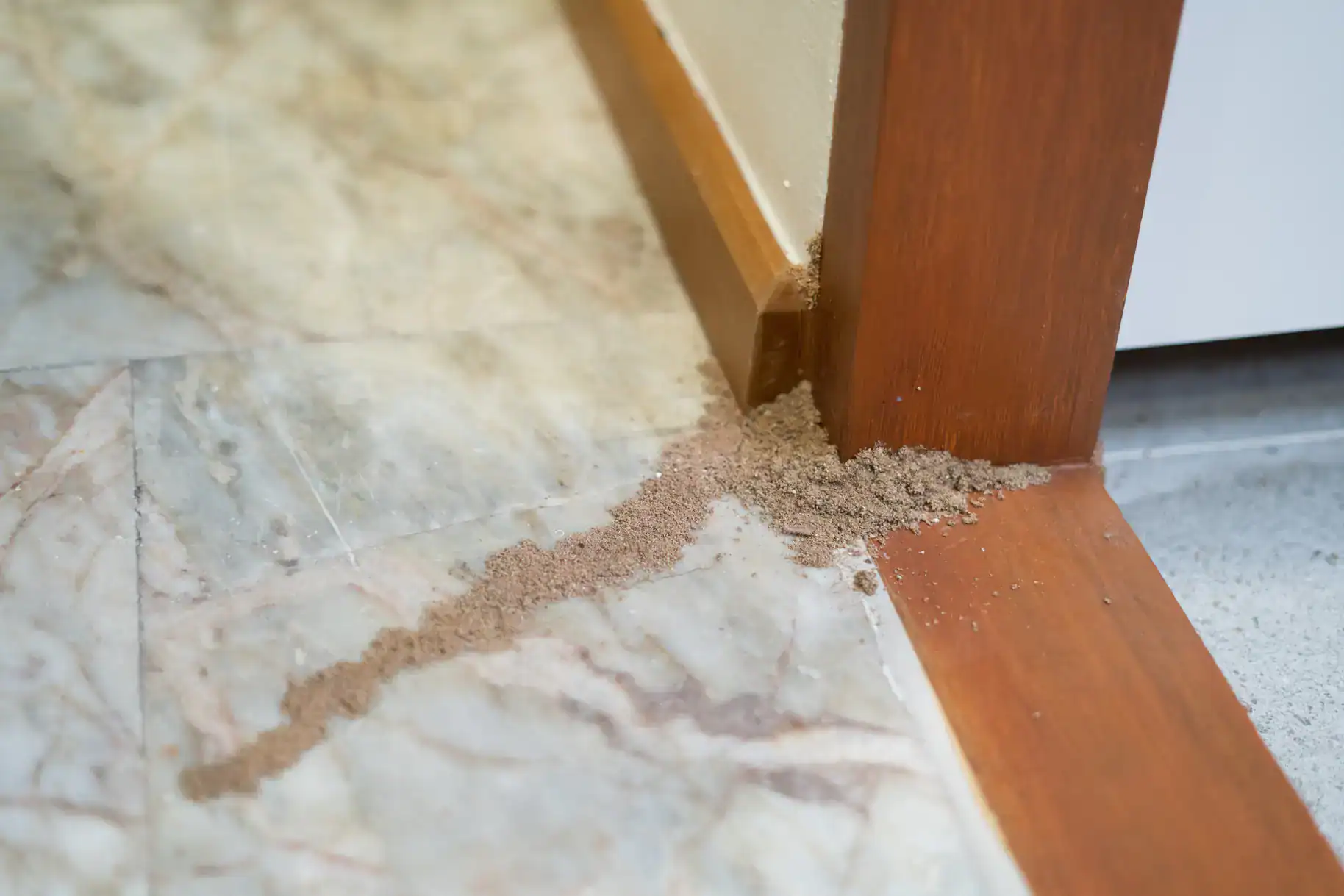
The earliest signs are often subtle enough to miss entirely, which is part of what makes subterranean termites so damaging in older homes. The most recognizable indicator is the presence of mud tubes pencil-thin tunnels made of soil and wood particles that termites build along foundation walls, floor joists, or any surface connecting soil to wood. If you see those, the colony is already established and actively feeding.
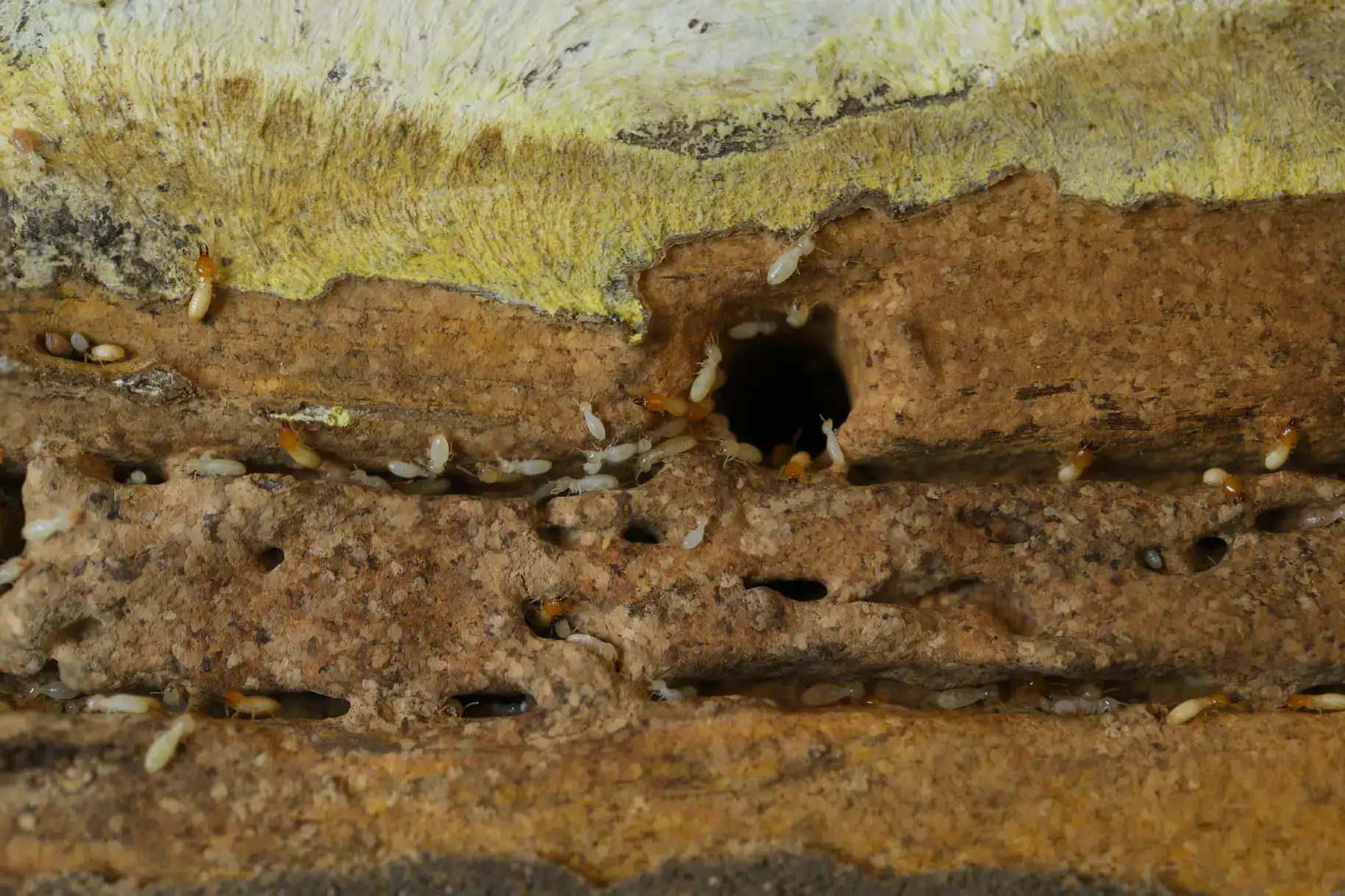
Other signs include wood that sounds hollow when tapped, floors or walls that feel slightly soft or spongy, paint that appears to bubble or crack without an obvious moisture source, and the appearance of small, pale insects in areas you wouldn’t expect them. In Glendale’s pre-war wood-frame homes many of which have original sill plates and floor joists that have been in direct or near-direct contact with soil for decades these signs can appear in basements, crawl spaces, and around window frames. Winged termites, called swarmers, are another clear indicator. In Queens, swarm season typically peaks between March and May. If you see a cluster of winged insects near a windowsill or emerging from a wall during that window, call us immediately for an inspection.
In almost every case, no. Standard homeowners insurance policies in New York classify termite damage as a preventable maintenance issue rather than a sudden or accidental loss which means it falls outside the scope of what a typical policy covers. That’s true whether you have a basic policy or a more comprehensive one. The damage has to be paid for out of pocket, which is why the financial stakes of delayed treatment are so high.
The average cost to repair termite damage is around $3,000, but structural repairs replacing compromised floor joists, sill plates, or load-bearing framing can run $10,000 or more depending on how far the damage has spread. In Glendale, where homes were built as far back as the late 1800s and median property values are approaching $938,000, the gap between the cost of early treatment and the cost of delayed discovery is enormous. Professional termite control typically runs $1,500 to $5,000 for a standard Queens row house or two-family property. That investment is a fraction of what you’d spend repairing structural damage and it protects equity that insurance simply won’t replace.
It depends on the treatment method we use. Liquid termite barrier treatments Termidor is one of the most widely used create a chemical barrier in the soil around your foundation that termites cannot detect or avoid. These treatments typically remain effective for five to ten years under normal conditions. For most Glendale homeowners, a properly applied liquid barrier provides long-term protection without requiring annual reapplication, though periodic inspections are still a good idea given the neighborhood’s proximity to the Cemetery Belt and Forest Park.
Termite baiting systems work differently. Rather than creating a barrier, bait stations are placed in the soil around the property and monitored on a regular schedule. When termites find the bait, they carry it back to the colony which is what makes baiting effective at eliminating the source rather than just blocking access. This approach requires ongoing monitoring visits, typically quarterly or semi-annually, to ensure the bait is being taken and the colony is being addressed. For properties near persistent termite habitat like the undisturbed cemetery grounds along Glendale’s western and southern borders the monitoring component of a bait system provides an ongoing early-warning layer that a one-time liquid treatment alone doesn’t offer.
For FHA and VA loans, a termite inspection formally called a Wood Destroying Organism (WDO) inspection is typically required before closing. Even for conventional purchases, most buyers’ attorneys and real estate agents in Queens will recommend one, especially for pre-war properties. Given that Glendale’s housing stock is largely built from the early 1900s, a WDO inspection isn’t just a formality it’s one of the most important pieces of due diligence you can do before committing to a purchase.
From the seller’s side, having a clean inspection report removes one of the most common transaction contingencies and gives buyers confidence in the structure they’re purchasing. If an issue is found, knowing about it before listing gives you the option to address it on your terms rather than under deadline pressure. We provide WDO inspections with the full documentation lenders, attorneys, and property managers require. With Glendale’s market moving quickly 30 homes sold in October 2025 alone having that report ready can make a real difference in keeping a transaction on track.
Yes. Every product we apply is registered with the New York State Department of Environmental Conservation, which sets the safety and efficacy standards for pesticide use in the state. NYS DEC registration means the materials have been reviewed and approved for use in residential settings including homes with children and pets. Our technicians use targeted application methods that concentrate treatment where termites actually are, rather than applying broad chemical coverage throughout the home.
For Glendale families roughly 22% of the neighborhood’s population is under 18 this matters in a practical way. Most termite treatments do not require extended displacement from your home. In the majority of residential cases, you can return to normal activity the same day or within a short window after treatment is complete. If your specific situation requires any additional precautions, our technician will tell you exactly what those are before any product is applied. There are no surprises, no vague instructions, and no pressure to agree to anything before you fully understand what’s being done and why.
Useful Links
Other Services we provide in Glendale