
Hear from Our Customers
When termite treatment is done right, you stop worrying about what’s happening inside walls you can’t see. You know the structural integrity of your home is sound. You know the investment you made whether that’s $1.2 million or closer to $2.8 million for a Midwood Street rowhouse in Prospect Lefferts Gardens is protected. That peace of mind is real, and it’s worth more than the cost of the treatment by a wide margin.
Prospect Lefferts Gardens creates a specific set of conditions that make termite risk higher than most homeowners realize. Your home’s western edge sits within blocks of Prospect Park 526 acres of mature trees, moist organic soil, and deep root systems that Eastern Subterranean Termites thrive in. That biological pressure doesn’t stop at Ocean Avenue. It reaches the foundations of homes on the streets east of the park, and if your building hasn’t been inspected or treated, you’re operating on assumption, not information.
Then there’s the row house factor. Attached construction means a colony that establishes itself under one unit can migrate laterally through shared foundation zones to the building next door without a single visible sign on either exterior. After treatment, that risk is contained. You know where your property stands, and you’re not waiting for a contractor to open a wall during renovation to find out the hard way.
We were founded in 1976 by Richard Kourbage Sr. and his sons Richard Jr. and Charles are still central to how the business runs today. That continuity matters in a neighborhood like Prospect Lefferts Gardens, where trust is built through reputation and community relationships. When something needs to be addressed, Charles responds personally. That’s not a policy it’s just how a family business works.
Our headquarters is at 2216 Flatbush Avenue, Brooklyn the same commercial corridor that runs through the heart of Prospect Lefferts Gardens. Our technicians have been working in these blocks for decades, treating pre-war limestone and brownstone rowhouses that were built in the same era as the ones in the Historic District. We’ve seen what decades of untreated foundations look like from the inside, and we know how to assess a building that’s never had a termite inspection without missing anything.
We hold BBB accreditation dating back to 1989 and apply only NYS DEC registered materials on every job.
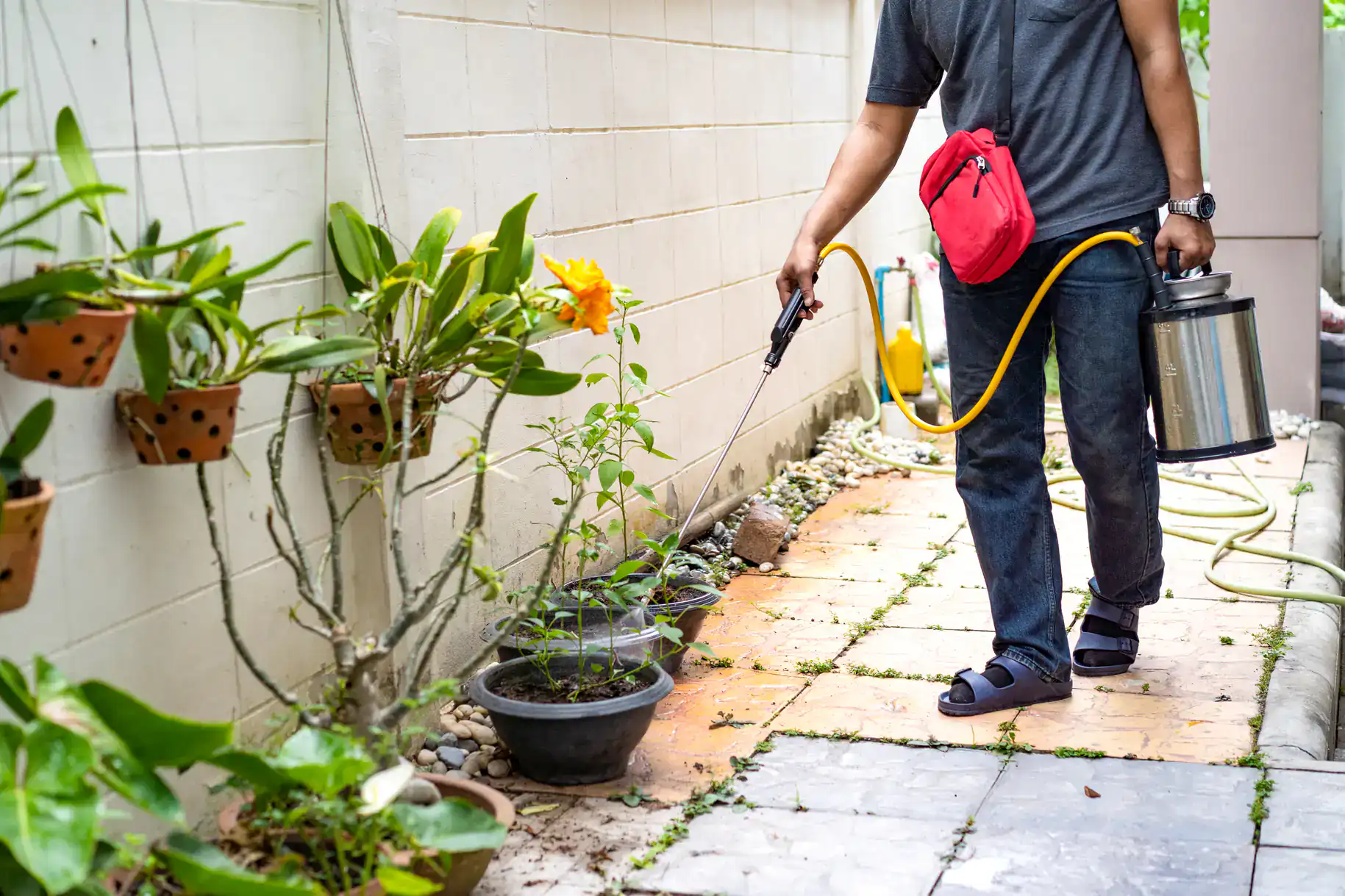
It starts with a full inspection and in Prospect Lefferts Gardens’ attached rowhouses, that means more than a quick walk-through. Our technician examines your foundation perimeter, basement framing, sill plates, and any wood-to-soil contact points that Eastern Subterranean Termites use to enter a structure. We’re looking for mud tubes, hollow-sounding wood, frass, moisture damage, and the subtle signs that most homeowners miss entirely. In a pre-war building with original timber framing, the inspection goes deeper than it would in newer construction.
If an active infestation is confirmed, treatment is matched to your specific property and infestation profile. For most Prospect Lefferts Gardens rowhouses, that means a combination of liquid termiticide barrier application and a baiting system. The liquid barrier applied around your foundation creates a treated zone that termites cannot cross, and it lasts five to ten years. The bait stations work differently: foraging termites carry a slow-acting toxicant back to the colony, which eliminates the source rather than just the termites you can see. For homes in the Prospect Lefferts Gardens Historic District, all treatment is conducted in a manner consistent with the care these landmark-designated buildings require.
After treatment, we provide documentation of what was found, what was applied, and what your follow-up schedule looks like. If you need a WDO report for a real estate transaction which FHA and VA lenders require before closing that documentation is part of the process from the start.
Ready to get started?
Our termite services cover the full range of what Prospect Lefferts Gardens homeowners, property managers, and real estate buyers actually need. That includes termite identification and inspection, subterranean termite eradication, termite baiting system installation and monitoring, liquid termiticide barrier treatment, Wood Destroying Organism (WDO) inspections for real estate transactions, and treatment for related wood-destroying insects including carpenter ants and powder post beetles. We serve both residential and commercial properties.
For Prospect Lefferts Gardens specifically, the WDO inspection service is worth understanding clearly. If you’re buying or selling a rowhouse in Prospect Lefferts Gardens where prices regularly exceed $1 million FHA and VA mortgage lenders require a WDO report before the transaction can close. We provide that documentation with the speed a time-sensitive closing demands. Same-day inspections are frequently available, and appointments are guaranteed within two business days. Free estimates are standard on every job, and we’re available 24/7 by phone, so you’re not leaving a voicemail when you find something that can’t wait.
All materials we apply are registered with the New York State Department of Environmental Conservation. For properties within the Prospect Lefferts Gardens Historic District, we select treatment methods with the building’s landmark status in mind no shortcuts, no visible exterior damage, no surprises. Senior discounts are available for long-term Prospect Lefferts Gardens residents who’ve been maintaining these buildings for decades.
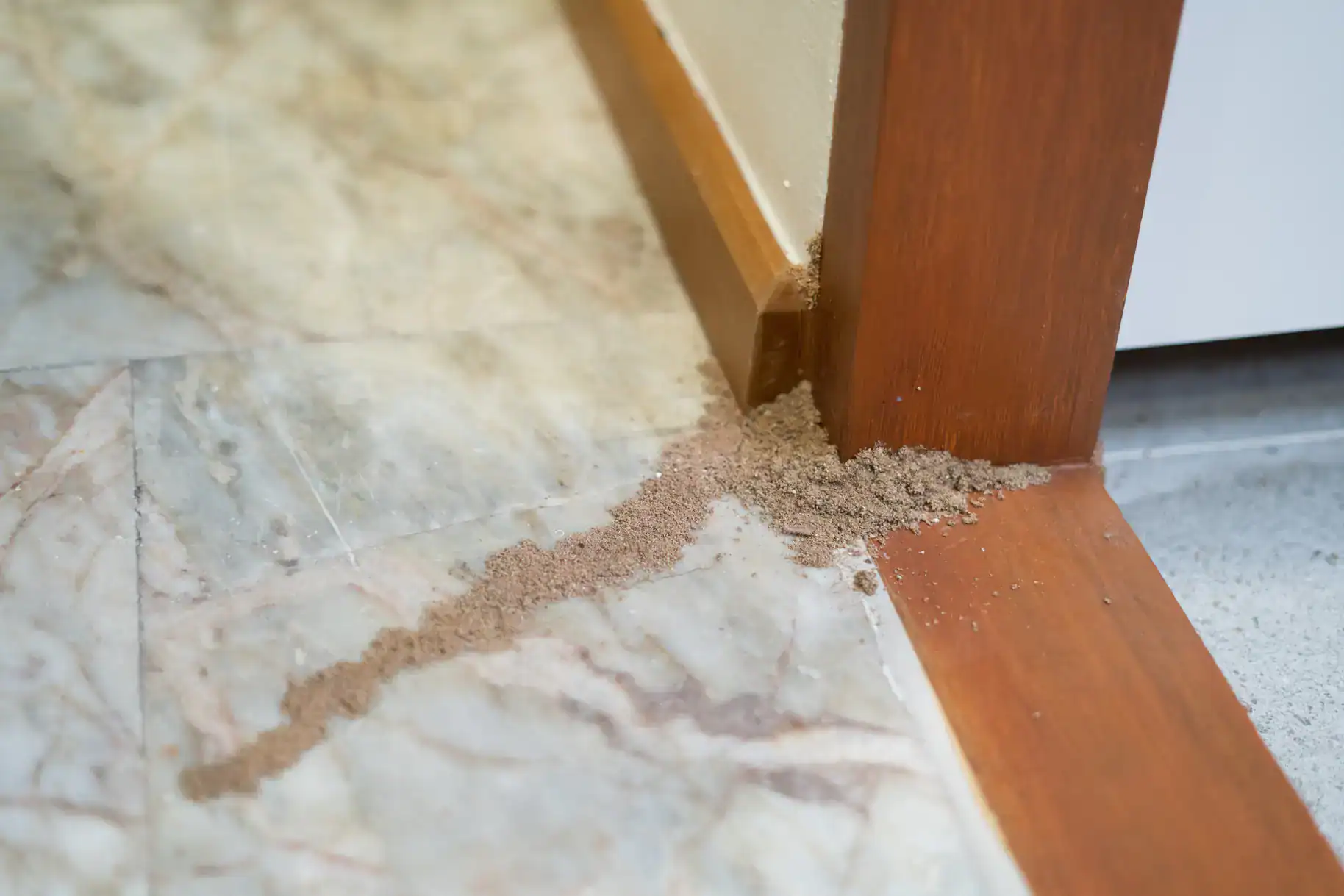
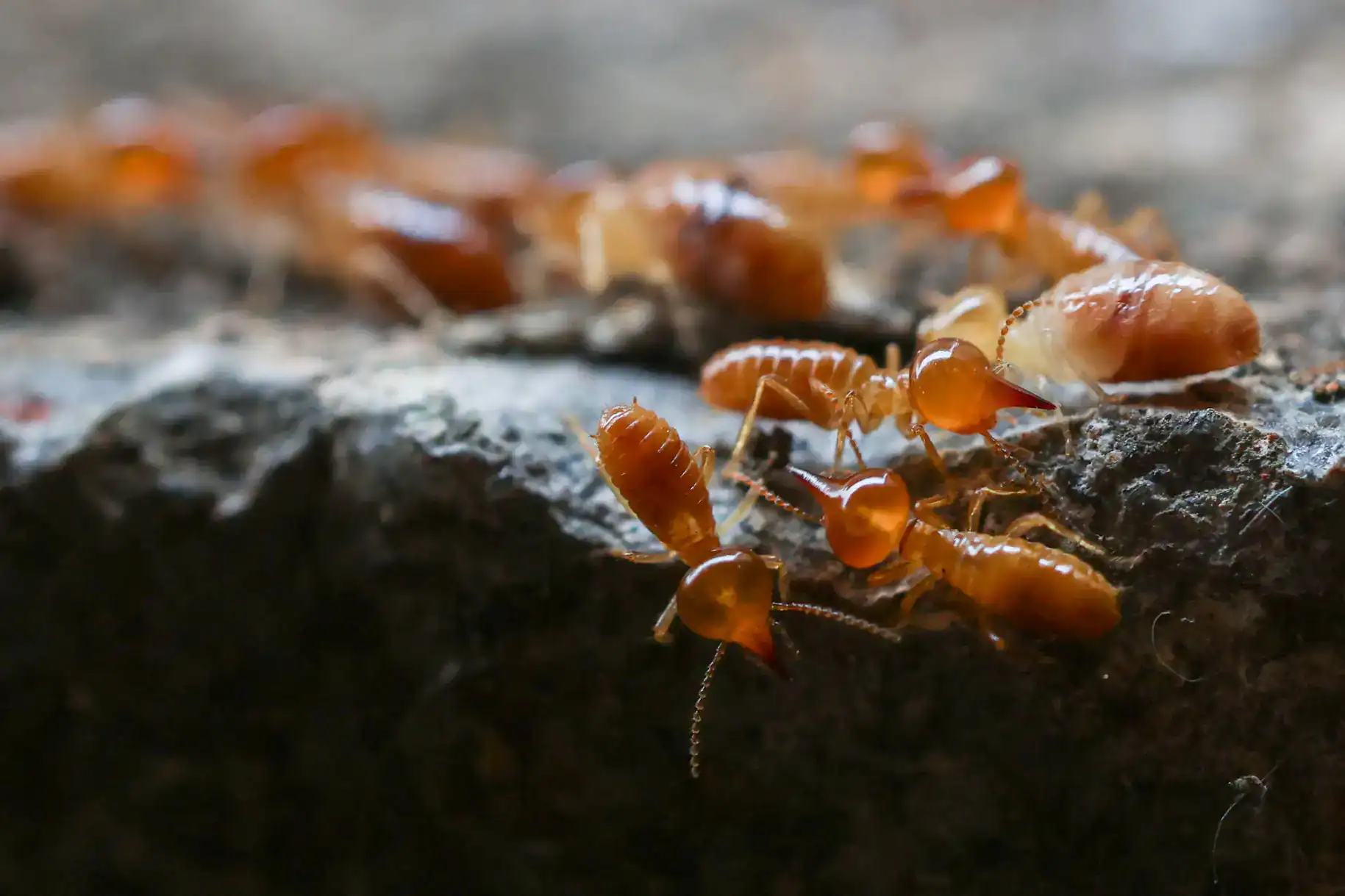
Eastern Subterranean Termites the species responsible for virtually all termite infestations in Brooklyn live underground and travel through soil to reach wood. They only need a gap of 1/32 of an inch to enter a structure, which is smaller than the width of a credit card and invisible to the naked eye. In Prospect Lefferts Gardens’ pre-war rowhouses, those entry points are easy to find: settling foundations, gaps around utility penetrations, deteriorated mortar between foundation stones, and wood sill plates that sit in near-direct contact with soil at grade level.
Most of Prospect Lefferts Gardens’ housing stock was built between 1900 and 1930 and the original timber framing in many of these buildings has never been chemically treated. That means a century of exposure with no chemical barrier between the soil and the wood. Once termites locate a food source, they build mud tubes upward along the foundation to reach it, feeding continuously, 24 hours a day. By the time you see a mud tube or notice hollow-sounding wood, the colony has usually been active for years.
Yes and this is one of the most important things to understand about termite risk in Prospect Lefferts Gardens’ attached rowhouse blocks. Subterranean termite colonies travel underground, not through walls. That means a colony established beneath one unit can expand its foraging territory laterally through shared foundation zones and reach the adjacent building without any visible sign on either structure’s interior or exterior. The colony doesn’t recognize property lines.
This is why a termite infestation in an attached rowhouse is never purely a single-unit problem. If your neighbor has had termites or if you’ve seen swarmers on your block in the spring your own foundation perimeter deserves an inspection regardless of whether you’ve noticed symptoms inside your home. Our professional inspection assesses the full foundation perimeter, not just the areas with obvious signs. Early detection on your end can stop a spreading colony before it establishes itself under your structure, which is significantly less expensive than treating an active infestation that’s already feeding on your framing.
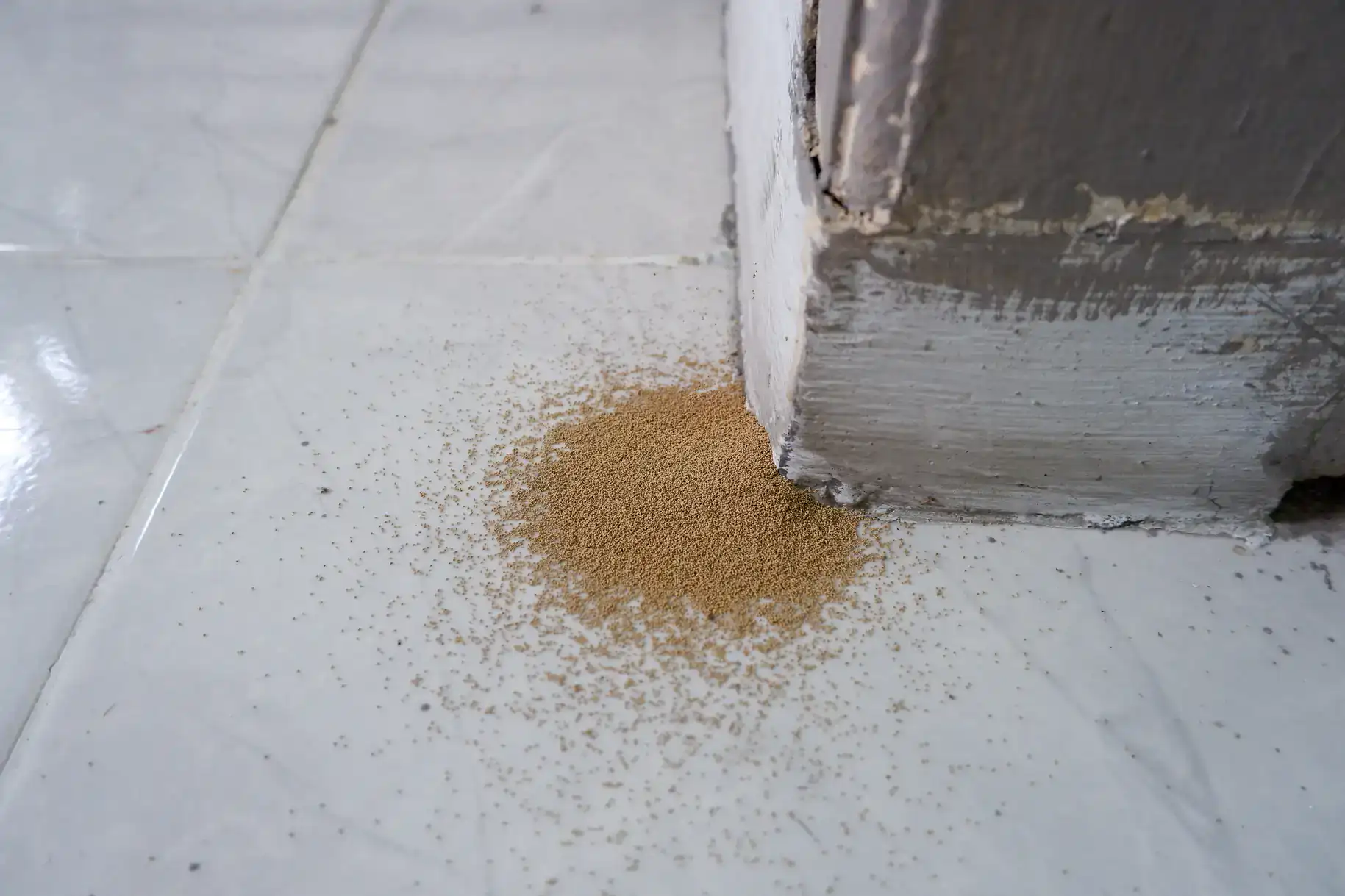
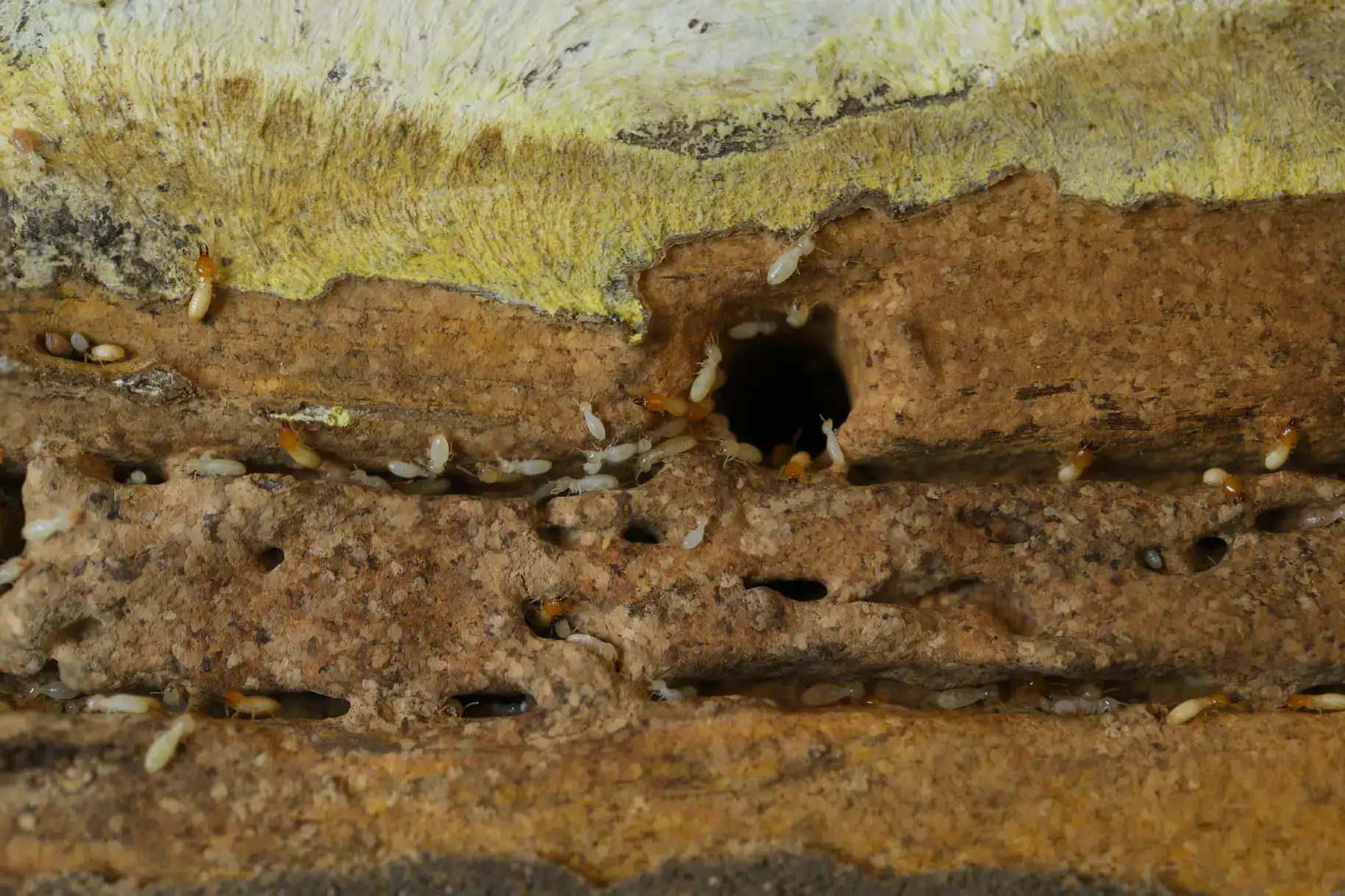
The most commonly reported signs are mud tubes pencil-width tunnels of dried soil and termite secretions running along foundation walls, basement framing, or interior walls near the floor. Hollow-sounding wood when you tap on it is another indicator, as is wood that appears blistered or buckled without an obvious moisture source. During spring swarm season, you may see winged termites called swarmers emerging from foundation cracks, window sills, or basement areas. They’re frequently mistaken for flying ants, but the difference matters: termites have straight antennae, equal-length wings, and a straight body without the pinched waist of an ant.
In pre-war construction, termite activity often goes undetected for years because the damage occurs inside structural members that aren’t visible during normal daily life. Basement joists, floor framing, and wall plates can be significantly compromised before the surface shows any change. If you’re planning a renovation which is common in Prospect Lefferts Gardens’ active real estate market there’s a reasonable chance a contractor opening walls or floors will find evidence of current or historical termite activity. At that point, a professional inspection and treatment plan should happen before the renovation continues.
It’s a fair question, and the honest answer is: it can, depending on the treatment method and where on the building the work is being done. The Prospect Lefferts Gardens Historic District was designated by the NYC Landmarks Preservation Commission in 1979, and exterior alterations to buildings within the district are subject to LPC guidelines. For termite treatment, this primarily becomes relevant when exterior foundation drilling or injection is required in areas visible from the street.
We select treatment methods with this in mind. Liquid termiticide barriers can typically be applied through interior basement access points or through foundation areas that are not street-facing, minimizing any exterior impact. Bait station systems are installed around the perimeter at grade level and are generally unobtrusive. The goal is effective treatment that doesn’t compromise the architectural integrity of your landmark-designated building and our experience with Brooklyn’s pre-war housing stock means these considerations are part of the planning process from the beginning, not an afterthought.
In Brooklyn, Eastern Subterranean Termites typically swarm in the spring most commonly between March and May on warm days following rain. That weather pattern arrives reliably each year, and in Prospect Lefferts Gardens, the proximity to Prospect Park amplifies it. The park’s moist, organic-rich soil provides ideal overwintering conditions for termite colonies, and swarms that originate in park-adjacent ground can reach the foundations of homes along Ocean Avenue and the streets east of it.
If you see winged insects emerging from your foundation, window sills, or basement area in spring, don’t wait to see if it happens again. Swarmers are reproductive termites leaving an established colony which means a colony is already present and mature enough to reproduce. That typically takes five or more years to reach, so by the time you see swarmers, the infestation has likely been active for a long time. Call us as soon as you notice them. We answer 24/7 and can frequently schedule a same-day inspection. The swarmers themselves don’t cause structural damage, but what they’re telling you about the colony below is urgent.
The cost of termite treatment in Prospect Lefferts Gardens depends on several factors: the size of the structure, the extent of the infestation, the treatment method used, and whether the property requires a WDO inspection report for a real estate transaction. For a standard Prospect Lefferts Gardens rowhouse, professional termite treatment including a liquid termiticide barrier and bait station system typically falls in the range of $1,200 to $3,500, depending on those variables. WDO inspections for real estate closings are priced separately and are generally straightforward to schedule quickly.
What’s worth keeping in perspective is the comparison. The average cost to repair termite structural damage is around $3,000, and significant beam or floor joist replacement can run $2,000 to $10,000 or more. In a neighborhood where rowhouses are selling for $1 million to $2.8 million, a termite infestation that reduces property value by even 10% is a six-figure problem and homeowner’s insurance won’t cover it, because termite damage is classified as a preventable maintenance issue. We provide free estimates on every job, so you know exactly what you’re looking at before committing to anything. Call us, get the inspection, and make the decision with real information rather than guesswork.
Useful Links
Other Services we provide in Prospect Lefferts Gardens