
Hear from Our Customers
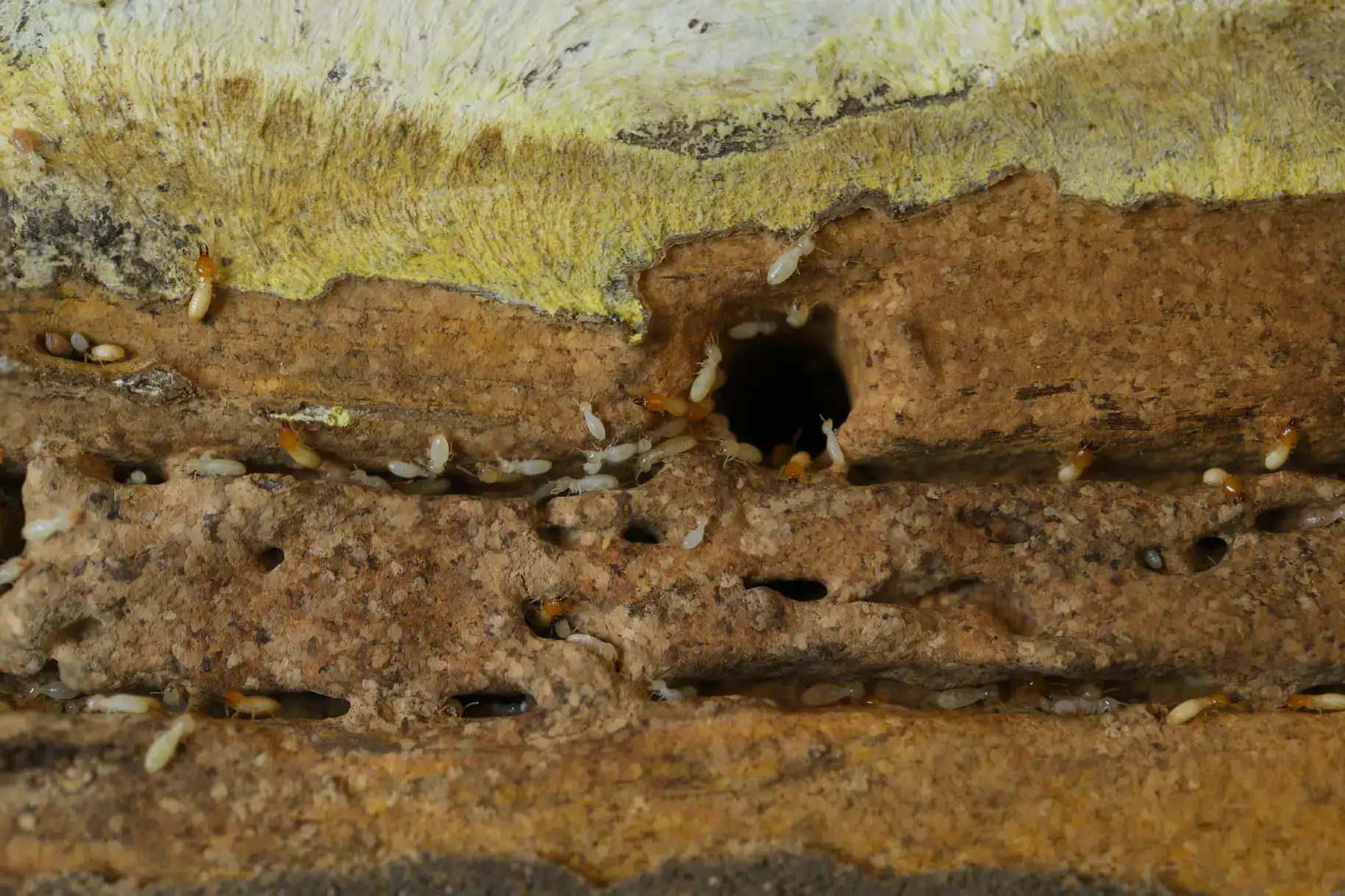
Most Sunset Park homeowners don’t find out they have termites until a contractor opens a wall during a renovation and by then, the damage is already deep. Eastern Subterranean Termites feed around the clock, seven days a week. A mature colony can consume 20 feet of a 2×4 in a single year, and they don’t stop because it’s inconvenient for you.
What makes Sunset Park particularly vulnerable is the building stock itself. The masonry rowhouses along 43rd, 44th, 50th Street, and throughout the neighborhood’s four NYC Landmarks Preservation Commission-designated historic districts were built between 1885 and 1912. The brick exteriors look solid, but the interior framing floor joists, stair carriages, subfloor planking is original untreated lumber that’s been sitting near soil grade for over a century. That’s exactly what subterranean termites are looking for.
There’s also the party-wall factor. In Sunset Park’s connected rowhouses, a colony that enters one unit can spread laterally through shared foundation systems into the home next door, and the one after that. Effective termite treatment here isn’t just about your unit it’s about stopping the colony at its underground source before it becomes your neighbor’s problem too. That’s the kind of outcome that actually protects what you’ve invested in.
We’ve been operating out of Brooklyn since 1976 founded by Richard Kourbage Sr. and now run across three generations of the same family. That’s over 50 years of treating the specific building types that define Sunset Park and the surrounding neighborhoods: pre-war masonry rowhouses, connected two-family homes, and multi-unit buildings with shared foundations and aging structural wood.
Our team collectively brings more than 100 years of combined pest control experience to every job. That’s not a marketing number it means when a Kingsway technician walks into a Sunset Park basement and looks at a foundation wall, they’re drawing on decades of field experience with exactly these conditions. We know what mud tubes look like in a rowhouse crawl space. We know how moisture from the Gowanus Bay waterfront affects soil conditions in the lower-elevation blocks west of 3rd Avenue. We’ve seen this before, and we know how to handle it.
We hold BBB accreditation since 1989 and use only NYS DEC-registered materials so you’re working with a company that’s been accountable to this borough long before most of our current competitors existed.
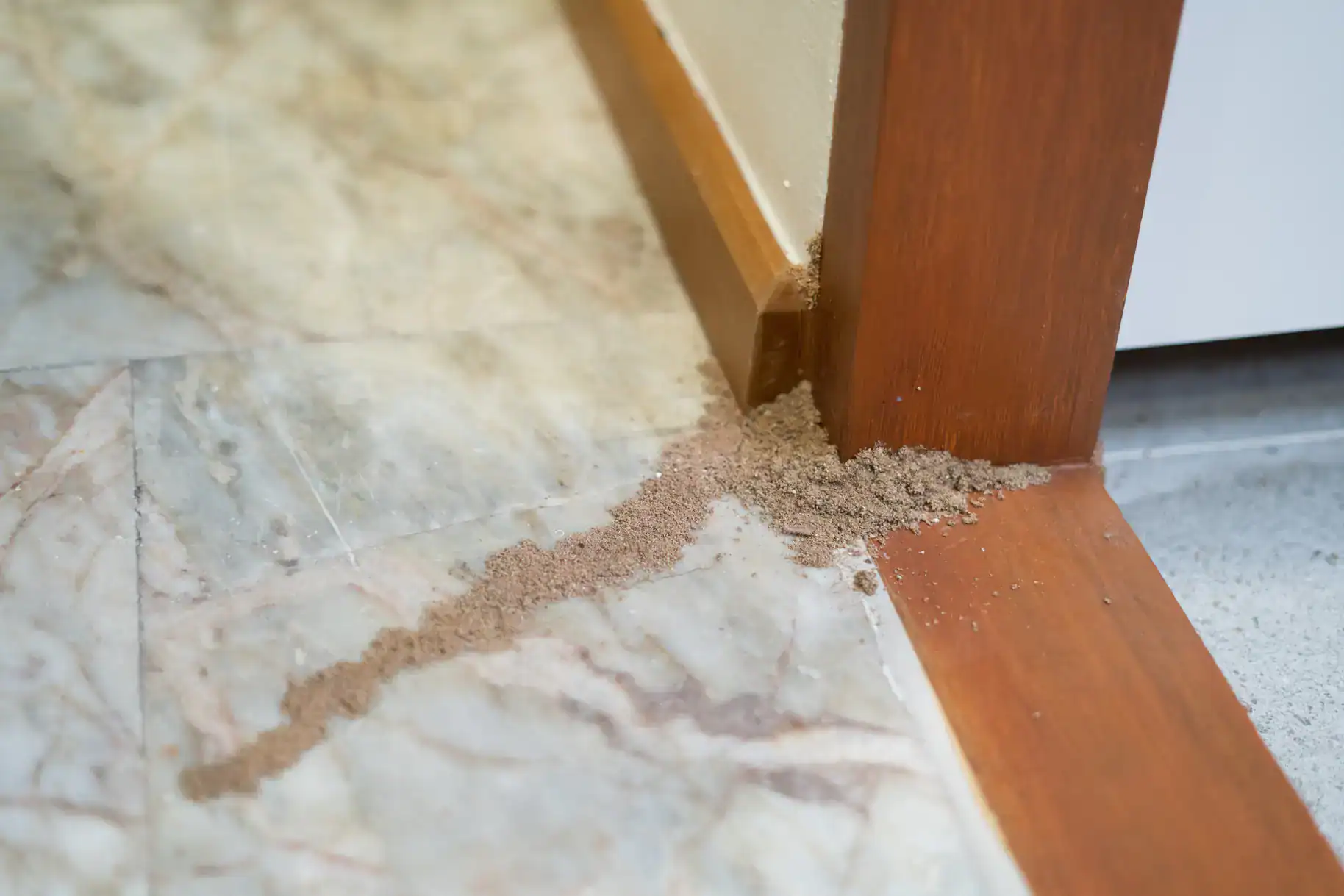
It starts with a thorough inspection. A licensed technician walks your property basement, foundation perimeter, crawl spaces, any areas where wood meets soil or concrete looking for mud tubes, damaged framing, swarm evidence, and moisture conditions that indicate active or past termite activity. In Sunset Park’s rowhouses, this includes checking party walls and shared foundation areas that most homeowners never think to look at. If you’re in one of the neighborhood’s LPC-designated historic districts, the inspection accounts for the building’s original construction methods so treatment recommendations don’t conflict with the integrity of the structure.
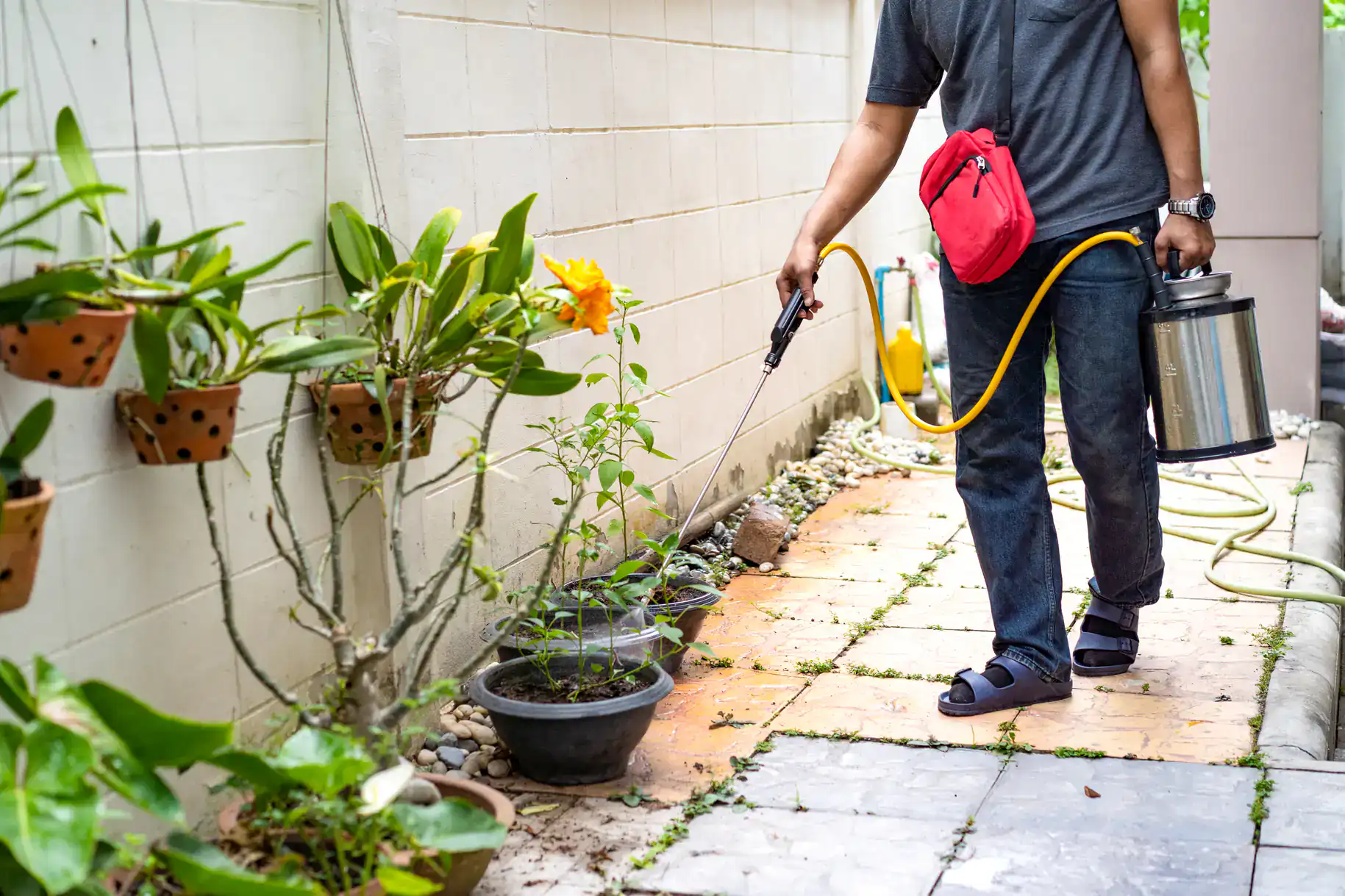
Once the inspection is complete, you get a clear picture of what’s there or what isn’t. If treatment is needed, we’ll walk you through the recommended approach. For active infestations in Sunset Park’s connected rowhouses, termite baiting systems are often the most effective option because they target the colony underground rather than just the termites visible inside the walls. Liquid barrier treatments are also used where appropriate, applied to the soil around the foundation to create a continuous treated zone. All materials are NYS DEC-registered and applied by our certified professionals.
After treatment, we provide documentation which matters if you’re dealing with a real estate transaction, an FHA or VA lender requiring a WDO report, or a NYC Department of Health citation tied to your property. You get a record of what was done, not just a handshake.
Ready to get started?
Termite control in Sunset Park isn’t the same as termite control in a suburban neighborhood with isolated single-family homes and newer construction. The conditions here are different, and the approach has to match. Our termite services cover residential rowhouses and two-family homes throughout Sunset Park’s historic districts, multi-family buildings along 5th and 8th Avenues, and commercial properties including older industrial spaces in the Brooklyn Army Terminal and Industry City waterfront campuses where wood pallets, aging structural elements, and moisture create significant termite exposure.
For homeowners buying or selling property in Sunset Park, we provide licensed termite inspections and WDO (Wood Destroying Organism) reports the documentation that FHA and VA lenders require before approving financing. With Sunset Park’s active real estate market drawing buyers from Park Slope and Greenwood Heights southward, these transaction-driven inspections are a regular part of what we handle. If you’re under a contract deadline, same-day inspections are frequently available, and appointments are guaranteed within two business days.
We also handle NYC Department of Health pest citations a specific need for Sunset Park’s multi-family property owners and landlords who face DOH compliance requirements. If you’ve received a citation, we can document the treatment and help you get to compliance. Every service uses NYS DEC-registered materials, applied by technicians who are certified under New York State law.
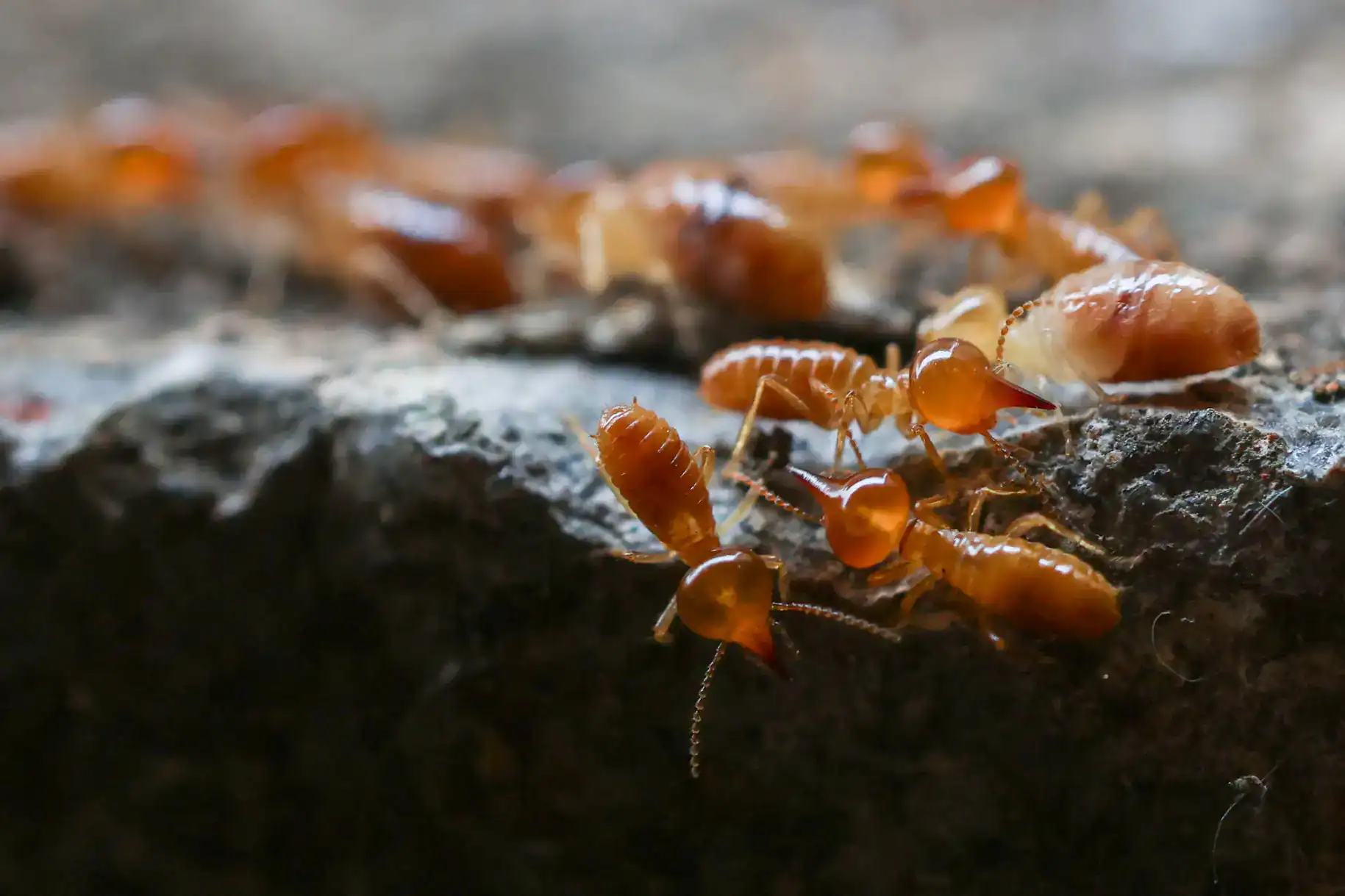
Yes, and it’s one of the most important things to understand about termite risk in Sunset Park’s connected rowhouses. Eastern Subterranean Termites nest underground and travel through soil, which means they’re not confined to the footprint of a single building. In a rowhouse row where properties share party walls and often sit on continuous foundation systems running the length of a block, a colony that enters one unit has a direct pathway to adjacent homes without ever surfacing where you’d see them.
This is why treating the colony at its underground source matters more than just treating what’s visible inside your walls. Liquid barrier treatments create a continuous treated zone in the soil around your foundation, and termite baiting systems work by eliminating the colony itself. If you’re in Sunset Park and your neighbor has had termite activity, that’s a legitimate reason to get your own property inspected not out of panic, but because the risk is genuinely shared in this building typology.
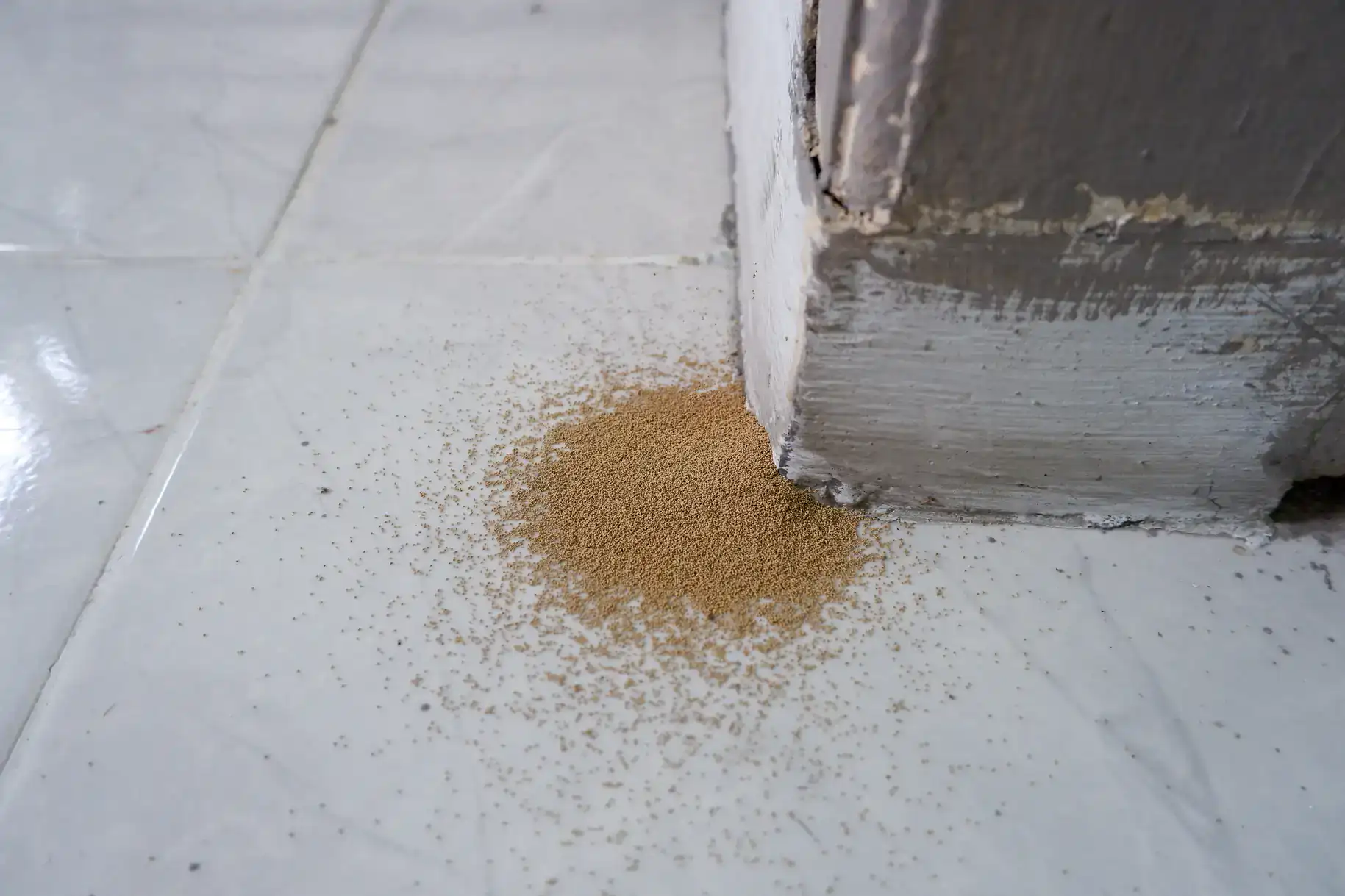
The most common early sign is mud tubes pencil-thin tunnels of soil and debris running along foundation walls, basement joists, or anywhere termites travel from soil to wood. In Sunset Park’s pre-war rowhouses, these often appear in basement stairwells, along the interior face of foundation walls, or behind stored items that haven’t been moved in years. You might also notice wood that sounds hollow when tapped, floors that feel soft or slightly springy underfoot, or small piles of what looks like sawdust near baseboards or window frames which is actually termite frass.
Swarmers are another signal. In Brooklyn, Eastern Subterranean Termites typically swarm in early spring late March through May on warm days after rain. If you see a cluster of winged insects inside your home during that window, don’t assume they’re flying ants. Termites have straight antennae, equal-length wings, and a thick waist; flying ants have elbowed antennae and a pinched waist. If you’re not sure, call for an inspection. By the time swarmers appear inside, the colony producing them has usually been established for several years.
In almost every case, no. Standard homeowner’s insurance policies including those covering properties in Sunset Park and throughout New York City classify termite damage as a preventable maintenance issue, not a sudden or accidental event. That means the cost of repairing damaged floor joists, subfloor planking, stair carriages, or any other structural wood falls entirely on you as the homeowner.
This is worth taking seriously given what repairs can cost. The national average for termite damage repair runs around $3,000, but in a Sunset Park rowhouse where the structural framing is original 100-year-old lumber, repairs to load-bearing elements can reach $10,000 or more and that’s before factoring in the cost of treatment. The financial case for a professional inspection and proactive treatment is straightforward: prevention costs a fraction of what remediation does, and there’s no insurance backstop if you wait too long.
Treatment cost depends on the size of the property, the extent of the infestation, and the method used. For a typical Sunset Park two-family rowhouse, professional termite treatment generally runs between $1,500 and $3,500 for a liquid barrier application, and termite baiting systems can range from $1,200 to $2,500 or more depending on the number of stations needed and the monitoring schedule. More severe infestations or larger properties including multi-unit buildings along 5th or 8th Avenue will be on the higher end.
We provide free estimates, so you’ll know what you’re looking at before any commitment is made. The estimate is based on an actual inspection of your property, not a number pulled from a general price list. Given that untreated termite damage in a pre-war rowhouse can easily exceed the cost of treatment by a factor of three or more, most homeowners find the math straightforward once they see what’s actually at stake.
Termite swarm season in Sunset Park and the rest of Brooklyn typically peaks from late March through May. Swarms are triggered by warm days usually above 70°F following rainfall, which is a common weather pattern in Brooklyn spring. Sunset Park’s proximity to Upper New York Bay means the neighborhood tends to hold moisture longer than inland Brooklyn areas, which can extend the window of termite activity and support larger, more active colonies in the soil beneath the neighborhood’s lower-elevation western blocks.
If you see a swarm inside your home, the instinct to sweep them up and move on is understandable but it’s not the right call. Swarmers themselves don’t cause damage, but their presence inside your home means a mature colony is already established somewhere in or beneath the structure. That colony has likely been active for five years or more. The right move is to capture a few of the insects in a sealed bag if you can, note where they appeared, and call for an inspection as soon as possible. The swarm is the signal, not the problem the problem is what’s already been feeding inside your walls.
If you’re financing the purchase with an FHA or VA loan, a Wood Destroying Organism (WDO) inspection is required by your lender before the loan can be approved it’s not optional. But even if your financing doesn’t require it, getting a termite inspection before buying a Sunset Park rowhouse is genuinely worth doing. The neighborhood’s housing stock is predominantly pre-war construction, with most homes built between 1885 and 1912. That means original untreated structural lumber, foundations that have been in contact with Brooklyn soil for over a century, and in many cases no record of whether a prior termite treatment was ever performed.
A termite inspection gives you real information before you close not just peace of mind, but actual data on the condition of the structure you’re buying. If an active infestation or prior damage is found, you have the opportunity to negotiate repairs or treatment as part of the sale, or to walk away if the scope is serious. We provide licensed termite inspections and full WDO documentation, and with same-day inspections frequently available, a tight closing timeline doesn’t have to be a barrier to getting it done right.
Useful Links
Other Services we provide in Sunset Park