
Hear from Our Customers
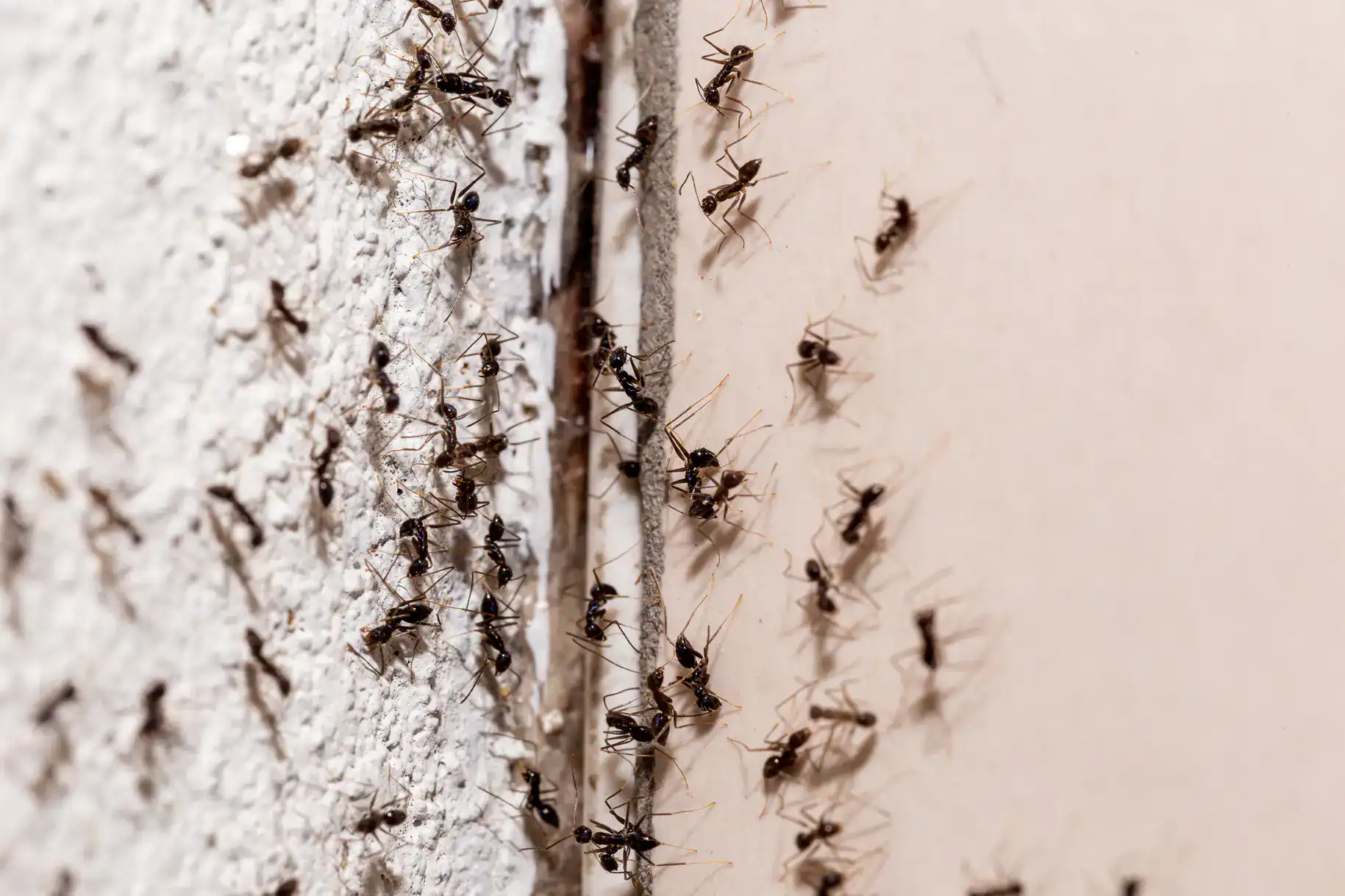
The ants trailing across your kitchen island aren’t the problem they’re the symptom. The colony is somewhere deeper, tucked into a wall void, a utility chase, or the moisture-softened wood around a window frame that’s been slowly leaking since the last renovation. Until that colony is eliminated, the ants keep coming back. That’s true whether you’ve tried sprays, traps, or the last exterminator who showed up once and never followed through.
In SoHo and NoHo specifically, the building conditions make this harder than in most neighborhoods. Cast-iron construction from the 1800s, decades of plumbing retrofits, and the characteristic open floor plans of loft conversions all create environments where ant colonies establish themselves deep and spread fast. When your living room, kitchen, and dining area share the same open space, an active infestation isn’t a background problem it’s front and center, every day.
When ant control is done right, you stop seeing scouts on the countertop. You stop finding trails along the baseboard. You stop wondering if the problem is getting worse. For building owners and property managers in this neighborhood, it also means staying ahead of Local Law 55 compliance requirements which mandate annual pest inspections and documented remediation for multi-unit buildings across New York City.
We’ve been handling pest control across New York City’s five boroughs for over 40 years. That’s not a marketing number it means our technicians have worked in pre-war cast-iron buildings along Greene Street and Wooster Street, mixed-use structures with ground-floor restaurants and residential lofts stacked above, and the high-density Manhattan environments that most pest control operators have never set foot in.
We’re family-owned and operated, founded by Richard Kourbage, and built on a straightforward standard: do the job right, show up when we say we will, and follow through when the first visit isn’t enough. We maintain an A+ rating with the Better Business Bureau of New York State, use only NYS DEC-registered pesticide materials, and are fully licensed, bonded, and insured. Those credentials matter in a neighborhood where co-op boards, building managers, and commercial landlords need documentation, not just a verbal assurance.
We answer phones 24 hours a day, 7 days a week. Free estimates are available. And we offer a 10% discount for senior residents.
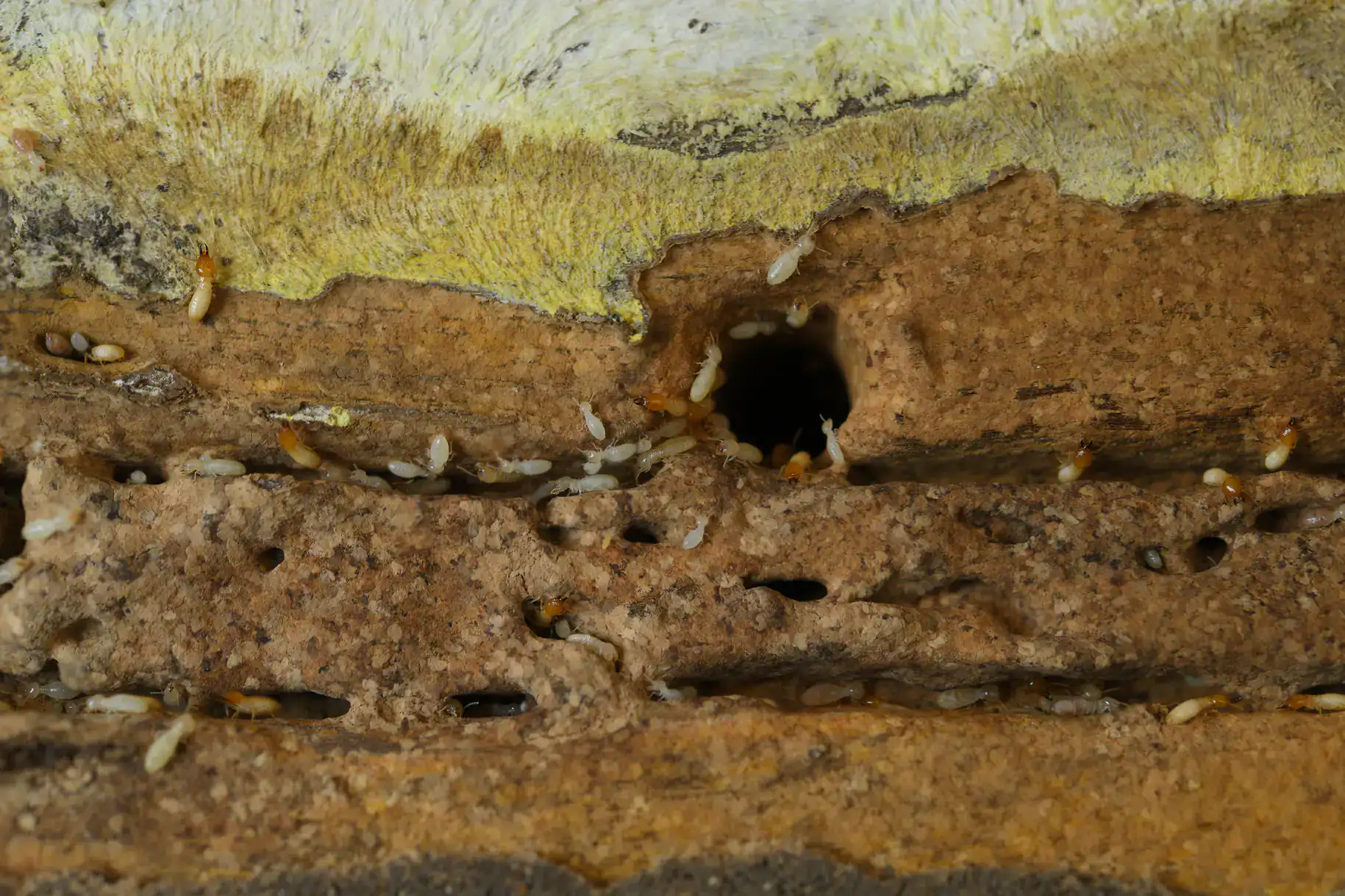
The first visit is a cleanout. That means treating both the interior and exterior of your building simultaneously not just where you’re seeing ants, but the entry points, foundation gaps, and harborage zones that are feeding the activity inside. The materials we use are transfer-based, meaning foraging ants carry the treatment back into the colony and share it with the population you can’t see, including the queen. That’s how we end an infestation instead of just slowing it down temporarily.
Because SoHo and NoHo buildings tend to have multiple pressure points street-level pavement ant colonies expanding in from the cobblestone blocks of Wooster or Greene Street, ground-floor restaurant kitchens creating constant food-source attraction, and interior conditions that allow Pharaoh ants to stay active year-round in heated loft spaces a single visit is rarely the complete answer. After the initial cleanout, we schedule follow-up visits based on the severity of the infestation and the specific conditions of your building. Weekly, every other week, or monthly whatever the situation actually calls for.
Each return visit re-applies materials, checks for new activity, and closes off any pressure points that opened up since the last treatment. Our goal isn’t to keep you on a service schedule indefinitely it’s to resolve the problem and make sure it stays resolved.
Ready to get started?
Ant control in SoHo and NoHo covers the full range of species that actually show up in these buildings. Pavement ants pushing in from the sidewalk and street tree root systems along Prince or Spring Street. Odorous house ants invading open-plan kitchens where there’s no door to close between the food prep area and the living room. Carpenter ants nesting in moisture-damaged wood around aging window frames or roof structures in pre-war loft buildings the kind of structural damage that gets expensive fast if it’s ignored. And Pharaoh ants, which don’t slow down in winter because your building is climate-controlled and they know it.
For residential loft owners, our service includes interior and exterior treatment, species identification before any materials are applied, and a follow-up schedule matched to your building’s actual pressure level. For commercial operators restaurants along Grand Street, retailers on Broadway, building management teams overseeing multi-unit residential conversions we offer commercial ant pest control services that include the documentation and maintenance scheduling NYC’s Local Law 55 compliance requires.
Every job starts with a free estimate. We don’t require long-term contracts and don’t pressure you to sign up for more than your situation warrants. If the problem is straightforward, the plan will be straightforward. If it’s more complex which in a 150-year-old cast-iron building, it sometimes is you’ll know exactly why and what it takes to fix it.
Store-bought sprays and over-the-counter baits kill the ants you can see but the colony producing them is usually somewhere you can’t reach without professional materials and a targeted approach. In a SoHo loft building, that colony could be nesting inside a wall void, in the space around a plumbing chase that’s been retrofitted multiple times over the decades, or in moisture-softened wood near a window frame that’s been slowly absorbing water from a slow roof leak. The foragers you’re seeing on the counter are just scouts. Eliminating them doesn’t communicate anything back to the colony.
Professional ant removal uses transfer-based treatments that foraging ants carry back into the nest themselves, spreading the material through the colony population including the queen. That’s the mechanism that actually ends the cycle. Without it, you’re managing the symptom on a loop which is exactly why the problem keeps returning after every DIY attempt.
The four species that show up most consistently in SoHo and NoHo buildings are pavement ants, odorous house ants, Pharaoh ants, and carpenter ants and each one behaves differently enough that treating them the same way is one of the most common reasons infestations don’t resolve.
Pavement ants nest in the cracks, sidewalk joints, and street tree root systems that line every block in the neighborhood including the historic cobblestone stretches of Wooster, Greene, and Mercer Streets and expand into building foundations every spring. Odorous house ants are the small, dark brown ants most commonly found in kitchens; they form massive colonies and are persistent in open-plan loft spaces where food prep, dining, and living all share the same floor. Pharaoh ants are a particular challenge in SoHo and NoHo because they thrive in heated, well-insulated interiors and remain active year-round there’s no cold-weather slowdown in a climate-controlled luxury loft. Carpenter ants are the most structurally serious: they excavate moisture-damaged wood and have been found nesting in upper-floor window frames of Manhattan pre-war buildings where persistent leaks created the right conditions. Identifying which species you’re dealing with before treatment begins is not optional it’s how you choose the right approach.
Yes, and it happens regularly in SoHo and NoHo’s mixed-use buildings. The characteristic layout of these structures commercial space on the ground floor, residential lofts stacked directly above creates a direct vertical pathway for ant migration. A restaurant kitchen on the ground floor provides a continuous food source that sustains large foraging populations, and those populations don’t stop at the ceiling. They follow plumbing lines, utility chases, and wall voids straight up into the residential floors above.
For building owners and property managers, this is both a pest control problem and a compliance issue. NYC’s Local Law 55 requires building owners to annually inspect for and remediate pest infestations in all units and common areas, and to address the underlying conditions cracks, gaps, moisture that attract them. If a ground-floor commercial tenant’s kitchen is the origin point of an infestation affecting upper-floor residents, that’s a building-wide problem that requires a building-wide response. Our commercial ant control services are structured to coordinate across both the commercial and residential portions of a mixed-use building.
Renovation activity is one of the most reliable triggers for sudden ant infestation reports and the wave of building conversions and interior renovations that followed the 2021 SoHo/NoHo Rezoning has made this a current, ongoing issue in the neighborhood. When walls are opened, floors are pulled up, or plumbing is rerouted in a building that’s housed established ant colonies for years, those colonies get displaced. Displaced colonies don’t disappear they relocate, often into adjacent units, neighboring buildings, or newly created voids in the renovated space itself.
If you’re in a building that’s undergoing or recently completed renovation work, and you’re suddenly seeing ants where you hadn’t before, the timing is not a coincidence. This is also relevant for building owners undertaking renovation projects: proactive ant control before and during construction is significantly less disruptive and less expensive than responding to a full infestation after the walls are back up. We can assess the specific conditions of your building and set up a treatment and monitoring plan that accounts for active construction activity.
This is one of the most common concerns from SoHo and NoHo residents, and it’s a fair one. In a traditional apartment, there’s a door between the kitchen and the rest of the living space. In a loft, everything is open the kitchen, the dining area, the living room are all one continuous environment. Any material applied in that space is present where you eat, sit, and spend most of your time at home.
We use only NYS Department of Environmental Conservation-registered pesticide materials state-regulated products applied in controlled quantities by licensed technicians. Before leaving, our technician will walk you through the specific products used, where they were applied, re-entry timing, and any precautions relevant to your specific space. If you have children, pets, or specific sensitivities, mention that at the time of booking or during the free estimate it affects product selection and application method. The goal is effective treatment that you can live with comfortably, not a space that feels like it needs to air out for a week.
Carpenter ants are larger than most ant species you’ll encounter indoors typically between a quarter inch and half an inch long, usually black or dark reddish-brown. But size alone isn’t always enough to tell, especially if you’re only seeing one or two at a time. The more telling signs are where you’re seeing them and when. Carpenter ants are most active at night, and if you’re spotting large ants near windows, along baseboards adjacent to exterior walls, or in areas where there’s been any history of water intrusion or moisture damage, that’s worth taking seriously.
In NoHo and SoHo’s pre-war loft buildings, carpenter ants tend to establish themselves in wood that’s been softened by moisture aging window frames, areas around roof penetrations, or structural members near plumbing that’s leaked at some point. Unlike termites, carpenter ants don’t eat wood they excavate it to nest, and over time that excavation weakens structural elements. In a building where the wood framing may be well over a century old, that’s not a problem to sit on. If you’re seeing large ants and you’re not sure what you’re dealing with, a free estimate from us will tell you exactly what species you have, where they’re likely nesting, and what it takes to eliminate them.
Useful Links