
Hear from Our Customers
Most Marine Park homeowners don’t find out they have termites until they’re mid-renovation pulling up a floor or opening a wall and finding wood that looks like it’s been hollowed out from the inside. By that point, the colony has typically been active for years. It’s just how Eastern Subterranean Termites work. They’re quiet, they’re underground, and they don’t announce themselves.
What changes after a professional termite inspection and treatment is simple: you know what you’re dealing with. If there’s an active infestation, we address it before it reaches your floor joists, your framing, or your basement walls. If there isn’t one, you have documentation that protects your home’s value which matters a lot in Marine Park, where median home values sit close to $800,000 and homes rarely come to market.
Marine Park’s housing stock is predominantly single-family homes built between the 1920s and 1970s. These are older structures with basements, aging foundations, and decades of settling exactly the conditions subterranean termites exploit. Add in the shallow water table and persistently damp soil that comes with living near Jamaica Bay and the salt marsh, and the risk profile here is genuinely higher than in drier, inland parts of Brooklyn. Getting ahead of it isn’t overcautious. It’s smart homeownership.
We’ve been operating out of Brooklyn since 1971 headquartered on Flatbush Avenue, the same road that runs directly into Marine Park. Richard Kourbage Sr. founded Kingsway Exterminating Company, and his sons Richard Jr. and Charles have been part of it since the late 1980s. That’s not a tagline. That’s how long we’ve been doing this work, in this borough, on these streets.
Our team collectively brings more than 100 years of combined pest control experience to every job. That means when one of our technicians walks into a Marine Park basement the kind of older, below-grade space common to the brick colonials and split-levels throughout this neighborhood we’re not guessing. We’ve seen it before, many times over, in homes just like yours.
We apply only NYS Department of Environmental Conservation registered materials, hold BBB accreditation with an A+ rating going back to 1989, and answer the phone 24 hours a day. Appointments are guaranteed within two business days, and same-day inspections are frequently available.
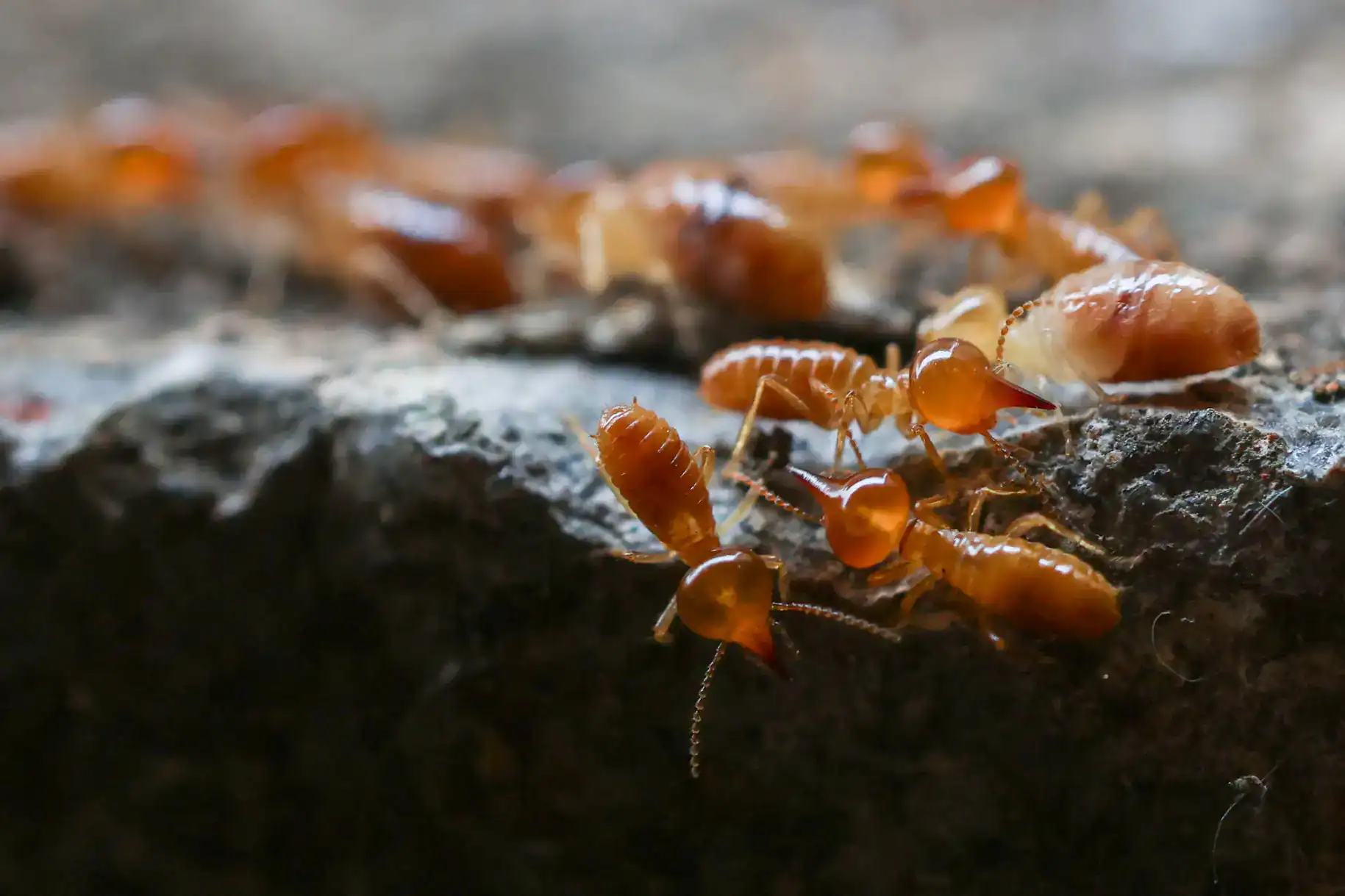
It starts with a call and because we answer 24/7, that call can happen the moment you notice something that doesn’t look right. Swarmers coming up from your basement floor in early spring. Mud tubes along a foundation wall. Wood that sounds hollow when you knock on it. You don’t need to be certain before you call. That’s what the inspection is for.
When our technician arrives, we do a full walkthrough of the areas termites are most likely to target: the basement, the foundation perimeter, any wood that’s in contact with or near soil, and the structural framing accessible from below. In Marine Park, this means paying particular attention to the moisture-prone areas common in homes built close to the Jamaica Bay shoreline basement slab joints, utility penetrations, stoops, and any spots where water has historically intruded. The damp soil conditions in this part of Brooklyn create ideal underground nesting environments, so the inspection goes beyond what’s visible on the surface.
If we find an active infestation, you’ll get a clear explanation of what was found, where, and what the treatment options look like whether that’s a liquid barrier treatment, a termite baiting system that targets the colony at its source underground, or a combination of both. If you’re buying or selling a home in Marine Park, we also provide WDO (Wood Destroying Organism) inspection reports, which many lenders require as part of the transaction. Free estimates are standard. No surprises.
Ready to get started?
Termite control in Marine Park isn’t a one-size approach. The combination of older housing stock, basement-heavy construction, and the moisture conditions created by the neighborhood’s proximity to Jamaica Bay and the Gerritsen Creek corridor means that what works in a newer, drier part of Brooklyn may not be enough here. Our termite services are built around what’s actually happening in your specific home not a generic checklist.
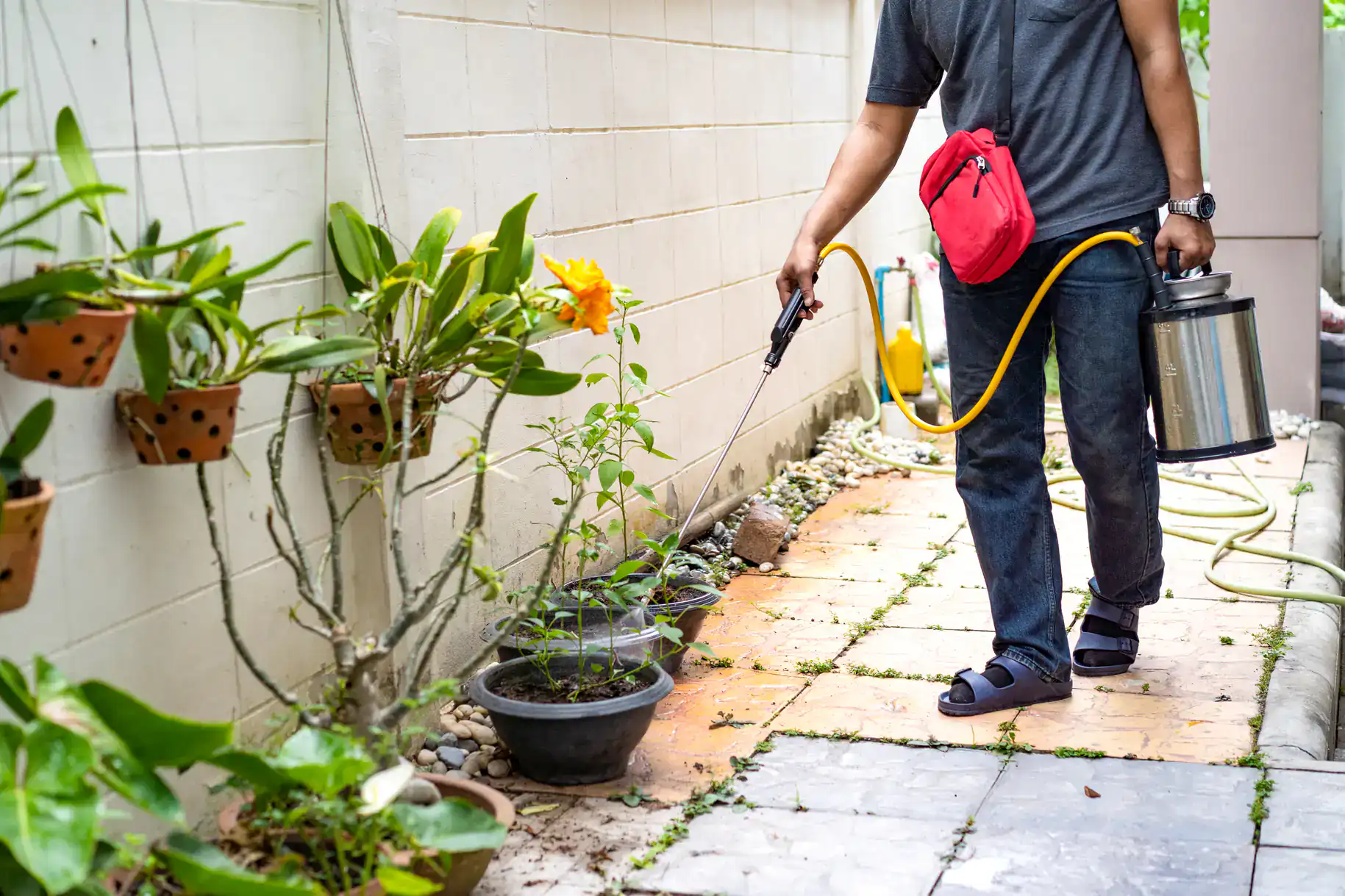
For active infestations, treatment typically involves liquid barrier application around the foundation perimeter, which creates a treated zone that termites cannot cross without contact. For colonies that are well-established underground which is common in Marine Park’s shallow, moisture-retentive soil termite baiting systems are often used in combination or as the primary method. Bait stations are placed strategically around the property, intercepting foraging workers who carry the active ingredient back to the colony. This reaches the queen and the reproductive population, not just the termites visible at the surface.
For real estate transactions, we provide certified WDO inspection reports that satisfy lender requirements for FHA and VA mortgage programs a service that comes up regularly in Marine Park, where homes often change hands after decades of single-family ownership. All materials we use are registered with the NYS Department of Environmental Conservation, and every treatment is performed by licensed, certified applicators. If you’re in Kings County and need documentation, a diagnosis, or a full treatment plan, we can have someone out to you fast.
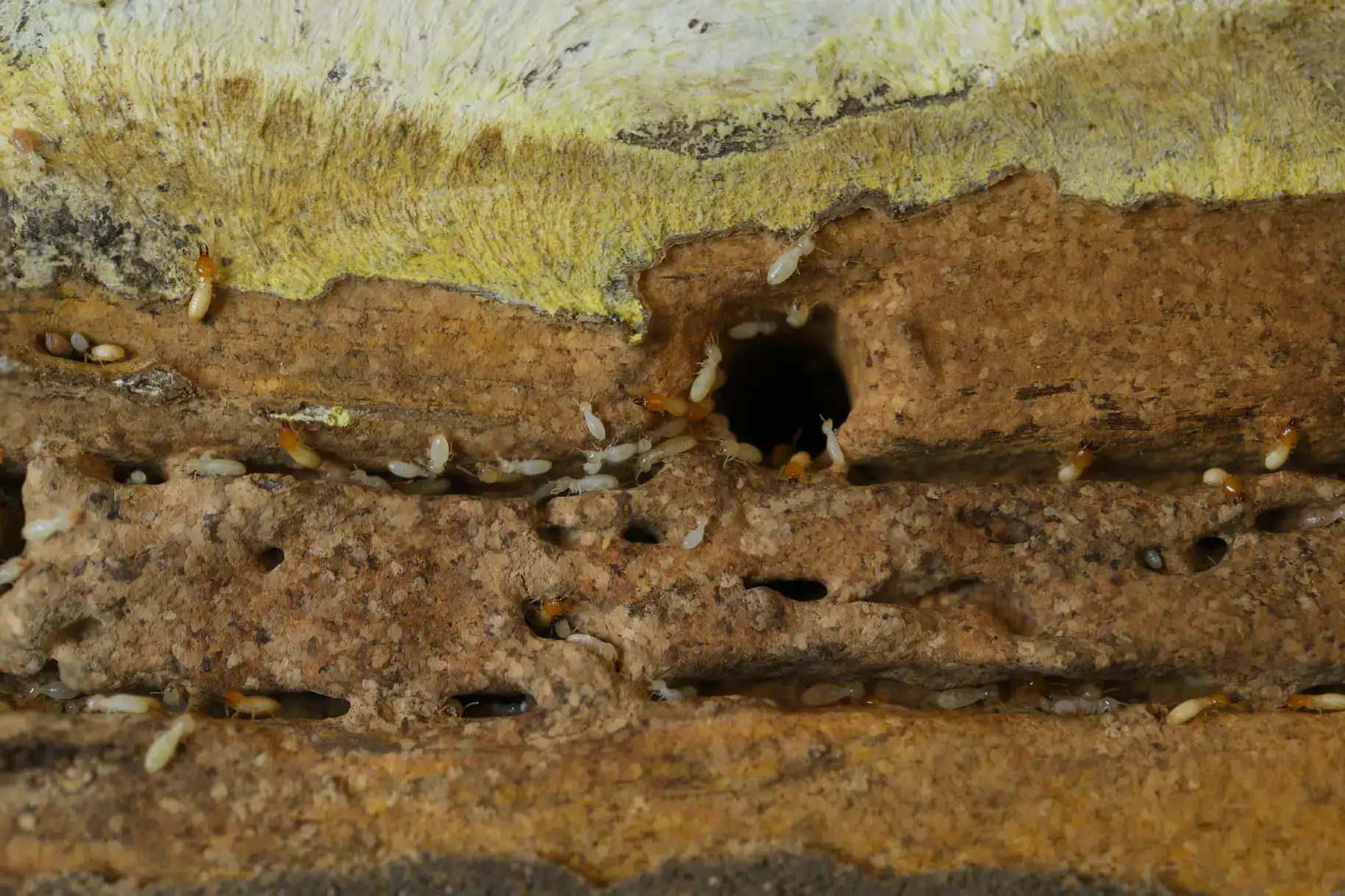
Yes and it’s not a minor difference. Eastern Subterranean Termites require moisture to survive. They nest underground in damp soil, build their colonies in moisture-rich environments, and prefer feeding on wood that’s been softened by water exposure. Marine Park sits directly adjacent to Jamaica Bay and its surrounding salt marshes, and much of the neighborhood’s residential grid was built on land that was partially reclaimed from former marshland in the 1930s. The underlying soil in many parts of Marine Park retains moisture consistently, even during dry stretches, because the water table here is relatively shallow.
That means the soil around your foundation the same soil termites tunnel through to reach your home stays in a condition that supports active termite colonies year-round. Homes along streets closest to the park, the salt marsh, and the Gerritsen Creek inlet are especially exposed. If your home is in Marine Park, the question isn’t really whether termites are a risk. It’s whether you’ve had a recent inspection to know where things stand.
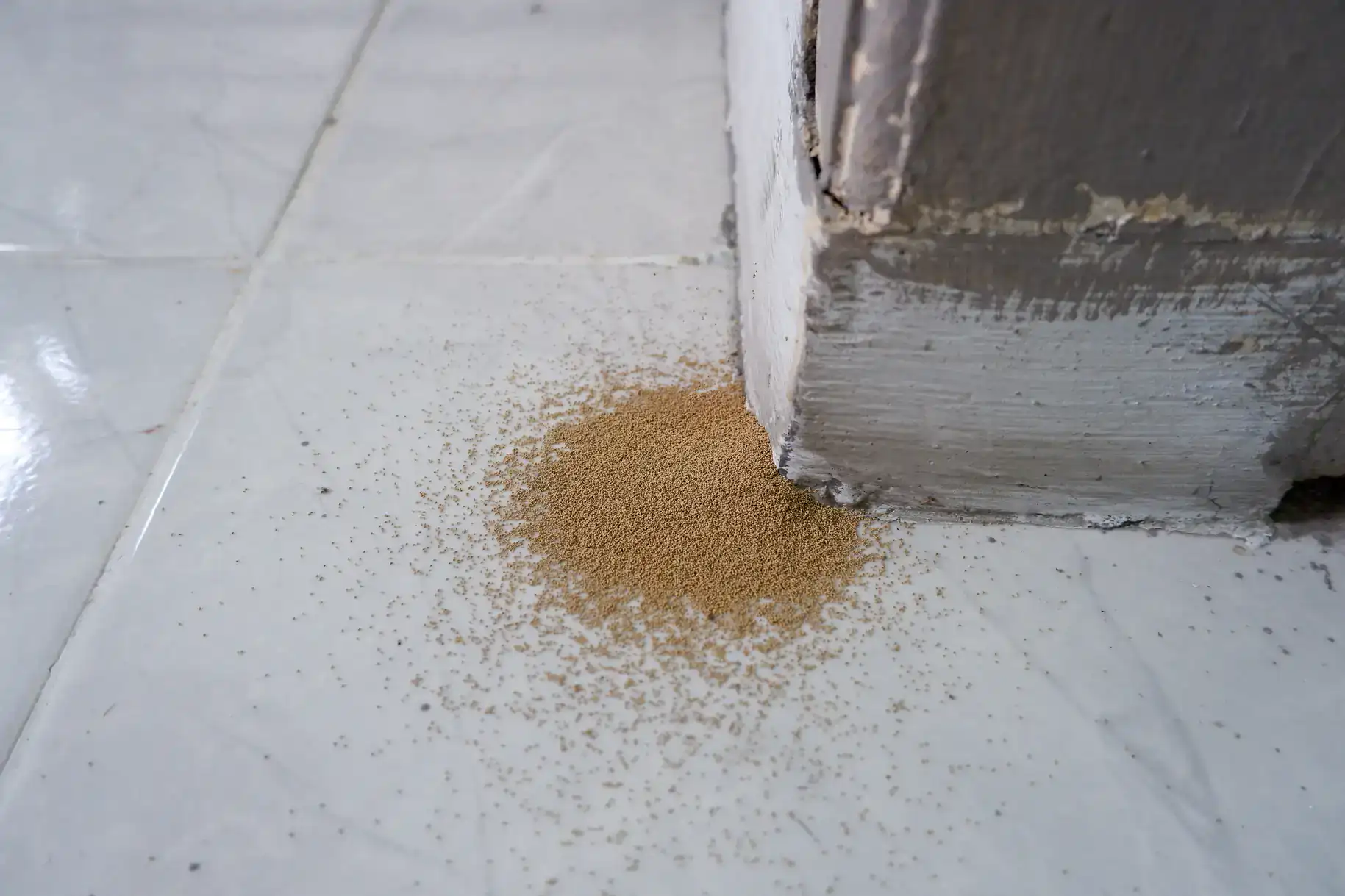
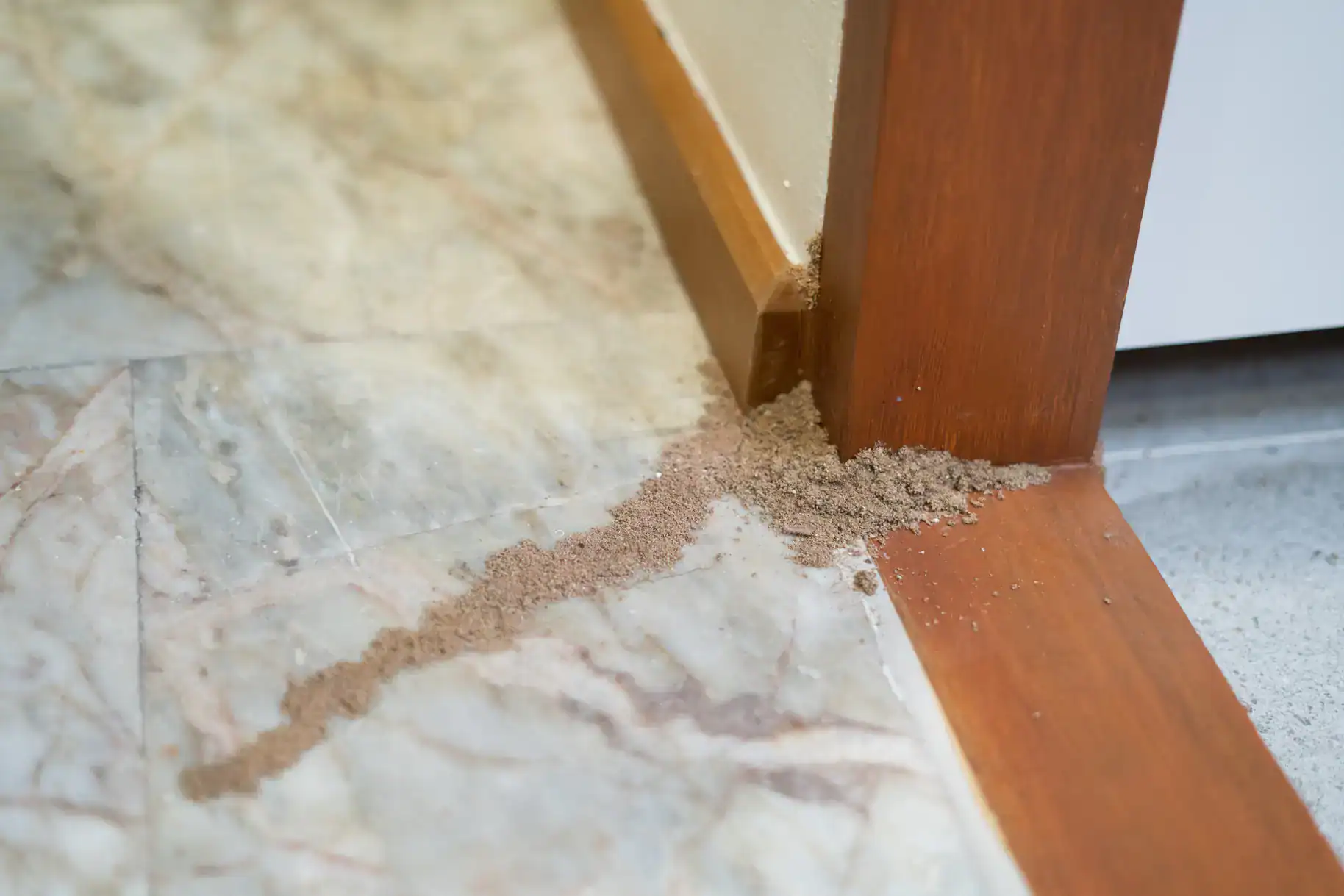
The most common early sign is mud tubes pencil-thin tunnels made of soil and termite saliva running along foundation walls, basement framing, or the exterior of your home near ground level. Termites build these to travel between the soil and the wood they’re feeding on, and they’re often found in the corners of basement walls or along the sill plate where the framing meets the foundation. If you tap on wood near the foundation and it sounds hollow, that’s another red flag worth investigating.
In the spring typically March through May in Brooklyn you may also see swarmers, which are winged reproductive termites that emerge to start new colonies. Finding a cluster of small, winged insects near a window, basement floor drain, or wall crack is not a seasonal nuisance. It’s a sign that a mature colony is already established nearby, likely underground. Call for an inspection the same day you notice it.
The cost of termite treatment in Marine Park typically ranges from around $1,500 to $5,000 or more, depending on the size of the home, the extent of the infestation, and the treatment method required. Liquid barrier treatments for a standard single-family home tend to fall in the lower-to-mid range of that window. Baiting systems, which are often the better option for well-established colonies in the moisture-rich soil conditions common near Jamaica Bay, may carry a higher upfront cost but provide ongoing colony elimination rather than just a surface-level barrier.
The more important number to keep in mind is what untreated termite damage costs. Structural repairs in a Marine Park home floor joists, basement framing, support beams can run $2,000 to $10,000 or more depending on the scope. Homes with a documented history of termite damage also see roughly a 20% decrease in property value, which on an $800,000 Marine Park home translates to a potential loss of $160,000 or more. Most homeowner insurance policies in New York do not cover termite damage. We provide free estimates, so you know exactly what you’re looking at before any commitment is made.
It depends on the buyer’s financing, but in many cases, yes. FHA and VA mortgage programs frequently require a Wood Destroying Organism (WDO) inspection report as part of the loan approval process. Even when it’s not technically required by the lender, buyers in Marine Park especially those purchasing older homes that have been in the same family for decades often request one as a condition of the sale. Given the neighborhood’s housing stock and its proximity to Jamaica Bay’s moisture environment, it’s a reasonable ask.
A WDO report documents the presence or absence of termites, wood-boring beetles, wood decay fungi, and other wood-destroying organisms. It’s a formal, certified document produced by a licensed inspector, and it carries weight with lenders, buyers, and real estate attorneys. We provide these reports and can typically schedule inspections quickly which matters when a real estate transaction has a deadline. Marine Park’s vacancy rate is just 1.2%, meaning homes here are in high demand when they do come to market. Don’t let a missing inspection report slow down or derail a sale.
Absolutely. Brick exteriors don’t stop termites because subterranean termites don’t come through your walls they come through your foundation. They enter through expansion joints, cracks in the foundation slab, gaps around utility lines, and the space between the foundation and the wood framing above it. Once they’re inside the foundation perimeter, they have direct access to the wooden structural elements of your home: floor joists, sill plates, subflooring, and wall framing. The brick on the outside tells you nothing about what’s happening to the wood on the inside.
This is a common misconception in Marine Park, where most homes are brick construction. Homeowners assume the exterior material offers some protection, but it doesn’t factor into how subterranean termites operate at all. What matters is what’s underground the soil conditions around your foundation and whether termites have found a pathway in. Given the damp, shallow-water-table soil conditions throughout Marine Park, the underground environment here is particularly favorable for termite colony activity. A brick exterior is not a reason to skip an inspection.
A properly applied liquid barrier treatment typically remains effective for five years or more, though the exact duration depends on soil conditions, how the treatment was applied, and whether any physical disruption to the treated zone occurs over time things like landscaping work, new construction near the foundation, or significant soil erosion. In Marine Park, where soil moisture levels near Jamaica Bay can affect how treatment materials behave in the ground over time, periodic monitoring is a reasonable precaution.
Termite baiting systems work differently they’re designed for ongoing use, with stations that are checked and maintained regularly. As long as the system is active and serviced, it continues to intercept termite activity and prevent re-infestation. Whether termites come back after treatment largely depends on whether the original colony was fully eliminated and whether new colonies from neighboring soil find a pathway into your home. That’s why post-treatment monitoring matters. We can walk you through what ongoing protection looks like for your specific home and situation there’s no one-size answer, and we’ll tell you that honestly rather than promise you something permanent after a single visit.
Useful Links
Other Services we provide in Marine Park