Hear from Our Customers
Finding cockroaches in a SoHo loft is jarring not because it means you’re doing something wrong, but because the building itself is working against you. The cast-iron buildings along Wooster Street, Greene Street, and Mercer Street were built in the 1850s and 1860s. Their basements are interconnected, their walls are original masonry, and their utility infrastructure predates modern pest-exclusion standards by over a century. That’s not a cleaning problem. That’s a structural one.
When the ground floor of your SoHo or NoHo building houses a restaurant and in this neighborhood, it very often does German cockroaches have a permanent food source, a warm environment, and a direct path upward through shared plumbing and electrical conduits. Treating only your unit without addressing the source is like bailing out a boat without plugging the hole. The roaches come back because the conditions that brought them haven’t changed.
What changes after a proper cockroach treatment isn’t just the absence of insects. It’s the absence of that low-grade anxiety the one that hits when you turn the kitchen light on at 2 a.m. It’s knowing your space has been treated by someone who actually understands the building you’re living in, not someone who showed up with a spray can and a 20-minute window.
Kingsway Exterminating Company was founded by Richard Kourbage Sr. and has been operating continuously in New York City for over 50 years. Richard Kourbage Jr. joined in 1987, and the family still runs the business today. That kind of continuity is rare in this industry and it means something when you’re dealing with a problem that requires real accountability, not a corporate ticket number.
We’ve collectively brought over 100 years of hands-on pest control experience across every borough. We’ve worked in pre-war apartment buildings in Crown Heights, food service facilities in Midtown, and the kind of mixed-use cast-iron loft buildings that define SoHo and NoHo. We know the difference between a German cockroach infestation and an American waterbug intrusion and we know that treating them the same way gets you the same disappointing result.
Every technician on our team is NYS DEC certified, and every product we apply is a registered material under New York State Department of Environmental Conservation standards. We also hold an A+ rating with the BBB of New York State not as a one-time achievement, but as a consistent standard. For residents and business owners in SoHo / NoHo, that combination of local knowledge, regulatory compliance, and family accountability is exactly what this neighborhood’s pest control challenges require.
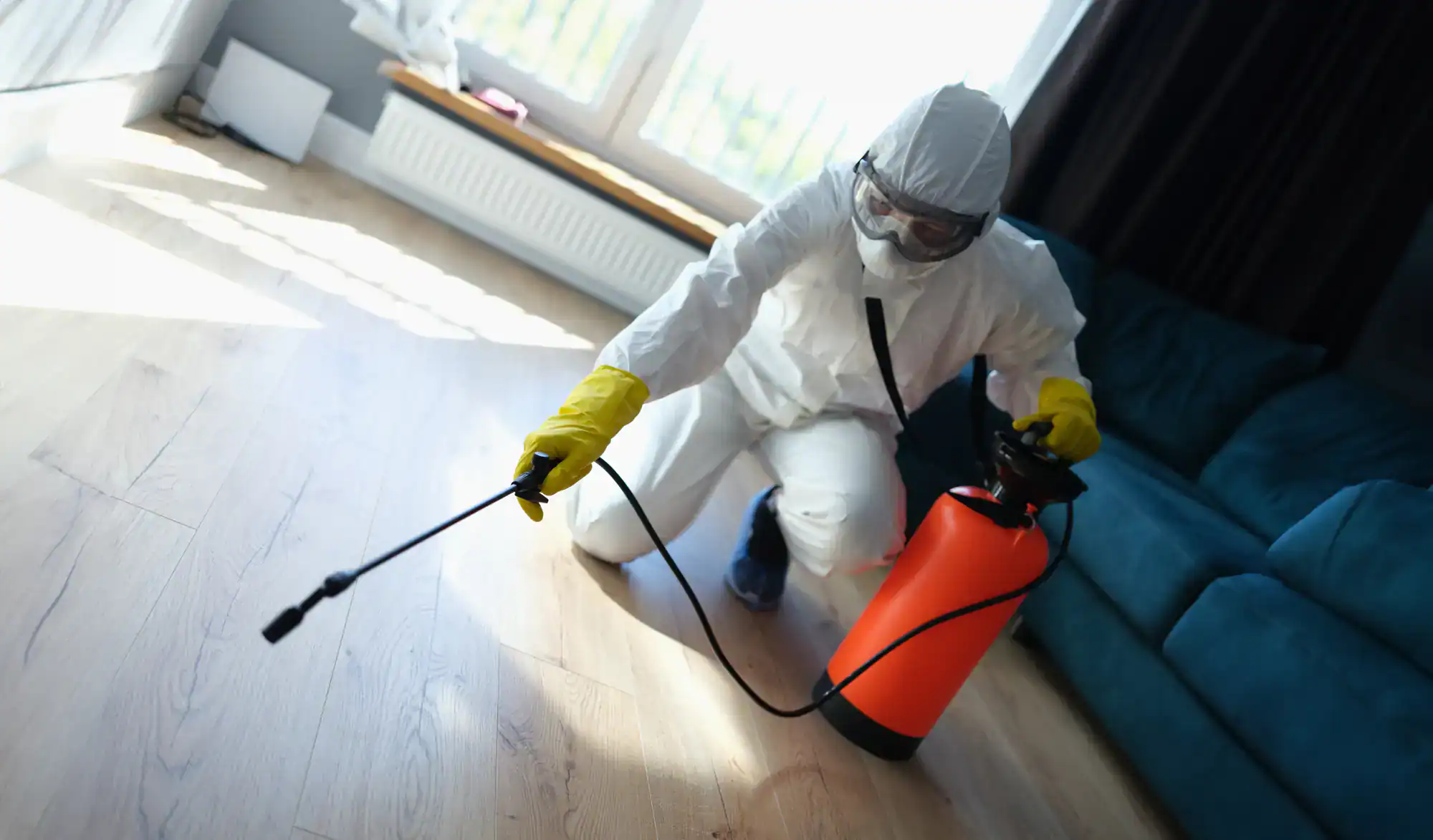
The first thing one of our technicians does when arriving at your SoHo or NoHo property is assess not just your unit, but the context around it. In a mixed-use loft building, that means understanding what’s on the ground floor, what the basement situation looks like, and where the likely entry and travel points are. In a neighborhood going through the kind of renovation activity that followed the 2021 SoHo / NoHo rezoning, it also means accounting for the fact that construction in adjacent units or buildings may have displaced existing cockroach populations into yours.
From there, treatment is targeted not broadcast. For German cockroaches, that typically means gel bait applications in harborage areas like cabinet hinges, under appliances, and inside wall voids, combined with insect growth regulators (IGRs) that interrupt the reproductive cycle. For American cockroaches coming up from the sewer system through basement drains the ones New Yorkers call waterbugs our approach shifts to entry point treatment, drain applications, and perimeter barriers at the building’s lower levels. The right diagnosis drives the right treatment, and that distinction matters more than most people realize.
After treatment, our technician will walk you through what was applied, where, and what to expect over the following days. Cockroach activity may increase briefly as insects are flushed from harborage sites that’s normal and expected, not a sign the treatment failed. Follow-up is part of our process, not an afterthought, and we account for the fact that in a dense, mixed-use neighborhood like SoHo / NoHo, a single visit is sometimes the beginning of a building-level solution, not the end of it.
Ready to get started?
We work with individual residents, property managers, facility managers, and commercial operators which matters enormously in a neighborhood like SoHo / NoHo, where the line between residential and commercial space runs through the same building. If you’re a tenant on the third floor of a mixed-use loft building on Spring Street or Grand Street, and the restaurant below you is the infestation source, you need a company that can legally and practically treat both spaces. We can.
For restaurant and retail operators in SoHo / NoHo, the stakes around cockroach control are direct and financial. A cockroach sighting during a New York City Department of Health inspection is a critical violation one that can drop your letter grade publicly, trigger a re-inspection window, and cost you business from the moment that grade hits your window. We have experience with commercial health code violation remediation and can provide the documented treatment records your re-inspection requires.
For residential clients whether you’re in a converted loft on Wooster Street or a newer build near the NoHo BID corridor we apply only NYS DEC registered materials administered by certified technicians, and every service is backed by the kind of follow-through that a 50-year family business builds its reputation on. We also issue Demolition Clearance Certificates to the NYC Department of Health, making us a resource for property owners navigating the active construction environment that SoHo / NoHo’s ongoing rezoning has created.
This is one of the most common frustrations in SoHo / NoHo, and the answer almost always comes down to the building not your unit. The cast-iron loft buildings that define this neighborhood were built in the mid-to-late 1800s with interconnected basement systems, original masonry walls, and utility infrastructure that creates continuous pathways between units, floors, and commercial spaces. If the ground floor of your building houses a restaurant or food retailer, there’s a persistent cockroach harborage site below you that no amount of unit-level treatment will permanently resolve.
Treating only your apartment addresses the symptom, not the source. German cockroaches travel through shared plumbing chases, electrical conduits, and wall voids which means a new population can recolonize your unit within weeks if the building-level problem isn’t addressed. A proper approach involves identifying the infestation source, treating the travel pathways, and ideally coordinating with your property manager to address the full vertical column of the building. If you’ve had repeated treatments that haven’t held, the next call should be to someone who can assess the building as a whole not just your floor.
In New York City, “waterbug” is the local term for the American cockroach Periplaneta americana. They’re the large, reddish-brown insects, often an inch and a half or longer, that appear suddenly in bathrooms, kitchens, and basements, particularly after heavy rain. They’re not a different species from cockroaches they are cockroaches. The name just reflects where they come from: the sewer system. When it rains heavily in spring or summer, waterbugs migrate upward through floor drains, basement openings, and utility penetrations to escape rising water levels underground.
In SoHo / NoHo, the combination of aging sewer infrastructure and the abundance of below-grade spaces in historic loft buildings sub-basements, utility vaults, original foundation areas creates multiple entry points for waterbug migration. They require a different treatment approach than German cockroaches. Instead of bait-focused interior treatment, the priority is entry point exclusion, drain treatment, and perimeter barriers at the building’s lower levels. If you’re seeing large roaches appearing suddenly and sporadically rather than small ones consistently near your kitchen, you’re likely dealing with a waterbug intrusion, not a German cockroach infestation and the treatment plan should reflect that distinction.
Yes when it’s done correctly, with the right products, applied by a certified technician who knows what they’re doing. We apply only N.Y.S. Department of Environmental Conservation registered materials. These are regulated substances that have been tested for safety and efficacy, not off-the-shelf aerosols. Every technician is NYS DEC certified, which means they’re trained in correct dosage, placement, and re-entry intervals for the specific products we use.
In SoHo / NoHo loft apartments which tend to be large, open-plan spaces with limited interior walls product placement matters more than in a standard apartment layout. Gel baits, for example, are applied in targeted locations like cabinet hinges, behind appliances, and inside wall voids, not broadcast across open surfaces. Our technician will walk you through exactly what was applied and where, and will give you a specific re-entry window based on your unit’s layout and the products used. If you have young children or pets, mention that when you call it affects how the treatment is planned, and we’ll adjust accordingly.
Absolutely and in SoHo / NoHo, this is one of the most structurally common infestation scenarios. German cockroaches thrive specifically in warm, humid food-service environments. A ground-floor restaurant provides a continuous food source, heat, moisture, and harborage everything a cockroach colony needs to sustain itself year-round. From there, they travel upward through shared plumbing chases, electrical conduits, and wall voids into the residential floors above. You can keep your loft spotless and still have cockroaches, because the problem isn’t originating with you.
The practical path forward depends on your situation. If you’re a tenant, your landlord is legally responsible under New York City’s Housing Maintenance Code for maintaining the building free of pest infestation which includes addressing building-level sources, not just individual units. If you’re a property manager or building owner, we work with both residential and commercial spaces in the same building, which means we can coordinate treatment across the full structure rather than just responding to individual unit complaints. Addressing the restaurant and the residential floors together is the only approach that produces a lasting result in a mixed-use building.
More than most residents realize. The December 2021 NYC Council rezoning that created the Special SoHo-NoHo Mixed Use District has accelerated building renovation, residential conversion, and new construction activity throughout the neighborhood. When walls are opened, basements are disturbed, and old infrastructure is demolished, established cockroach populations are displaced. They don’t disappear they scatter into adjacent units, neighboring buildings, and previously unaffected floors.
If your building or a building on your block is currently undergoing renovation or conversion work, the timing of professional cockroach treatment becomes more urgent, not less. Construction activity is a documented driver of infestation spread, and waiting until you see roaches regularly means the population has already had time to establish. We issue Demolition Clearance Certificates to the NYC Department of Health and work directly with demolition contractors meaning we have real, operational experience with the pest displacement that construction creates. If your building is in the middle of a conversion project, or if a neighboring property is being renovated, it’s worth a proactive call rather than a reactive one.
For a single residential treatment in a SoHo or NoHo loft, you’re typically looking at somewhere in the $200 to $500 range depending on unit size, infestation severity, and the specific treatment approach required. Loft apartments which tend to be significantly larger than standard NYC apartments may fall toward the higher end of that range simply because of square footage and the number of harborage sites that need to be addressed. Commercial treatments for restaurants or retail spaces vary more widely based on the size of the facility and the scope of the problem.
What’s worth keeping in mind in this neighborhood specifically is that the cost of not treating or of treating inadequately tends to be higher than the service itself. For restaurant operators, a cockroach-related DOH violation and the resulting grade drop can cost far more in lost business than a professional treatment would have. For residential tenants in a high-rent loft, the ongoing stress and health implications of an untreated infestation cockroach allergens are a documented asthma trigger, and over 90% of NYC kitchen air samples in affected apartments test positive for them are real costs too. We also offer a 10% senior discount for qualifying clients. The better question isn’t what it costs to treat it’s what it costs to keep putting it off.
Useful Links
Other Services we provide in Soho / Noho