
Hear from Our Customers
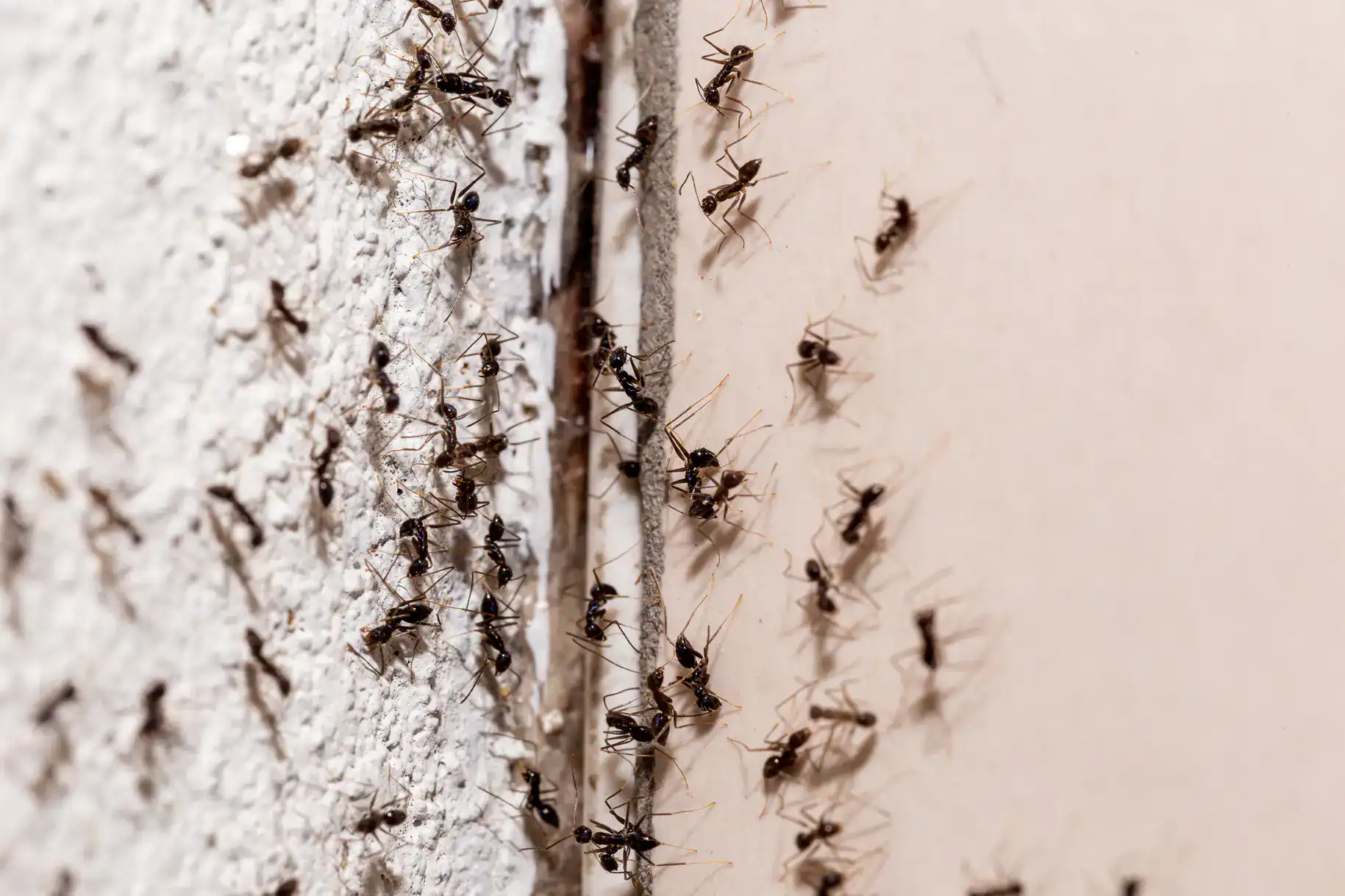
The ants on your counter aren’t the problem. They’re the symptom. The colony potentially tens of thousands strong is living inside your walls, beneath your floorboards, or under your stoop. Spraying what you see doesn’t touch it. That’s why the ants keep coming back, and that’s exactly what our ant removal process in Fort Greene, NY is built to address.
Fort Greene’s housing stock makes this more complicated than it sounds. These brownstones were built in the 1850s and 1860s original wood framing, aging basement sills, and decades of plumbing modifications that create the moisture conditions carpenter ants need to establish a nest. When a slow leak behind your kitchen wall has been sitting long enough, the wood doesn’t just rot it becomes real estate for a colony. Identifying that source and treating it directly is the difference between a temporary fix and an actual solution.
Living near Fort Greene Park adds another layer. The 30 acres of soil, tree roots, and leaf litter at the neighborhood’s center is a permanent ant reservoir. Properties on Cumberland Street, South Oxford Street, and Washington Park deal with seasonal pressure every spring as park-edge colonies expand outward. Once the colony is eliminated and perimeter treatment is in place, that pressure has somewhere to stop.
We’ve been operating in Brooklyn for over 50 years, and that means our technicians have been inside the specific type of buildings that line Lafayette Avenue and Carlton Avenue long before most of the current competition existed. The basement configurations, the shared party walls, the original wood framing that runs through nearly every brownstone in the Fort Greene Historic District this isn’t unfamiliar territory. It’s the core of what we’ve been doing since the beginning.
We’re family-owned, fully licensed, bonded, and insured, and we use only materials registered with the New York State Department of Environmental Conservation. That last part matters in a neighborhood like Fort Greene, where households with kids and pets want a straight answer about what’s being applied and why not a sales pitch. We hold a consistent A+ rating with the Better Business Bureau of New York State, and our phones are answered 24 hours a day, 7 days a week. When you find ants in your kitchen at 8 PM on a Friday, you shouldn’t have to wait until Monday to talk to someone.
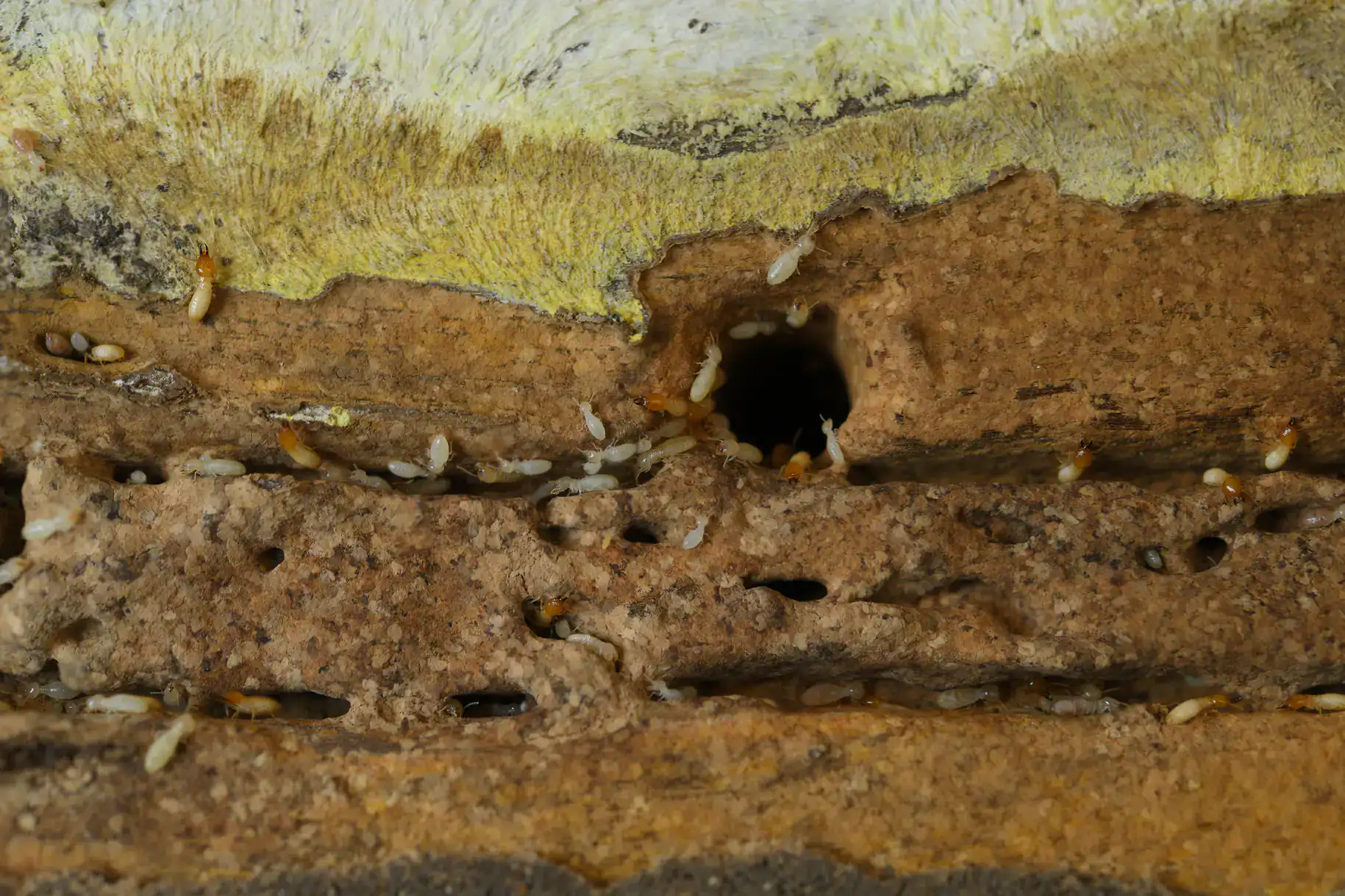
It starts with a free estimate and a real inspection not a quick look around the kitchen, but an actual assessment of where the activity is concentrated, what species you’re dealing with, and what conditions in the building are making it possible. In Fort Greene’s older brownstones, that often means checking the basement level, the areas around plumbing penetrations, and any spots where moisture has had time to accumulate in original wood framing. Carpenter ant infestations almost always have a moisture source behind them, and finding it is part of the job.
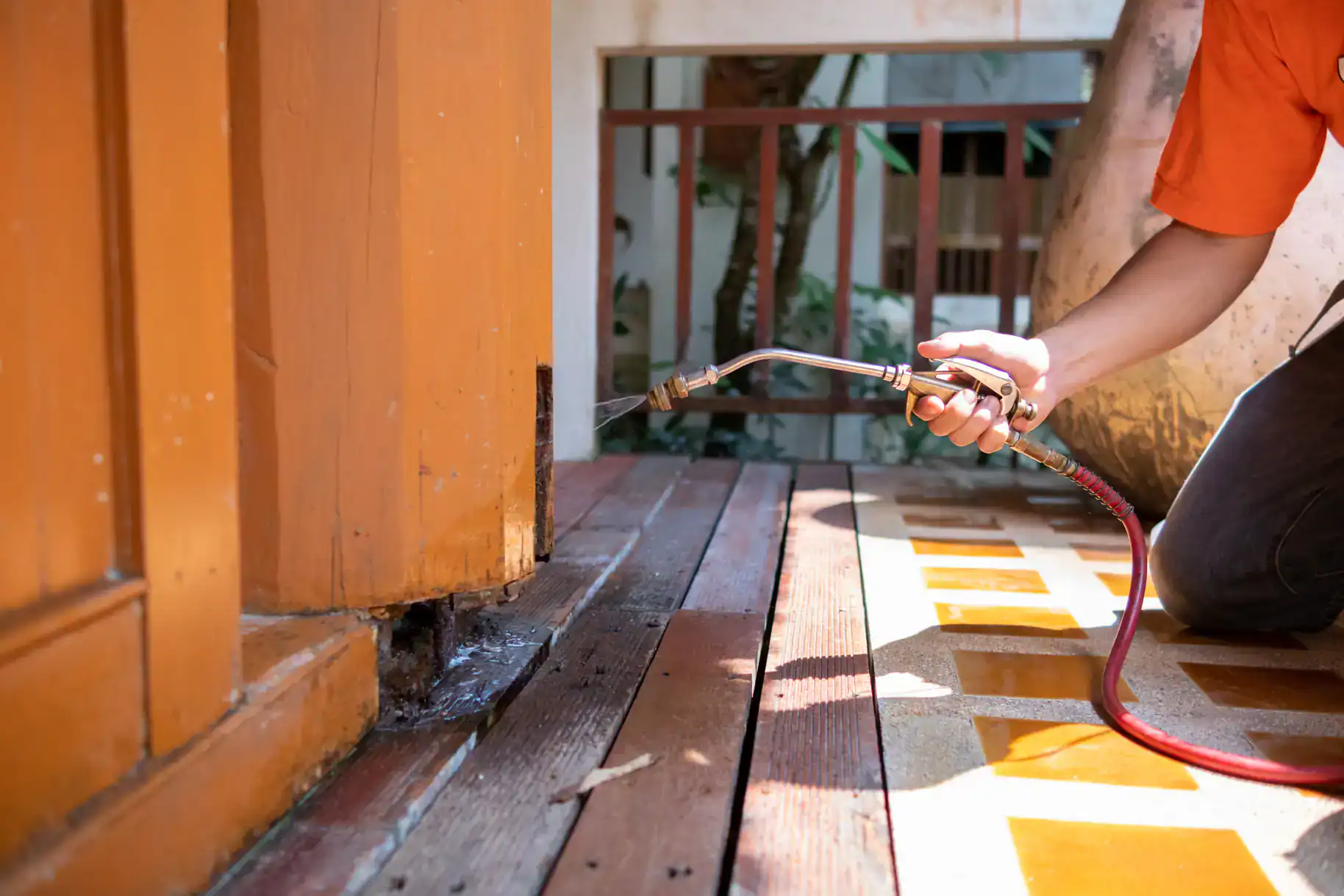
From there, we apply materials that forager ants carry back into the nest and share with the colony. This is the critical piece most DIY approaches miss entirely the product has to reach the source, not just the ants you can see. In Fort Greene’s attached rowhouses and multi-unit buildings, where a colony can span shared walls and interconnected foundations, that targeted approach matters even more.
The initial treatment is followed by scheduled follow-up visits weekly, bi-weekly, or monthly depending on what the infestation calls for. This isn’t a formality. In dense urban buildings like the ones throughout Fort Greene, re-application and monitoring are what turn a first treatment into a lasting result. The job isn’t closed until the activity is gone and stays gone.
Ready to get started?
Ant control in Fort Greene covers a specific range of problems that other neighborhoods don’t face in quite the same way. Carpenter ants are the most serious and in a building with 150-year-old wood framing, they’re not just a nuisance, they’re a structural concern. Our ant control services address carpenter ant infestations with a full inspection, targeted colony treatment, and follow-up visits designed around the building’s layout and the severity of the infestation.
Pavement ants are the other constant in this neighborhood. Fort Greene’s dense sidewalk network, historic stoops, and ground-level apartment entries give pavement ant colonies direct access to kitchens and living spaces especially after a heavy rain pushes them out of their sidewalk nests. Odorous house ants, which spread easily through shared walls and plumbing chases in multi-unit buildings, round out the most common species we handle throughout the neighborhood.
For property managers and landlords overseeing multi-unit buildings in Fort Greene including those subject to NYC Local Law 55’s Integrated Pest Management requirements we provide commercial-grade ant control services with the documentation and scheduling flexibility that multi-unit properties require. Whether it’s a single brownstone on Portland Avenue or a larger rental building on Fulton Street, the process is the same: find the source, treat the colony, and follow up until it’s resolved. A free estimate is always the starting point, with no commitment required until you know exactly what you’re dealing with.
Spring ant activity in Fort Greene follows a predictable pattern, and it’s tied directly to the neighborhood’s physical environment. As soil temperatures rise, pavement ant colonies that have been nesting in sidewalk cracks, under stoops, and along foundation edges become active and start expanding. Ground-floor and basement-level apartments in brownstones are the most exposed there’s very little separation between a sidewalk colony and your kitchen when the building sits directly at street level.
Heavy spring rain accelerates this significantly. When nests in the sidewalk or foundation get flooded, the colony moves and the nearest dry space is often inside your building. Fort Greene’s historic drainage infrastructure and dense paving network make this a recurring issue, not a fluke. A single treatment visit can reduce activity, but the follow-up schedule is what keeps the pressure from rebuilding as the season continues. If you’re dealing with this every year, that’s a sign the colony hasn’t been fully eliminated it’s just been disrupted temporarily.
Carpenter ants are larger than the pavement ants or odorous house ants you typically see trailing across a countertop usually a quarter-inch to half-inch long, black or dark brown, and often seen individually rather than in a tight trail. If you’re finding them near windows, door frames, or in the basement, that’s a stronger indicator than location alone. The clearest sign of an established carpenter ant infestation in a Fort Greene brownstone is finding winged reproductives swarmers emerging from inside the walls or ceiling, typically in late April through June.
In a building with original 19th-century wood framing, carpenter ants are a concern worth taking seriously. They don’t eat wood the way termites do, but they excavate galleries through it to build nests and in aging, moisture-affected framing, that excavation can compound existing structural weakness over time. If you’re seeing large ants and there’s a known moisture issue in the building (a slow leak, a damp basement, a failing window frame), those two things are almost always connected. A professional inspection will confirm the species and identify the moisture source driving the infestation.
This is one of the most common questions we get from Fort Greene households, and it deserves a direct answer. We use only materials registered with the New York State Department of Environmental Conservation state-regulated products applied by licensed technicians who are trained in proper placement and dosage. The goal is targeted application: getting the product where the ants are, not broadcasting it throughout your living space.
In practical terms, your technician will walk you through what’s being applied, where it’s going, and any precautions relevant to your specific situation whether that’s keeping pets out of a treated area for a short period or ventilating a space after application. You should know exactly what’s happening in your home, and our approach is to explain it clearly before any treatment begins. If you have specific concerns about a product or a family member with sensitivities, bring that up during the free estimate it affects how the treatment is planned.
This is a common situation in Fort Greene’s rental market, particularly in multi-unit brownstones where an infestation in one unit can spread through shared walls and plumbing chases to adjacent units. If your landlord isn’t responding adequately, you have a few practical paths. First, document the infestation photos, dates, written communication with your landlord because NYC housing code requires landlords to maintain pest-free conditions. Second, you can contact 311 to file a complaint, which triggers a Housing Preservation and Development inspection.
In the meantime, private pest control is an option even as a renter. We can treat your individual unit, and in many cases that’s enough to significantly reduce or eliminate the activity you’re experiencing even if the building-wide issue isn’t fully resolved. It’s worth noting that NYC Local Law 55 requires landlords of buildings with three or more units to use Integrated Pest Management practices and keep treatment records. If your building qualifies and your landlord isn’t complying, that’s a specific regulatory lever available to you. A free estimate from us costs you nothing and gives you a clearer picture of what you’re dealing with.
There’s no single honest answer to this because it depends on the species, the size of the infestation, and the building’s layout. A straightforward pavement ant situation in a ground-floor apartment might show significant improvement after the initial treatment and one or two follow-ups. A carpenter ant infestation that’s established inside the wall framing of a 150-year-old brownstone especially one with an underlying moisture source is a more involved process that requires multiple visits to fully eliminate.
What we commit to is a structured follow-up schedule, not a single-and-done visit. After the initial cleanout, follow-up visits are scheduled weekly, bi-weekly, or monthly depending on what the infestation requires. In Fort Greene’s attached rowhouses and multi-unit buildings, where colonies can span shared walls and foundations, that follow-up phase is often what makes the difference between temporary relief and a resolved infestation. The job isn’t considered done until the activity is gone and there’s no sign of it returning.
We offer a 10% discount for senior residents something that’s genuinely relevant in a neighborhood as economically diverse as Fort Greene, where the population spans high-income brownstone owners and long-term residents on fixed incomes, including those in the Walt Whitman Houses and Ingersoll Houses NYCHA developments. The discount applies to senior customers and is straightforward no complicated conditions attached.
Beyond that, the free estimate itself functions as a financial safeguard for anyone evaluating pest control services. You get a clear picture of what the infestation involves and what treatment will cost before committing to anything. In a neighborhood where residents are accustomed to doing their research before making decisions, that transparency matters. There’s no pressure to book on the spot, and the estimate gives you the information you need to make the right call for your home and your budget.
Useful Links