Hear from Our Customers
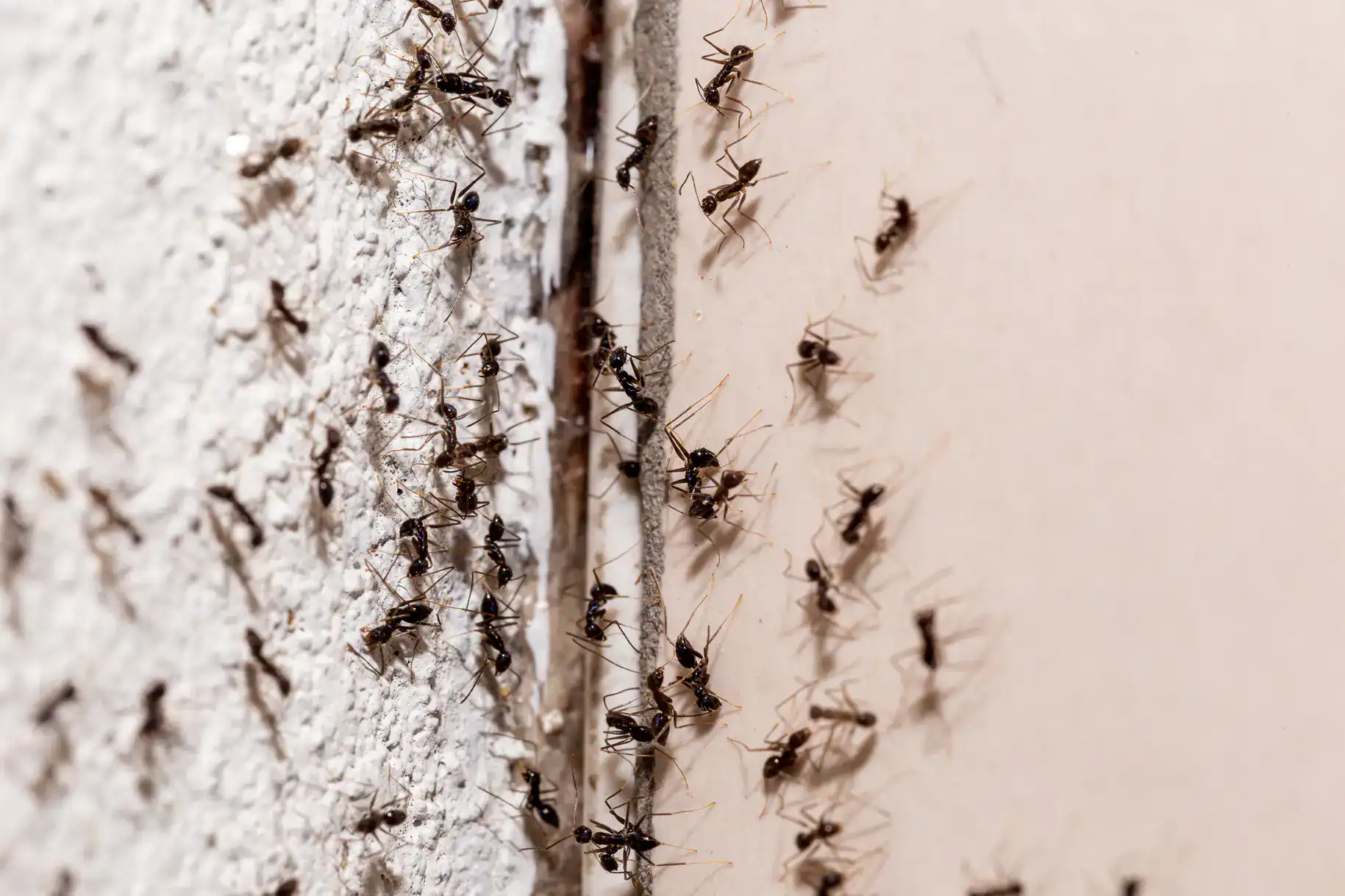
The ants you see foraging across your kitchen counter represent maybe five to ten percent of the actual colony. The rest including the queen are sitting deep inside a wall void, beneath your foundation, or traveling through plumbing conduits between floors. That’s why a can of spray from the hardware store never really finishes the job. It kills what’s visible, the colony adjusts, and you’re back to square one within days.
Queens homes face a specific version of this problem. A significant portion of the borough’s housing stock the attached row houses in Ridgewood, the pre-war apartment buildings in Astoria, the older single-family homes in Howard Beach and Bayside was built in an era before modern pest-proofing standards. Aging wood, deteriorating foundations, gaps around utility conduits, and decades of settling create exactly the kind of entry points and nesting conditions that ant colonies exploit. Carpenter ants in particular are drawn to moisture-damaged wood, and older Queens homes with any history of roof leaks or plumbing issues are especially vulnerable.
In multi-unit buildings which make up a substantial part of Queens’ residential landscape from Flushing to Jackson Heights to Long Island City pharaoh ants are their own category of problem. These tiny yellow-red ants travel through electrical and plumbing conduits between units. If you treat one apartment without addressing the broader colony, the colony doesn’t die. It splits. You end up with more nesting sites, not fewer. That’s not a DIY problem it’s a professional one. When the infestation is fully resolved, the difference is straightforward: no more trails, no more recurring appearances after the first warm rain, no more discovering ants in your food. Just a home that stays clear.
We’re a family-owned company based out of Brooklyn, operating across all five boroughs for over 40 years. That’s not a marketing number it’s the reason our technicians recognize a pharaoh ant problem in a Flushing apartment building on sight, know what carpenter ant frass looks like behind the baseboard of a Howard Beach bungalow, and understand how Queens’ dense sidewalk infrastructure contributes to pavement ant pressure in neighborhoods like Jackson Heights and Elmhurst.
We hold an A+ rating with the Better Business Bureau of New York State, are fully licensed, bonded, and insured, and use only materials registered with the NYS Department of Environmental Conservation. From our base at 2216 Flatbush Avenue, we have direct highway access to every corner of Queens via the Belt Parkway to the south, the Van Wyck to Jamaica and Kew Gardens, and the Long Island Expressway straight through the borough’s central spine.
Our phones are answered 24 hours a day, seven days a week. With tens of thousands of Queens residents working night shifts at JFK, LaGuardia, or area hospitals, waiting until Monday morning to address an ant problem shouldn’t be the only option. It isn’t with us.
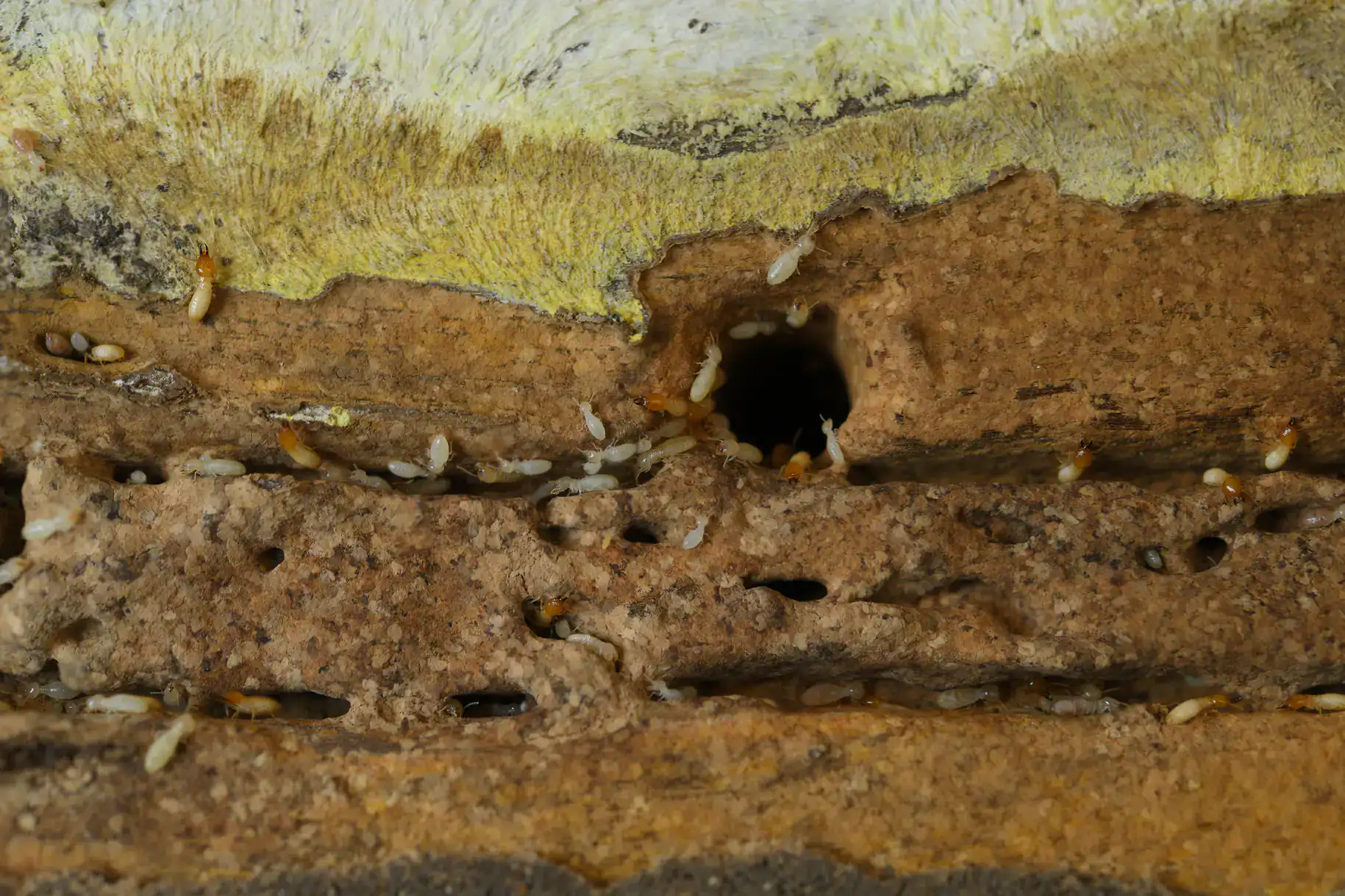
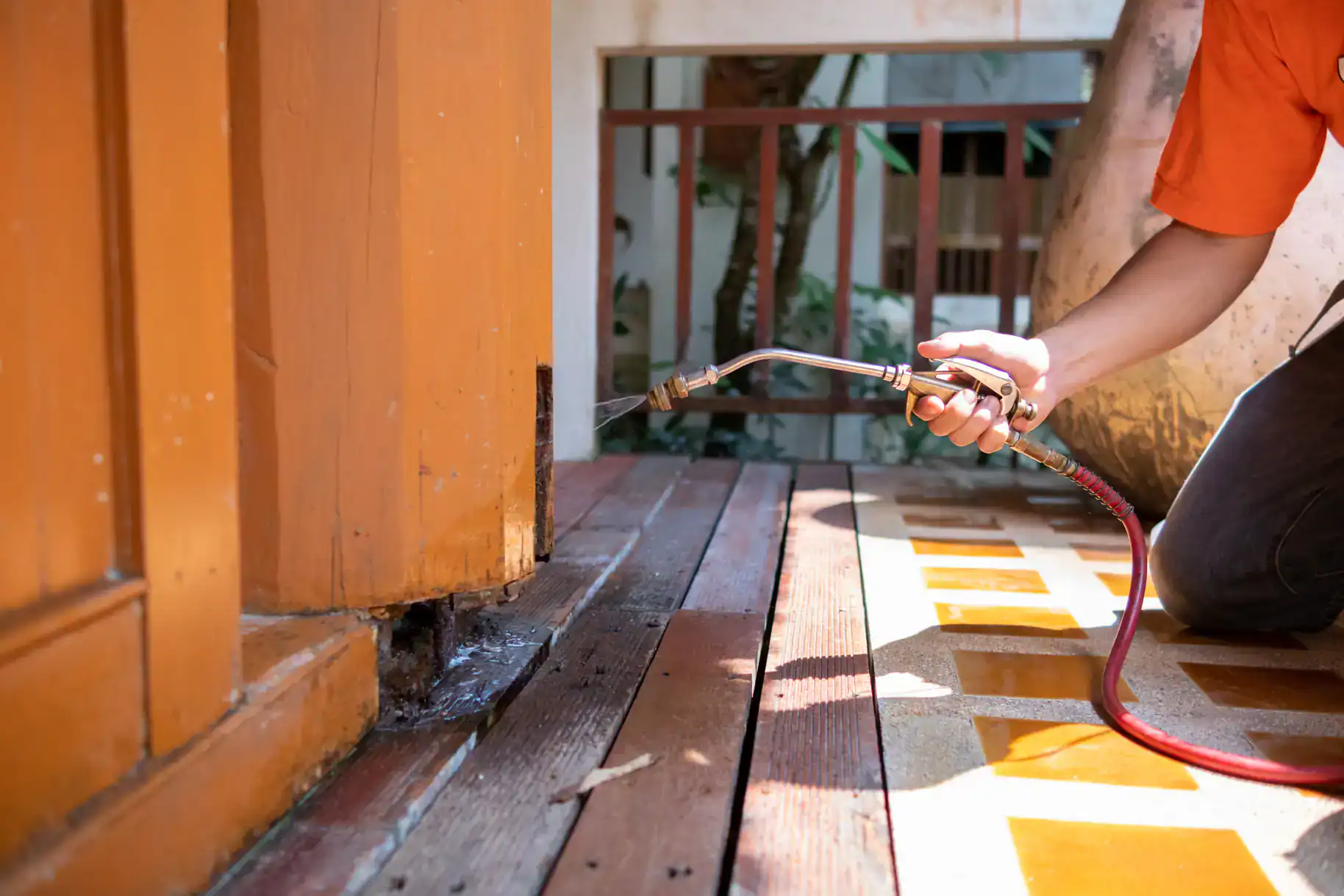
The process starts with a real assessment of your property not a quick walk-through with a clipboard. Our technician identifies the ant species present, locates active entry points and likely nesting areas, and evaluates the specific conditions driving the infestation. In Queens, that assessment looks different depending on the property. A carpenter ant problem in an older Douglaston home with moisture history is handled differently than a pavement ant issue in a ground-floor Woodside apartment or a pharaoh ant infestation spreading through a multi-unit building in Astoria.
Once the source is identified, the initial treatment applies materials specifically selected for the species and situation. These aren’t surface sprays. They’re materials that foraging ants pick up, carry back into the nest, and share with the colony targeting the population you can’t see, not just the ones crossing your counter. For pharaoh ant infestations in multi-unit buildings, this step is especially critical: the wrong treatment approach causes colonies to bud and spread, which is why professional identification before any application matters.
After the initial cleanout, we schedule follow-up visits weekly, every other week, or monthly, depending on what your situation calls for. Materials are re-applied, activity is monitored, and any new entry points are addressed. Queens properties near Flushing Meadows-Corona Park, Jamaica Bay, or any of the borough’s larger green spaces can see continued ant pressure from adjacent natural habitat, and that ongoing monitoring is what keeps the infestation from resurfacing. The job isn’t finished when our technician leaves after visit one. It’s finished when the problem is gone.
Ready to get started?
Our ant control service covers the full range of species active in Queens carpenter ants, pharaoh ants, pavement ants, odorous house ants, and the various smaller nuisance species that show up seasonally. The service applies to residential properties of all types: single-family homes, attached row houses, co-ops, condos, and multi-unit apartment buildings. We also serve commercial properties and mixed-use buildings, including property managers navigating HPD compliance obligations under NYC’s Housing Maintenance Code and Local Law 55, which requires property owners to proactively remediate pest infestations and maintain documentation. Our licensing and insurance credentials satisfy those requirements.
Every service begins with a free estimate no obligation, no pressure, no vague pricing. We offer a 10% senior discount for qualifying residents, which is particularly relevant in neighborhoods like Bayside, Forest Hills, and parts of Howard Beach where many longtime homeowners are on fixed incomes.
All materials we use are registered with the NYS Department of Environmental Conservation. That matters in Queens, where the NYC Department of Health prohibits the use of unregistered pesticide products including certain informal pest control products that circulate in some of the borough’s immigrant communities. Using a licensed, DEC-registered exterminator isn’t just the smarter choice for results; in many Queens rental and multi-unit situations, it’s the legally required one. Our follow-up visit schedule is flexible and built around your situation, not a rigid contract.
The short answer is that store-bought treatments sprays, traps, bait stations from the hardware store almost never reach the colony. They eliminate the foragers you can see, but the queen and the bulk of the population are protected deep inside a nest, whether that’s inside a wall void, beneath a foundation slab, or in the soil under your front steps. The colony registers the loss of foragers, adjusts its behavior, and sends out more. You’re not solving the problem you’re managing the symptom on a loop.
In Queens specifically, this cycle is compounded by the borough’s building density and aging housing stock. Ants don’t need much a hairline crack in a foundation, a gap around a utility conduit, a spot where caulking has failed around a window frame. Older homes in neighborhoods like Woodside, Richmond Hill, and Ozone Park have had decades to develop these entry points. A professional treatment that targets the colony directly, followed by scheduled monitoring visits, is the only approach that actually breaks the cycle rather than just resetting it.
The four species we encounter most frequently across Queens are carpenter ants, pharaoh ants, pavement ants, and odorous house ants. Carpenter ants are the most structurally concerning large black ants that nest inside moisture-damaged wood and can cause real structural harm over time. They’re common in older single-family homes throughout Bayside, Howard Beach, and Douglaston, particularly in properties with any history of water intrusion or aging plumbing.
Pharaoh ants are a different challenge entirely. They’re tiny barely visible and they travel through the plumbing and electrical infrastructure of apartment buildings, which makes them especially prevalent in the dense multi-unit housing stock of Flushing, Astoria, and Jackson Heights. Pavement ants are the ones you typically see along sidewalk cracks and foundation edges extremely common across Queens given the borough’s dense paved environment. Odorous house ants tend to nest indoors and are identifiable by the faint rotten-coconut smell they emit when crushed. Each species requires a different treatment approach, which is why correct identification before any application is the first step in our process.
This is one of the most common questions we get, and it’s a fair one especially in Queens, where the average household includes nearly three people and a significant share of homes have children, elderly family members, or pets sharing the space being treated. The short answer is yes, when applied correctly by a licensed professional, the materials we use are safe for your household.
We use only materials registered with the NYS Department of Environmental Conservation. These aren’t industrial-grade chemicals applied without regard for the people living in the space they’re professional-grade products applied in targeted locations, at appropriate concentrations, by technicians who know exactly where and how to apply them safely. Your technician will advise you on any re-entry timing or precautions relevant to your specific household before the treatment begins. That level of precision and communication is actually a significant safety advantage over store-bought aerosols, which most homeowners apply broadly and without the training to minimize exposure.
Under New York City’s Housing Maintenance Code, landlords are legally required to keep rental properties free of pests. If your landlord has failed to address a documented ant infestation, you have a few clear options. First, submit a written request to your landlord or property manager with the details of the infestation date, location, and description. Keep a copy. If they don’t respond within a reasonable timeframe, you can file a complaint through NYC’s 311 system, which routes to the Department of Housing Preservation and Development (HPD) for inspection and potential violation issuance.
Queens landlords are also subject to Local Law 55, which requires proactive pest investigation, remediation, and annual inspection documentation for many residential properties. Persistent non-compliance can result in HPD violations that carry real financial consequences for building owners. If you’re a property manager or building owner in Queens and you want to stay ahead of this rather than respond to it we work with commercial and multi-unit clients throughout the borough on scheduled maintenance programs that satisfy documentation requirements and keep buildings in compliance.
Ant activity in Queens generally picks up in March and April as temperatures climb, peaks through the summer, and sees a second wave in September and October as colonies seek warmth before winter. Carpenter ant swarm season runs roughly May through June, when winged reproductives emerge if you’re seeing large winged ants inside your home during that window, it’s a strong signal that an established colony is already nesting somewhere in or around the structure.
That said, Queens’ dense urban environment creates conditions that extend activity beyond what you’d see in the suburbs. The borough’s pavement-heavy landscape absorbs and retains heat, keeping ground temperatures elevated later into fall and warming up earlier in spring. In heated apartment buildings, pharaoh ant colonies can remain fully active through winter there’s no cold season that shuts them down when the building maintains 68 degrees year-round. The practical answer to “when should I call” is: as soon as you notice consistent ant activity, not after you’ve spent two months trying to manage it yourself. The longer an established colony has to grow, the more involved the treatment.
Yes we offer a 10% senior discount on ant control services. Queens has a substantial senior population, particularly in neighborhoods like Bayside, Forest Hills, and parts of Howard Beach, where many longtime homeowners have lived in the same property for decades. Those are also, not coincidentally, some of the neighborhoods with the oldest housing stock in the borough homes that have had more time to develop the foundation gaps, aging wood, and plumbing vulnerabilities that make ant infestations more likely and more persistent.
For seniors on fixed incomes who are dealing with a recurring ant problem, the combination of transparent upfront pricing, a free estimate before any commitment, and the senior discount makes professional treatment genuinely accessible not a luxury. And because our follow-up visit schedule is flexible rather than locked into a rigid contract, you’re not signing up for something you can’t adjust if your situation changes. Call to confirm eligibility and get your free estimate scheduled.
Useful Links
Other Services we provide in Queens