
Hear from Our Customers
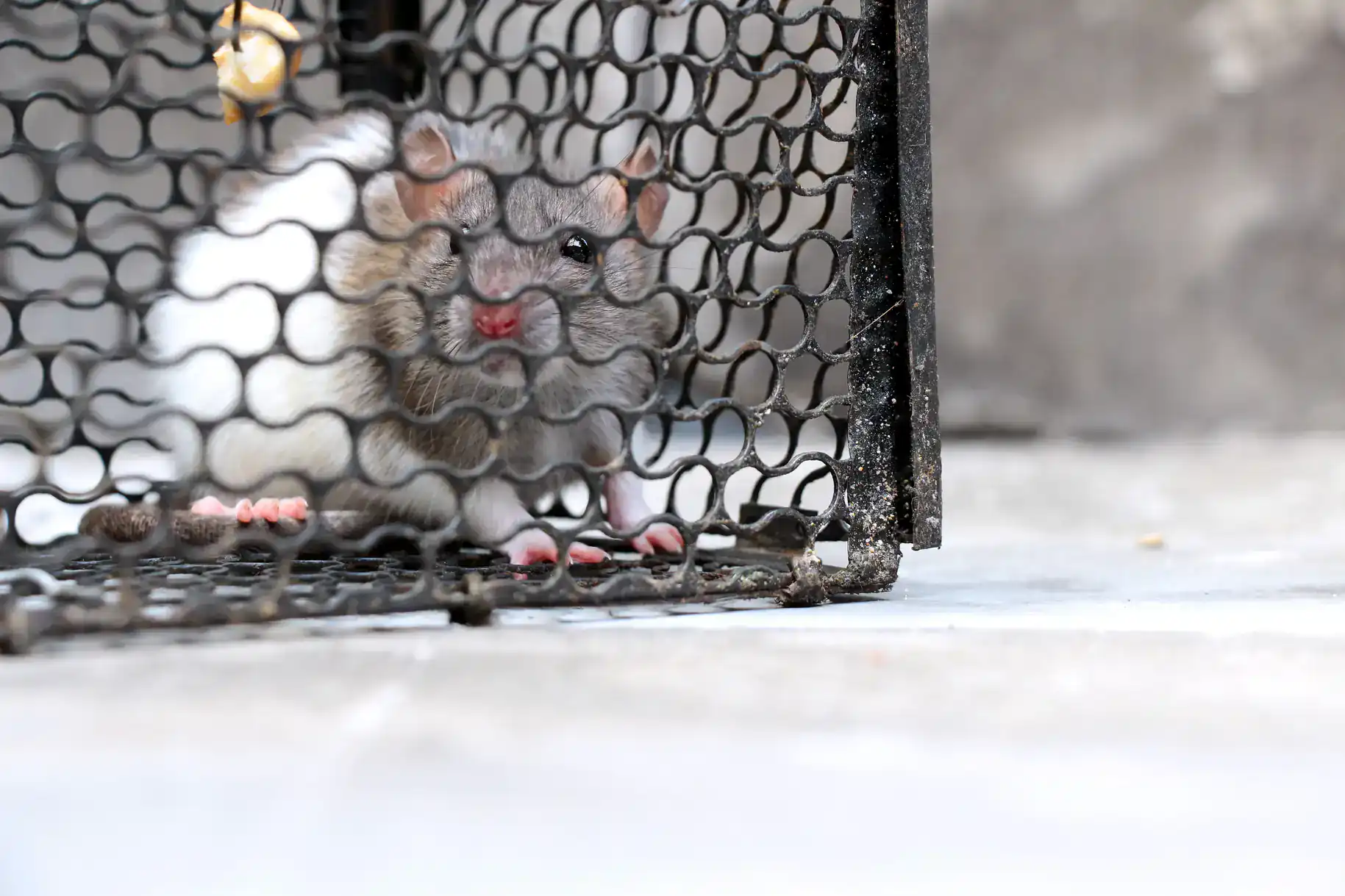
You stop hearing scratching in the walls at 2 AM. You stop finding droppings behind the stove. You stop replacing snap traps every week and wondering why nothing’s working. That’s what a real rodent removal solution looks like not a temporary fix, but an actual resolution.
In Queens, the challenge isn’t just finding the rodent. It’s understanding why it’s there. The semi-detached brick homes in Woodhaven, Richmond Hill, and Ozone Park share wall cavities with neighboring units, which means a rat that enters one home can move laterally through an entire block without ever crossing open ground. Trapping one or two won’t stop that. Identifying the entry points and sealing them will.
The same goes for apartment dwellers near the 7 train corridor in Jackson Heights, Woodside, and Corona. Subway infrastructure creates underground movement routes that push rodents up into buildings from below. Surface-level bait stations don’t address that. A thorough inspection that accounts for how rodents actually move through Queens’ specific building types that’s what makes the difference between a treatment that holds and one that doesn’t.
We were founded in 1971 by Richard Kourbage Sr. with a straightforward mission: handle pest problems the right way, at a price that’s fair. His sons Richard Jr. and Charles joined the business in the late 1980s and have been running it ever since. That’s over five decades of the same family, the same standards, and the same commitment to doing the job right the first time.
We hold an A+ rating with the Better Business Bureau of New York State accredited since 1989 and apply only N.Y.S. Department of Environmental Conservation registered materials on every job. That matters in Queens, where families are living in close quarters, multi-generational households are common, and the last thing anyone needs is a pest control company cutting corners on what goes inside your home.
We’ve worked in apartment buildings near Queensbridge Houses, handled rodent calls in commercial properties along Jamaica Avenue, and dealt with the kind of infestations that keep coming back until someone actually finds the source. Queens isn’t a stretch territory for us it’s been part of our core service area for generations.
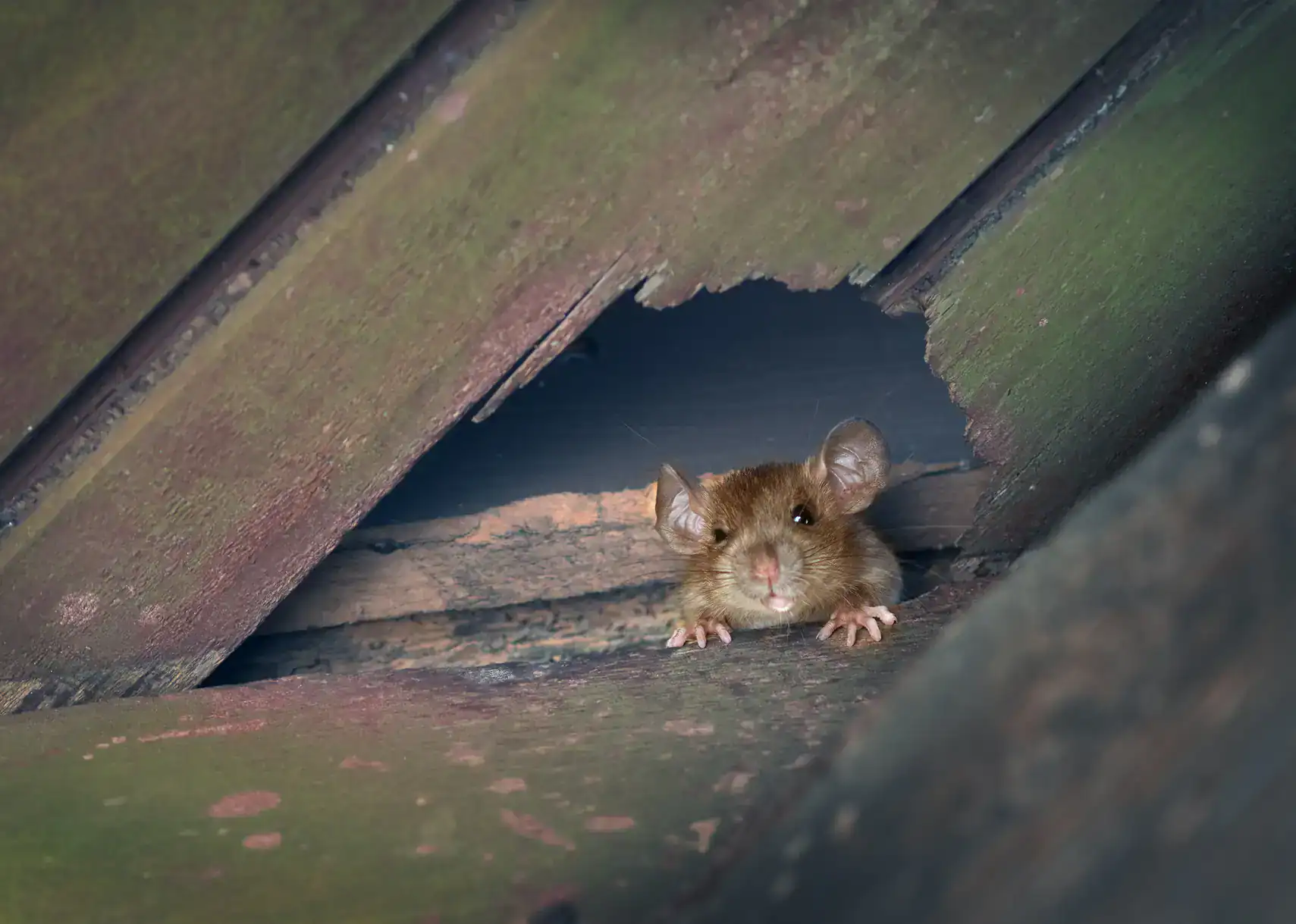
It starts with a phone consultation at no charge. You describe what you’re seeing droppings, sounds, gnaw marks, whatever tipped you off and a knowledgeable person walks you through what it likely means, what the next steps are, and what a service call would involve. No pressure, no sales script. Just a straight conversation about your situation.
When a technician comes out, the first thing we do is a thorough inspection interior and exterior. In Queens, that means checking the foundation for cracks and gaps, examining areas around utility penetrations, inspecting wall cavities where possible, and looking at the specific conditions that are driving activity in your building type. A Flushing apartment building has different access points than a detached home in Bayside or an attached row house in Maspeth. The inspection accounts for that.
From there, we build a treatment plan around what was actually found not a one-size-fits-all approach. That typically includes targeted baiting, trapping, and exclusion work to seal the entry points that are allowing rodents in. In Queens, where NYC Health Code Article 151 requires property owners to maintain premises free of rodent harborage conditions, we provide documentation of treatment for landlords and property managers who need it for compliance purposes. Follow-up is part of the process, not an add-on.
Ready to get started?
Rodent control in Queens isn’t one problem it’s several, depending on where you live and what kind of building you’re in. For homeowners in attached row houses across Woodhaven, Glendale, and Middle Village, the priority is exclusion: finding every gap, crack, and shared-wall penetration that’s giving rodents a way in and sealing them off permanently. Rats need a hole the size of a quarter. Mice need even less. In aging pre-war brick construction, those openings are everywhere if you know where to look.
For renters and building managers in multi-family properties whether that’s a six-unit walkup in Astoria or a large complex near LeFrak City in Corona the focus shifts to building-wide assessment, documentation, and a treatment approach that can be coordinated with property management. We can work with both tenants and landlords, and we provide written service records for housing court purposes if a tenant’s rights situation is involved.
For homeowners in eastern Queens Bayside, Whitestone, Fresh Meadows, Douglaston the issue often involves outdoor harborage: overgrown areas, woodpiles, compost bins, or bird feeders near the foundation that are drawing rodents close to the home before they find a way inside. We address both the interior activity and the exterior conditions enabling it. Every treatment uses only NYS DEC-registered materials, applied by licensed, bonded, and insured technicians because what goes into your home matters as much as what gets taken out of it.
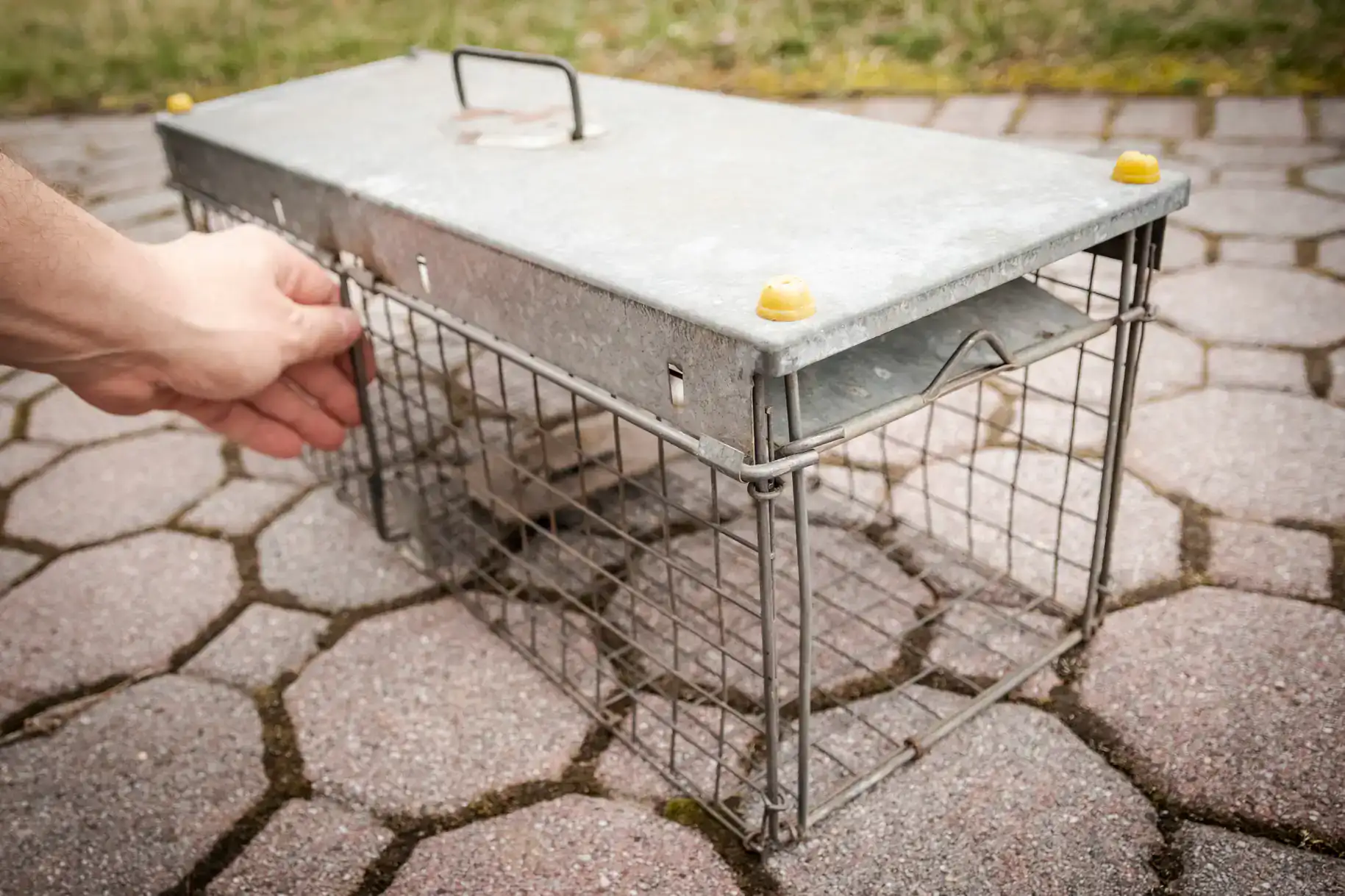
Traps catch individual rodents they don’t stop more from coming in. If you’re resetting traps and the problem keeps returning, it almost always means there’s an entry point somewhere that hasn’t been found and sealed. In Queens, this is especially common in older attached homes where the building envelope has deteriorated over decades. Gaps around water pipes, cracks in the foundation, deteriorating mortar joints, and openings where utility lines enter the building are all common access points that a hardware-store trap does nothing to address.
The only way to stop the cycle is to find where they’re getting in and close it off. That’s what a professional inspection is designed to do. A technician will examine the exterior perimeter, check under sinks and behind appliances, look at the basement and crawl space if applicable, and identify the conditions not just the rodents that are sustaining the infestation. Once entry points are sealed and harborage conditions are addressed, the trapping becomes a cleanup measure rather than an endless battle.
Yes and this is one of the most common and least understood drivers of rodent activity in Queens right now. Active construction displaces established rat colonies. When a building gets demolished or a major infrastructure project breaks ground, the rats living in and around that site don’t disappear they move. They relocate to the nearest available food source and shelter, which is often a residential block nearby.
Queens has been one of the most active construction zones in New York City for the past several years. The ongoing JFK Airport redevelopment, new residential towers going up in Long Island City and Flushing, and continuous subway infrastructure work are all generating displacement events that push rodent populations into surrounding neighborhoods. If you’ve noticed a sudden increase in rodent activity and there’s active construction within a few blocks, that’s likely not a coincidence. The treatment approach in displacement-driven infestations needs to account for the fact that the pressure is coming from outside which means exclusion work on the building exterior is especially important alongside interior treatment.
The CDC documents over 35 diseases that rats and mice can transmit to humans, either directly through contact with their urine, droppings, or saliva, or indirectly through fleas, ticks, and mites that feed on infected rodents. The most serious include hantavirus, leptospirosis, salmonella, and rat-bite fever. These aren’t rare or theoretical risks they’re documented public health concerns in dense urban environments.
In Queens, where multi-generational households are common in neighborhoods like Jackson Heights, Corona, and Woodside, the health stakes are higher than in a single-occupancy home. Young children, elderly family members, and anyone with a compromised immune system are more vulnerable to illness from rodent contact or contaminated surfaces. Droppings and urine left in kitchen cabinets, behind appliances, or inside wall cavities can remain infectious long after the rodent is gone. Professional rodent removal includes safe handling and cleanup procedures that reduce the risk of contamination during and after treatment something a DIY trap-and-dispose approach doesn’t account for.
Under New York City law, landlords are legally required to maintain rental units free of pest infestations, including rodents. If your landlord has been unresponsive, you have a few options. You can file a complaint through 311, which triggers a NYC Department of Health and Mental Hygiene inspection of the property. If a violation is issued, the landlord is legally required to hire a licensed pest management professional and remediate the conditions. Persistent failure to comply can result in fines and housing court action.
You can also take the matter to Housing Court directly, where a judge can order the landlord to make repairs and provide pest control services. Having documentation of the infestation photos, written complaints to the landlord, and records of any professional inspections or treatments strengthens your case significantly. We provide written service documentation that is suitable for legal purposes. If you’re a renter in Queens dealing with an unresponsive landlord, getting a professional inspection on record is often the most effective first step toward getting the problem resolved through the proper channels.
The attached and semi-detached brick row houses that line the streets of Woodhaven, Richmond Hill, Ozone Park, and Maspeth are some of the most rodent-vulnerable building types in Queens. The reason is structural: these homes share walls with neighboring units, and the cavities inside those shared walls create a continuous underground and interior pathway that rodents can move through without ever crossing open ground. A rat that enters through a foundation crack at one end of a row can work its way through multiple homes without being detected until it shows up in someone’s kitchen.
Rats can squeeze through a hole the size of a quarter. Mice need even less space roughly the diameter of a pencil eraser. In pre-war brick construction, deteriorating mortar joints, gaps around gas and water lines, and openings where pipes penetrate the foundation are extremely common. A professional inspection of these homes focuses heavily on the exterior perimeter particularly the foundation, the area where the building meets the sidewalk, and any utility penetrations because that’s where the access points almost always are. Sealing those entry points is what stops the cycle.
Yes. We serve Queens in full from Astoria and Long Island City in the west to Bayside, Whitestone, and Douglaston in the east, and from Flushing and College Point in the north to Howard Beach, Ozone Park, and the Rockaways in the south. Every neighborhood in the borough is within our service area, and we’ve worked across the full range of Queens’ housing stock attached row houses, multi-family apartment buildings, NYCHA-adjacent properties, and suburban single-family homes in eastern Queens.
Appointments are available 24 hours a day, seven days a week, and we guarantee a scheduled appointment within 48 hours of your call. The initial phone consultation is free no charge, no obligation, just a direct conversation about what you’re dealing with and what it would take to fix it. Whether you’re in a sixth-floor apartment in Flushing, a two-family home in Richmond Hill, or a detached house in Fresh Meadows, the process starts the same way: you call, you talk to someone who knows what they’re doing, and you get a clear picture of your options before committing to anything.
Useful Links
Other Services we provide in Queens