Hear from Our Customers
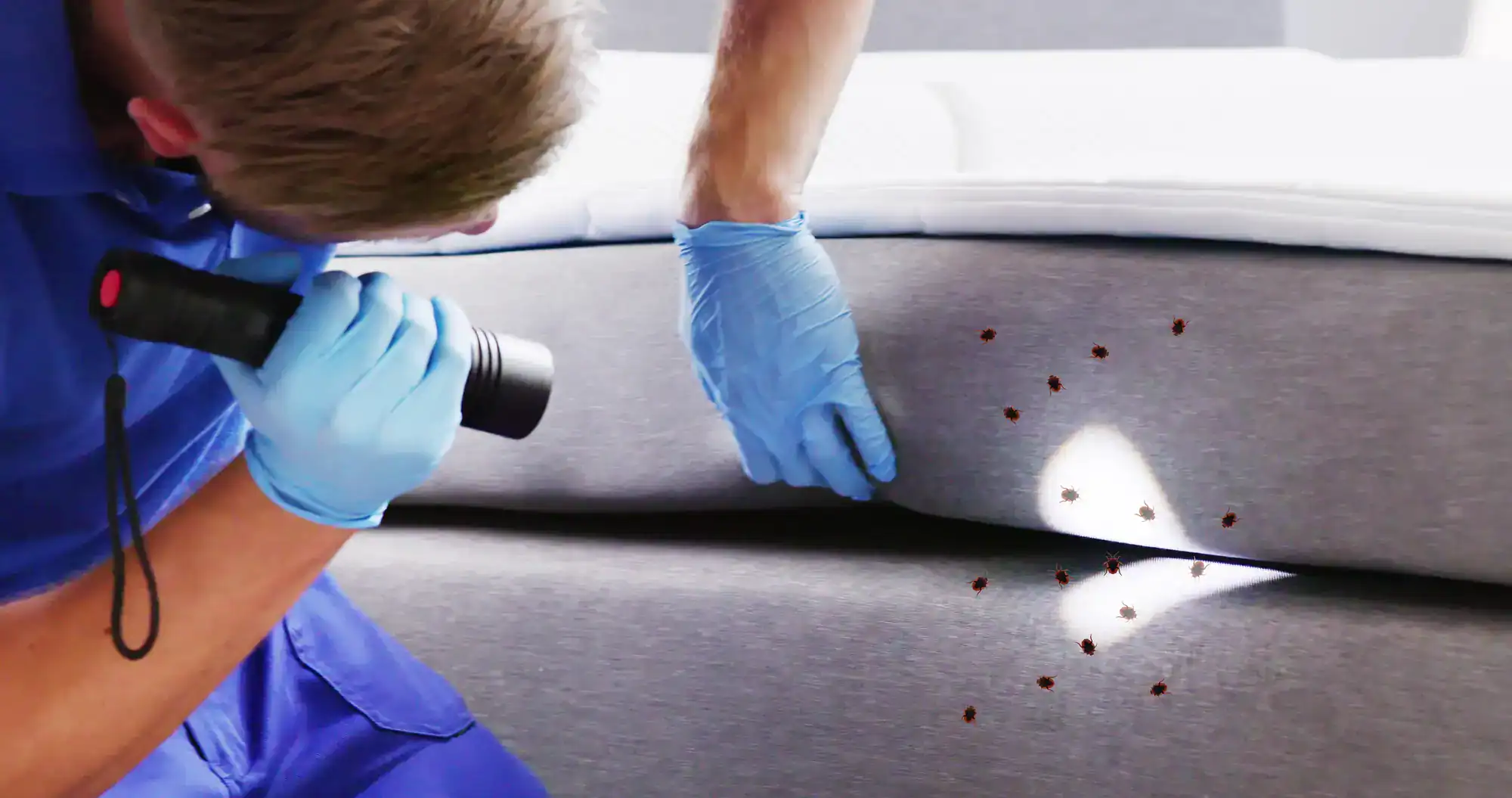
You stop waking up to check the mattress seams. You stop wondering if the itch is in your head or on your skin. You stop dreading the moment your kids ask what those bites are. That’s what a properly treated home feels like and it’s the only outcome worth paying for.
Jamaica Hills has a specific set of conditions that make bed bug problems harder to ignore and harder to solve on your own. The prewar co-op buildings along Hillside Avenue and the older multi-family stock near 168th Street have aging wall cavities, shared plumbing chases, and connected infrastructure that let bed bugs move between units without anyone noticing until the problem is already in three apartments. A spray from a general exterminator who doesn’t understand multi-unit dynamics doesn’t fix that. It delays it.
Then there’s the travel factor. With the AirTrain to JFK Airport accessible right from Jamaica Station one of the busiest international transit hubs in the country Jamaica Hills residents travel more than most. Hotels, planes, and transit corridors are among the most common ways bed bugs enter a home. If you’ve recently returned from a trip and started noticing bites, the connection is more common than people realize. Getting a certified specialist in quickly not a generalist is what separates a contained problem from a spreading one.
We’ve been operating across all five boroughs for over 50 years. That’s not a number for the website it’s a track record built job by job, borough by borough, in housing stock exactly like what you’ll find in Jamaica Hills. From the brick Tudors on Gothic Drive to the six-story co-ops near Jamaica High School, we’ve seen the full range of how infestations behave in older New York City buildings.
We’re family-owned, founded by Richard Kourbage, and BBB-accredited with an A+ rating since 1989. That kind of standing doesn’t happen by accident. It happens because the work gets done right and the people doing it are accountable not to a corporate franchise, but to a name that’s been on the door for five decades.
We hold certified bedbug specialist status, are fully licensed by the NYSDEC, and carry the credentials required by New York State law for legal bed bug treatment in residential apartments. If you’re a landlord, co-op board member, or property manager dealing with an HPD violation or a DOHMH order, we handle that too including the documentation and clearance certificates that close the case.
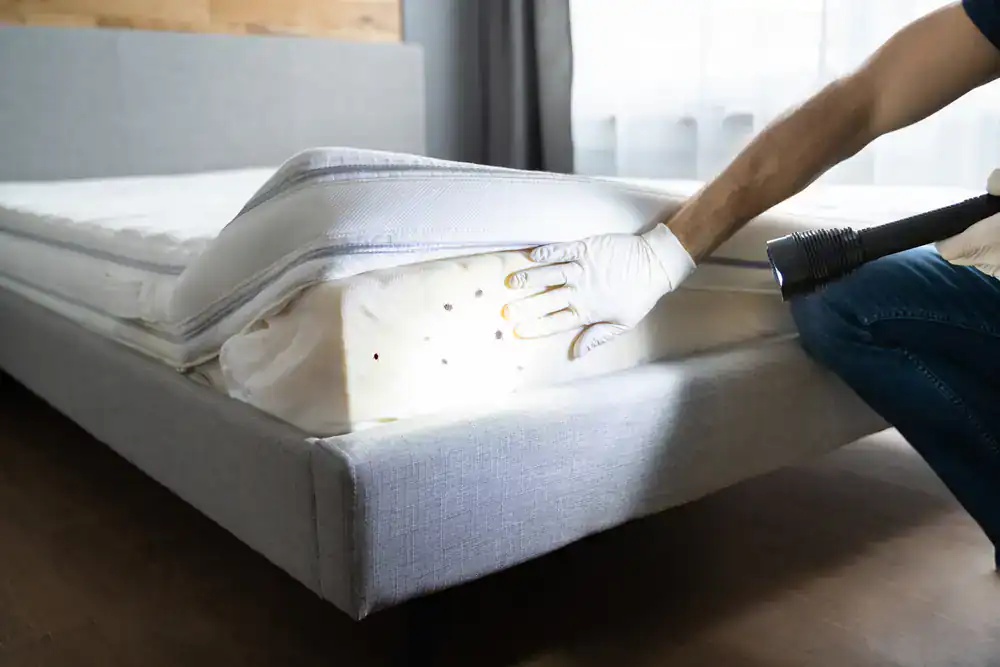
It starts with a call and because we answer 24 hours a day, seven days a week, that call can happen Sunday night after you find something on your mattress, not Monday morning when you’ve already lost sleep over it. Same-day inspections are available when the schedule allows, and a guaranteed appointment within two days is the floor not the ceiling.
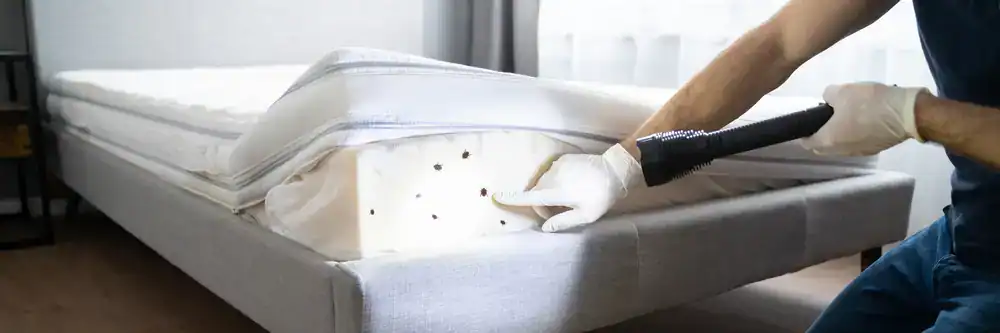
The inspection comes first. A certified specialist walks the property, identifies the scope of the infestation, and gives you an honest assessment of what you’re dealing with. In a Jamaica Hills co-op or multi-family building, that means evaluating not just your unit but the shared infrastructure around it because treating one apartment while ignoring the wall cavities and utility chases connecting it to neighboring units is how infestations come back. You’ll know exactly what was found, what treatment is recommended, and why before any work begins.
Treatment follows a plan built around your specific situation. For single-family homes on Jamaica Hills’ interior streets, that looks different than treatment in a prewar apartment building near Hillside Avenue. Preparation instructions are clear and specific what to do with bedding and clothing, how to ready each room, what to expect during and after the visit. Follow-up is built into the process, not sold as an add-on. Under NYC Local Law 69, residential property owners are also required to file an annual bed bug report with HPD by December 31 and if that’s on your radar, we can walk you through what compliant, documented treatment looks like for that filing.
Ready to get started?
Bed bug treatment in Jamaica Hills isn’t one-size-fits-all, and any company that treats it that way is going to leave you with a recurring problem. The neighborhood’s housing mix detached Tudors and Colonials from the 1920s and 1930s, postwar co-ops, and multi-family rentals along the Hillside Avenue corridor each presents a different challenge. Our approach accounts for the building type, the scope of the infestation, and the people living inside.
Every treatment is performed by a certified bedbug specialist using professional-grade methods appropriate for the specific environment. For families in Jamaica Hills homes and with nearly 18% of the neighborhood being children under 15, that’s most households environmentally friendly treatment options are available and explained upfront. You’ll know what’s being applied, where, and why it’s safe for your family before the technician starts. No surprises, no pressure to agree to something you don’t understand.
For landlords and property managers dealing with HPD violations or DOHMH Commissioner’s Orders which are common in Jamaica Hills’ multi-family rental stock we provide the documented, NYSDEC-licensed treatment that satisfies New York State’s legal requirements. We can also issue NYC Department of Health clearance certificates, which is what closes a violation on record. Free estimates are available, senior discounts apply, and the assessment you get will reflect what’s actually there not what generates the biggest invoice.
Yes and this is one of the most important things to understand about bed bug treatment in Jamaica Hills’ older co-op and apartment buildings. Bed bugs don’t stay in one unit. They move through wall voids, electrical outlets, plumbing chases, and shared infrastructure, which means a neighbor’s infestation can become yours without either of you doing anything wrong. In the prewar and postwar buildings common along Hillside Avenue and near Jamaica High School, those shared pathways have been in place for 70 to 90 years and they’re exactly the kind of environment where bed bugs travel undetected.
Treating only your unit without addressing the building’s shared structure is one of the most common reasons infestations return. A certified specialist who understands multi-unit building dynamics will assess not just your apartment but the surrounding conditions and make recommendations accordingly. If you’re a co-op shareholder in Jamaica Hills, it’s worth raising this with your board because under NYC’s housing code, the building owner has a legal obligation to address infestations that affect multiple units, not just the one that reported it first.
Most infestations require two to four professional treatments over a three-to-six-week period. That range depends on several factors: the size of the infestation, the type of housing, how long the bugs have been present, and whether neighboring units or rooms are also affected. A single treatment almost never eliminates a bed bug problem completely, because eggs that weren’t exposed during the first visit will hatch and need to be addressed in follow-up visits.
In Jamaica Hills specifically, the older housing stock both the detached homes on interior streets like Marlborough Road and the multi-family buildings near Hillside Avenue tends to have more hiding spots due to aging baseboards, original hardwood floors, and decades of layered construction. That can extend the treatment timeline compared to newer construction. The honest answer is that a certified specialist needs to assess your specific situation before giving you a number, and anyone who guarantees a single-treatment solution without seeing the property first is not giving you accurate information.
This is one of the most common concerns for Jamaica Hills families, and it’s a fair one. Environmentally friendly treatment options are available and are the preferred approach for homes with children and pets. Before any treatment begins, you’ll receive clear preparation instructions what to do with bedding, clothing, food items, and pet supplies and you’ll be told exactly when it’s safe to re-enter treated rooms. Nothing is vague or left to assumption.
The products we use are professional-grade and applied with precision not broadcast sprayed throughout a room indiscriminately. The goal is targeted treatment in the areas where bed bugs actually live and hide, which minimizes overall chemical exposure while maximizing effectiveness. If you have specific concerns about a child with allergies, a pet with sensitivities, or any other household health consideration, bring those up during the inspection. A good specialist will factor that into the treatment plan before the work begins, not after.
Professional bed bug treatment in New York City typically ranges from $1,000 to $2,500 for a standard residential infestation, with more severe or widespread cases running higher depending on the size of the property and the number of units involved. In Jamaica Hills, where housing ranges from single-family Tudors to multi-floor co-op buildings, the scope of the job is the primary cost driver a contained bedroom infestation in a detached home is a different project than a multi-unit building situation requiring coordinated treatment and documentation.
The most important thing to understand about cost is that a free estimate gives you a real number before you commit to anything. We offer free estimates, and the assessment you receive will reflect what’s actually present not an inflated scope designed to increase the invoice. Senior discounts are also available. Trying to save money with over-the-counter products is a common approach that usually extends the problem rather than solving it, because bed bugs have developed significant resistance to most retail pesticides. The cost of professional treatment is almost always less than the cost of multiple failed DIY attempts followed by a professional call anyway.
It’s entirely possible. Hotels, planes, and transit hubs are among the most well-documented sources of bed bug introduction, and Jamaica Hills residents have direct, easy access to JFK International Airport via the AirTrain from Jamaica Station. The transit corridor itself the AirTrain, the LIRR platform, and the connecting subway lines carries foot traffic from travelers arriving from all over the world, and bed bugs can hitch a ride on luggage, clothing, and bags without any visible sign.
If you’ve recently returned from a trip and started noticing bites or seeing signs of bed bugs within two to four weeks of getting home, travel exposure is a real and likely explanation. The good news is that travel-introduced infestations, caught early, are typically more contained than ones that have been spreading undetected for months. Getting a certified inspection scheduled quickly before the population has time to establish itself throughout the home is the most effective thing you can do. Don’t wait to see if it gets worse. It will.
New York City’s regulations on this are specific and enforceable. Under the NYC Housing Maintenance Code, landlords are required to address bed bug infestations promptly once reported. If HPD inspects and finds bed bugs, the property owner receives a Notice of Violation and a DOHMH Commissioner’s Order that mandates documented remediation including inspection of all cited apartments and follow-up visits to confirm the infestation is resolved. New York State law also requires that only NYSDEC-licensed pest control professionals perform the treatment, meaning unlicensed operators don’t satisfy the legal requirement regardless of what they charge or claim.
Under Local Law 69 of 2017, all residential property owners in Jamaica Hills must file an annual bed bug infestation history report with HPD by December 31 each year even if no infestation occurred during the reporting period. Failure to file results in a Class A violation that is publicly visible on HPD’s online database. We handle health code violation citations, provide the documented treatment records needed for compliance, and can issue NYC Department of Health clearance certificates that formally close a violation on record. If you’re managing rental units in Jamaica Hills and navigating any part of this process, that regulatory experience is not a minor detail it’s the difference between a closed case and an ongoing liability.
Useful Links
Other Services we provide in Jamaica Hills