Hear from Our Customers
You stop finding roaches in your kitchen at midnight. Your kids aren’t sleeping in a space that’s triggering asthma flare-ups. You’re not throwing money at sprays from the pharmacy that knock a few back for a week before they return in full force. That’s what real cockroach removal looks like and it’s a different experience than what most East New York residents have been getting.
The buildings here aren’t forgiving. Aging pipe collars, shared walls between units, and decades-old plumbing give cockroaches more entry points and hiding spots than most people realize. A treatment that only addresses what you can see is going to fail. What actually works is identifying where they’re coming from the wall voids, the drain lines, the gaps around utilities and cutting off those pathways for good.
If you’re in one of the lower-lying blocks near Spring Creek or close to the Belt Parkway corridor, you’ve probably dealt with waterbugs coming up through your drains after a heavy rain. That’s American cockroaches migrating through the sewer system when it gets overwhelmed and it happens here more than in most parts of Brooklyn. That specific problem has a specific fix, and it starts with treating the source, not just the surface.
We’ve been operating out of Brooklyn since the 1980s. Founded by Richard Kourbage Sr. and still family-run today, we’re headquartered on Flatbush Avenue in Marine Park just a few miles from East New York. We built this business block by block across southeastern Brooklyn, and we know the housing stock here intimately: the older walk-ups, the row houses off Pitkin Avenue, the dense residential corridors near Pennsylvania Avenue, and the unique challenges that come with buildings constructed before modern pest-proofing was even a consideration.
Our team collectively brings over 100 years of hands-on pest control experience, holds an A+ rating with the Better Business Bureau of New York State, and operates exclusively with NYS DEC Registered Materials. Every technician is licensed, we’re fully bonded and insured, and we’ve been doing this long enough to know what actually works in an East New York apartment not just what looks good on paper.
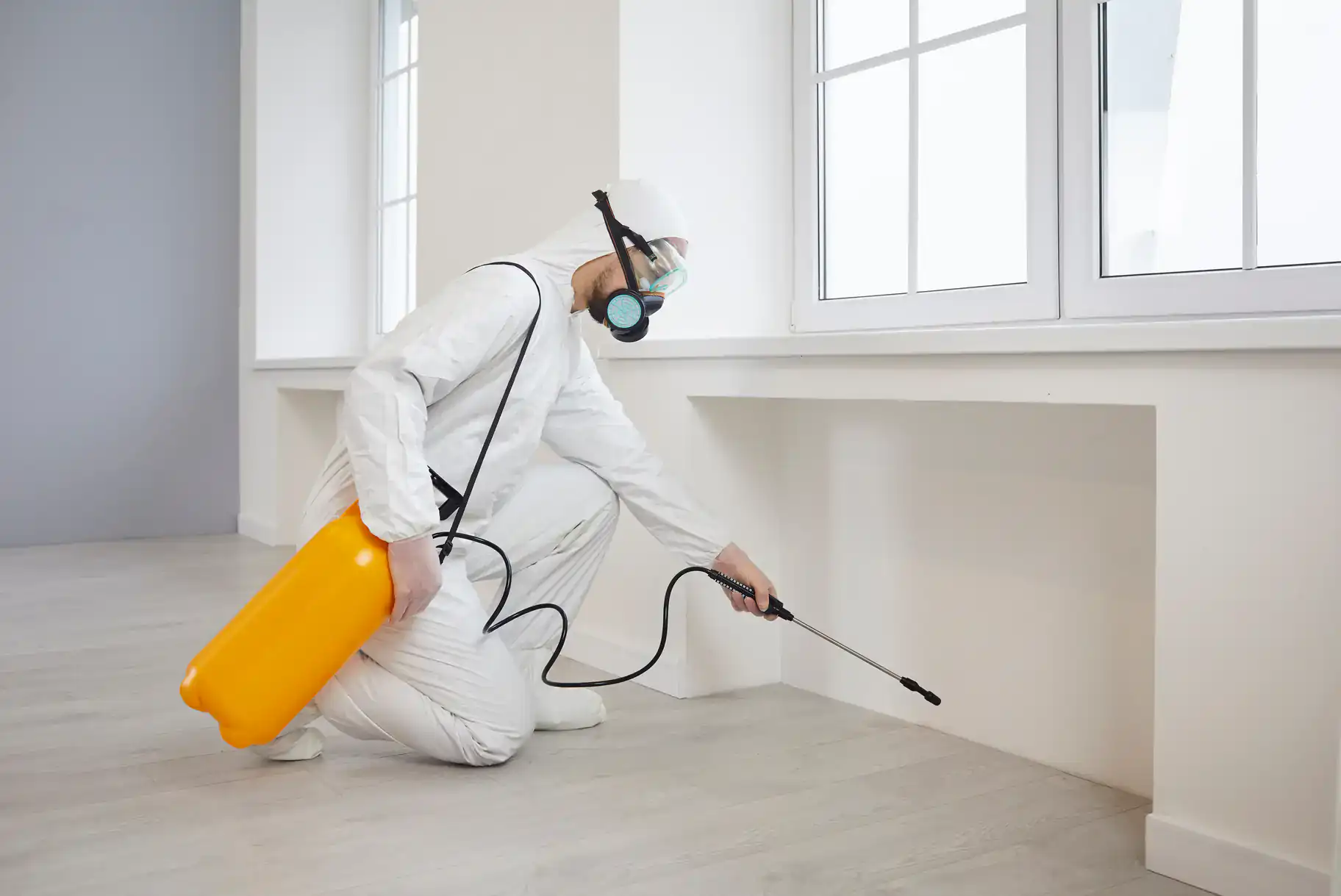
It starts with a real inspection not a five-minute walkthrough. Our technician looks at the areas where cockroaches actually live and travel: behind appliances, under sinks, inside cabinet hinges, along baseboard gaps, around pipe penetrations. In East New York’s older buildings, those pipe penetrations are often the main highway. If your building has shared walls or a common basement, that gets factored in too, because treating your unit in isolation won’t hold if the source is two floors down.
From there, we build a treatment plan around what’s actually found not a one-size-fits-all spray job. German cockroaches, the small fast ones that colonize kitchens and bathrooms, respond well to targeted gel bait applications placed in the right spots. American cockroaches coming up from the sewer system need a different approach entirely, focused on drain treatments and entry-point sealing. We use NYS DEC Registered Materials for every application, which matters if you have kids or pets in the home.
After treatment, you’ll know what was done, where, and what to expect in the days that follow. If you’re in a multi-unit building and the infestation is coming through shared infrastructure, we can work with your property manager or landlord to address the building-level problem which is often the only way to get a result that actually lasts in East New York’s dense residential environment.
Ready to get started?
Cockroach pest control in East New York isn’t a standard job. The neighborhood’s concentration of multi-unit housing from the Linden Houses and Cypress Hills Houses to the private rental buildings along Linden Boulevard means infestations almost always involve shared building infrastructure. Our approach accounts for that. We work with individual tenants, property managers, and landlords, and we understand the obligations that come with NYC Local Law 55, which requires monthly pest inspections in buildings with three or more units and mandates professional exterminator service for common areas.
For commercial clients along Pennsylvania Avenue or the Gateway Center corridor in Spring Creek, we also handle NYC Department of Health compliance situations. A cockroach sighting during a DOH inspection can cost a food service business its grade and the response needs to be documented, professional, and fast. We can provide the kind of written remediation record that satisfies an HPD or DOH follow-up.
Residential or commercial, our service includes a thorough inspection, species-specific treatment using DEC Registered Materials, entry-point assessment, and follow-up guidance. We offer a 10% discount for seniors in East New York a straightforward acknowledgment that pest control shouldn’t be out of reach for residents on fixed incomes in a neighborhood where that’s a real financial reality for a lot of people.
What you’re calling a waterbug is almost certainly an American cockroach a large, fast-moving species that lives in sewer systems and migrates upward through drain pipes when those systems get overwhelmed. In East New York, this is a specific and recurring problem. The neighborhood’s southern edge sits close to Jamaica Bay, and the low-lying areas near Spring Creek and the Belt Parkway corridor are particularly vulnerable to sewer overflow during heavy rain events. When that happens, cockroaches don’t have anywhere to go but up and they end up in your drains, your bathroom, and eventually your kitchen.
The fix isn’t a can of spray. It’s drain treatment, entry-point sealing around pipe penetrations, and in some cases, coordination with building management if the issue is coming from shared plumbing. If you’re seeing waterbugs consistently after rain and you live in a lower-elevation part of East New York, that’s a structural problem with a structural solution and it’s one we’ve dealt with across southeastern Brooklyn for decades.
Yes and in East New York’s older multi-unit buildings, it happens constantly. Cockroaches travel through wall voids, plumbing chases, electrical conduit, and gaps around pipe penetrations. If you treat your apartment and your neighbor’s unit is untreated, the infestation will come back. It’s not a matter of cleanliness it’s a matter of building infrastructure. Older buildings have more of these shared pathways, and most of East New York’s residential stock was built in an era when those gaps weren’t sealed.
This is exactly why single-unit treatment often fails in this neighborhood. A real solution has to account for where the cockroaches are coming from, not just where you’re seeing them. If you’re a tenant, that might mean working with your landlord to coordinate treatment across multiple units. If you’re a property manager, NYC Local Law 55 already requires you to address pest control in common areas and we can help you meet that obligation in a way that actually produces results.
Under the NYC Housing Maintenance Code, your landlord is legally required to keep your apartment free of pests. If you report a cockroach infestation and your landlord doesn’t respond, you can file a complaint through 311, which triggers an HPD inspection. A confirmed infestation can result in a Class B violation a hazardous condition that the landlord is required to correct within 30 days. That’s the legal framework, and it applies to every rental unit in East New York.
In practice, response times and treatment quality vary widely. Some landlords hire professional exterminators quickly. Others drag their feet, and in NYCHA developments, the in-house pest control program has well-documented capacity limitations. If you’re not getting a timely or effective response from your landlord or building management, you have the right to hire a private exterminator. We work with both tenants and property managers throughout Brooklyn, and we can document the treatment in a way that supports your rights if a housing complaint is already in progress.
The two species you’re most likely dealing with in East New York are German cockroaches and American cockroaches. German cockroaches are small about half an inch light brown, and almost always found indoors. They reproduce fast, they prefer warm and humid spaces like kitchens and bathrooms, and they’re the species most commonly found in apartment buildings. If you’re seeing small roaches near your stove, refrigerator, or under your sink, that’s almost certainly what you have.
American cockroaches are much larger over an inch reddish-brown, and typically come in from outside or through sewer systems. They’re the ones people call waterbugs. You’ll usually see them in basements, bathrooms, and near drains. The treatment approach for each species is different. German cockroaches respond best to targeted gel bait and crack-and-crevice treatments. American cockroaches require drain treatment and entry-point sealing. Misidentifying the species and applying the wrong treatment is one of the main reasons DIY products fail and it’s one of the first things our technician gets right before anything is applied.
For a contained German cockroach infestation in a single apartment, you should see a significant reduction within one to two weeks of professional treatment. Full elimination typically takes two to four weeks, depending on the severity of the infestation and whether neighboring units are also being treated. If the infestation is heavy or has been present for a long time which is common in East New York’s older buildings where a problem can go untreated for months while a tenant waits on a landlord or NYCHA work order a follow-up visit may be needed to fully clear it.
For American cockroach intrusions coming up through drains, the timeline is different because the issue is ongoing and tied to the building’s plumbing and the neighborhood’s sewer infrastructure. Treatment reduces the intrusion significantly, but if the building has unsealed drain lines and the sewer system continues to overflow during heavy rain, some level of maintenance may be needed on a recurring basis. We’ll give you an honest assessment of what’s realistic for your specific situation not a guarantee that oversells what one visit can do.
Yes we offer a 10% discount for senior residents. East New York has a meaningful senior population, including many long-term residents in older private buildings and NYCHA developments who are on fixed incomes. Pest control is one of those services that people in that situation sometimes put off longer than they should, partly because of cost and partly because they’ve already tried cheaper options that didn’t work. The discount is a straightforward way to make professional service more accessible to people who genuinely need it.
If you’re a senior dealing with a cockroach infestation whether you’re in a private apartment, a two-family home, or a building near Linden Boulevard or New Lots Avenue you don’t have to keep managing it alone with over-the-counter products that aren’t built for the kind of infestation that spreads through shared building walls. Call us, mention the senior discount when you book, and get an honest assessment of what it’s actually going to take to solve the problem in your specific home.
Useful Links
Other Services we provide in East New York