Hear from Our Customers
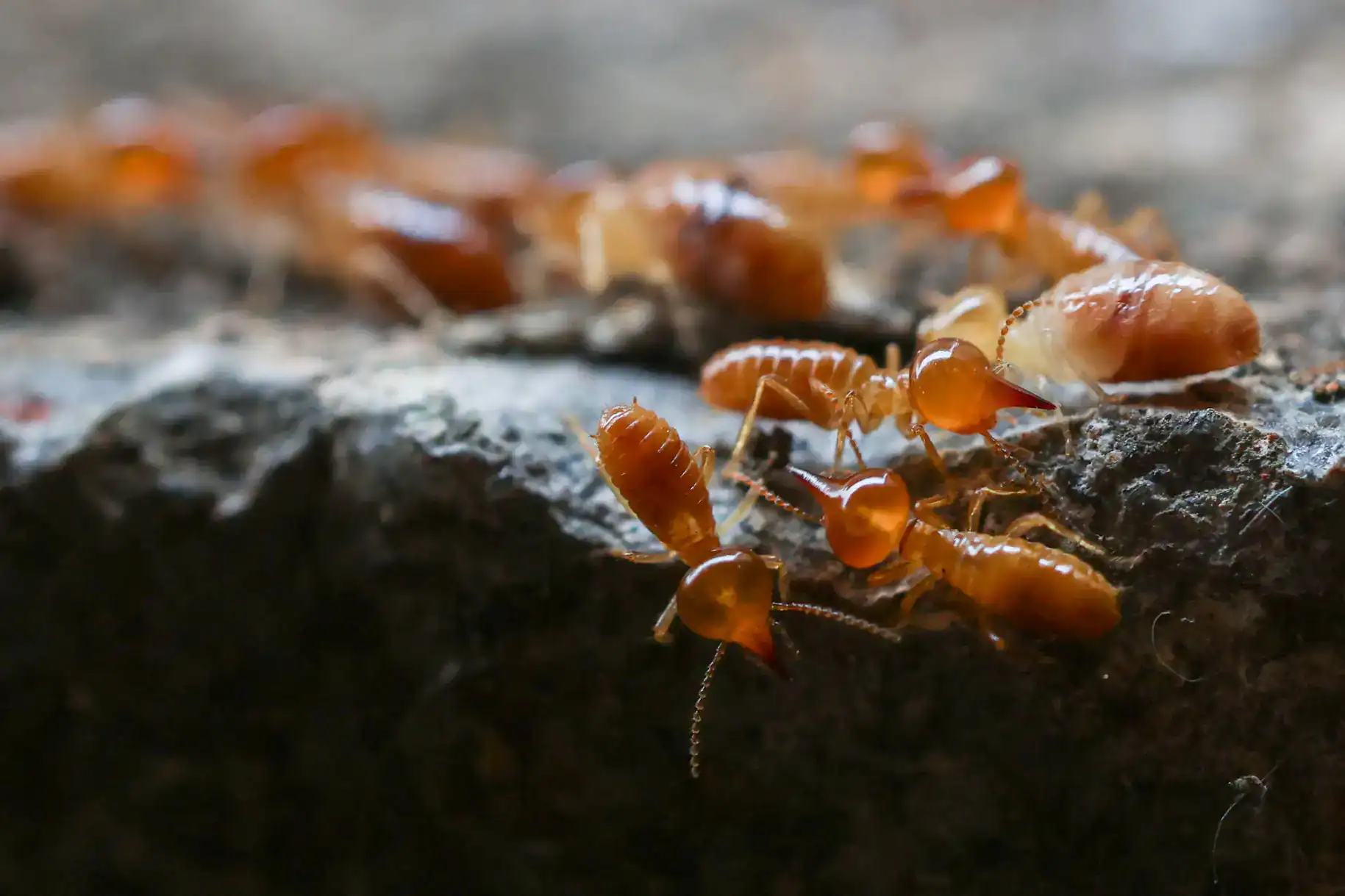
Termite damage doesn’t announce itself. By the time you notice hollowed-out wood, sagging floors, or mud tubes along your foundation wall, a colony has likely been feeding for years. The average repair bill runs around $3,000 and structural work like floor joist or beam replacement can push past $10,000. Your homeowner’s insurance won’t cover it. That’s not a fine-print surprise; it’s standard across virtually every policy in New York because insurers classify termite damage as a preventable maintenance issue, not a sudden event.
For East New York homeowners specifically, that financial exposure hits differently. Many families here bought their homes through programs like Nehemiah Spring Creek precisely because homeownership represented something real stability, equity, something to pass on. A termite infestation that goes undetected for five years doesn’t just damage wood. It damages that investment. Early termite inspection and treatment in East New York costs a fraction of what delayed action does.
The soil conditions in this neighborhood also matter. The lower-lying areas near Spring Creek and the Jewel Streets sit on chronically moist, high-water-table ground exactly the environment Eastern Subterranean Termites thrive in. These aren’t random infestations. They’re predictable outcomes of specific conditions, and knowing that gives you the advantage.
We’ve been based in Brooklyn since 1971. That’s not a marketing line it’s just the timeline. Founded by Richard Kourbage Sr. and now run with his sons Richard Jr. and Charles, Kingsway Exterminating has built its reputation one job at a time across the five boroughs, including every corner of East New York from Cypress Hills to Starrett City.
Our team brings over 100 years of collective pest control experience to every inspection. That depth means when we walk through a pre-war two-story on New Lots Avenue or a Spring Creek row home with a crawl space issue, we’re not guessing at what we’re looking at. We’ve seen it. We know what it means. And we’ll tell you straight.
We hold BBB accreditation going back to 1989 and apply only NYS Department of Environmental Conservation registered materials. Our phone is answered 24 hours a day, seven days a week because termite problems don’t wait for Monday morning.
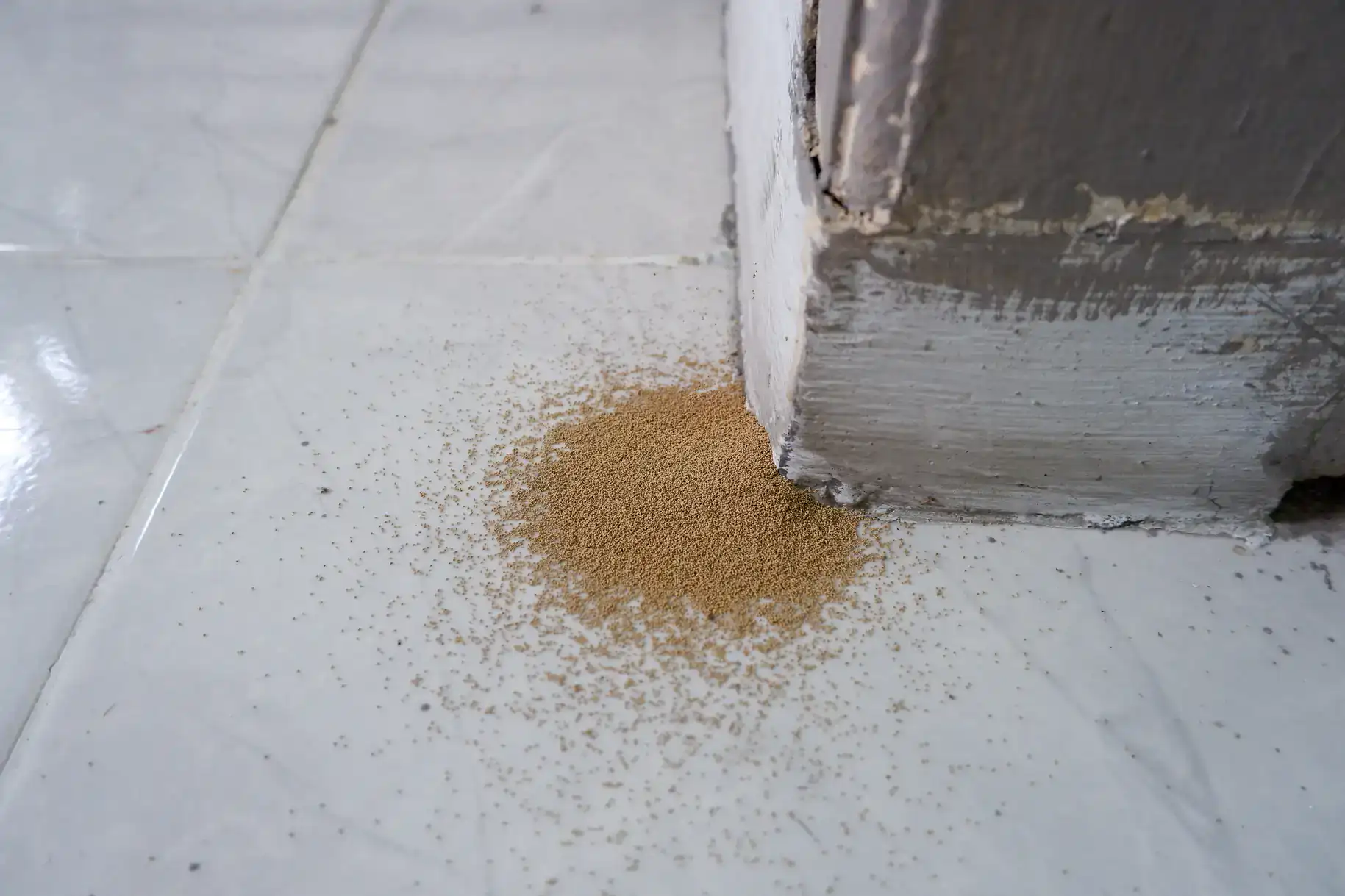
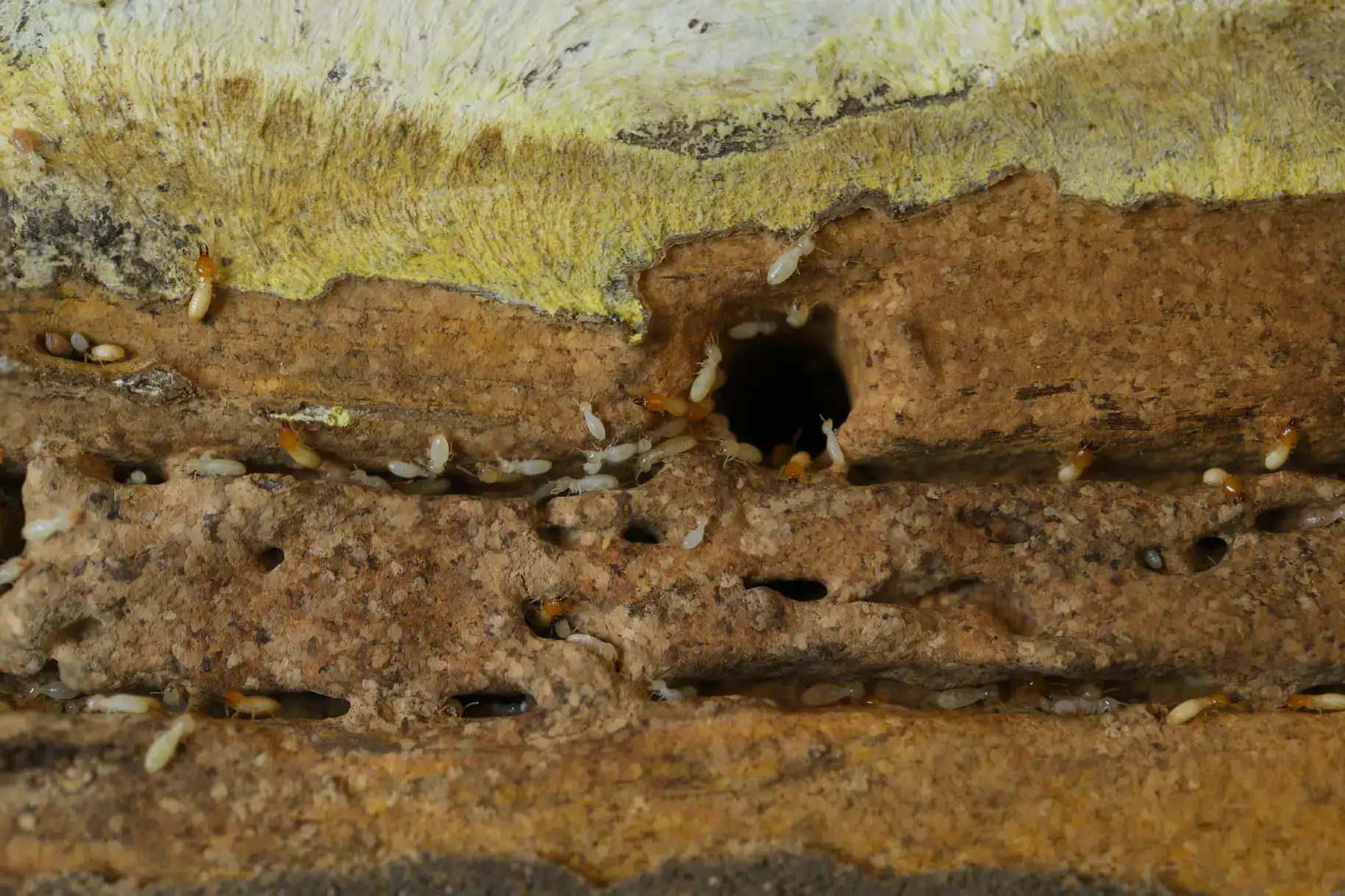
It starts with a free termite inspection. One of our licensed technicians comes to your property, walks the foundation perimeter, checks the basement or crawl space, examines sill plates, window frames, and any exposed structural wood. In East New York’s older housing stock particularly the row houses built after the 1922 subway extension, many of which are now pushing 100 years old there are specific access points termites use that an experienced eye knows to look for. Mud tubes along block foundations, soft spots near plumbing penetrations, frass near baseboards. The inspection covers all of it.
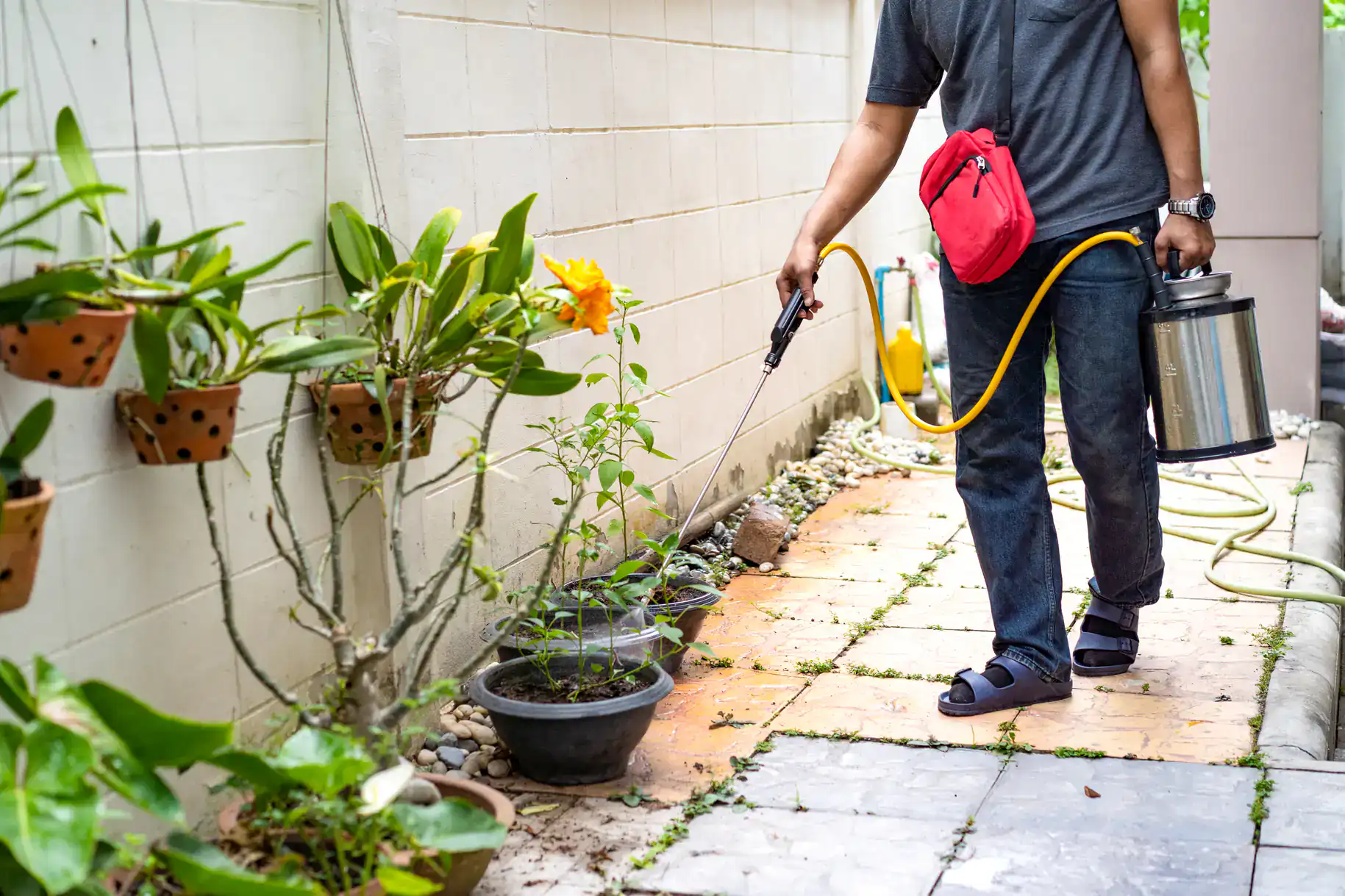
If there’s activity, we give you a clear explanation of what was found, where it is, and what the treatment options look like. We use both liquid barrier treatments and termite baiting systems depending on what the structure and infestation profile call for. Liquid barriers create a treated zone in the soil around your foundation that termites can’t cross. Baiting systems go after the colony directly workers carry the bait back underground, and the colony collapses from within. For properties near Spring Creek or the Jewel Streets where soil moisture is consistently high, we select treatment based on the drainage and groundwater conditions specific to that part of the neighborhood.
After treatment, you’ll know exactly what we applied, what to expect in the weeks ahead, and when to schedule a follow-up. No vague timelines, no disappearing after the check clears.
Ready to get started?
Our termite control in East New York, NY covers more than just the termites themselves. Eastern Subterranean Termites are the primary species across Kings County, but they’re not the only wood-destroying organism that affects Brooklyn’s housing stock. We treat carpenter ants and powder post beetles as well so you’re not getting a narrow answer to a broader problem.
For property owners going through a real estate transaction, we also provide Wood Destroying Organism (WDO) inspection reports. If you’re buying a Nehemiah Spring Creek home or any other property in East New York through an FHA or VA loan, your lender may require this documentation before closing. Getting that report from a company with 50 years of Brooklyn experience and a direct line to a licensed technician is a different experience than calling a national chain and hoping someone shows up.
Landlords and multi-family property owners in East New York are also covered. If you’ve received an NYC Department of Health pest citation which happens more frequently in neighborhoods with older rental housing stock we know exactly what documentation and treatment protocol is required to bring your property back into compliance. We handle the process efficiently, and you’re not left guessing at what the inspector needs to see.
Yes and the combination of factors in East New York makes it one of the higher-risk areas in Brooklyn. The neighborhood falls within a USDA-classified moderate-to-heavy termite pressure zone, which covers all of New York City. But East New York adds layers on top of that baseline. The row houses built after the 1922 subway extension are now approaching 100 years old, constructed with untreated lumber before modern building codes required termite-resistant materials. The soil in lower-lying sections near Spring Creek and the Jewel Streets stays moist year-round due to high groundwater and poor drainage and Eastern Subterranean Termites need moisture to survive underground.
That combination of old, untreated wood and wet soil creates conditions where termite colonies establish and grow without obvious signs for years. By the time swarmers appear in spring or you notice soft spots in your floor, the damage is already done. Annual inspections are the standard recommendation for any Brooklyn property, and for East New York specifically, they’re worth taking seriously.
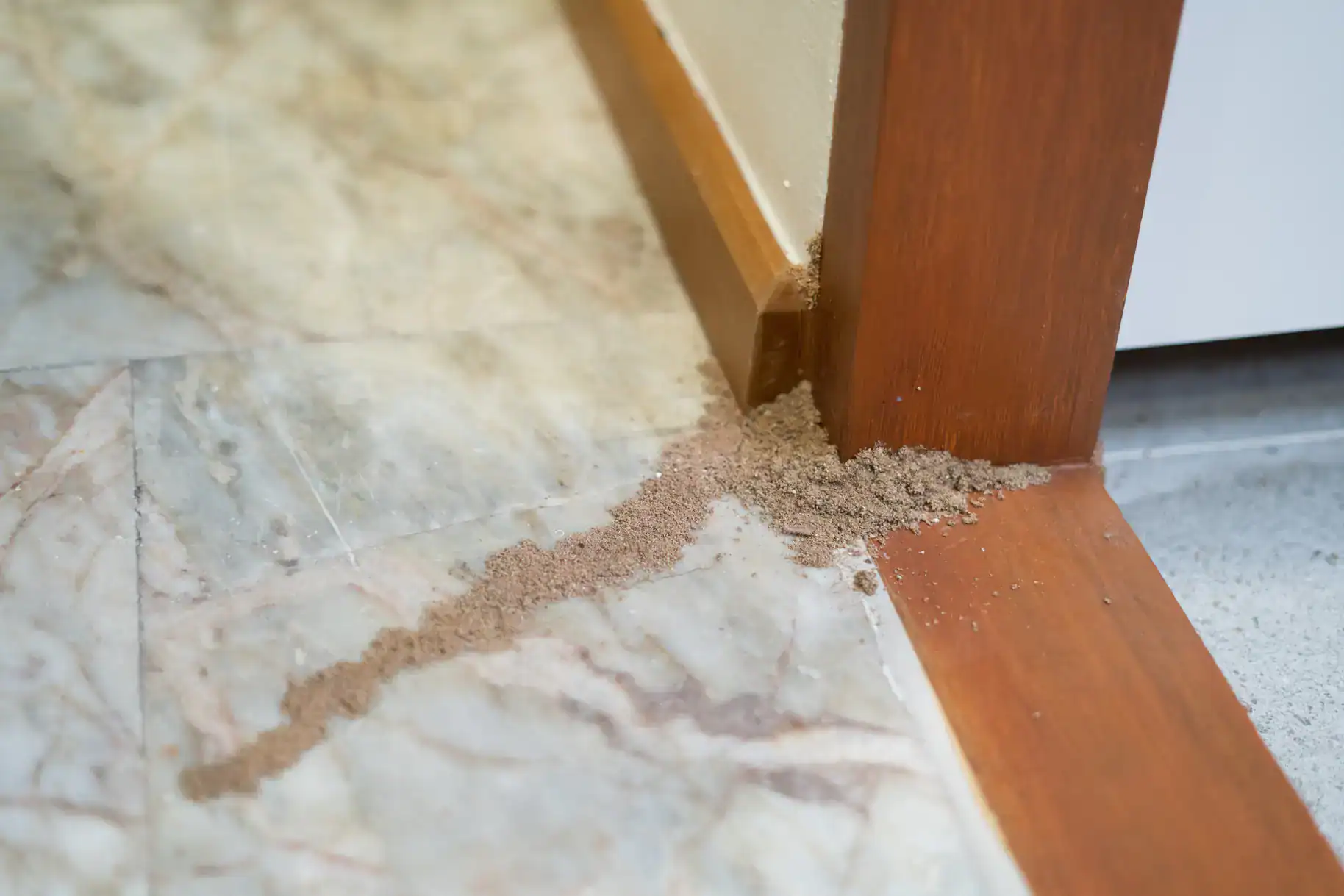
Most homeowners don’t see the termites themselves they see what the termites leave behind. The most common signs in East New York row houses and two-family homes include mud tubes running along foundation walls, concrete block joints, or exposed pipes in the basement. These are pencil-width tunnels the termites build to travel from the soil into the structure while staying protected from open air. You might also notice wood that sounds hollow when tapped, floors that feel soft or slightly springy in spots, or small piles of what looks like sawdust near baseboards or window frames that’s frass, which is termite waste.
In spring, usually between March and May, reproductive termites swarm. If you see winged insects emerging from walls, floors, or window sills especially after a warm, rainy day that’s a strong indicator of an active colony nearby. Swarmers themselves don’t cause damage, but they signal that a mature colony is established somewhere in or under your structure. Call us for an inspection while the evidence is fresh.
The cost depends on a few things: the size of your property, the extent of the infestation, and which treatment method is appropriate. A liquid barrier treatment for a standard East New York row house or two-family home typically runs in a range that reflects the linear footage of the foundation perimeter being treated. Baiting system installations involve an upfront setup cost plus ongoing monitoring visits. In either case, the inspection is free so you’re not paying anything to find out what you’re actually dealing with.
What’s worth keeping in mind is the comparison. The average cost to repair termite structural damage is around $3,000, and serious cases involving floor joists, sill plates, or load-bearing members can reach $10,000 or more. Homeowner’s insurance in New York doesn’t cover termite damage. So the question isn’t really whether treatment is expensive it’s whether the cost of treatment now is less than the cost of repair later. For East New York homeowners who’ve invested in their properties through programs like Nehemiah or through years of savings, that math is usually straightforward.
It depends on your financing. If you’re purchasing a home in East New York using an FHA or VA loan, your lender will likely require a Wood Destroying Organism (WDO) inspection report before the loan can close. This is a formal inspection conducted by a licensed pest control professional that documents whether any wood-destroying organisms termites, carpenter ants, powder post beetles are present or have caused damage. Without that report, your closing can stall or fall through entirely.
Even if your financing doesn’t require it, a termite inspection before buying any East New York property is a smart move. The neighborhood’s housing stock includes homes that are 80 to 100 years old, and many have never had a professional termite inspection. Discovering an active infestation or existing termite damage after you’ve closed gives you far fewer options than discovering it before. We provide WDO reports that satisfy lender requirements, and the inspection can typically be scheduled quickly which matters when you’re working against a closing deadline.
Liquid barrier treatments, when properly applied, typically remain effective for five to ten years. The active ingredient bonds to the soil and creates a continuous treated zone around your foundation that termites can’t cross without being affected. Over time, soil disturbance, landscaping work, or significant moisture changes can reduce the barrier’s effectiveness which is why periodic re-inspection matters even after treatment.
Baiting systems work differently. They don’t create a soil barrier; they eliminate the colony by getting the bait back to the source. The stations remain in the ground and are monitored on a regular schedule, typically every few months. This approach requires ongoing attention but addresses the colony directly rather than just blocking its access. For East New York properties near areas with active construction like the new development pipeline in the Spring Creek and Starrett City areas bait monitoring is particularly useful because nearby excavation can displace termite colonies and send them looking for new food sources. Your treatment plan should account for what’s happening in your specific block, not just your property line.
Yes, and in East New York’s attached and semi-attached housing, this is a real and documented concern. Eastern Subterranean Termites live underground in colonies that can span a wide area a single colony can cover several thousand square feet of soil. In a neighborhood where row houses share foundation walls or sit feet apart on narrow lots, a colony feeding on one structure can extend into adjacent properties without either homeowner knowing.
This is also relevant given the scale of new construction happening in the Spring Creek and Starrett City areas, where thousands of new housing units are in the pipeline. Excavation and soil disturbance during construction can displace established termite colonies, pushing them toward neighboring structures. If your property is near an active construction site, that’s not a reason to panic but it is a reason to schedule an inspection and know your baseline. We can assess your property’s current status and, if treatment is warranted, put a barrier in place before a displaced colony finds its way to your sill plate.
Useful Links