
Hear from Our Customers
You stop hearing scratching in the walls at 2 a.m. You stop finding droppings near the pantry and wondering how long it’s been going on. You stop second-guessing whether that snap trap from Home Depot actually worked or just moved the problem somewhere else in the house.
That peace of mind matters more in Staten Island than people talk about. Nearly 68% of residents here own their homes, which means when rodents get in, it’s your electrical wiring they’re chewing through, your insulation they’re nesting in, and your property value on the line. A South Shore colonial worth $800,000 doesn’t need a $12 trap it needs a real inspection, real exclusion work, and someone who knows what they’re doing.
The other thing worth understanding is that Staten Island’s rodent pressure isn’t random. Homes along the Greenbelt’s edges in Willowbrook, Egbertville, and New Dorp Heights sit next to permanent wildlife habitat. Construction on the South Shore keeps displacing established burrow populations into finished neighborhoods. The aging housing stock on the North Shore Port Richmond, Stapleton, Tompkinsville has foundation gaps and deteriorating pipe penetrations that rodents have been using for decades. Solving your rodent problem means understanding which of these factors is actually driving it. That’s what we do.
We’ve been serving New York City’s five boroughs for over 40 years. Kingsway Exterminating was founded by Richard Kourbage on one straightforward idea: deliver real pest control at a fair price, and do it right the first time. That hasn’t changed. What has grown is the depth of experience behind every job our team carries more than 100 years of combined pest control knowledge, built entirely in the New York metro area.
That matters here specifically. Staten Island isn’t Brooklyn, and it isn’t the Bronx. The borough’s mix of suburban single-family homes, proximity to the Greenbelt, and active development corridors from Charleston to St. George creates a rodent environment that national chains with generic protocols consistently misread. We’re based in Marine Park, Brooklyn minutes from the Verrazzano-Narrows Bridge and have worked across Staten Island’s neighborhoods long enough to know the difference between a Tottenville colonial and a Mariners Harbor multi-family, and exactly what each one needs.
We’re fully licensed, bonded, and insured. Every product we apply is registered with the NYS Department of Environmental Conservation, which matters if you have kids or pets in the home. Our A+ rating with the Better Business Bureau of New York State reflects a track record that speaks for itself.
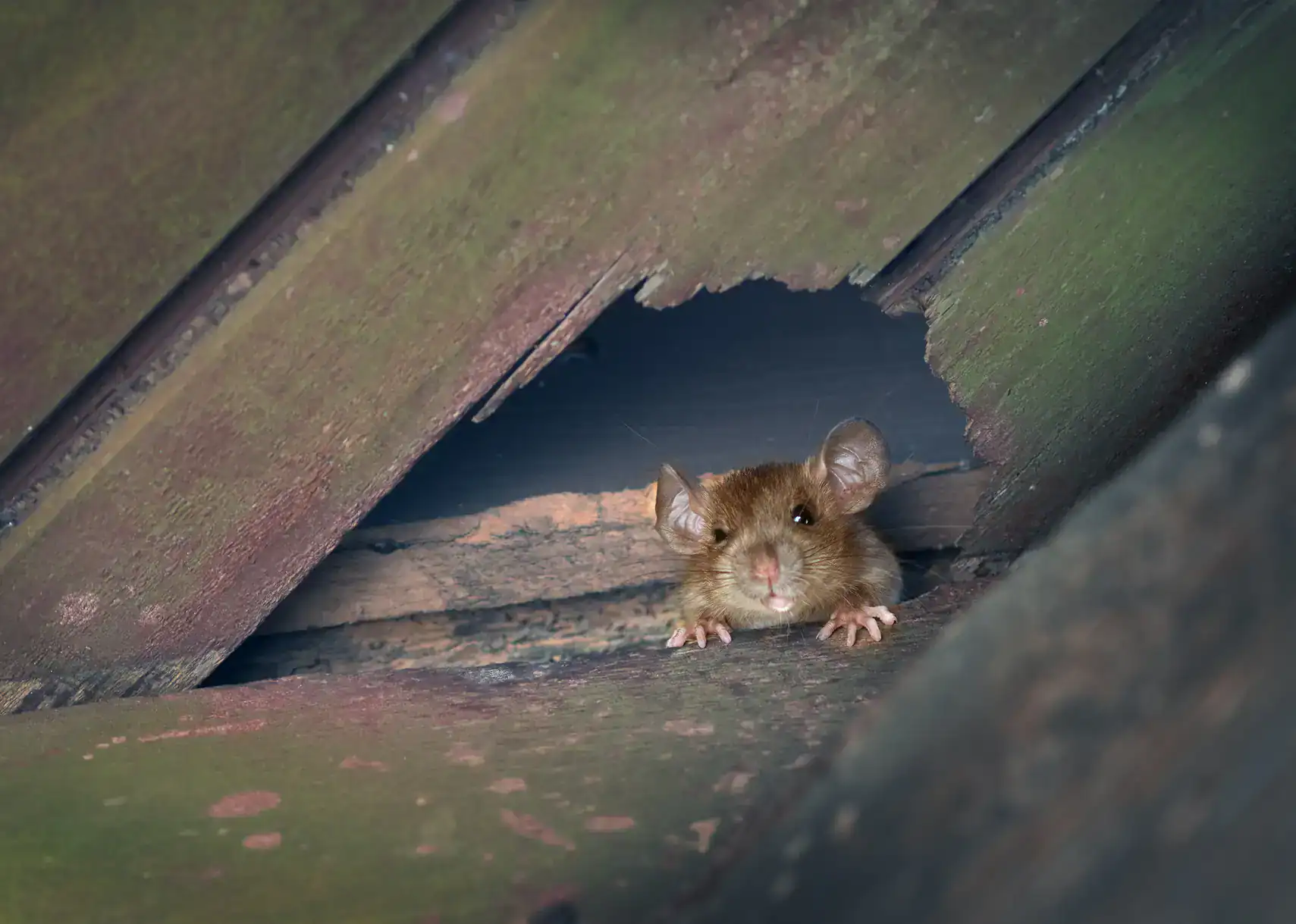
It starts with a real inspection not a five-minute walkthrough, but a thorough assessment of your home’s exterior and interior to identify active entry points, signs of harborage, and what’s actually drawing rodents to your property. In Staten Island, that often means checking the foundation perimeter carefully, especially on older North Shore homes where deteriorating masonry and aging pipe sleeves are common. It also means looking at what’s happening outside proximity to wooded areas, garage structures, compost setups, and any nearby construction activity that may have displaced a burrow population into your block.
Once the inspection is done, you get a clear picture of what’s happening and what the treatment plan looks like. We typically combine targeted baiting, trapping, and exclusion work sealing the actual entry points so the problem doesn’t come back after the rodents are eliminated. This exclusion step is the part most DIY approaches skip entirely, and it’s why infestations keep returning. If you’re near the Greenbelt or in a neighborhood with active development nearby, we may recommend ongoing monitoring to stay ahead of re-entry pressure from adjacent habitat.
If you’ve received a health code violation or a Commissioner’s Order to Abate from the NYC Department of Health, we have the documentation and compliance experience to handle that process correctly. The work gets done, the paperwork gets done, and you’re covered.

Ready to get started?
Rodent control in Staten Island has to account for things that just don’t apply the same way in other boroughs. The borough’s predominantly single-family and semi-attached housing stock means most of the entry point vulnerabilities are at the foundation, around garage structures, and through basement utility penetrations not through shared building walls. Attached garages, which are far more common here than anywhere else in the five boroughs, are one of the most consistently overlooked rodent entry points on the island. Crawl spaces and unfinished basement areas in older Great Kills and New Dorp homes are another.
Every service we provide in Staten Island includes a full exterior and interior inspection, identification of active and potential entry points, targeted treatment using NYS DEC registered materials, and exclusion work to seal the gaps that are letting rodents in. For residential homeowners, that means your specific home gets assessed and treated based on what’s actually happening not a package designed for a Bronx apartment building. For commercial property owners along Hylan Boulevard or Richmond Avenue, or landlords managing multi-family buildings on the North Shore, we also handle health code compliance documentation and can coordinate pre-demolition rodent baiting for any properties undergoing renovation or teardown.
Staten Island is not currently designated as a Rat Mitigation Zone under the city’s rat abatement program, which means there’s no city-mandated intervention coming to your neighborhood. Professional pest control is the primary line of defense here and it needs to be done right.
The Greenbelt isn’t just a park it’s 2,800 acres of continuous natural habitat that borders residential neighborhoods on all sides. Willowbrook, Egbertville, Lighthouse Hill, New Dorp Heights, and Richmond all sit along its perimeter, and the wooded edges function as permanent rodent habitat year-round. Rats and mice don’t stay in the forest. They follow the edge of the tree line looking for food and shelter, and suburban homes with yards, garages, and compost areas are exactly what they’re looking for.
If you live near the Greenbelt and keep seeing rodents return after treatment, the issue usually isn’t the treatment itself it’s that the entry points haven’t been sealed and the harborage pressure from adjacent habitat hasn’t been addressed. Effective rodent control in Staten Island requires exclusion work, not just elimination. Sealing foundation gaps, securing garage door sweeps, and eliminating outdoor food sources are what actually break the cycle. Without those steps, you’re managing a symptom instead of solving the problem.
The signs are similar but there are real differences that matter for treatment. Rat droppings are roughly the size and shape of a raisin about half an inch long, blunt-ended, and typically found along baseboards, behind appliances, or near food storage areas. Mouse droppings are much smaller, about the size of a grain of rice, and you’ll usually find them in higher volumes in tighter spaces like inside cabinets, behind drawers, or along wall edges. Gnaw marks also tell a story: rats tend to gnaw on structural materials like floor joists, wall framing, and utility pipes, while mice focus more on food packaging and soft materials for nesting.
In Staten Island homes specifically, rats are more commonly the issue in ground-level spaces basements, crawl spaces, garages, and foundation areas while mice tend to enter through higher gaps and travel through wall cavities and attic spaces. Older homes on the North Shore are particularly prone to mouse entry through deteriorating trim and pipe penetrations. Either way, accurate identification matters because the treatment approach, bait placement, and exclusion strategy differ between the two. A real inspection will tell you exactly what you’re dealing with.
Yes when it’s done correctly by a licensed applicator using properly registered materials. Every product we use is registered with the New York State Department of Environmental Conservation, which means it has been reviewed and approved for use in residential settings. That’s not a marketing point it’s a regulatory requirement that separates licensed professionals from anyone handing out generic bait stations without a license.
The application method matters just as much as the product. Bait stations used in homes with children and pets are tamper-resistant and placed in locations that are inaccessible to kids and animals inside wall voids, behind appliances, along the exterior foundation perimeter, and in enclosed crawl spaces. Our technician will walk you through exactly what was placed and where before leaving. If you have specific concerns about a particular area of your home a toddler’s playroom, a dog that has access to the basement bring it up during the inspection and the placement plan will account for it. There are no one-size-fits-all setups here.
Almost certainly yes, if the timing lines up. Excavation and demolition displace established rodent burrow populations and those rodents don’t disappear. They relocate, and the nearest available shelter is usually a finished residential home. The South Shore has seen significant new construction in Charleston, Rossville, and Huguenot over the past several years, and the ongoing land remediation work tied to the Freshkills Park development on the West Shore has had a similar displacement effect on Travis and adjacent communities.
Construction-displaced infestations tend to show up suddenly rather than gradually you may have had no rodent issues for years and then start finding evidence seemingly out of nowhere. The treatment approach for these situations should include not just elimination but a monitoring plan, because the pressure from nearby construction doesn’t end after the first treatment. As long as active excavation or demolition is happening nearby, new rodents can be pushed toward your property. Ongoing monitoring and maintained exclusion work are what keep your home protected through the development cycle, not a single-visit treatment.
Most homeowners in Staten Island spend somewhere between $180 and $600 on a professional rodent control service, depending on the size of the home, the severity of the infestation, and whether exclusion work is needed. If you have a straightforward mouse issue in a single-family home with a couple of clear entry points, you’re likely on the lower end of that range. A more established rat infestation in a larger home with multiple entry points, or a situation that requires significant exclusion work along the foundation or around a garage structure, will be higher.
The most important thing to understand is that a single treatment without exclusion work often leads to re-infestation, which means you end up paying twice. Getting the exclusion done correctly the first time is usually the more cost-effective path, especially for homeowners on the South Shore with properties in the $700,000 to $900,000+ range where deferred maintenance carries real financial risk. We offer free estimates, so you’ll know exactly what you’re looking at before any work begins no pressure, no surprises.
For standard residential rodent control in a single-family home, no permit is required. You hire a licensed exterminator, we treat the property, and that’s the extent of the regulatory process for most homeowners. What matters is that the company you hire holds a valid NYS DEC Commercial Pesticide Applicator License that’s the state-required credential for any professional applying pesticides in New York, and you should always confirm it before allowing anyone into your home.
The situation is different for landlords, property managers, and commercial property owners. If you’ve received a Commissioner’s Order to Abate (COTA) or a health code violation from the NYC Department of Health and Mental Hygiene, the abatement process requires documented treatment by a licensed professional and may involve follow-up inspections. Multi-family property owners in North Shore neighborhoods like Stapleton, Port Richmond, and West Brighton where older rental stock is more common sometimes encounter these situations. We have direct experience navigating the DOHMH compliance process and can handle the documentation side correctly so the violation gets closed out, not just temporarily addressed.
Useful Links