
Hear from Our Customers

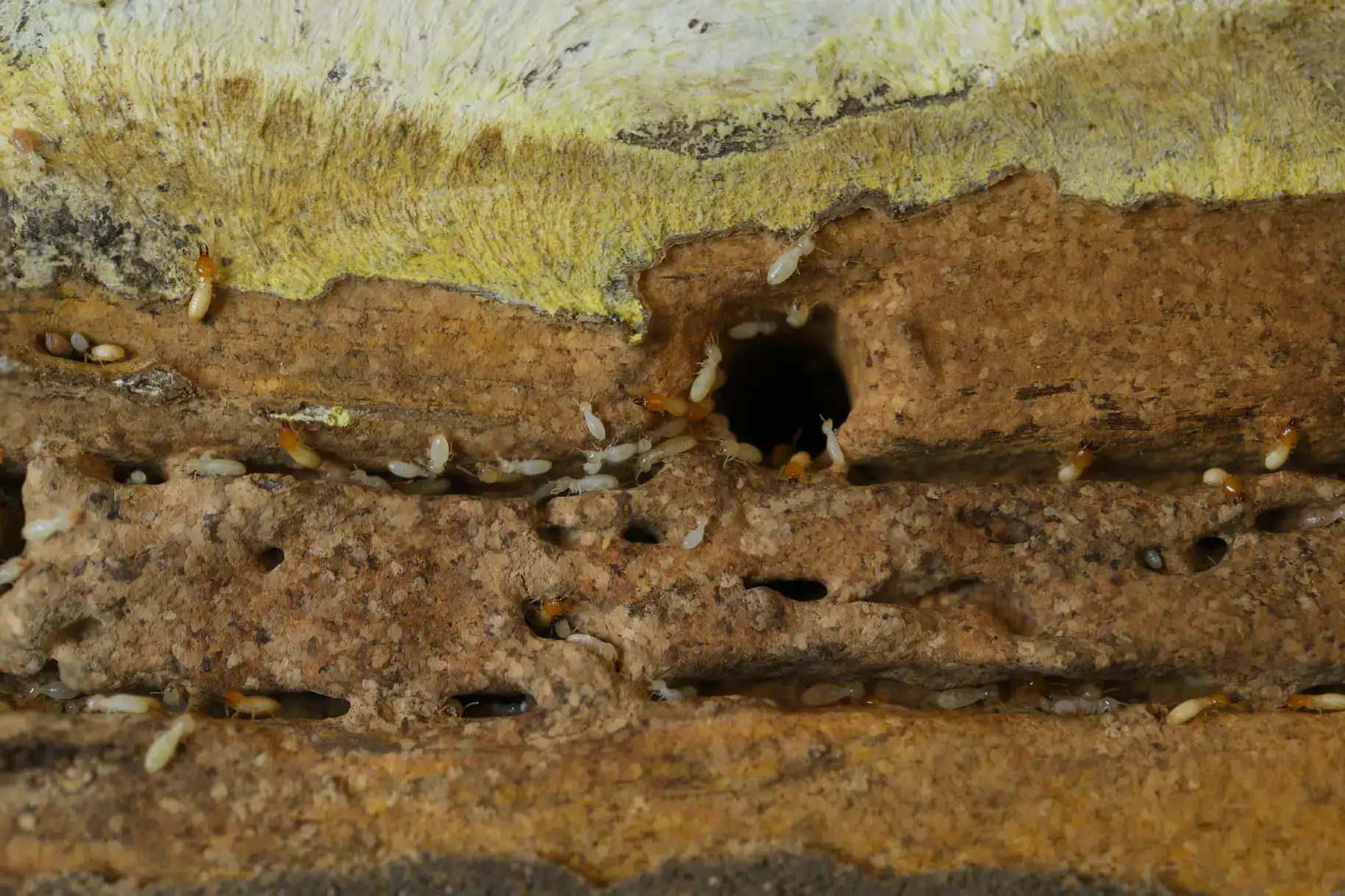
By the time you notice something wrong hollow-sounding floors, bubbling paint near a baseboard, a cluster of winged insects near your foundation on a warm April morning the colony has likely been feeding for years. Eastern Subterranean Termites don’t announce themselves. They work 24 hours a day, seven days a week, through wood, insulation, and structural framing, and they need a gap no wider than a credit card edge to get inside.
Briarwood’s housing stock makes this especially relevant. The neighborhood’s prewar Colonial and English-style attached homes, the mid-century garden apartments along Union Turnpike, and the 1947-era construction of Parkway Village all share the same vulnerability: aging wood, older foundations, and landscaped grounds with direct soil contact exactly the conditions subterranean termites are built to exploit. A building that’s been standing since 1938 has had decades to develop the cracks, gaps, and moisture points that make it accessible.
The financial reality is straightforward. The average termite repair bill runs around $3,000, and structural damage can push that number well past $10,000. Homeowner’s insurance almost never covers it termite damage is classified as a preventable maintenance issue. Early termite treatment costs a fraction of what delayed action will. Getting ahead of it is simply the smarter financial move.
We were founded in 1976 by Richard Kourbage Sr. the same year many of Briarwood’s mid-century homes were already considered established. Our sons Richard Jr. and Charles joined the business in the late 1980s and have been running daily operations ever since. When Charles responds to a customer review personally or Richard Jr. makes an in-person visit to a job site, that’s not a policy that’s just how a family business works when the name on the door is our name.
Our team carries over 100 years of combined pest control experience, holds an A+ rating with the Better Business Bureau (accredited since 1989), and applies only New York State Department of Environmental Conservation-registered materials on every job. That last point matters in a densely residential neighborhood like Briarwood, where families live close together in garden apartments, attached homes, and co-ops, and where the safety of treatment is just as important as its effectiveness.
We’ve been serving all five boroughs since the beginning. Queens including the central neighborhoods around Jamaica, Kew Gardens, and Briarwood is home territory, not a new market.
It starts with a thorough inspection. One of our technicians will assess your foundation, basement, crawl space, and any soil-contact points around the perimeter of your property. In Briarwood, that often means paying close attention to the landscaped grounds common to garden apartment buildings, the shared foundation walls in attached Colonial homes, and the basement-level entry points that are standard in the neighborhood’s prewar construction. If you’re in the middle of a home purchase or sale, we also provide full Wood Destroying Organism inspection reports with the documentation your lender requires.
Once the inspection is complete, you’ll get a clear picture of what’s there or confirmation that it isn’t. If treatment is needed, the approach depends on what the inspection reveals. For active infestations, liquid barrier treatment creates a protective zone in the soil around the foundation that termites can’t cross. For ongoing protection, termite baiting systems place stations in the ground around the structure; worker termites carry the bait back to the colony, which eliminates the problem at its source rather than just its edges. Both methods use NYS DEC-registered materials applied by our certified professionals.
Spring is the most active season for termite swarms in Briarwood warm days after rain in March, April, and May are when colonies send out swarmers, which is often the first visible sign homeowners notice. But treatment isn’t seasonal. If you’re seeing signs now, same-day inspections are frequently available, and we guarantee an appointment within two business days. The phone is answered 24 hours a day, seven days a week including the Sunday morning you find mud tubes in your basement.
Ready to get started?
Briarwood isn’t a one-size-fits-all neighborhood, and termite control here can’t be either. The service needs of a single-family Colonial home on a Parsons Boulevard block are different from those of a multi-unit garden apartment building or a co-op in Parkway Village. We handle all of it. For standalone homes, treatment typically involves a perimeter soil barrier and targeted interior treatment at any active entry points. For multi-family buildings and co-ops, the process includes coordination with building management, treatment of shared structural elements, and communication with residents the kind of logistical work that requires experience with commercial and multi-unit properties, not just single-family jobs.
The full scope of what we provide for termite infestation in Briarwood includes termite identification and inspection, liquid barrier treatment, termite baiting systems, and comprehensive Wood Destroying Organism inspections for real estate transactions. If you’re buying or selling a home in Briarwood where the median construction year is 1955 and older homes are the norm, not the exception a WDO inspection is frequently required by mortgage lenders, particularly for FHA and VA loans. We provide the documentation that gets transactions across the finish line.
All work is performed by NYS DEC-certified professionals using registered materials. We offer free estimates before any commitment is made. You’ll know exactly what the treatment involves and what it costs before anything starts.
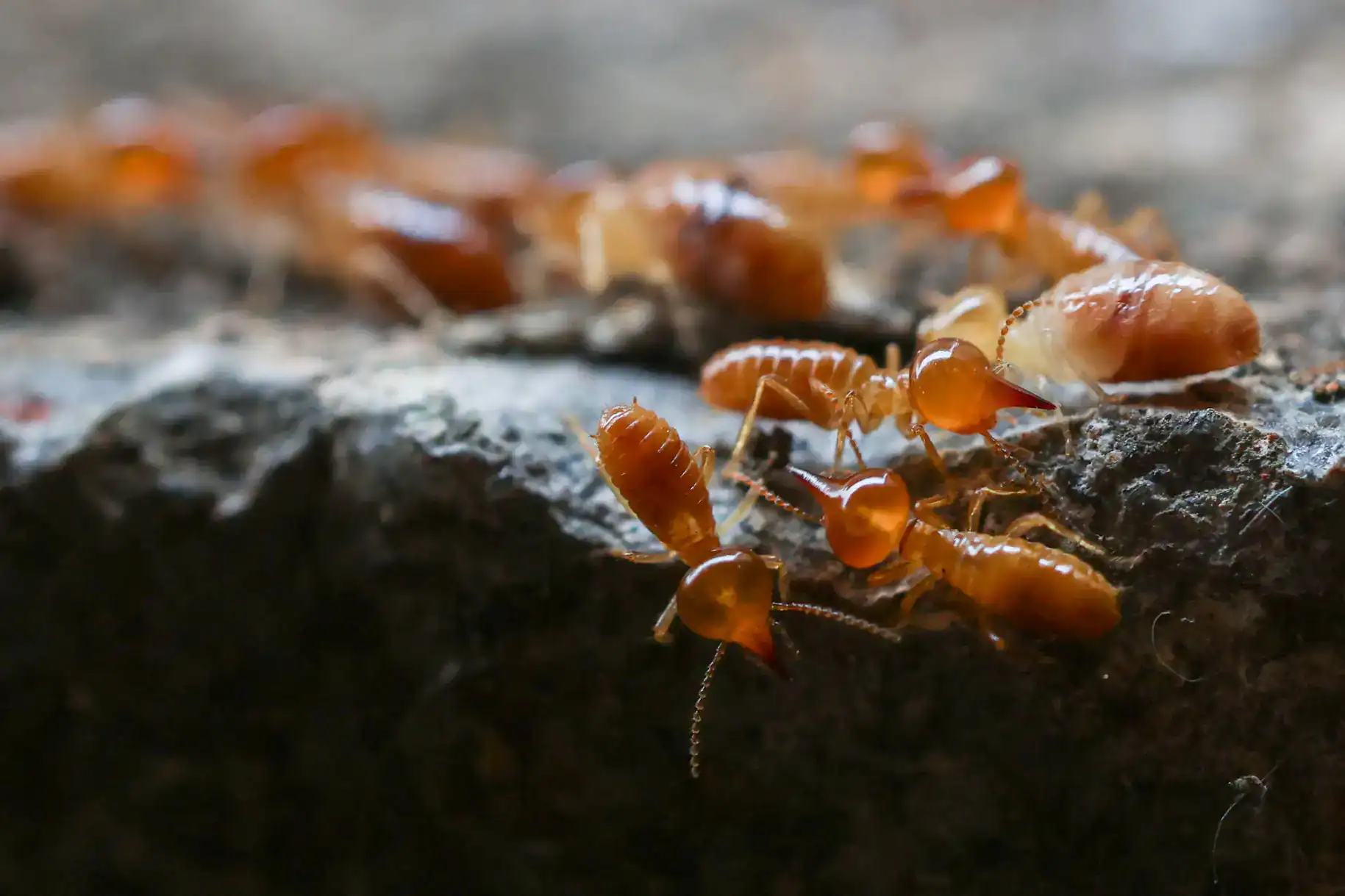
The most common signs are swarmers winged termites that emerge near windows, doors, or foundation walls, typically in spring after a warm rain. In Briarwood, where tree-lined streets and landscaped grounds are the norm, swarmers are easy to confuse with flying ants, and that’s a costly mistake to make. Look at the wings: termite swarmers have equal-length wings, while flying ants have unequal ones.
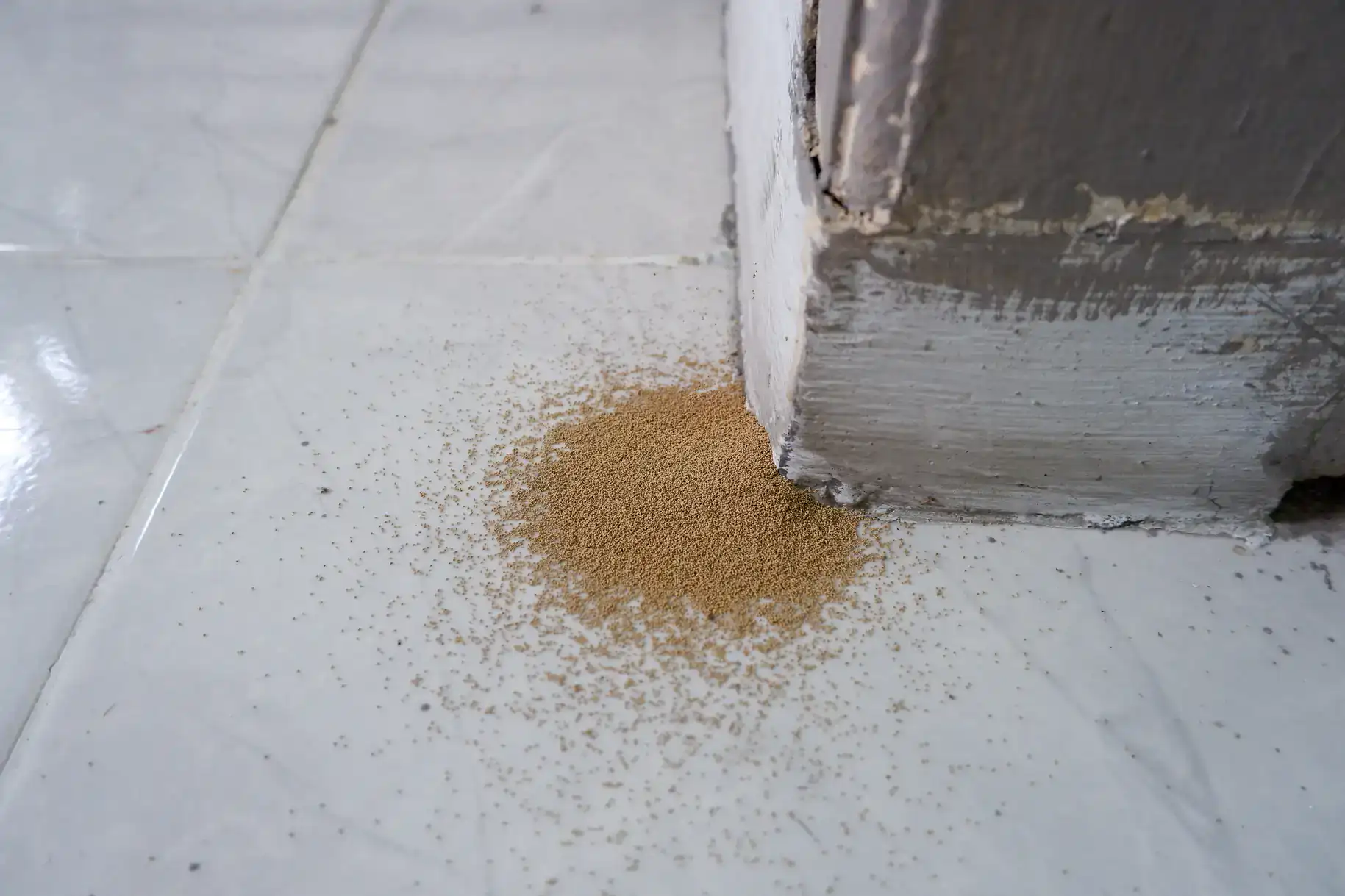
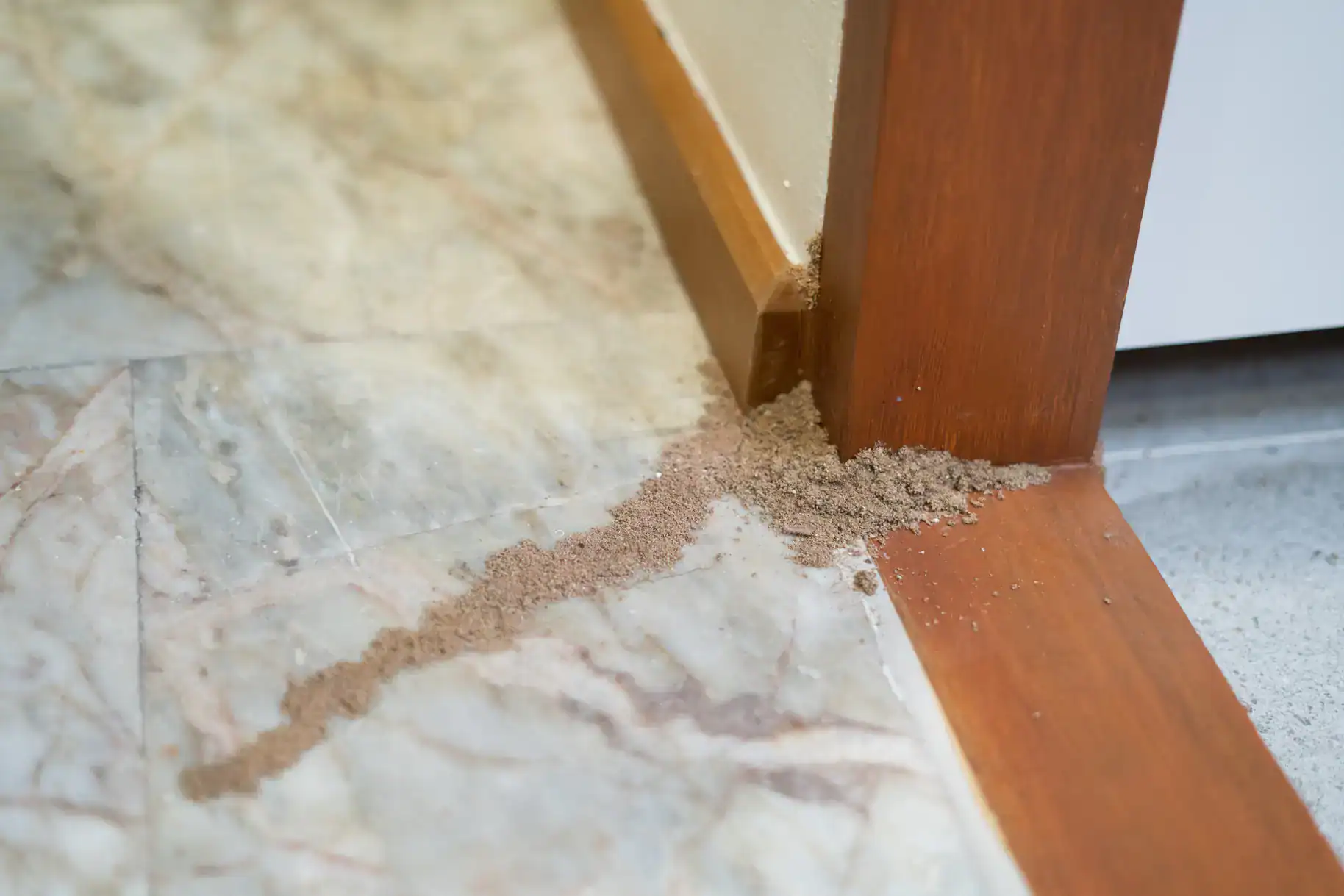
Beyond swarmers, watch for mud tubes running along your foundation walls or basement floor joists pencil-width tunnels of soil and debris that termites build to travel between the ground and your structure’s wood. Hollow-sounding floors, doors or windows that suddenly stick, and bubbling or peeling paint near baseboards are also common indicators. In older Briarwood homes with basements and crawl spaces, these signs often appear in lower-level areas first. If you’re seeing any of these, don’t wait a professional inspection will confirm whether it’s termites or something else entirely.
Both are effective, but they work differently and suit different situations. Liquid barrier treatment involves applying a termiticide into the soil around your foundation, creating a continuous treated zone that termites can’t cross without contact. It’s a strong option for active infestations where you need to stop feeding quickly. The treatment goes into the soil at regular intervals around the perimeter of the structure, and in Briarwood’s attached and semi-detached homes, that perimeter work is done carefully to account for shared foundation walls and adjacent properties.
Termite baiting systems take a longer-range approach. Stations are installed in the ground around the property, and worker termites which are constantly foraging find the bait and carry it back to the colony. Over time, the colony is eliminated from within, including the queen. Baiting is particularly well-suited to garden apartment buildings and co-op properties like those in Briarwood, where treating the full soil zone around a larger structure benefits from a colony-elimination strategy rather than just a barrier. Your inspection results will guide which approach makes the most sense for your specific property.
Not always legally required, but practically speaking yes, in most cases. Mortgage lenders, especially those issuing FHA or VA loans, routinely require a Wood Destroying Organism inspection before approving financing on older properties. Given that Briarwood’s median home construction year is 1955, and a significant portion of the neighborhood’s housing stock dates to the 1930s and 1940s, WDO inspections come up in Briarwood real estate transactions on a regular basis.
Even in conventional sales where the lender doesn’t require it, buyers’ attorneys and home inspectors frequently recommend one. A termite flag on an inspection report can delay or derail a closing and if it comes up mid-transaction, you’re under time pressure to get it resolved. We provide full WDO inspection reports with the documentation lenders and attorneys need, and same-day inspections are frequently available for time-sensitive transactions. If you’re buying or selling in Briarwood and need this handled quickly, that availability matters.
Termite swarm season in Briarwood typically runs from late March through May. Warm days following rainfall are the trigger colonies send out winged swarmers to establish new colonies, and that’s usually the first visible sign homeowners notice. The swarmers themselves don’t cause damage; they’re a signal that a mature colony is already present and has been active for some time. By the time a colony is large enough to swarm, it’s typically been established for several years.
That timeline is what makes urgency important. Termites feed continuously 24 hours a day, every day and they don’t stop between seasons. A colony that’s been in your foundation since the mid-2010s has had years to work through structural wood. Acting in spring when swarmers appear is smart, but acting in summer, fall, or winter is still far better than waiting for the next swarm season. The damage compounds with time, and repairs cost significantly more than treatment. If you’re seeing signs now, regardless of the month, it’s worth getting an inspection scheduled.
Yes, and this is one of the more important distinctions between treating a standalone home and treating a multi-family building. Eastern Subterranean Termites nest underground and travel through shared soil zones and structural elements. In a garden apartment building or a co-op like those found throughout Briarwood including properties in and around Parkway Village a colony can move through shared foundation walls, basement floor joists, and common structural wood without being contained to a single unit.
This is why building-level treatment matters more than unit-level treatment in multi-family situations. Treating one apartment without addressing the shared structural elements and surrounding soil is unlikely to resolve the problem long-term. We have experience coordinating termite treatment in multi-unit buildings, which involves working with building management, accessing shared spaces, and ensuring the treatment covers the full scope of the infestation not just the visible edge of it. If you’re a unit owner or property manager in a Briarwood apartment building and you’ve found signs of termites, the conversation needs to include the building as a whole.
The honest answer is that it depends on the size of the property, the extent of the infestation, and the treatment method that makes the most sense for your situation. A liquid barrier treatment for a single-family home will be priced differently than a baiting system installation for a larger garden apartment building. For a typical Briarwood single-family or attached home, termite treatment generally falls in the range of a few hundred dollars for a basic inspection and targeted treatment up to $1,500 or more for a full perimeter liquid barrier on a larger property. Multi-family buildings and co-ops are quoted based on the scope of the job.
What’s worth keeping in perspective: the average cost of repairing termite damage is around $3,000, and structural repairs can run $10,000 or higher. Homeowner’s insurance almost universally excludes termite damage it’s treated as a preventable maintenance issue, not a covered loss. For a Briarwood homeowner with a property worth $350,000 to $550,000, professional termite treatment is a straightforward investment in protecting what you own. We provide free estimates with no obligation, so you’ll know exactly what you’re looking at before making any decision.
Useful Links
Other Services we provide in Briarwood