
Hear from Our Customers
Eastern Subterranean Termites don’t announce themselves. They work through the soil beneath your foundation, behind your walls, inside your floor joists and by the time you notice something’s wrong, the colony has usually been feeding for years. In Clinton Hill, where brownstones and Victorian row houses on streets like Greene Avenue and Lafayette Avenue still carry original wood framing from the 1800s, that timeline matters more than it does almost anywhere else in Brooklyn.
The financial stakes here are real. Brownstones in Clinton Hill regularly sell for $1.5 million to over $3 million. A termite infestation that compromises structural wood doesn’t just cost you a repair bill it can reduce your property’s value by 20% or more, complicate a sale, or trigger a NYC Buildings Department review if the damage is severe enough. Most homeowner insurance policies won’t cover it either, because termite damage is classified as a preventable maintenance issue.
Getting ahead of it means protecting the investment you’ve already made. A professional termite inspection gives you a clear picture of what’s actually happening inside your walls not a guess, not a surface-level look. And if treatment is needed, catching it early is the difference between a targeted solution and a major structural repair.
We were founded in Brooklyn in 1971 by Richard Kourbage Sr. His sons Richard Jr. and Charles joined the business in the late 1980s, and we’ve been operating out of the same borough ever since. That’s over 50 years of treating the exact type of pre-war brownstones, attached row houses, and multi-family walk-ups that define Clinton Hill including properties in and around the Clinton Hill Historic District, where landmarked buildings require a level of care and precision that most exterminators simply aren’t equipped to provide.
Our team carries over 100 years of combined pest control experience. Every material we apply is registered with the NYS Department of Environmental Conservation, and we’ve held BBB accreditation since 1989. When you call, someone answers 24 hours a day, 7 days a week and an appointment is guaranteed within two business days, with same-day inspections frequently available.
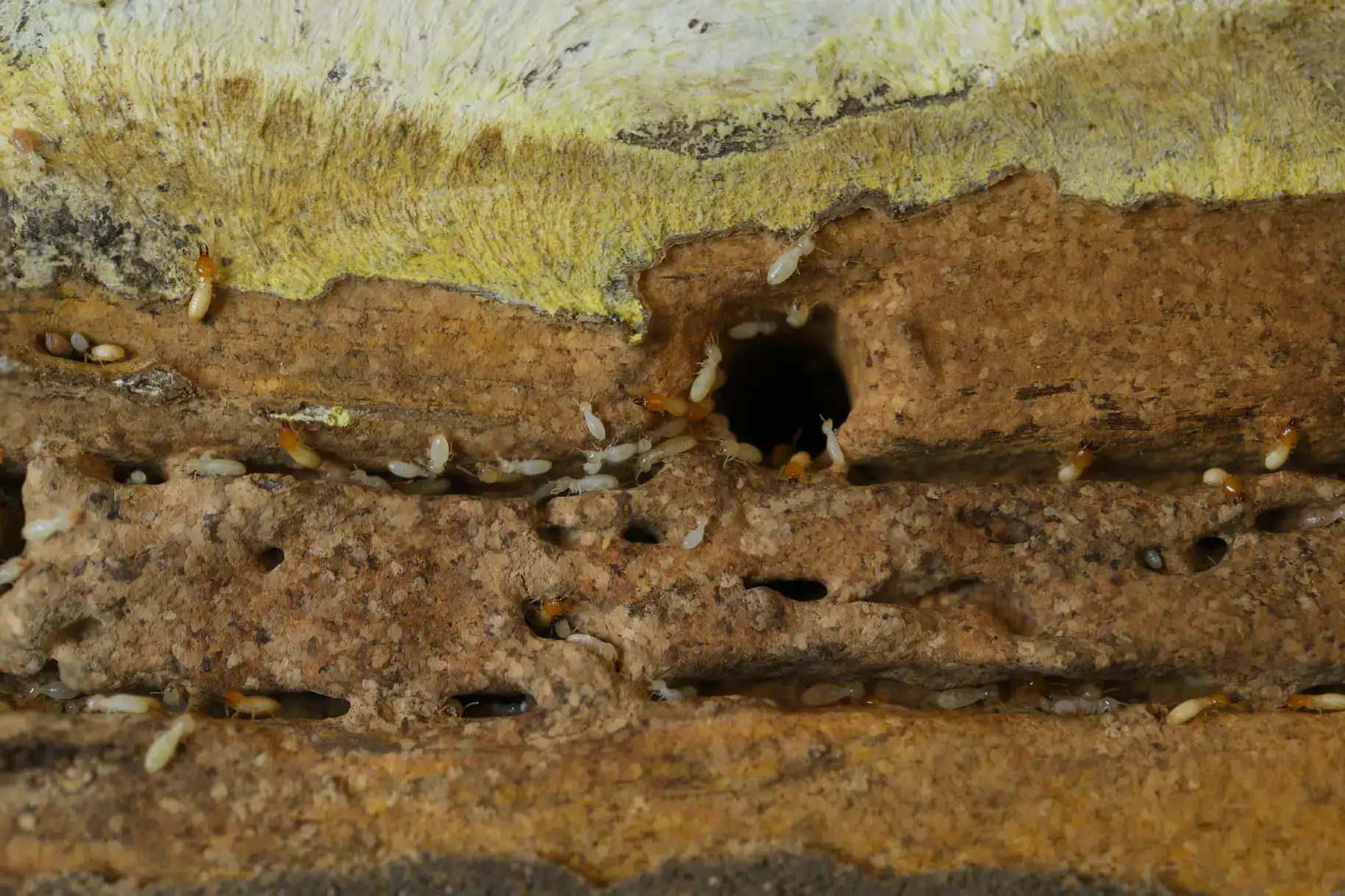
It starts with a thorough inspection not a five-minute walkthrough. In a Clinton Hill brownstone, that means checking the basement and foundation perimeter for mud tubes, examining exposed wood framing for hollowing or damage, looking at moisture-prone areas around aging plumbing, and assessing any soil-to-wood contact points along the building’s exterior. These are the specific entry routes Eastern Subterranean Termites use in Brooklyn’s older attached homes, and they require someone who knows what to look for in this type of construction.
If an active infestation is found, we explain treatment options clearly before anything is applied. Depending on the extent of the infestation and your property’s construction, that may involve a liquid barrier treatment along the foundation, a termite baiting system, or a combination of both. For properties within the Clinton Hill Historic District, we handle placement and application with your building’s historic materials in mind no unnecessary drilling into original masonry, no shortcuts that could create a bigger problem down the road.
After treatment, you receive documentation of what was found, what was applied, and what to watch for going forward. If you’re in the middle of a real estate transaction and need a Wood Destroying Organism report for your lender or attorney, we handle that as part of the inspection process properly formatted and signed by a licensed professional.

Ready to get started?
Termite control in Clinton Hill isn’t one-size-fits-all. The neighborhood’s housing stock Greek Revival, Italianate, Neo-Grec, Romanesque Revival spans construction styles from the 1810s through the early 1900s. These buildings share original wood structural elements that have been aging for over a century, and they require treatment methods that account for that reality. We cover Eastern Subterranean Termites specifically, along with carpenter ants and powder post beetles, which are also common in Clinton Hill’s pre-war wood framing and hardwood floors.
For homeowners, our service includes a full inspection, treatment, and written documentation. For landlords managing multi-family brownstones a common ownership structure in Clinton Hill we also handle NYC Department of Health compliance, including documentation that satisfies DOH citation requirements if a tenant complaint or violation has been filed. That’s not something every exterminator in Brooklyn is set up to handle, and it matters when you’re managing rental units in a building where health code accountability falls on you.
For buyers and sellers, we provide Wood Destroying Organism inspection reports that meet FHA, VA, and conventional lender requirements. In a market where a Clinton Hill brownstone can close at $2 million or more, having that documentation handled by a licensed, credentialed team isn’t optional it’s the standard your transaction demands.
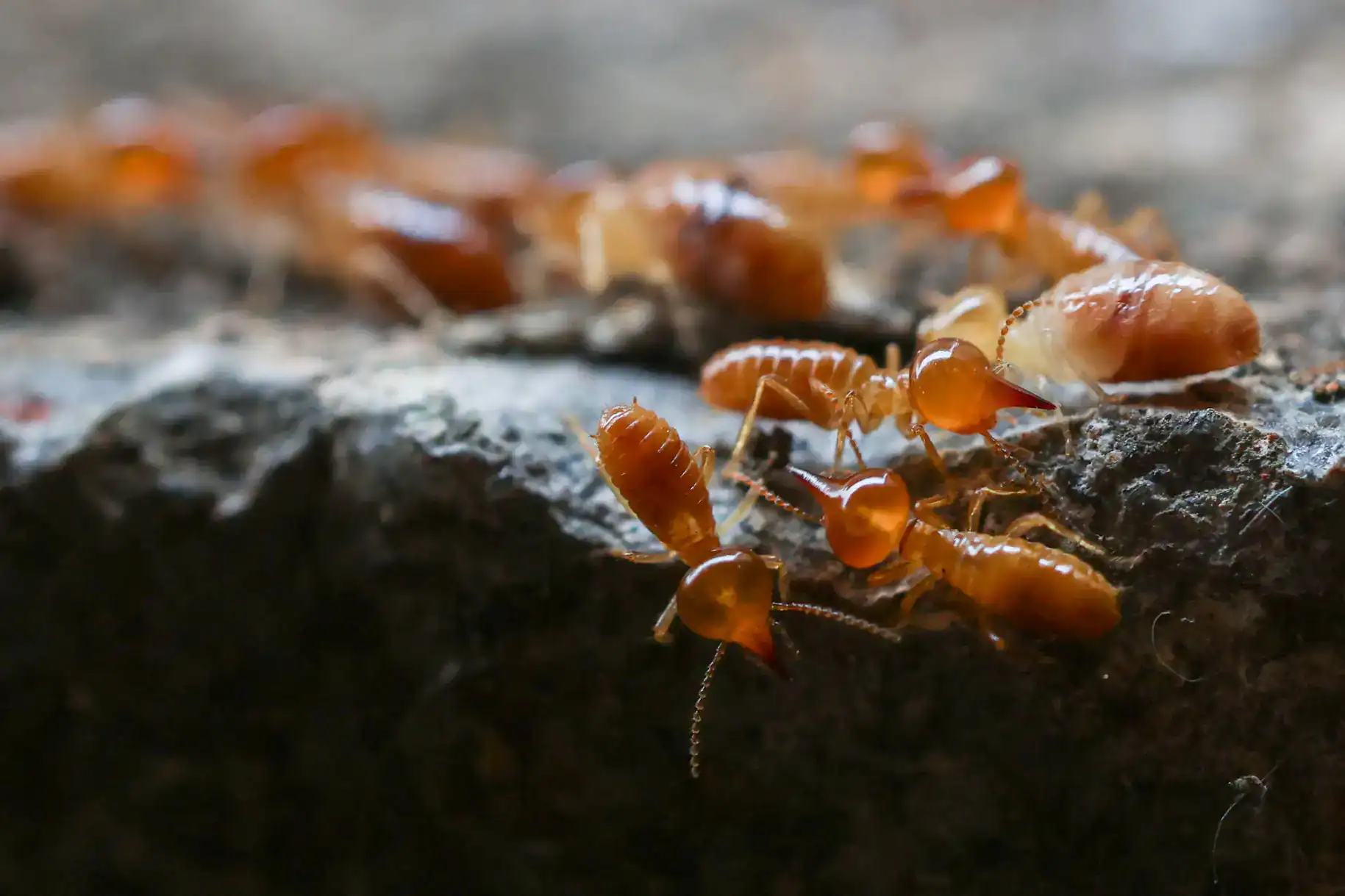
Yes and more commonly than most owners realize. Eastern Subterranean Termites are the dominant termite species in New York City, and Clinton Hill’s housing stock gives them exactly what they need: aging wood framing, soil-to-foundation contact, and moisture from decades-old plumbing systems. The brick and brownstone exteriors on streets like Clinton Avenue and DeKalb Avenue can give owners a false sense of security, but the structural wood inside floor joists, subfloor framing, stair carriages, interior load-bearing elements is often original and well over 100 years old.
What makes the situation harder to catch is that these termites work silently underground. A colony can feed for five or more years before you see any visible signs. By the time you notice swarmers near your windows in April or soft spots in your flooring, the infestation is typically well established. Routine inspections are the most reliable way to catch it before it becomes a structural problem.
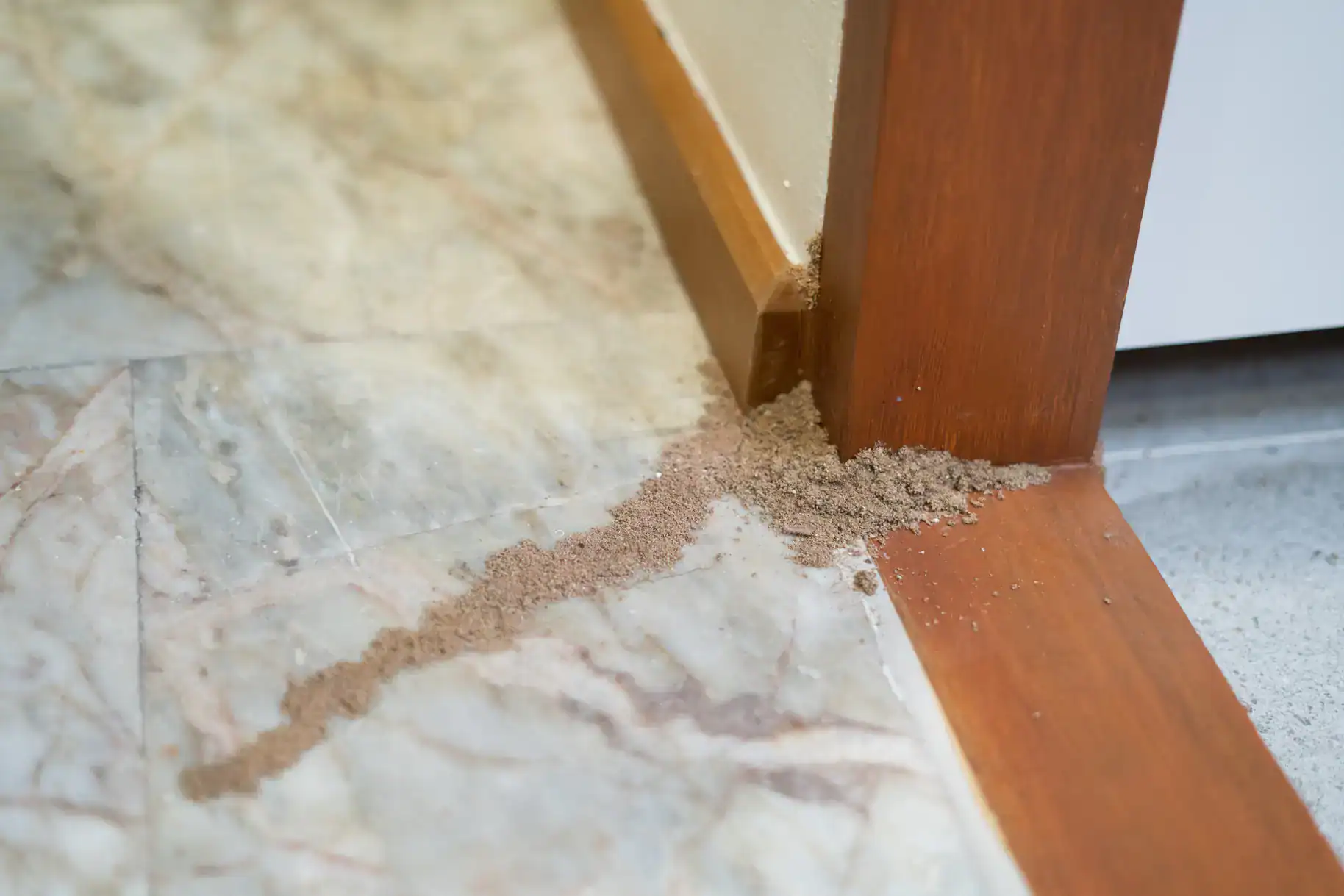
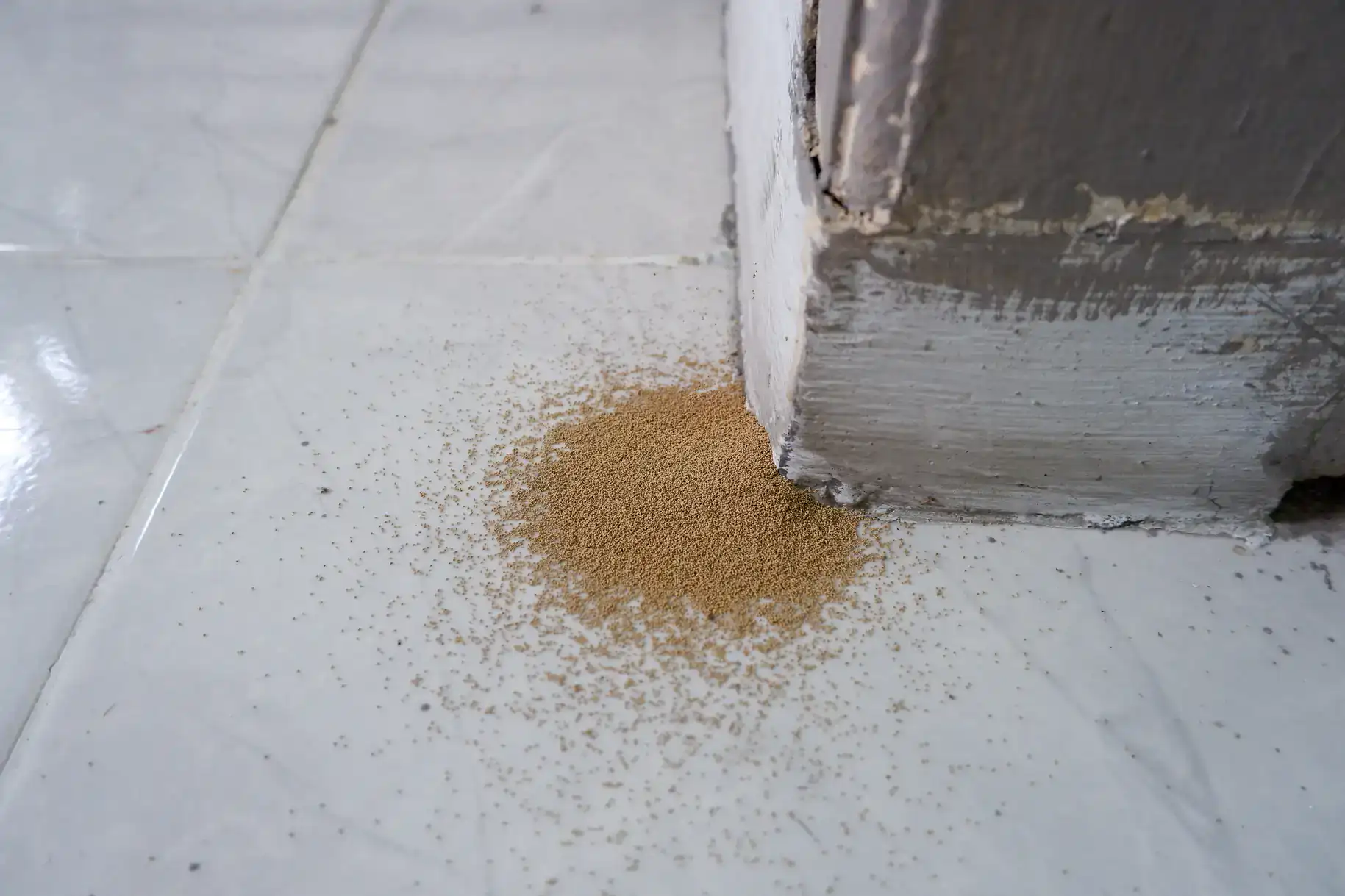
The most common early signs in Clinton Hill’s older brownstones are mud tubes along the foundation or basement walls, hollow-sounding wood when you knock on floor joists or baseboards, small piles of what looks like sawdust or frass near wood surfaces, and paint that bubbles or peels without an obvious moisture source. During spring typically late March through May you may also see swarmers, which are winged termites that emerge on warm days after rain to start new colonies.
In pre-war construction, these signs often show up first in the basement or crawl space, where original wood framing sits closest to the soil. If you’re doing any renovation work opening up walls, replacing floors, updating a kitchen and you notice discolored, soft, or tunneled wood, stop and get an inspection before continuing. What looks like minor damage on the surface is frequently more extensive once the framing is exposed.
The cost depends on the size of your property, the extent of the infestation, and the treatment method used. For a typical Clinton Hill brownstone, professional termite treatment generally ranges from around $500 to $2,500 or more for the treatment itself. If structural repairs are needed replacing damaged floor joists, subfloor framing, or load-bearing elements those costs are separate and can run from $2,000 to $10,000 or higher depending on the scope.
The more important number to keep in mind is what untreated termite damage costs. On a Clinton Hill brownstone valued at $2 million, a documented history of termite damage can reduce the property’s market value by 20% or more that’s $400,000 in potential lost equity, plus the cost of repairs, plus the complications it creates during a sale. Most homeowner insurance policies in New York don’t cover termite damage at all. The inspection and treatment cost is small relative to what you’re protecting.
FHA and VA loans require a Wood Destroying Organism report before closing no exceptions. For conventional transactions, it’s not always legally required, but buyers’ attorneys in Clinton Hill routinely request one as part of due diligence, and most buyers purchasing a home at this price point aren’t going to skip it. If you’re selling, a pre-listing inspection can prevent a deal from falling apart when the buyer’s inspector finds something you didn’t know about.
The WDO report needs to be completed by a licensed professional and formatted to meet lender and legal requirements. We provide these reports as part of our inspection process. Given the pace of Clinton Hill’s real estate market and the value of the properties changing hands, having this handled by a credentialed team rather than scrambling to find someone at the last minute before closing is worth doing early in the transaction process.
Termite swarm season in Brooklyn typically runs from late March through early June, with the heaviest activity in April and May. Swarms happen on warm days usually above 70 degrees following rain, when winged reproductive termites emerge from an established colony to start new ones. In Clinton Hill, this coincides directly with the neighborhood’s active spring renovation season, which is why so many infestations get discovered when contractors open up walls or floors during that window.
If you see swarmers inside your home near windows, along baseboards, or in the basement don’t ignore it. Swarmers inside the building almost always mean the colony is already established within or beneath the structure. Swarmers outside near the foundation are a warning sign worth taking seriously. Either way, an inspection should happen quickly. The swarmers themselves don’t cause damage, but the colony feeding on your home’s framing does, and it’s been doing so long before the swarmers appeared.
Absolutely and landmarked status actually makes the situation more complicated, not less. Properties within the Clinton Hill Historic District or individually landmarked by the NYC Landmarks Preservation Commission are subject to LPC review for exterior repairs and any work that affects historically significant materials. When termite damage reaches structural wood in a landmarked building, the repair process may require period-appropriate replacement materials and LPC approval before work can begin which adds time and cost to what would otherwise be a straightforward repair.
This is exactly why early detection matters more for Clinton Hill’s historic properties than it does for newer construction. The treatment itself liquid barrier applications, bait station placement, targeted drilling can be executed carefully to avoid disturbing original masonry or historic fabric. But once the damage is done and structural repairs are required, you’re navigating both a pest problem and a landmarks compliance process simultaneously. Getting an inspection before visible damage appears is the most practical way to protect a landmarked property in this neighborhood.
Useful Links