
Hear from Our Customers

Most pest problems in Clinton Hill don’t start with a dirty home. They start with the building itself. These rowhouses and pre-war co-ops were built between the 1870s and the 1940s long before anyone was thinking about sealing pipe gaps, closing coal chute remnants, or blocking the wall voids that connect your unit to your neighbor’s. When a mouse or a cockroach finds a way in, it’s rarely through a door you left open. It’s through the structure, and that’s where the fix has to happen too.
When pest control is done right in a building like yours, the difference is immediate and lasting. You stop finding droppings in the kitchen. You stop hearing movement in the walls at night. You stop wondering whether the problem is gone or just hiding. That kind of resolution real resolution, not just a temporary knockdown is what a proper inspection and treatment plan delivers.
Clinton Hill’s location along the northern edge near the Brooklyn Navy Yard and Myrtle Avenue’s commercial corridor means rodent pressure here is higher than in most Brooklyn neighborhoods. RentHop’s analysis of NYC 311 data places this neighborhood among the five most rat-infested in New York City, at roughly 334.9 complaints per square mile per year. That’s not a reflection of the people who live here it’s a reflection of the environment. And it means the solution has to be built for this specific place, not copied from a suburban playbook.
We’ve been operating in Brooklyn since 1971, and we’ve spent those five decades inside the exact type of buildings that line DeKalb Avenue, Lafayette Avenue, and Clinton Avenue in Clinton Hill. Our technicians know what a pre-war brownstone looks like from the basement up. They know where the gaps are, where pests travel between units, and what it takes to actually stop the cycle rather than just treat the surface.
We’re a family-owned, NYSDEC-licensed pest control company. Every technician is certified, every treatment uses EPA-registered materials, and every job starts with a real inspection not a guess. The District 35 Rat Task Force was established in 2022 specifically because rodent pressure in Clinton Hill had become a community-level problem. We’ve been working in this part of Brooklyn long enough to understand exactly why, and exactly what it takes to address it.
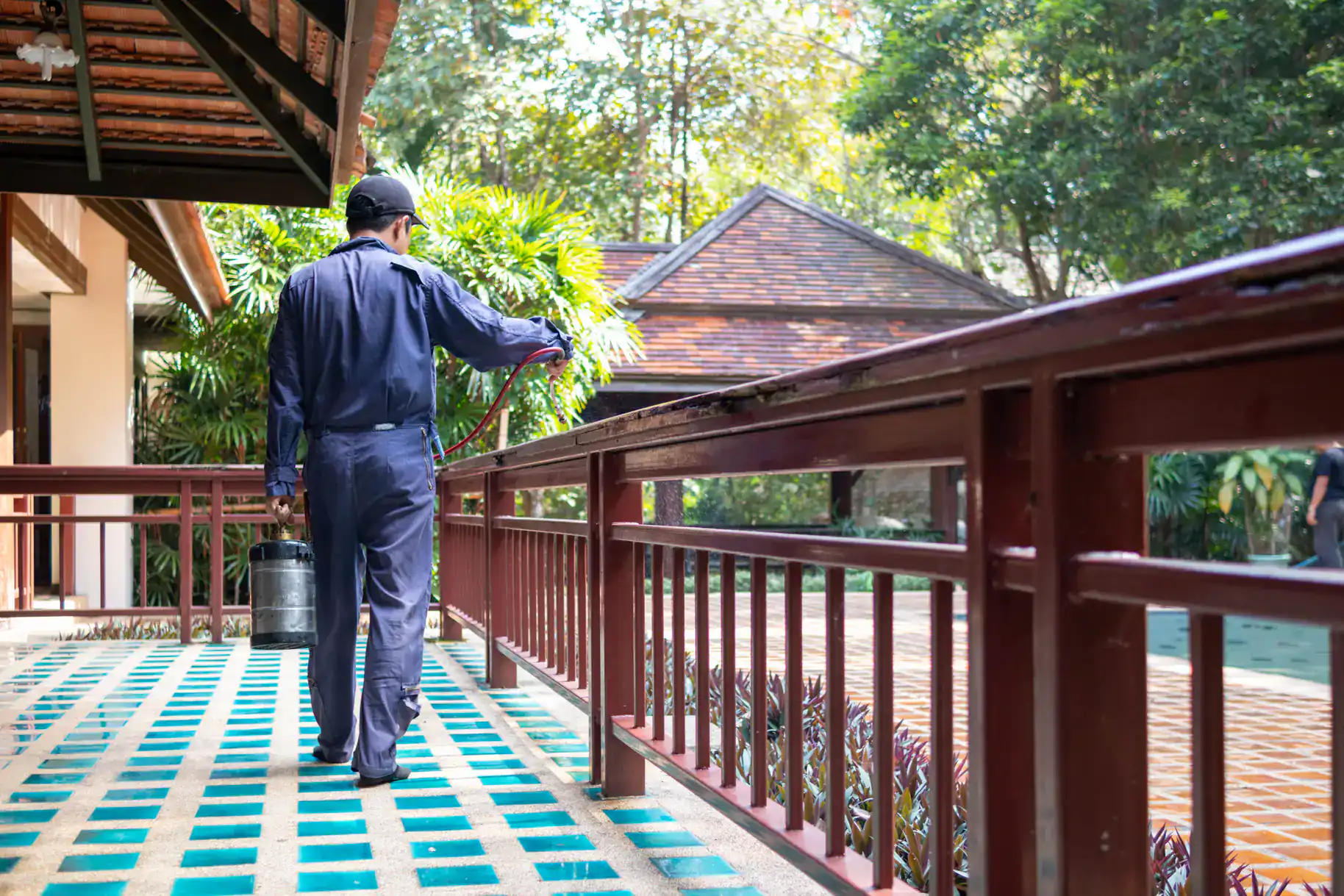
It starts with a free inspection. A licensed technician comes to your home, looks at the actual conditions not just where you’ve seen activity, but where pests are likely entering, traveling, and nesting. In Clinton Hill’s attached rowhouses, that often means checking the basement level, the radiator pipe penetrations, and the shared walls that connect your unit to the building next door. In a large co-op building like those along Clinton Avenue, it means understanding the building’s shared systems and what coordination with management may be needed.
From there, you get a clear picture of what you’re dealing with and what the treatment plan involves what materials will be used, how they’ll be applied, what you need to do to prepare, and when it’s safe to return to normal. There are no vague timelines and no surprise charges. NYC law requires pest control to follow Integrated Pest Management principles, which means the least toxic effective approach for each situation. That’s not a limitation it’s the right way to work in a dense residential building where your neighbors, your kids, and your pets are all in close proximity.
After treatment, we don’t disappear. If the problem persists or returns, we come back. That’s what accountability looks like when you’ve been doing this in the same borough for over 50 years.
Ready to get started?
We handle the full range of pest issues that Clinton Hill residents actually deal with: rodents, cockroaches, bed bugs, termites, ants, stinging insects, and more. Every service begins with that free inspection, and the treatment that follows is matched to the specific pest, the specific building, and the specific conditions we find not a one-size approach applied to every call.
Bed bugs get particular attention here. Pratt Institute’s annual student move-in cycle each August and September is one of the most consistent bed bug introduction events in this part of Brooklyn. Used furniture, shared laundry rooms, and the wall voids between apartments in older buildings can spread an infestation quickly. We offer both heat treatment and chemical treatment options depending on the extent of the problem and what the building allows.
For homeowners buying or selling property in Clinton Hill where brownstone sales regularly involve lenders requiring documentation we provide official Wood-Destroying Insect (WDI) inspection reports that satisfy FHA, VA, and conventional lender requirements. These are legal documents that only a NYSDEC-licensed professional can issue, and they’re often needed on a real estate timeline. If you’re in the middle of a transaction and need a WDI report fast, that’s a call we can handle. We’re available 24 hours a day, seven days a week, including same-day and next-day scheduling.

This is one of the most common frustrations we hear from residents in Clinton Hill, and the answer almost always comes back to the building’s structure. In an attached brownstone rowhouse or a pre-war co-op, your unit shares wall voids, plumbing chases, and building systems with every unit around you. If a cockroach colony or mouse population exists in a neighboring unit or in the building’s basement or common areas pests will continue migrating into your space even after a thorough treatment of your own unit.
The fix isn’t just retreating your apartment. It’s identifying the pathways pests are using to travel through the building and either sealing them or coordinating treatment across the affected areas. That might mean working with your landlord or co-op board to address shared spaces, or it might mean a more targeted exclusion approach focused on the specific entry points in your unit. Either way, re-infestation after treatment is a signal that the source hasn’t been addressed and that’s exactly what a proper inspection is designed to find.
The data says yes. RentHop’s analysis of NYC 311 complaint records places Clinton Hill among the five most rat-infested neighborhoods in New York City, with approximately 334.9 average yearly rat complaints per square mile. The District 35 Rat Task Force was established in 2022 specifically to address the rodent problem across Clinton Hill, Fort Greene, Crown Heights, and Prospect Heights because residents in this part of Brooklyn recognized it as a shared, community-level issue, not just individual bad luck.
The drivers are specific and documented: the Brooklyn Navy Yard’s industrial operations along the neighborhood’s northern border generate significant rodent pressure into the residential blocks near Flushing Avenue. The food waste from Myrtle Avenue’s commercial corridor sustains rat populations year-round. And the aging building stock brownstone foundations with cracks, unsealed utility penetrations, and basement-level gaps gives rodents easy access into homes. Treating the symptom without addressing these entry points is why so many rodent problems in Clinton Hill keep coming back. A proper exclusion strategy, combined with targeted baiting and monitoring, is what actually breaks the cycle.
Under the NYC Housing Maintenance Code, your landlord is legally required to keep your building free of pests. Cockroach infestations are classified as Class C violations the most serious category which means landlords are required to respond within 24 hours of a complaint. Rodent infestations carry similar weight. If your landlord isn’t acting, you can file a complaint through NYC 311 or directly with the Department of Housing Preservation and Development (HPD), which will trigger an official inspection.
That said, the legal process takes time, and if you’re dealing with an active infestation right now, waiting isn’t always an option. Many Clinton Hill renters especially in the neighborhood’s large rental buildings and brownstone conversions choose to hire a licensed exterminator directly while simultaneously pursuing the landlord through official channels. If you go that route, document everything: photos, dates, communication with your landlord, and any receipts from pest control services. That documentation can support a formal complaint or, in some cases, a rent reduction claim through HPD.
It depends on your loan type, but in most cases the answer is yes or at minimum, strongly recommended. FHA and VA loans require a Wood-Destroying Insect (WDI) inspection report as part of the lending process. Many conventional lenders request one as well, particularly for older properties. And given that Clinton Hill’s housing stock is dominated by buildings constructed between the 1870s and the 1940s, virtually every property in the neighborhood qualifies as “older” by any lender’s standard.
Beyond the lender requirement, a WDI inspection just makes sense when you’re buying a century-old wood-frame or brownstone structure. Termite damage costs U.S. homeowners an estimated $5 billion per year more than fires, floods, and storms combined and much of that damage happens silently, inside walls and floor joists, long before it becomes visible. A licensed inspection before closing tells you exactly what you’re buying. Only a NYSDEC-licensed pest control professional can issue an official WDI report in New York, and we provide these on a real estate timeline, including expedited scheduling when a closing date is approaching.
Early fall is the highest-urgency window, particularly for rodents. As temperatures drop in September and October, mice and rats begin actively seeking indoor warmth and Clinton Hill’s older brownstone stock, with its cracked foundations, radiator pipe gaps, and unsealed utility penetrations, gives them plenty of ways in. A small mouse problem that seemed manageable in July can become a building-wide infestation by November if entry points aren’t addressed. A single female mouse can produce up to 60 offspring per year, so early intervention matters.
That said, different pests peak at different times. Cockroach activity is highest in summer. Bed bug complaints spike in August and September which in Clinton Hill aligns directly with Pratt Institute’s student move-in cycle, when used furniture and high residential turnover create predictable introduction events. Termite swarms happen in spring, typically March through May. Stinging insects build nests in the eaves and rooflines of rowhouses through late spring and summer. There’s no single slow season for pest control in a dense urban neighborhood like this one which is why 24/7 availability matters more here than in most places.
The approach is meaningfully different, and it’s something a lot of providers don’t handle well. In a co-op building like the Clinton Hill Coops complex along Clinton Avenue, which spans roughly 1,200 units across 12 buildings pest control can’t be treated as a unit-by-unit issue. Shared plumbing chases, elevator shafts, laundry rooms, trash compactor areas, and basement utility spaces are the pathways pests use to move through the building. Treating one unit without addressing those shared systems is a temporary fix at best.
Effective pest control in a co-op setting involves working with building management or the co-op board to coordinate access to common areas, identify building-wide infestation points, and implement a monitoring and treatment program that covers the structure not just the reported unit. This kind of coordination requires a provider with real experience in Brooklyn’s multi-family buildings, not someone running a single-family residential operation who happens to have taken a co-op call. We’ve been working inside Brooklyn’s pre-war apartment buildings and co-op complexes for over 50 years. That experience is the difference between a treatment that holds and one that sends the pests two floors down to your neighbor.
Useful Links
Other Services we provide in Clinton Hill