
Hear from Our Customers
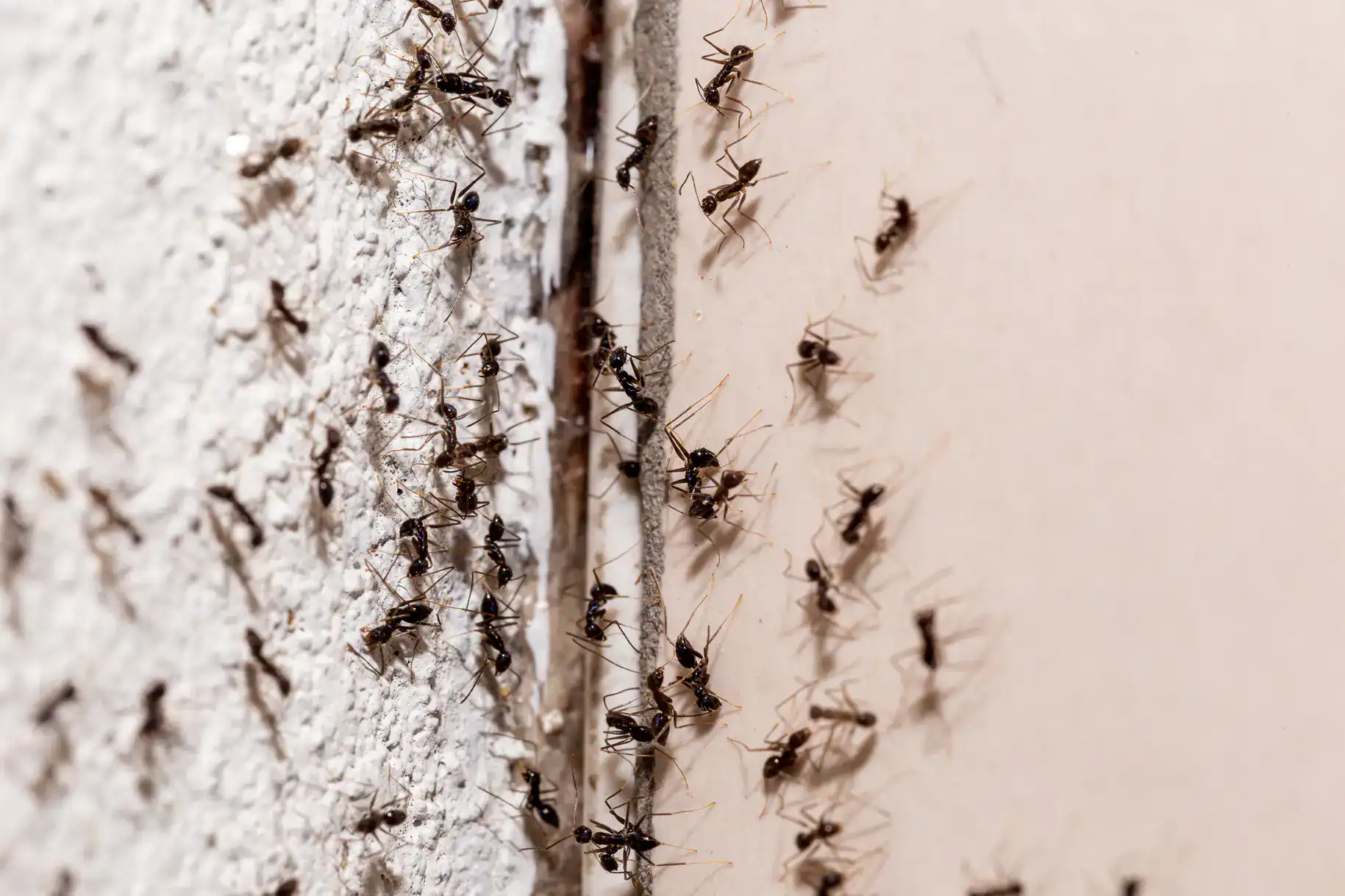
You stop seeing ants on your counters. You stop finding them near your kid’s cereal bowl in the morning. You stop wondering whether the trail along your baseboard is going to turn into something worse. That’s the difference between treating symptoms and treating the source.
Briarwood’s housing stock makes this harder than it sounds. The 1930s and 1940s Colonials and Tudor-style homes throughout the neighborhood have aging wood, older foundations, and decades of moisture exposure exactly the conditions carpenter ants look for. A surface spray slows them down for a few days. It doesn’t reach the nest buried inside a softened sill plate or behind a wall void that hasn’t been touched since the Wolosoff family built the block.
For residents in Briarwood’s garden apartments and co-op buildings including the multi-story brick buildings near Union Turnpike the challenge is different but just as real. Ants travel freely through shared walls and plumbing chases. Your unit can be spotless and you can still have a problem, because the colony isn’t living in your apartment. It’s living in the building. When we reach the colony and eliminate it at the source, that’s when the problem actually stops.
We’re a family-owned company based in Brooklyn, serving the five boroughs for over 40 years. We’re fully licensed, bonded, and insured, and we use only NYS Department of Environmental Conservation-registered materials which matters when you have kids in school at P.S. 117 or Archbishop Molloy and you need to know what’s being applied in your home.
We answer the phone 24 hours a day, seven days a week. Not a voicemail. Not a callback form. A real person. And we offer free estimates so you know exactly what you’re getting into before any work begins.
The Van Wyck Expressway puts Briarwood minutes from our Brooklyn operation, and our technicians have treated buildings throughout central Queens older co-ops, garden apartment complexes, prewar single-family homes. We hold an A+ rating with the Better Business Bureau of New York State, not because we claim it, but because we’ve maintained it consistently for decades.
The first thing that happens is identification. Not every ant is treated the same way, and in Briarwood’s mix of older homes and multi-unit buildings, getting this right matters. Pavement ants, carpenter ants, odorous house ants, and pharaoh ants each require a different approach. Pharaoh ants, which are common in Briarwood’s co-op buildings, actually require bait-only treatment spraying them causes the colony to split into multiple satellite colonies, which makes the problem significantly worse. We identify before we treat.
Once we know what we’re dealing with, we apply materials both inside and outside the structure. The goal is transfer foraging ants pick up the treatment and carry it back into the nest, where it spreads colony-wide. This is what reaches the ants you never see. It’s also why one visit starts the process but doesn’t finish it. Ant colonies are persistent, and Briarwood’s older building stock often means multiple entry points and more than one colony.
After the initial cleanout, we set up a maintenance schedule weekly, every other week, monthly, or every other month depending on your situation. This isn’t a formality. It’s how we make sure any satellite colonies that weren’t reached in the first treatment get addressed before they become a new infestation. You choose the cadence. There’s no mandatory long-term contract.
Ready to get started?
Ant control in Briarwood isn’t one-size-fits-all, and we don’t treat it that way. For single-family homeowners in the older Colonial and Tudor-style homes west of Parsons Boulevard, carpenter ant treatment focuses on identifying moisture-damaged wood, sealing entry points, and applying materials that reach wall voids where the colony is nesting. For ground-floor and garden-level units especially in complexes like the garden apartments near Union Turnpike we treat the perimeter soil and foundation, which is where pavement ants and odorous house ants are entering from.
For residents in Briarwood’s brick co-op buildings, we understand the coordination that multi-unit treatment sometimes requires. We work with both individual unit owners and property managers. We’re familiar with NYC Local Law 55, which governs pest management in multi-family dwellings and requires Integrated Pest Management approaches and our methods are fully compliant. Every material we use is NYS DEC-registered, which means it’s been reviewed and approved for residential use in New York State.
Every service includes a free estimate upfront, interior and exterior treatment, and a follow-up maintenance plan. For Briarwood’s senior residents roughly one in seven people in this neighborhood is 65 or older we offer a 10% senior discount. If you’re a co-op owner unsure whether you need building management involved, call us. We’ll walk you through it before anything else happens.
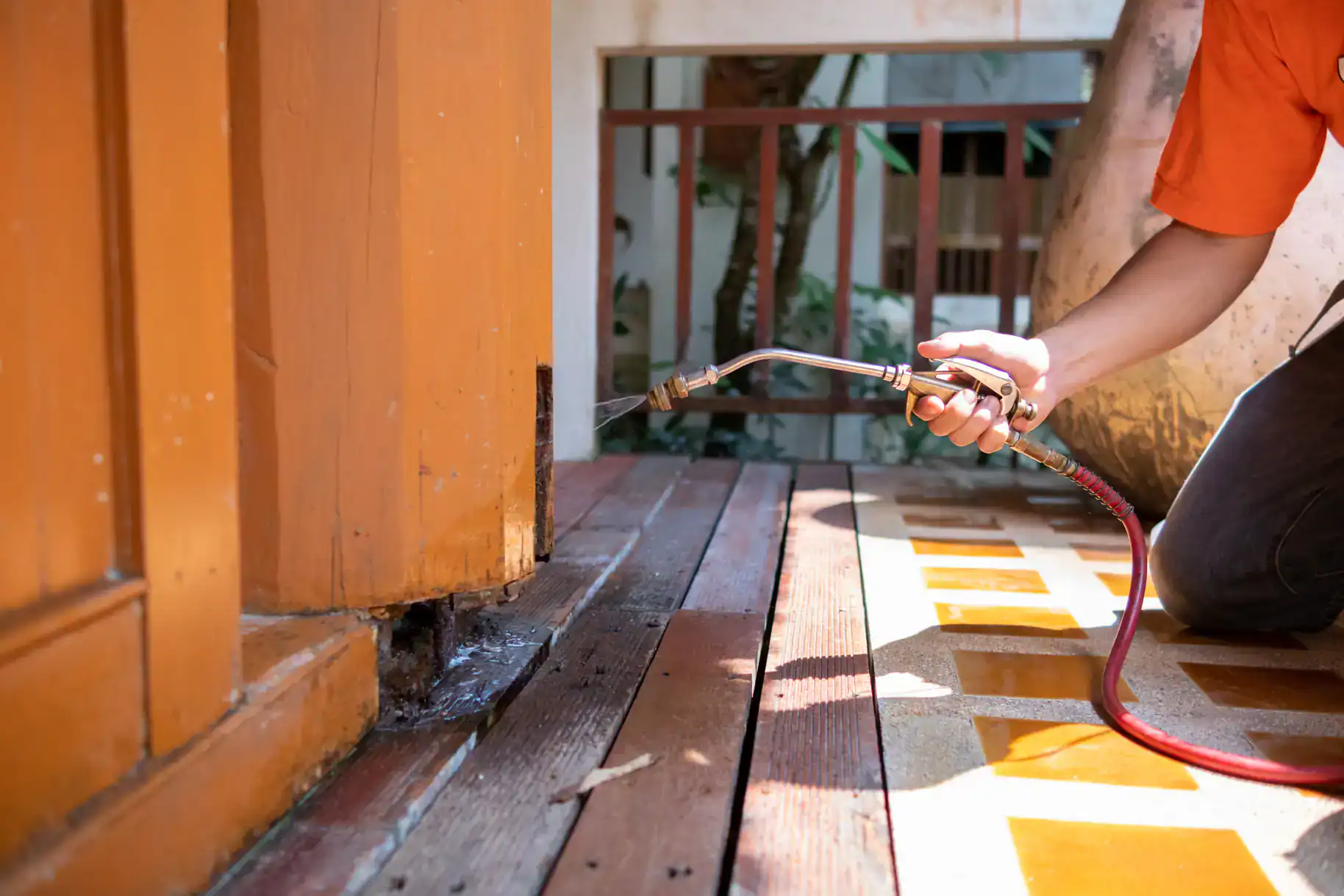
The short answer is that store-bought sprays kill the ants you can see, but they don’t reach the colony. Ant colonies can contain thousands of workers, and the ones foraging through your kitchen are a small fraction of the total population. When you spray them, the colony doesn’t notice. It just sends more.
In Briarwood’s older homes many built in the 1930s and 1940s colonies often nest inside wall voids, behind aging insulation, or in moisture-softened wood near window frames and sill plates. Those locations are completely untouched by surface sprays. Professional treatment works differently because it uses materials that foraging ants carry back into the nest and share with the colony, including the queen. That transfer effect is what eliminates the source. Until the source is gone, the ants keep coming back regardless of how much you spray.
It depends on where the infestation is originating. If ants are entering your unit from a shared wall void, a plumbing chase, or the building’s foundation, treating only your unit will reduce what you see temporarily but won’t eliminate the colony. In that case, building-wide treatment or at minimum treatment of the shared spaces and exterior perimeter is the more complete solution.
That said, individual unit treatment is often a meaningful first step, and many Briarwood co-op residents start there. We can assess your specific situation and give you an honest read on whether your unit alone can be resolved or whether building management needs to be looped in. We work with property managers regularly and can coordinate that conversation if needed. Under NYC housing code, landlords and co-op boards are legally obligated to address pest infestations so if you’ve reported the issue in writing and it hasn’t been resolved, you have more leverage than you might think.
It matters a lot. The four species you’re most likely to encounter in Briarwood are pavement ants, carpenter ants, odorous house ants, and pharaoh ants and each one requires a different treatment approach.
Pavement ants are the ones you see swarming on sidewalks and driveways every spring. They nest in the soil beneath and around building foundations, which makes Briarwood’s garden apartments and ground-floor units particularly vulnerable. Carpenter ants target moisture-damaged wood a concern in the neighborhood’s older prewar homes. Odorous house ants establish large, multi-queen colonies that are hard to eliminate with a single treatment. Pharaoh ants are the most complicated: they’re common in multi-unit residential buildings, and if you spray them, the colony splits into multiple satellite colonies, making the infestation significantly worse. Bait-only protocols are required for pharaoh ants. This is why species identification before treatment isn’t just best practice it’s the difference between solving the problem and accidentally multiplying it.
This is one of the most common questions we hear, and it’s a fair one especially in a family neighborhood like Briarwood where a lot of households have young children. Every product we use is registered with the New York State Department of Environmental Conservation. That registration process means the material has been reviewed for safety and approved for use in residential settings in New York State. It’s not a self-reported claim it’s a regulatory requirement we comply with.
After treatment, your technician will advise you on re-entry timing and any specific precautions based on what was applied and where. In most cases, this is a short window. For households with infants, toddlers, or pets that spend time on the floor, we’ll be direct about what to expect and how to prepare. If you have specific concerns about a product or application area, ask during the estimate we’d rather answer questions upfront than have you guessing afterward.
Ant activity in Briarwood follows a predictable seasonal pattern, but the honest answer is that the best time to call is before it gets bad not after you’re already dealing with a full infestation. Spring is the peak season. April through June is when pavement ants swarm visibly on Briarwood’s sidewalks and driveways, and when carpenter ant swarmers the winged reproductives emerge from colonies that have been established in older wood structures all winter. If you’re seeing swarmers inside your home in spring, that’s a sign of an established indoor colony, not just foraging from outside.
Summer brings sustained foraging pressure as colonies mature, and fall is when ants push indoors seeking warmth before temperatures drop. Carpenter ants in the walls of older Briarwood homes remain active year-round near heat sources and plumbing, even in winter. If you’re seeing ants inside between November and March, that almost certainly means the colony is already living inside the structure not just wandering in from outside. That’s a situation that warrants a call sooner rather than later.
Yes we offer a 10% discount for senior residents. Briarwood has a meaningful senior population, with roughly one in seven residents aged 65 or older, many of them longtime homeowners in the neighborhood’s 1930s and 1940s single-family homes. Those are exactly the types of structures where carpenter ants and moisture-related infestations tend to develop quietly over time inside wall voids and aging wood that doesn’t get inspected regularly.
For seniors on a fixed income who are weighing whether professional ant control is worth the cost, the discount is one part of the picture. The free estimate is the other you’ll know exactly what the service costs before committing to anything. And because our maintenance schedule is flexible rather than locked into a mandatory annual contract, you’re not signing up for more than you need. If you’re a senior homeowner in Briarwood dealing with a recurring ant problem that DIY products haven’t resolved, a conversation with us costs nothing.
Useful Links