Hear from Our Customers
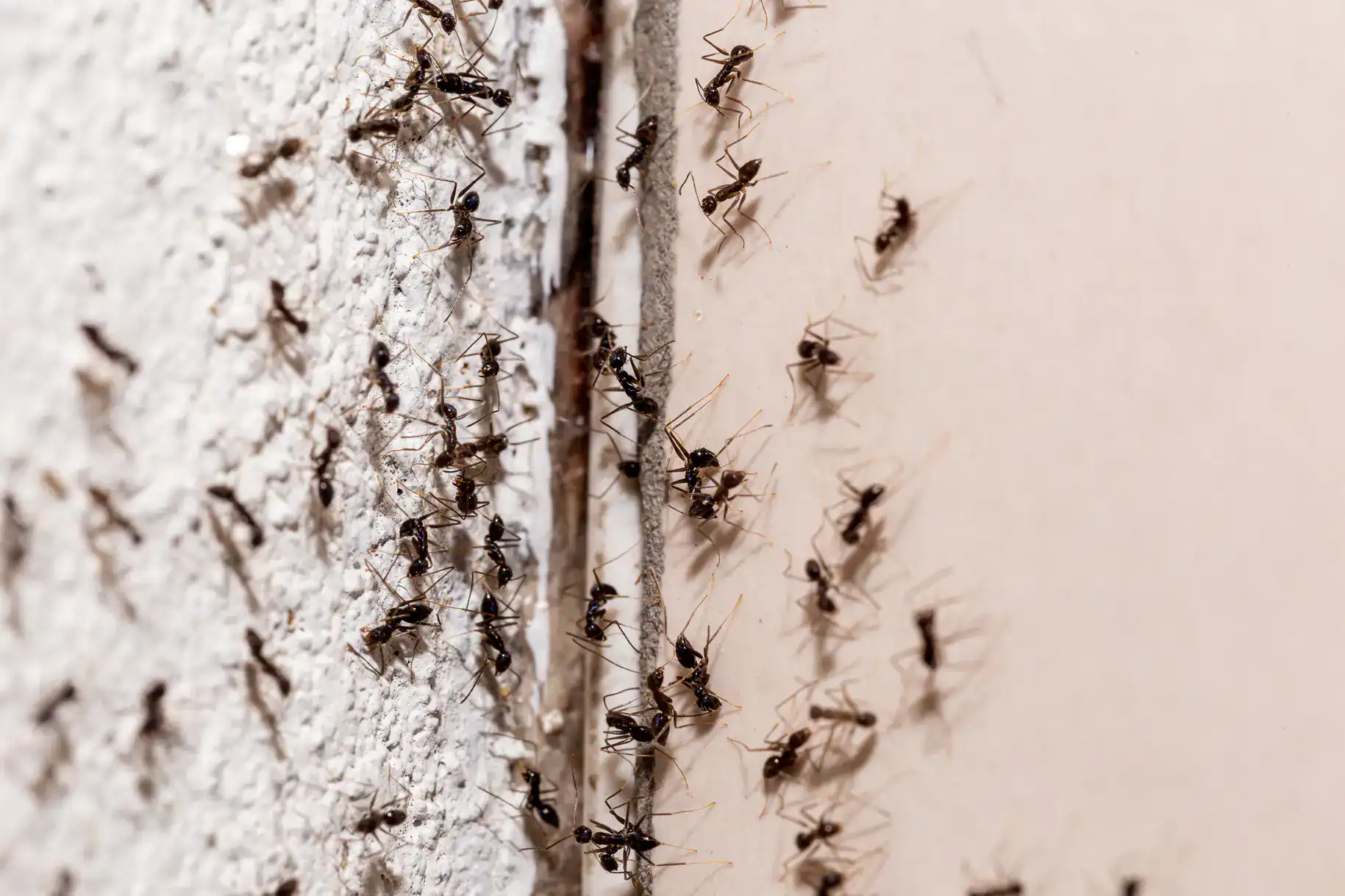
The ant you see on your kitchen counter is not the problem. It’s a scout and behind it is a colony that’s likely been established in your building’s wall cavities, utility chases, or original plumbing stacks long before you moved in. That’s the reality of living in a converted building in the Financial District. Former office towers weren’t designed with residential pest barriers in mind, and the infrastructure that got repurposed during conversion electrical conduit runs, communication chases, century-old plumbing created pathways that ants use to move between floors and units without ever touching open air.
What changes after a proper ant removal treatment isn’t just that the ants disappear. It’s that the colony is targeted, not just disrupted. You stop seeing the same trails reappear two weeks later. You stop wondering whether the treatment actually worked or just pushed the problem somewhere else in the building. For residents along Water Street, Front Street, or anywhere near the East River waterfront, where moisture in aging foundations drives carpenter ant activity, that distinction matters a lot.
For building managers overseeing large residential conversions in the Financial District, the outcome is equally direct: documented treatment, a maintenance schedule that holds up to NYC DOHMH scrutiny, and a provider who understands how ant pressure moves through shared infrastructure not just individual units.
Kingsway Exterminating Company is a family-owned business that has been serving all five boroughs for over 50 years. That’s not a tagline it’s a track record built one building at a time, across Manhattan high-rises, Brooklyn brownstones, and everything in between. We were founded on a straightforward principle: thorough pest control, honest pricing, and no shortcuts. That’s still how every job gets done today.
We hold an A+ rating with the Better Business Bureau of New York State, are fully licensed, bonded, and insured, and use only NYS Department of Environmental Conservation-registered materials. Those aren’t just credentials for a website they’re what qualifies us to legally treat commercial properties in a neighborhood like the Financial District, where NYC DOH compliance isn’t optional.
Based in Brooklyn, directly across the East River from FiDi, we’ve worked inside the kinds of buildings that define this neighborhood converted financial-era structures, luxury residential towers, and ground-floor commercial spaces along corridors like Fulton Street and Broadway. We’ve treated pavement ant infestations in the century-old sidewalk systems beneath Stone Street’s outdoor dining corridor, carpenter ant colonies in moisture-compromised structural elements near the East River waterfront, and the persistent ant pressure that comes with operating in one of Manhattan’s most densely built neighborhoods. The phones are answered 24 hours a day, seven days a week, because pest problems in the Financial District don’t wait for business hours.
The first visit isn’t just a treatment it’s a cleanout. We apply materials both inside and outside your unit or property, specifically formulated so that foraging ants carry the treatment back into the nest and share it with the colony. That transfer is what makes the difference. It’s the reason a professional ant infestation treatment outlasts anything you’ll find on a store shelf.
In a Financial District building, that exterior application matters more than most people realize. The pavement ant supercolonies that nest beneath FiDi’s oldest sidewalks some of the most established in Manhattan send foragers into ground-floor spaces every spring as soil temperatures rise. Treating only the interior of a unit while ignoring the foundation perimeter and building entry points is like mopping a floor with the faucet still running. We treat both.
Because ant infestations in shared-wall, shared-foundation buildings rarely come from a single colony, follow-up visits are built into the process weekly, every other week, or monthly depending on the severity and the building type. After the initial cleanout phase, we set up a maintenance schedule on your terms. That ongoing treatment is what keeps materials active in a neighborhood where the urban heat island effect keeps ant colonies growing and foraging well past the season they would in a suburban environment. All materials used are NYS DEC-registered, applied by licensed technicians in full compliance with NYC Health Code requirements.
Ready to get started?
Ant control in the Financial District isn’t a single visit with a spray bottle. It’s a process built around the specific pest pressure that comes with living or operating in Manhattan’s oldest and most densely built neighborhood. Our ant control services cover the three species most commonly driving infestations in FiDi buildings: pavement ants, which colonize the cracks beneath century-old sidewalks and push into building foundations each spring; carpenter ants, which establish in moisture-softened wood generated by aging converted buildings near the East River water table; and the ManhattAnt Lasius emarginatus a European species now documented as the second most common ant in New York, with a growing presence in the mechanical floors and utility spaces of Manhattan high-rises.
Treatment is species-specific because what eliminates a pavement ant colony isn’t necessarily what eliminates a carpenter ant nest embedded in a structural beam. We identify the species before applying anything, which is what separates a targeted ant exterminator treatment from a generic application that temporarily reduces visible activity without reaching the source.
For commercial properties restaurant operators on Stone Street, retail managers in the Fulton Center, facilities teams managing office buildings near the World Trade Center our services include the documented IPM records and after-hours availability that NYC DOH compliance and institutional building management require. For residents, it means a licensed technician, DEC-registered materials, and a clear follow-up schedule. Free estimates are available for all ant control services in the Financial District, NY.
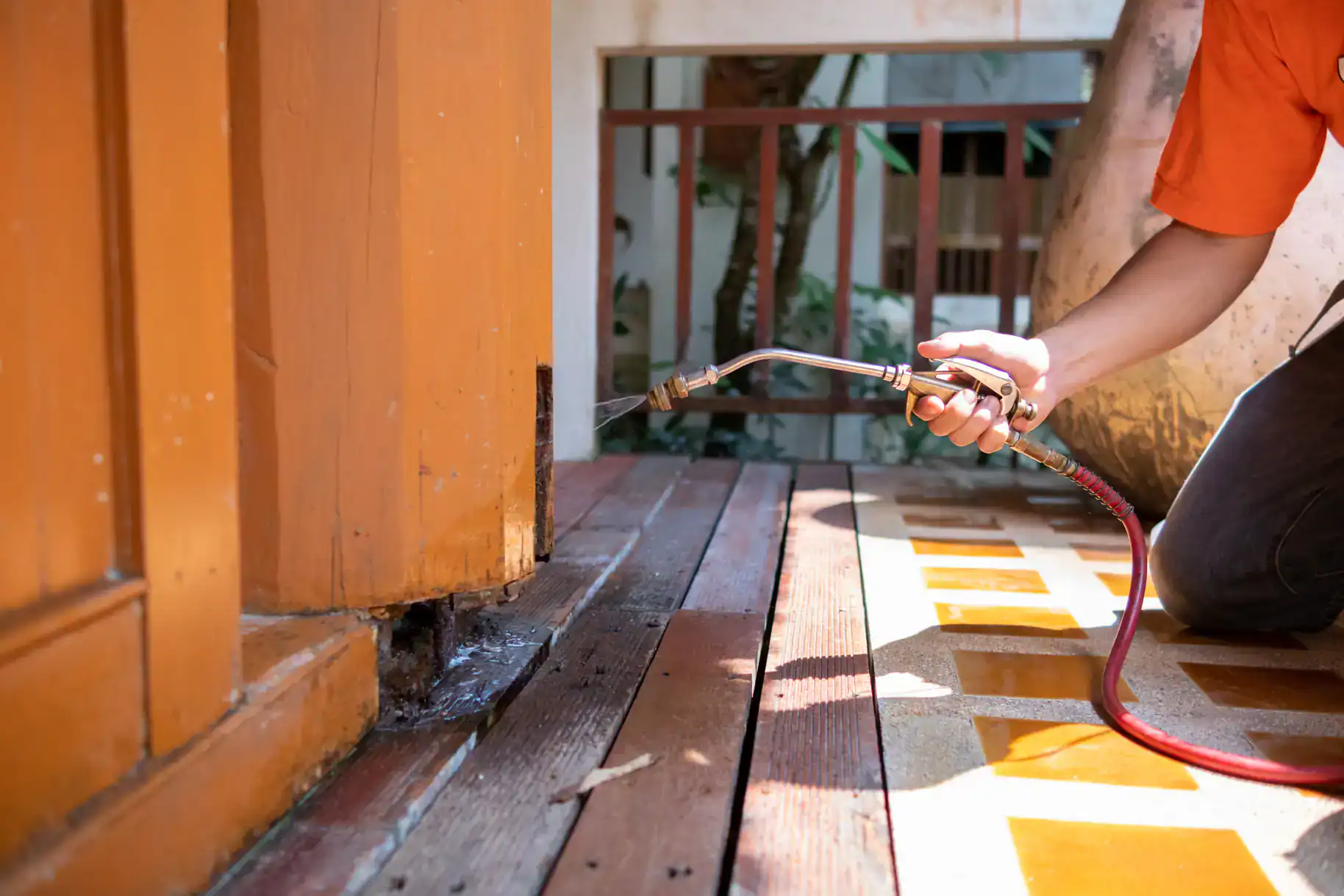
This is the most common frustration, and it almost always comes down to the same root cause: the treatment reached the foragers but not the colony. Over-the-counter sprays and even some professional treatments that only address visible activity will reduce what you see for a few weeks but the queen is still producing workers, and the colony simply reroutes its foraging trails around the treated area. In a converted building in the Financial District, where ant colonies can travel through unsealed utility chases, original plumbing stacks, and shared foundation systems across multiple floors and units, surface-level treatment is almost never enough.
The fix isn’t a stronger spray it’s a different approach. We use materials that ants carry back into the nest and share with the colony, targeting the source rather than the symptom. Combined with follow-up visits to re-apply materials and monitor activity, this is what actually breaks the cycle instead of just delaying it.
It matters because they require different treatments, nest in different locations, and pose different levels of risk to your property. Pavement ants are the small dark ants you typically see trailing along baseboards or near kitchen appliances they nest beneath sidewalks and building foundations and send foragers inside in search of food. In the Financial District, where some of Manhattan’s oldest sidewalks sit above massive pavement ant supercolonies, ground-floor units and basement-level spaces deal with this species every spring without fail.
Carpenter ants are a different situation. They don’t eat wood they excavate it to build nesting galleries, and they’re drawn to wood that’s already been softened by moisture. In FiDi’s converted buildings near the East River waterfront, where aging foundations and century-old structural elements are common, moisture-damaged wood creates ideal carpenter ant habitat. Left untreated, an established carpenter ant colony can weaken beams and structural elements over time. Identifying which species you’re dealing with before treatment begins is not optional it’s the foundation of an effective approach.
Yes and professional treatment is actually more controlled than what most people apply themselves. The materials we use are registered with the New York State Department of Environmental Conservation, which means they’ve been reviewed and approved for use in residential and commercial settings by state regulators. They’re applied by licensed technicians in targeted quantities and locations, not broadcast across surfaces the way many store-bought products are.
Your technician will advise you on re-entry timing after treatment typically a short window while materials dry and on any specific precautions relevant to your unit or building type. For families with young children who’ve moved into one of FiDi’s newer residential conversions, or for pet owners in buildings along the Water Street corridor, this is a straightforward conversation to have before the job starts. The goal is to eliminate the infestation without creating any other concern in the process.
It requires treating more than just your unit, and it requires follow-up. In a standalone house, you can treat the perimeter, seal entry points, and address the colony in a relatively contained area. In a Financial District high-rise or converted office tower, the ant pressure comes from multiple directions the building’s shared foundation, the utility chases running between floors, the original plumbing infrastructure that wasn’t fully sealed during residential conversion. A colony eliminated in one unit can re-establish from an adjacent space within weeks if the source isn’t addressed.
Our approach in multi-unit buildings combines interior treatment with exterior foundation and perimeter applications, followed by scheduled follow-up visits to re-apply materials and confirm the colony is being eliminated rather than just displaced. For building managers overseeing large residential properties in the Financial District, we can coordinate treatment across multiple units and common areas, with documentation that meets NYC Housing Maintenance Code requirements for landlord pest control obligations.
Spring is when most people first notice the problem April through June, when rising soil temperatures cause pavement ant colonies to expand rapidly and send foragers into building foundations and ground-floor spaces. But in the Financial District specifically, the urban heat island effect means ant colonies stay active longer into the fall than they would in suburban environments. The density of concrete and asphalt in Lower Manhattan absorbs heat during the day and releases it slowly at night, which accelerates colony growth and extends the active season on both ends.
Carpenter ant activity tends to peak in late summer and fall, when colonies seek warmth as temperatures drop and moisture-softened wood in older converted buildings becomes more attractive for nesting. Year-round interior infestations are also common in FiDi’s heated high-rises, where consistent internal temperatures prevent colonies established in wall cavities or mechanical spaces from going dormant the way outdoor colonies do. The short answer: call when you see activity. Waiting to see if it resolves on its own almost never works in a building environment like this one.
Yes, and for most buildings in the Financial District, ongoing maintenance is the smarter long-term approach. The neighborhood’s combination of century-old building infrastructure, proximity to the East River and Hudson River water tables, and the persistent food sources generated by Stone Street’s outdoor dining corridor, the Oculus food hall, and the surrounding restaurant density means that ant pressure doesn’t disappear after a single treatment season. Colonies re-establish. New foragers find entry points. Buildings that share foundations and utility systems with neighboring structures are continuously exposed.
We offer flexible maintenance scheduling weekly, monthly, or every other month based on your building’s specific risk profile and your preferences. For individual residents, that might mean a quarterly visit to keep materials active and catch any new activity early. For building managers overseeing large residential or commercial properties, it means a documented maintenance program with scheduled visits, treatment records, and a licensed provider on call. The goal is to keep the problem from coming back, not just to address it after it already has.
Useful Links